
Russia has launched its full-scale invasion of Ukraine both on the territory of our state and on social networks since the first day. The enemy created a large number of Telegram channels where the admins are posting Ukrainian-language content without knowing the language. The Russians try to translate their propaganda either by themselves or through Google Translate. However, the results disappoint.
Today "Trybun" has compiled a list of the most absurd and senseless language mistakes in fake news and narratives that Russia is trying to spread among Ukrainians.
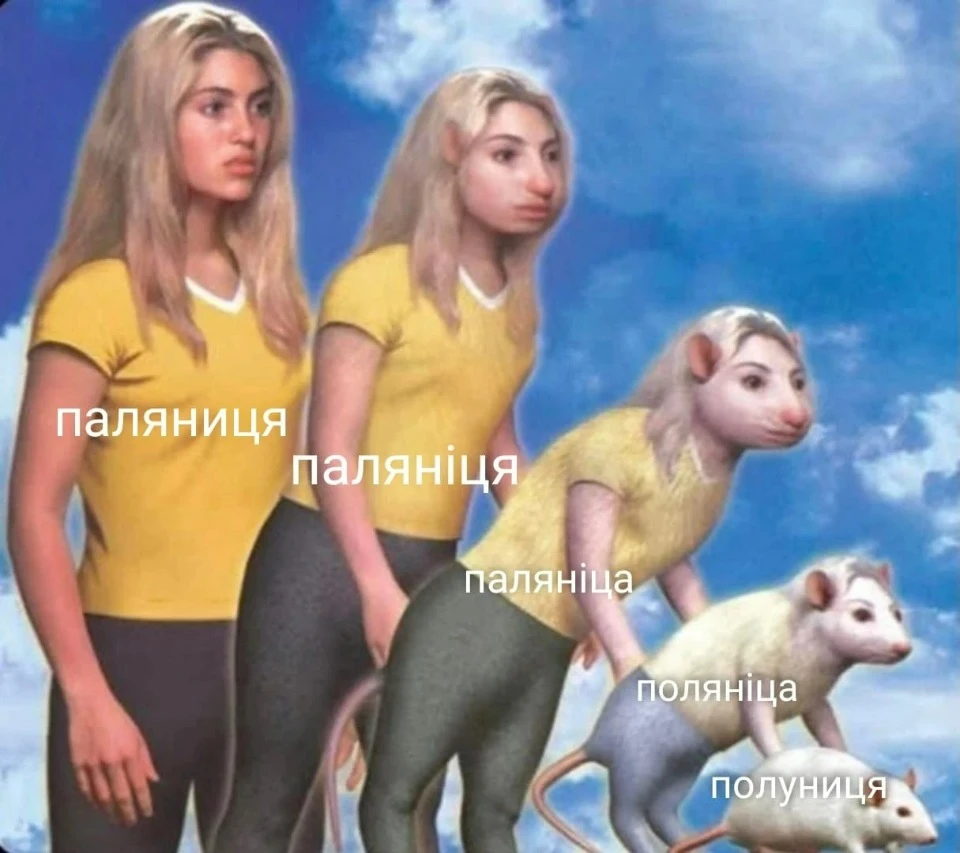
Palianytsia – polunytsia
Russian propagandist Olha Skabeeva gave a start to facepalms in the first days of the full-scale invasion.
On TV, Skabeeva talked about the linguistic "torture" of the Russian occupiers.
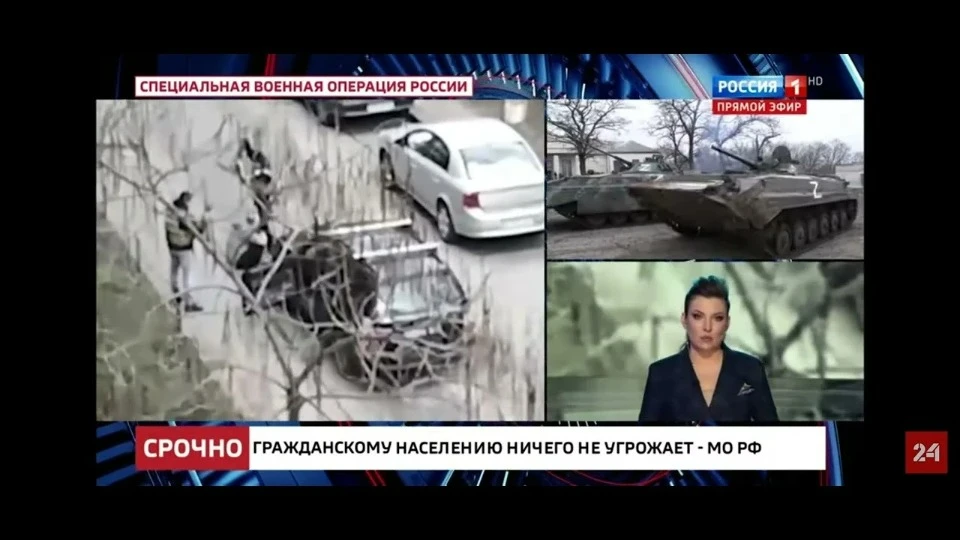
"For the Nazis, it is the word "strawberry. ''In Ukrainian it sounds like "palianytsia". If a person answers incorrectly or pronounces it incorrectly, somehow with mistakes ˗ s/he must kneel down and get a bullet," the propagandist convinced.
Memes about Russians' difficulties with the Ukrainian language swept the Internet.
Die for Green
In February 2022, the Ministry of Internal Affairs of Ukraine published a screenshot from the phone of an allegedly dead or captured Ukrainian soldier. Of course, the text was written by a Russian-speaking propagandist.
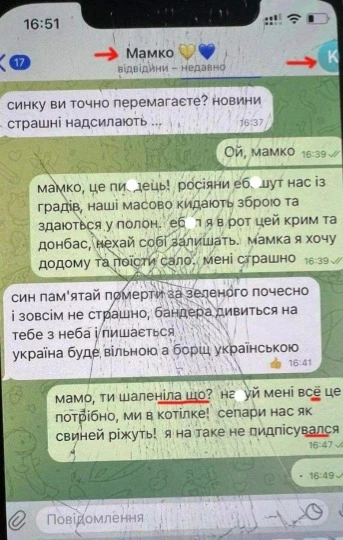
"When you have a fantasy, but you did not study well at school. Rather unprofessionally, with spelling errors, the Russians create and spread such fakes in the information space based on a photo that was released by our military in the morning in order to confuse the Russian civilian population. It is quite obvious that the text was written by a Russian-speaking propagandist. The letter in the upper right corner in the circle must be the same as the first letter of the signed contact. However, it's "M" in the word "Mamko", and for some reason "K" in a circle. The soldier also miraculously seems to have Wi-Fi working in the field," the Ministry of Internal Affairs drew attention.
The expression "mamko" in the Ukrainian language exists in the vocative case. "Shalenila shcho", "vse", "kotilke", "podpysuvalsia"˗ these expressions do not resemble either Surzhyk or the dialect of a certain region. "Dying for Green is honorable and not scary at all." This is how Google Translate translates "Zelenskyy" from Russian to Ukrainian.
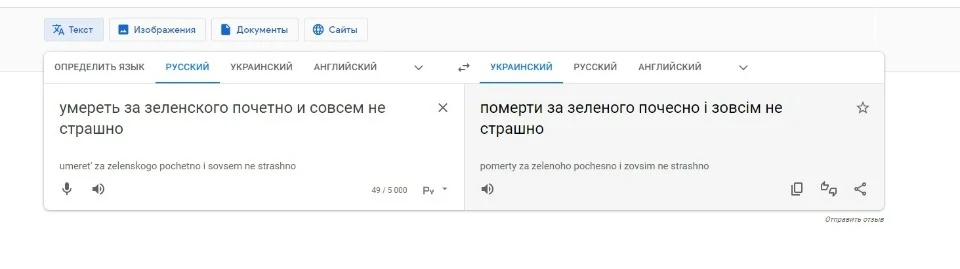
V. A. Zelenskyy
In March 2022, a photo showing Ukrainian medals "For the Capture of Crimea" that were allegedly found in the military commissariats of Kherson oblast was circulated online. The certificate issued by "order of the President of Ukraine" shows the initials "V. A. Zelenskyy".
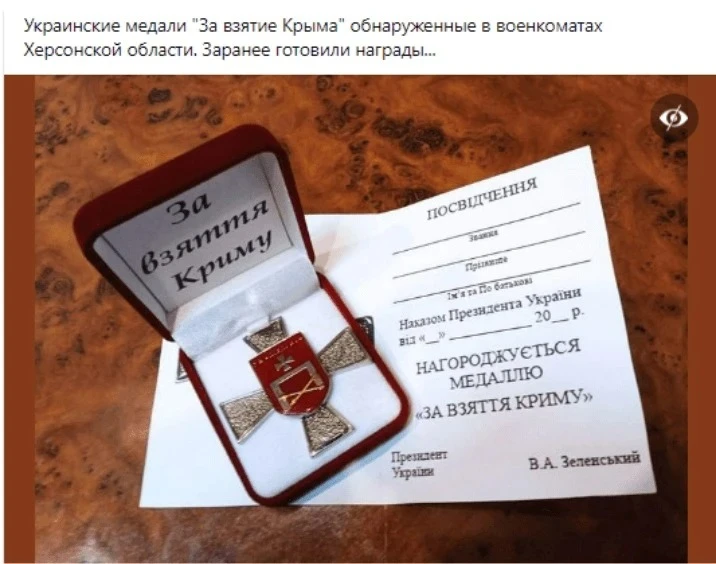
In the fake certificate the initials are indicated as "V. A. Zelenskyy". V. A is an abbreviation of the first name and patronymic "Vladimir Aleksandrovych" in Russian. "V. O" is the correct version of the initials in Ukrainian ˗ Volodymyr Oleksandrovych.
It's impossible to slip up on common things, but the propagandist did it.
Bavovna
At the end of the 2010s, the Russian government ordered all mass media to call explosions (mostly gas explosions) "liasky".
The Russian word "khlopOk" ( clap in English) has a homograph "khlOpok" , which means "bavovna" in Ukrainian.
On April 25, 2022, explosions rang out in a military unit and an oil depot in the Russian city of Bryansk. The online translator confused the Russian homographs. As a result, the text of the news tells about a powerful bavovna before the start of the fire.
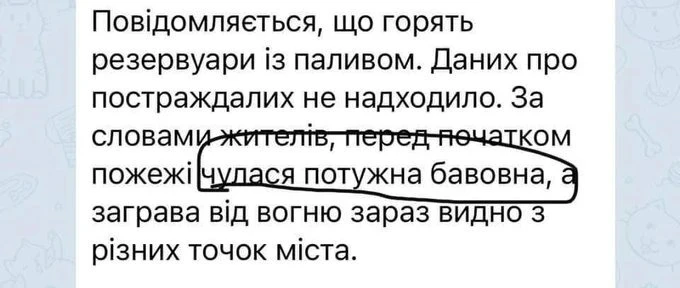
Russian websites mistakenly spread this text and Twitter users from Ukraine mocked it. A few days later, on April 30, the Ukrainian segment of Twitter began to threaten the residents of the Russian Belgorod with future shelling, allegedly being prepared by the Armed Forces of Ukraine. In particular, the term "bavovna" was used in its memetic sense in this campaign.
Since then, the word "bavovna" in the Ukrainian segment of the Internet has been used to refer to explosions in the occupied territories of Ukraine and Russian territories.
In August 2022, the Ministry of Defense of Ukraine published an image of a bavovniatko, a mythical creature that burns the bases of Russian invaders, with the following description:
"Fluffy and restless. At night, bavovniatko quietly comes to the occupier's bases, warehouses, airfields, oil refineries and other places filled with flammable objects, and starts playing with fire there".

Rozpovi vchyteltsi
This is one of the strongest and funniest fakes about education in Ukraine.
The pro-Russian news agency "DonPress" in occupied Donetsk published a fake leaflet urging schoolchildren to inform on their parents. The text was full of mistakes.
The author of the news allegedly received photo evidence from one of the educational institutions in the controlled territory of Ukraine, which shows that children are forced to inform on their parents. The photo shows a school bulletin board. There is a poster with the words of the Ukrainian national anthem, an image of Patron the dog and an announcement about the donation of 40 hryvnias for a trip to the theater.
There is a supposed "reminder" for children next to this information. It explains, in which cases they should inform on their relatives to teachers and the school administration. The list includes relatives in the Russian Federation, everyday conversations in Russian, parents' viewing of Russian TV channels, and criticism of the Ukrainian President Volodymyr Zelenskyy.
However, there is a detail in the photo that immediately cast doubt on the authenticity of this document. Instead of the phrase "Tell the teacher" ( Rozkazhy vchyteltsi in Ukrainian) , with which this card should have started, the following is printed: "Rozpovi vchyteltsi".
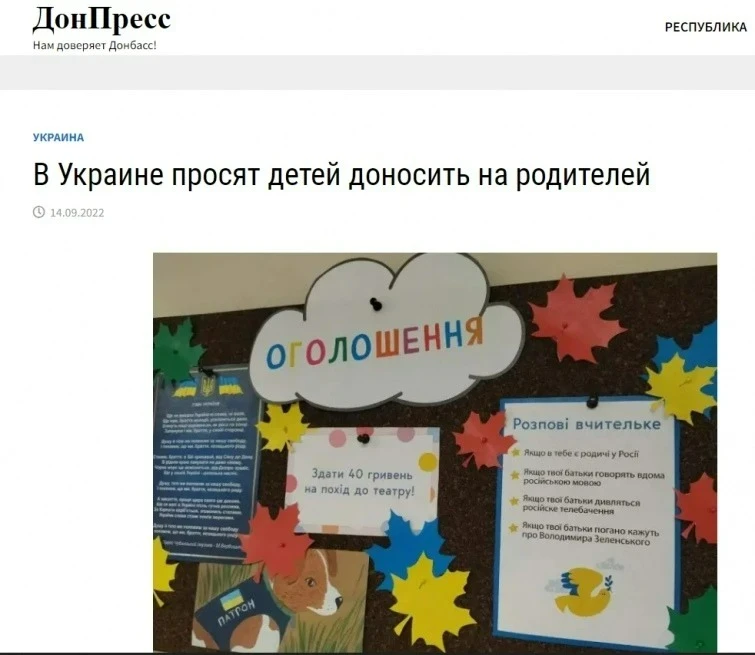
Reading this propagandists' story, Ukrainians and some companies launched a flashmob on social networks, where they offered their versions of "denunciations" and at the same time mocked the Russians' lack of elementary knowledge of grammar.
Hlopivky
In November 2022, the Russians published information about the fictitious detention of a SSU coordinator in Kherson in one of the Telegram channels.
The message is illustrated with a photo of correspondence from the phone of this very "coordinator". This photo proves the fakeness of this story as there are big mistakes in Ukrainian. This is the word "vykonacham" instead of the more natural "vykonavtsiam" (executors in English).
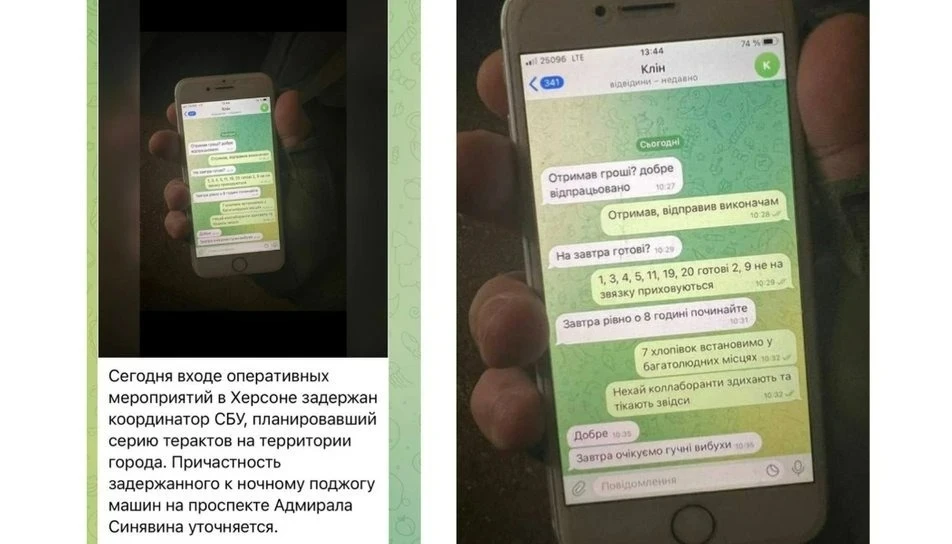
The list of mistakes also include: " prykhovuiutsia" instead of "perekhovuitsia", "khlopivka" instead of "khlopushka". However, if itʼs really about "crackers", the Russians do not know that Ukrainians do not call explosions "claps", and explosives ˗ "flappers".
A sad part
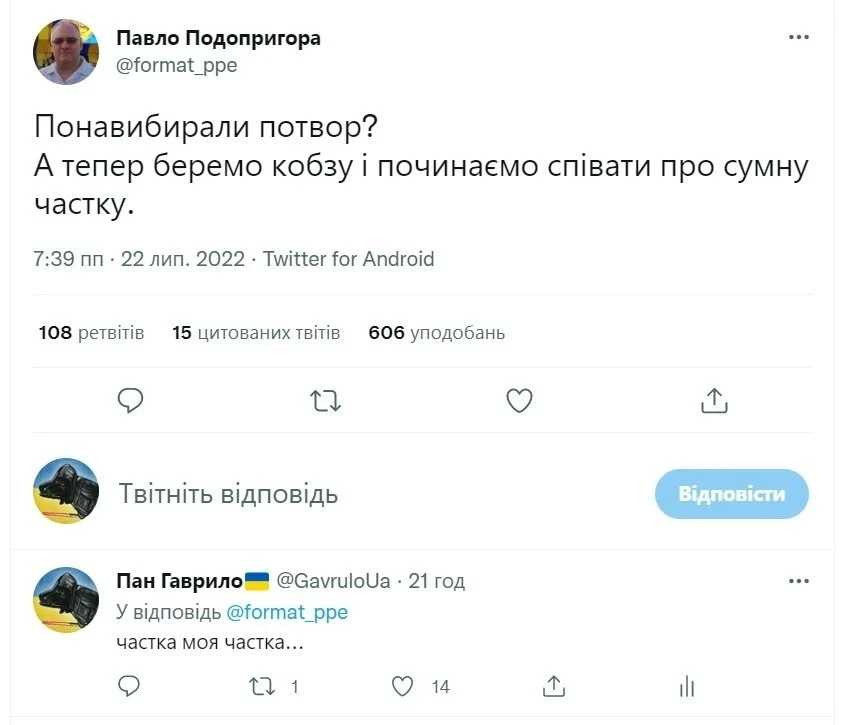
One of the Russian bots, telling about "treason from the Ukrainians", unsuccessfully mixed the narrative "they were chosen" with the proposal to "take a kobza and sing about a sad part", meaning "sad fate".
Point "U"
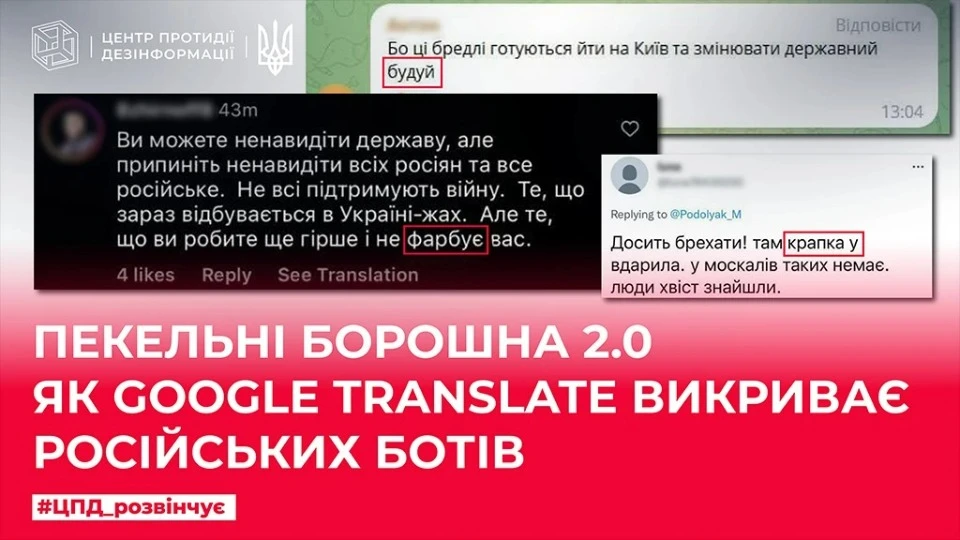
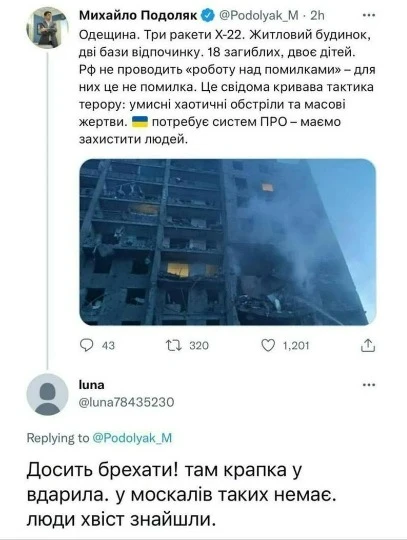
We have debunked another Russian fake. Let's look at one more "great" fake posted by Russians in Twitter - "Point U", which probably meant the tactical missile complex "Tochka-U", which, by the way, has been actively used by both Ukraine and Russia since the beginning of the full-scale invasion. It was written in a comment to the tweet of the adviser to the head of the Office of the President Mykhailo Podoliak.
In this screenshot, "Moment 29" was probably supposed to mean the MiG-29 fighter, but Google Translate decided otherwise.
There is no urine to endure these infernal flour
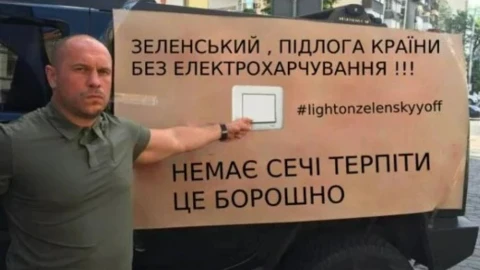
At the beginning of November 2022, the Russians launched something similar to a "flashmob", in which they tried to urge others to use electricity as much as possible on behalf of Ukrainians. They used hashtag #LightOnZelenskyyOff. Provocative appeals and messages were distributed in the Ukrainian segment of the Twitter and Viber messenger.
However, the Russians once again ran into the difficulties of translation - "it is impossible to endure these hellish torments without light. Ukrainians want peace, not war" was translated from the occupiers' language as "there is no urine to endure this flour without light. Ukrainians want light, not war." By the way, Google Translate gave us a completely adequate translation.
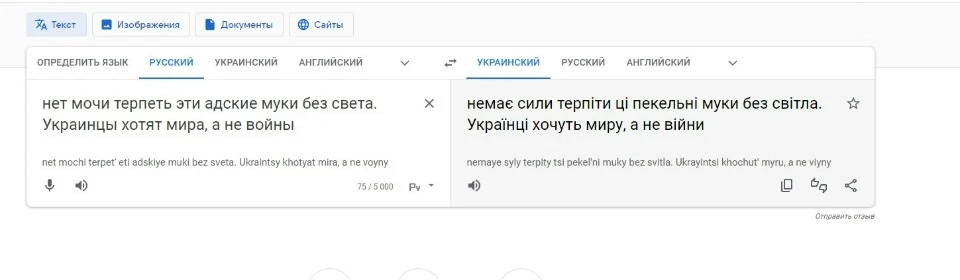
Moreover, the word "electric power supply" became "electric eating" and it swept the Internet.
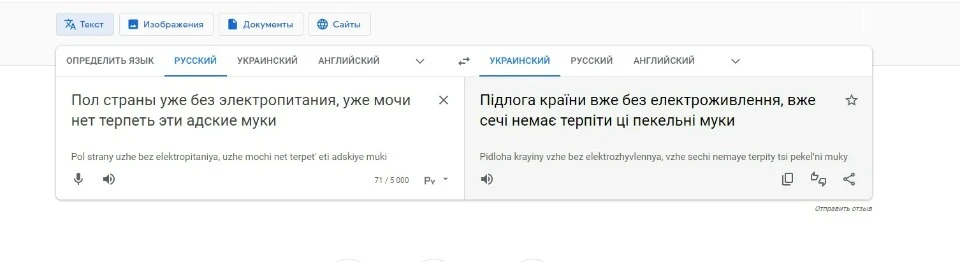
The phrase "Half of the country is already without electricity, it is impossible to endure these hellish torments!" is translated and distributed in the version: "Half of the country is already without electricity, there is no more urine to endure these infernal flours!".
Google translator gave us an even more interesting translation: "The floor of the country is already without electricity, there is no more urine to endure these hellish torments."
Commenting Ukrainian publics, hostile bots increasingly pretend to be real Ukrainians, but ignorance of the language and Google Translate nullify all their efforts, phrases from publications are turned into jokes.
The Center for Countering Disinformation warns: if there are absurd mistakes in a publication or comment that are not inherent in the Ukrainian language, the text is most likely spread by a hostile bot.