

TikTok, a service for creating and viewing short videos, has become one of the main platforms where fake videos about the war in Ukraine collect millions of views.The platform says it's trying to stop the flow of fakes, but the Kremlin has launched an army of bots that spread tons of them.
According to experts of the NewsGuard project, TikTok algorithms can show disinformation about the Russian invasion of Ukraine even on newly created accounts within first 40 minutes of registration.
A team of investigators conducted several tests to assess how TikTok filters information about the war in Ukraine.In order to conduct the experiment, experts used new accounts without any subscriptions or likes.The object of research is videos from the "Recommendations" section, which are selected by TikTok's internal algorithms.To set up the feed, the investigators used a search for the 20 most popular queries, including "Ukraine", "Russia", "War", "Kyiv" and "Donbas".
According to experts from NewsGuard, at the end of the 45-minute experiment, the feeds were filled with both true facts and fake content related to the war in Ukraine.
None of the reviewed videos contained information about the credibility of the source or additional information that could lead users to the true source.
Today we will talk about the main forms of Russian TikTok fakes.
Fake streams
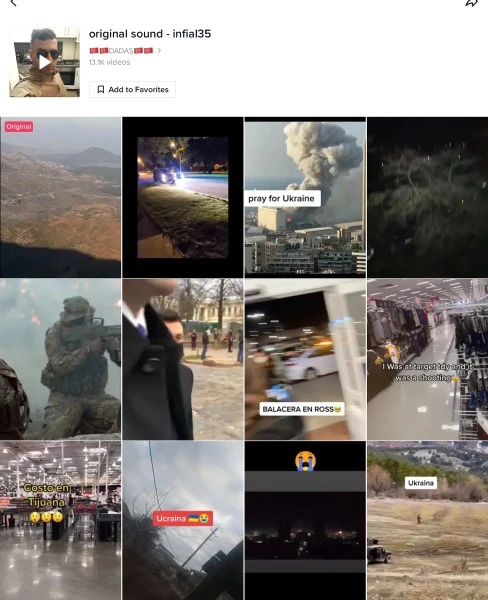
Fake streams collect a huge number of views.To create them, they take videos of old military exercises or other video content. After they start a live broadcast, as if the author is in a hot spot under the fake sound of a powerful explosion or an intense firefight.
The fake gunshot soundtrack has become so popular that it has been used in more than 13,000 videos.
Most fake live streams can be found using popular hashtags like #Ukraine or #UkraineWar.
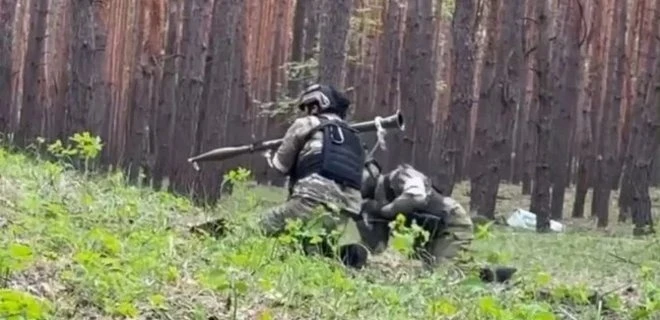
Fake videos The TikTok troops of Ramzan Kadyrov, who is actively promoting the Russian-Ukrainian war, know how to shoot at the empty windows of high-rise building in Sievierodonetsk, traffic lights, trees, or record posts allegedly from under Kyiv staying in Chechnya.This PR brought the leader of Chechen militants good bonuses - several million subscribers, recognition of propagandists and the rank of lieutenant general from Putin. The SSU proved that a large part of the Kadyrivets' video had been staged. The SSU found a video on the smartphone of one of the soldiers from Chechnya where they "heroically fight with pine trees in Luhansk oblast."
However, this does not prevent Russian bloggers on TikTok from publishing videos about dangerous and daring Chechens or scaring everyone with Kadyrov. One of the most popular "heroic" videos from Kadyrovites which made these grief-stricken soldiers laugh, is about a Ukrainian scout captured in spring in Mariupol. And according to them, the prisoner was from the "Azov" regiment, which is still like a bone in the throat of the TikTok troops.
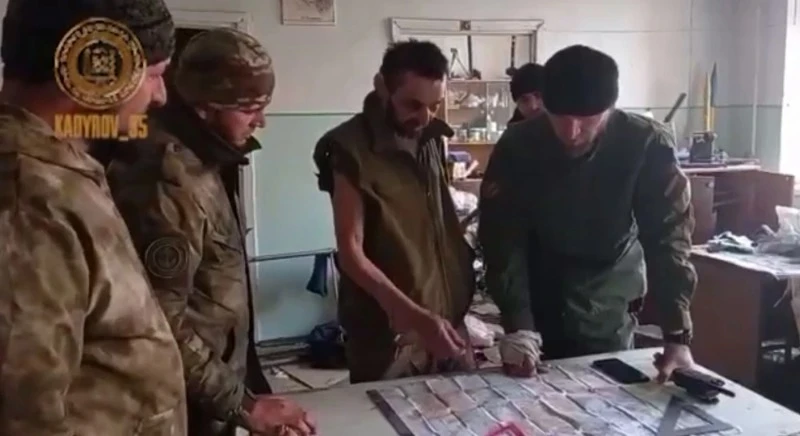
Only listening to the Kadyrivites and the confession of the captive, we can alledgely understand that the man is a Ukrainian scout, a representative of the "Azov" regiment and he was captured in Mariupol.The tik-tokers did not show any other documentary evidence.When the pseudo-prisoner tells information about people from Azov, he repeats the most primitive clichés and clichés of racist propaganda - "here the pravyi sector is fighting," and "here is a foreign battalion from which countries I don't know," and "here are volunteer battalions" and "here are the Azov battalion".At the beginning of the video, one of the Kadyrovites says that the scout was taken prisoner during the operation, and at the end, the same man and the so-called prisoner, say that "the man himself left the factory". The co-founder of the Cathedral of the Orthodox Church of Ukraine in Mariupol, Kyrylo Dolymbayev identify the fake man from Azov. The so-called prisoner is a needy man who has problems with his head and he is always drunk and the Church of the Orthodox Church of Ukraine fed him every day.
Journalists from " Slidstvo.Info" told more about other fakes and manipulations about the war in Ukraine created by Ramzan Kadyrov's team in the interests of the Kremlin. Fakes for residents of European countries One of the most widespread video fakes is the myth that the US is sponsoring the development of biological weapons in Ukrainian laboratories.

This list also includes the favorite stories of Russian propagandists: neo-Nazis rule Ukraine and the terrible footage of the bombings of Ukraine are fakes.Despite the fact that TikTok suspended its work in Russia due to the same Kremlin law "about fakes", the recordings still gain millions of views and mislead not only users from Ukraine but also from countries around the world.
Among the popular videos is a woman's story about how "Ukrainian refugees beat a Russian to death." Germany called it a fake.
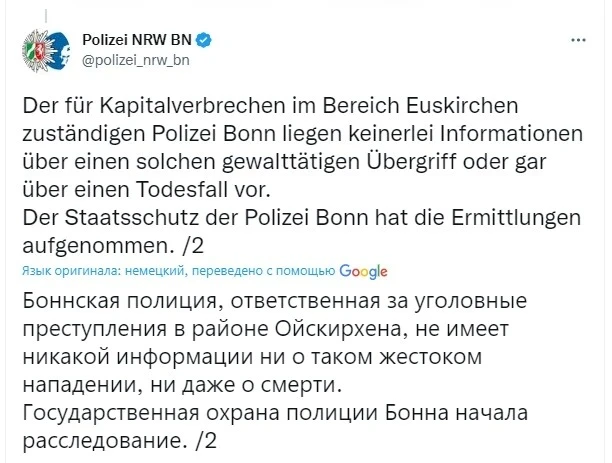
The video shows a boy, Daniel, who was allegedly beaten to death at a train station for speaking Russian, and who later allegedly died in hospital. Neither footage of the attack nor any other confirmation was provided. The woman later admitted on TikTok that the story "turned out to be false." She said that she had been "misled".“I would like to apologize to all of you who have seen my video for the fact that it turned out to be false. I wanted to ask when the funeral of the murdered guy was, but it turned out to be a fabrication," the woman said and added that the person from whom she heard this information "hated Ukrainians and decided to make things worse with such a story." "I believed so wholeheartedly that I didn't even need any facts, no photos, no confirmations... I want you not to make the same mistake as I did. Don't trust anyone without confirmation," the woman said. According to her version, she fell into "such a trap", she was "framed like that and used like that".
Tiktokers sometimes use videos of fighting in other countries, where the Russians also invaded, and pass them off as the conflict in Ukraine. Stories about Russian greatness When the Russians have nothing to boast, they are trying to improve their image with the help of silent mysterious videos. These videos are actively distributed on TikTok by anonymous bloggers. Such bloggers are not only those who are fighting on the territory of Ukraine, but also the so-called beginners.One such example is a conscript soldier nicknamed endi_drill.
Unlike experienced propagandists, he sincerely named one single advantage of serving in the Russian army: "You will get a military ID."Some time after the full-scale invasion of the Russian Federation into Ukraine, he stopped publishing new posts. A few months ago Swedish children were intimidated by videos threatening a future war with Russia via the TikTok social network. According to local newspaper Aftonbladet, the nationwide Swedish children's rights organization BRIS, which operates a children's hotline, has started receiving phone calls from teenagers who are worried about a Russian invasion that seems to be "coming."
The app found videos with titles such as "war is coming", other videos said that Russian forces would "bomb Sweden or even invade the country". In Sweden as in the rest of the world, only 3% of children read newspapers every day, while about 30% of them use TikTok, the publication notes.
According to an article in a Swedish newspaper, no country has yet claimed responsibility for the videos, but Russia is clearly interested in sowing fear in a country that has begun to rebuild its defenses in recent years.
Video games Also, instead of real videos, the Russians can use footage from video games.For example, dogfights from Arma 3 and Call of Duty.In addition, they often use footage from reality shows, TV series or war movies.Fake dogfights, in particular shots of fighter jets being shot down, were especially popular.
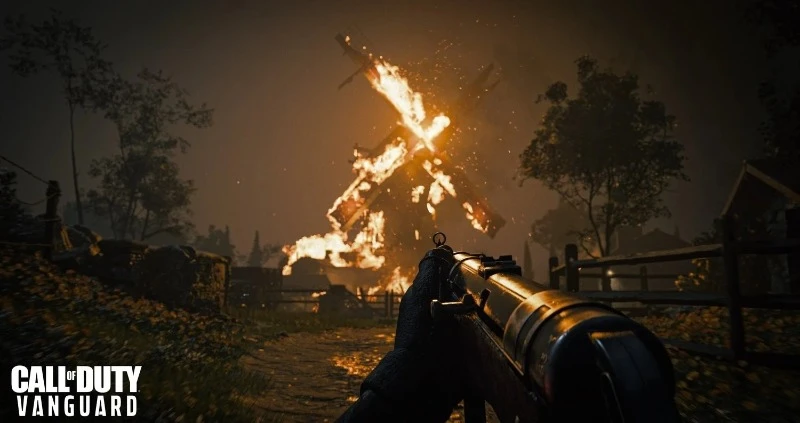
One video, which has received 24 million views, shows a man throwing explosives at a tank.This episode was taken from a video of an airsoft match and uploaded to YouTube in January. Another fake stream, viewed by 2.3 million users, consists of computer graphics of missile strikes and it has been circulating on the Internet since last year.
Old videos Videos of old conflicts are usually used when a new one breaks out.For example, according to the Ukrainian BBC, a video of one fierce battle between Russian and Ukrainian troops near an apartment building received 7.7 million views. In fact, this footage was recorded in 2014 in the Chechen capital of Grozny during a deadly jihadist attack.In order to hide the real source, fake breaking news labels were placed on the original footage. Some users post videos of military operations in 2014, which are easily confused with current ones, as well as footage of military exercises or parades in Russia or Ukraine.
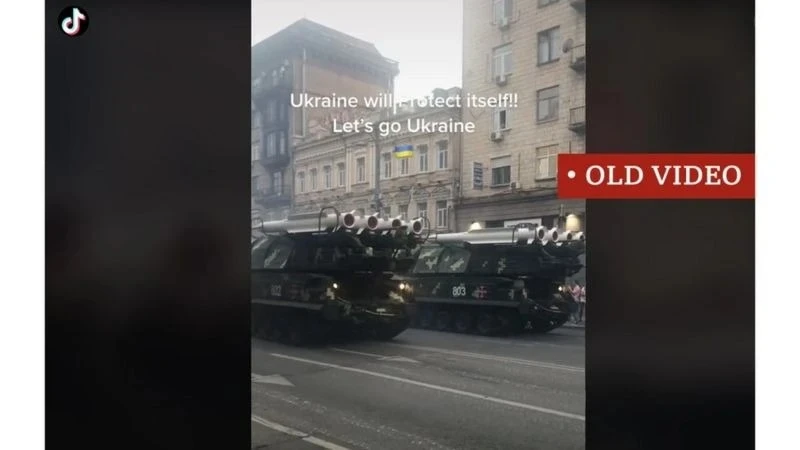
For example, a video of a convoy of Ukrainian tanks in the center of Kyiv was presented as if they were on their way to defend the capital from a Russian offensive.The clip received nine million views. In fact, it was filmed a few years ago during the military parade for the Independence Day of Ukraine.
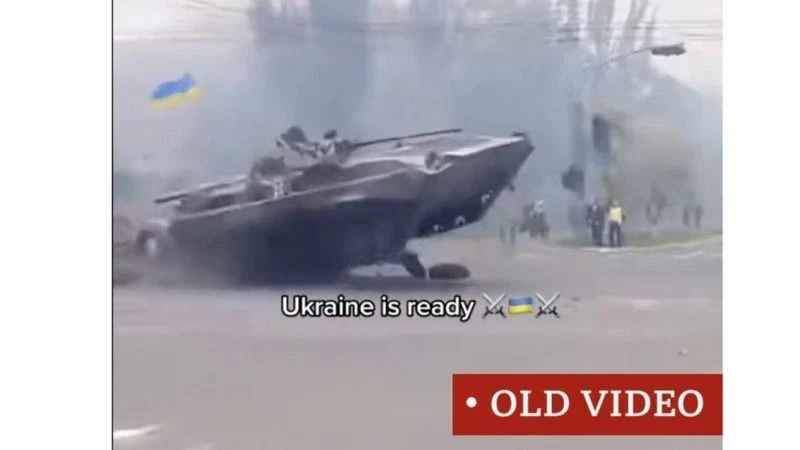
Another video of a tank with a Ukrainian flag racing through a residential area has been viewed four million times. In fact, it was filmed back in 2014.
How does TikTok work?
The platform works with independent fact-checkers, albeit on a smaller scale than Meta and its sister services Facebook and Instagram. However, if Facebook and Instagram mark fake content about Ukraine, such marking is rare in TikTok. Unlike some of its competitors, TikTok does not provide analytics and transparency tools for researchers and journalists.Independent fact-checkers have to constantly manually analyze huge volumes of content.
Another problem is the lack of a community of TikTok users who are willing to expose fakes on the platform. In September researchers at NewsGuard, a company that monitors misinformation on social media, found that nearly 1 in 5 videos automatically suggested by TikTok contained misinformation.
The researchers searched for content on the hottest topics and then evaluated the videos for false data. According to Stephen Brill, founder of NewsGuard, the amount of misinformation - and the ease with which it can be found - is particularly worrying given TikTok's popularity among young people.
Brill questioned whether ByteDance, the Chinese company that owns TikTok, is doing enough to stop misinformation, or whether it is deliberately allowing misinformation to spread as a way to sow confusion in Ukraine and other European democracies.
TikTok issued a statement in response to the NewsGuard report, saying that its community guidelines prohibit harmful misinformation and that the company works to promote authoritative content.
In early March TikTok explained that it temporarily stopped functioning in Russia due to the same fake law regarding the activities of the Russian military.
TikTok has been operating in the Russian Federation in a limited format since March.This is due to the reluctance of the social network to enter into a conflict with the Russian authorities and violate the so-called "fake law", which prohibits calling the war in Ukraine anything other than "special operation" and telling the truth about what is happening there. TikTok blocks all content with hashtags like #war, #Zelenskyi, etc. for users from the Russian Federation.However, as Western analysts found out, the social network continues to promote new propagandists' content inside the country.
Mostly users with Russian IP addresses can see it. The non-profit organization Tracking Exposed said that TikTok was engaged in "shady promotion" of content to Russians, despite the platform's policy published on June 30. "Shady promotion" is a new term coined by researchers that refers to the algorithmic promotion of content that is allegedly banned on the platform.
Some Russian verified accounts continue to post new content despite the bans.Russian accounts have been repeatedly recommended on the "For You" page.In particular, the researchers recorded the shady promotion of the "Kinopoisk" account - a Russian database related to films. When accessing Kinopoisk account from Russia, Russian users receive videos uploaded after the ban.
There is also the content of Yandex Music, Premier, Letoile Official, Hice Bank, Prequelapp, Vprokru, Beautybomb.rus, Aviasales and Yota.ru accounts in TikTok. The Russians can also see international political content on TikTok. However, according to ByteDance, in the first quarter of 2022, the platform removed more than 102 million videos that violated its rules.
Only a small percentage of them violated TikTok's rules specifically against disinformation.AIN.UA published an interview with a Ukrainian woman who works as a TikTok moderator.The woman told about work, war and prohibited content.She admits that the most terrifying part of her work is the Russian videos with captured and killed Ukrainian soldiers. "We're all used to watch a lot of content with dead Russians, but on the other hand, they post stuff like this even with more brutality, so it's always painful to see." - the woman added.According to her, the topic of war is controlled in detail.
Almost every statement, fake and propaganda is actively defended by the management.The rules of the social network adhere to the official position of Ukraine and internationally recognized statements.For example, Russian accusations that there are Nazis in Ukraine, and Ukraine is governed from the outside, also fall under the category of "dangerous disinformation." It is also worth giving an example of the discussion on the account of Russian distinguishing marks and the popularization of the "Z" sign, which is already perceived by many as a modern Russian swastika.During the 8 months of the full-scale Russian invasion, many negotiations took place and it was recognized that the depiction of the symbol to glorify the Russian military or threaten Ukraine or Ukrainians on social media falls under the category of "threat of violence". Ukrainian soldiers' TikTok Soldiers of the Armed Forces of Ukraine also use TikTok.
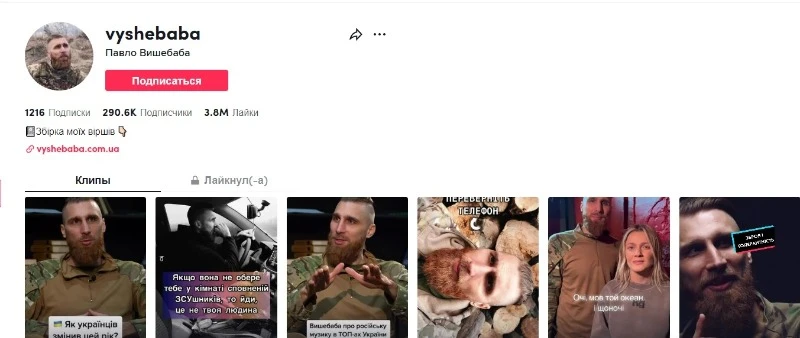
So, during the full-scale war, the social network became another way to talk about the events at the front. For example, Pavlo Vyshebaba from Kramatorsk has been defending the country at the front since the first days of the war.In his peaceful life he was a musician, public activist and coordinator of animal protection actions.In his videos he humorously demonstrates soldiers' life, reads his own poems and motivates others to speak the Ukrainian language.
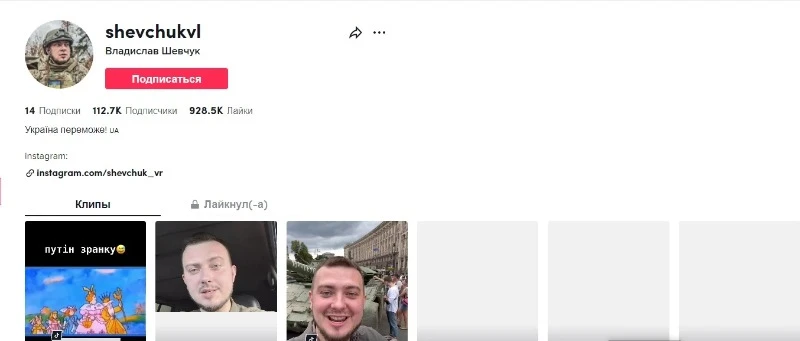
Military Vladyslav Shevchuk does not talk much about how he and his comrades are doing now. However, his TikTok videos motivate to win in a different way.Vladyslav mostly publishes short patriotic speeches.
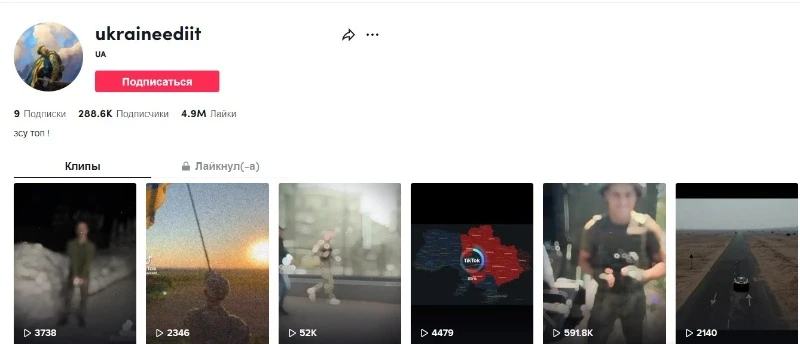
Ukraineediit is one of the collective accounts of Ukrainian soldiers, in which the TikTok series "the Armed Forces of Ukraine presents" was created.
Each video is a cut of funny episodes from the life of Ukrainian soldiers who continue to smile under any circumstances.
Author: Anton Malinovskyi