

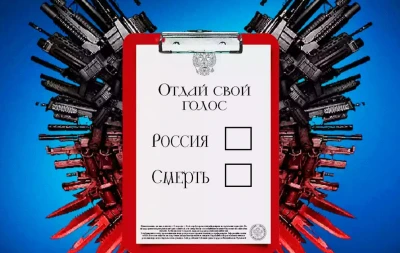
From September 23 to 27 "referendums" on joining the russian federation were held in Ukrainian settlements occupied by russia.Fake votes were held in Luhansk, Donetsk, Zaporizhzhia and Kherson regions.
Despite the fact that none of these regions was ever fully controlled by russia, the question of joining the regions to the russian federation within their administrative boundaries was raised. On the evening of September 27 the russian mass media started spreading information about the results of the " declaration of will".More than 90% "in favor" were reported. In the so-called DPR generally 99.23% were generally announced.
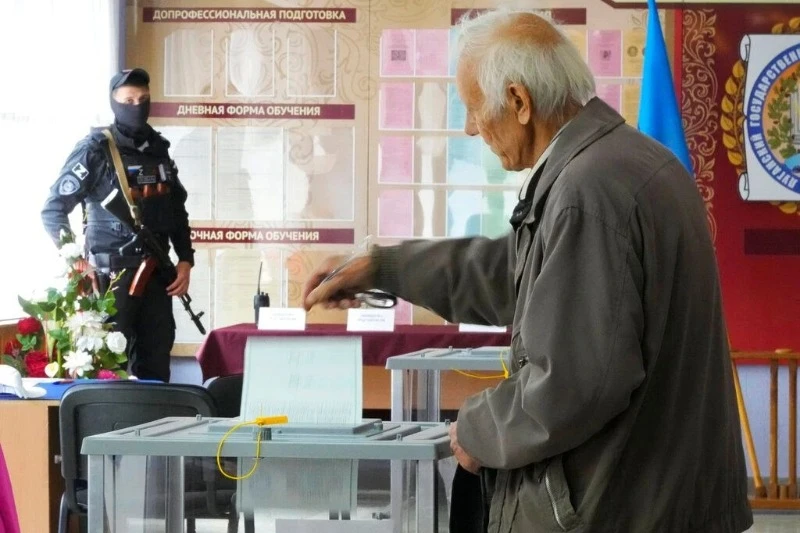
It turned out that the number of those who allegedly "voted" at pseudo-referendums did not match the actual number of residents who lived in these regions at that time. The occupiers counted the "votes" even of those who left the territories. And those who refused to vote or voted against were threatened with deportation and mobilization.
Read how they actually "voted" in the occupied territories in our article.
Luhanshchyna
Luhansk oblast allegedly has 98.42% of those willing to join russia.
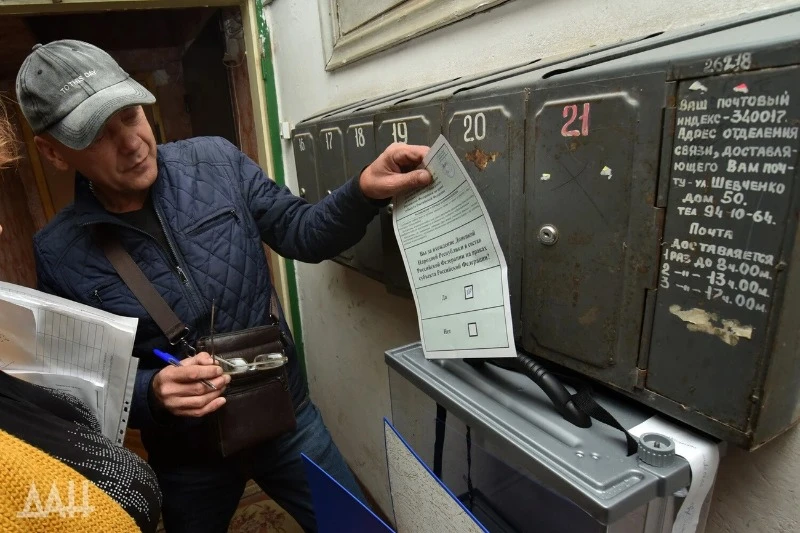
According to the head of Luhansk oblast Serhiy Hayday, armed soldiers only carried out door to door inspection and forced to "vote" in the yards on the first day of the so-called of the referendum , only then men with machine guns inspected the places of mass gathering of people. In particular, markets — documents were checked and people were directed to the "polling station".
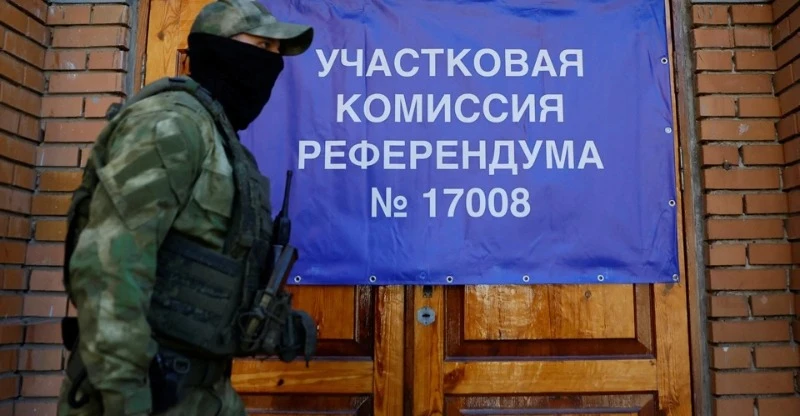
Moreover, employees of the so-called "polling stations" forced residents to "vote" even without passports in Luhansk oblast. The occupiers threatened to fire those who refused.
Haiday also added that one of the goals of the pseudo-referendums in the occupied territories is to check the presence of men in the house and forcely mobilize them to the enemy army.
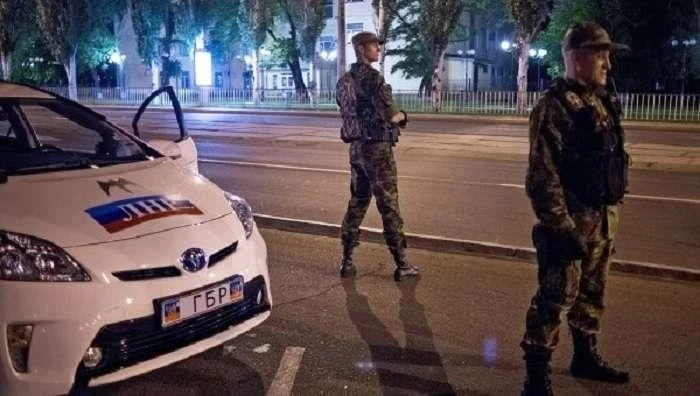
According to Haidat, the role of observers was performed by only five persons from Belarus and Cameroon who had international accreditation. The number of those who voted was not announced anywhere - only the percentage was presented.In Lysychansk, Sievierodonetsk, and Rubizhne, which were almost completely destroyed, the occupiers claimed a turnout of 41% to 46%, but at the same time they did not have lists of the population that remained in these cities.
According to his calculations, approximately 10,000 locals remained in Sievierodonetsk as of the end of September.Before the full-scale invasion, about 110,000 people lived in the city.
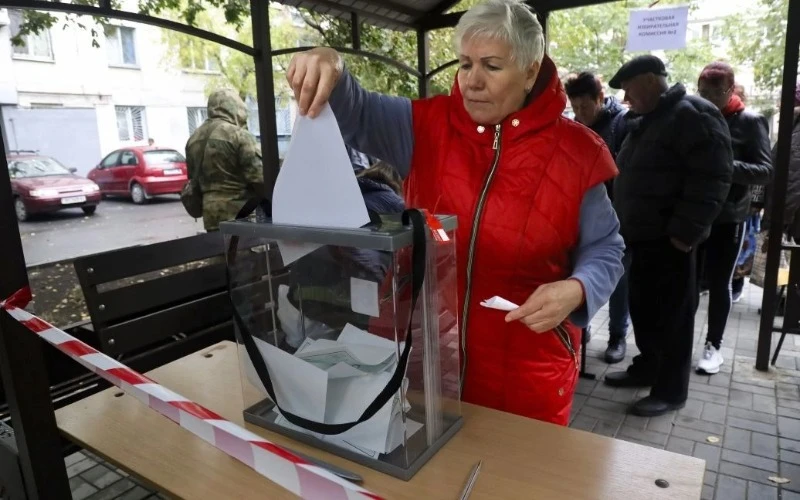
The highest "turnout" at the pseudo-referendum was recorded in occupied Alchevsk, where, according to the occupation authorities, a high probability of shelling existed and the polling stations worked exclusively in bomb shelters. There was no door-to-door inslection with machines in the city, those who voted were gathered for a TV picture, and the turnout was drawn based on average indicators.
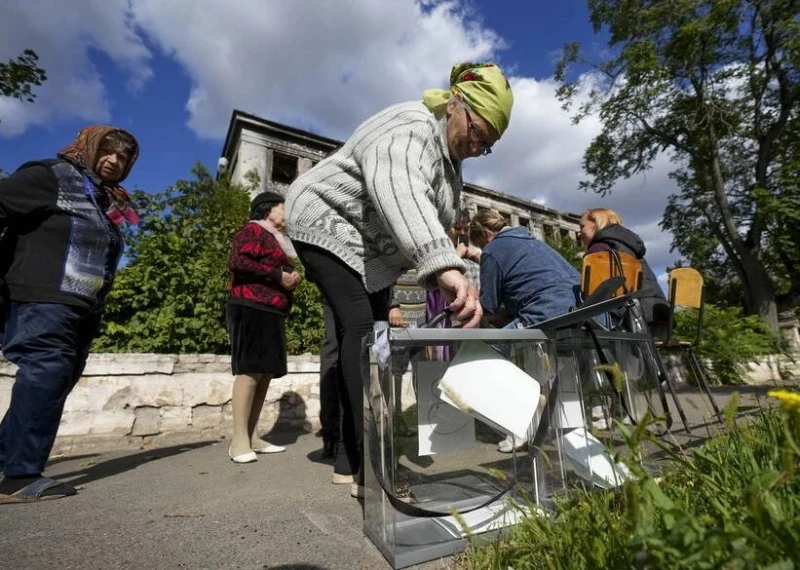
Instead, the Russian occupation authorities reported that hundreds of polling stations had been opened.In some cities, there were ballot boxes were simply on the streets.People filled out documents and voted on curbs, in tents, and on buses.According to eyewitnesses, there were always military personnel nearby.
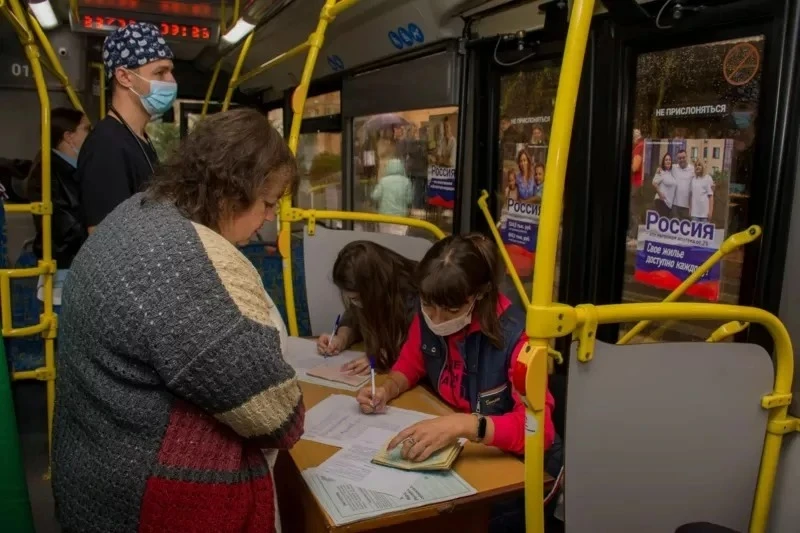
In addition, residents of most of the occupied settlements were restricted from leaving them during the "referendum". In Starobilsk, people were forbidden to leave the city until September 27.
Commenting on the course of the pseudo-referendum, Serhiy Hayday emphasized:"This so-called "voting" is a farce from start to finish: people are left with no choice.Members of the "commissions" come to apartments accompanied by armed persons. Those who voted "against" are not sure what will happen to them next".
Unreal figures were also made public for the occupied Luhansk oblast.The so-called Central Election Commission of the pseudo-republic announced that 1 million 765 thousand 993 voters took part in the referendum. However, as of January 1, according to the occupiers' State Statistics Service, the population of the pseudo-republic was only 1.4 million. It means that more people voted in the pseudo-referendum than live there.
Even if we take into account that after January 1, the Russians occupied more territories of Luhansk region, only the Russian Federation itself accepted several hundred thousand refugees from the occupation before the full-scale attack.
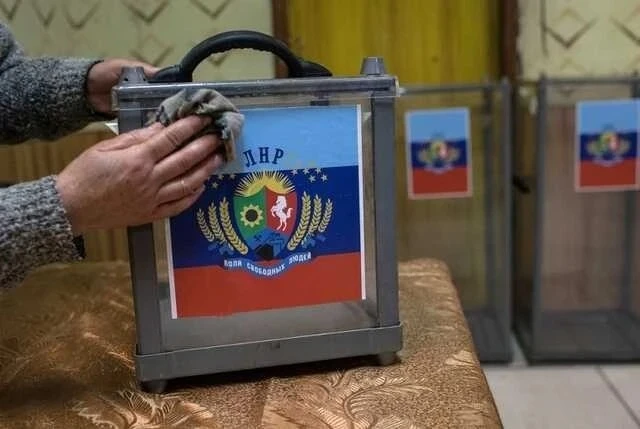
Donetsk oblast
Head of Donetsk regional military administration Pavlo Kyrylenko said that the absolute majority of people left the territories occupied by the Russians after February 24 before the start of the pseudo-referendum, most part of them moved to the free regions of Ukraine. However, the occupation authorities reported that the turnout for the "referendums" in the Donetsk oblast had exceeded 86%.
According to the leader of the so-called "DPR" of Denys Pushylin, 2 million 116 thousand 800 voters of the occupied regions of Donetsk voted "for joining the Russian Federation". It means that totally 2 million 133 thousand 226 people
live in the so-called "DPR".
However, according to the occupiers, on the eve of the referendum, there were only 1.5 million people on the voter lists.In addition, even according to the Militants' State Statistics Service, as of March 1, the total population of the so-called "DPR" amounted to no more than 2.2 million.
The so-called vote in Mariupol, which was almost destroyed by the Russians, looks especially cynical.Olena, one of the members of "polling station" gave a comment to the Reuters publication and stated that the locals wereallegedly looking for any opportunity "to vote".And the sick or bedridden, they say, call and ask to come to their home.
However,the adviser to the mayor of Mariupol, Petro Andryushchenko, shared other information.According to him, on September 23, "voting" in the city began under the muzzles of machine guns. People were stopped on the street and forced to "vote".
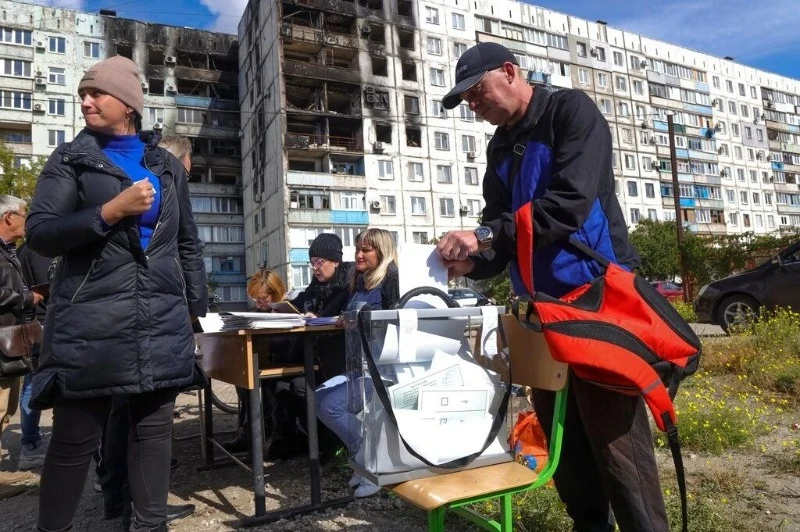
According to the adviser, several tents were set up in places of concentration of people, but even here there were few people willing to vote.
At that time, there were at most 90,000 people who could vote in Mariupol.No more than 10% of these people are openly pro-Russian. All others are those who were caught on the street.
And on the last day of the referendum, in order to create a picture of massiveness, the occupiers included in the "voting" Russians who worked in the city on construction.
One of the most flagrant violations of human rights norms took place in occupied Olenivka.There, the Russians forced captured Ukrainian soldiers to "vote" and recorded this process on video.
In order to make the turnout higher, even minor children from 13 to 17 years of age were involved in the fake referendum, and single residents of residential buildings were forced to vote for their absent neighbors in Donetsk oblast.
Behavioral statistics should also be taken into account: almost 100% of citizens do not attend any official elections in Ukraine.The maximum turnout in the regions of Donbas was at the presidential elections in 2010: then 70% of voters voted in Donetsk and Luhansk regions.The average turnout is even lower.According to the State Statistics Service of Ukraine, as of February 1, 2022, there were slightly more than 4 million permanent residents in Donetsk region, and half as many lived in Luhansk region.if we calculate the turnout even at the maximum level of 70%, it turns out that 1.5 million people in Donetsk region and 980 thousand in Luhansk region could actually vote.This figure does not include hundreds of thousands of evacuees, as well as thousands killed. Then it turns out that compared to the total population in the regions, the number of voters, close to the real one, could reach 37.5% in Donetsk oblast and 49% in Luhansk oblast.And this is even less than half of those who could vote, that is, the number of votes "for" is probably even less.Such a referendum should be declared invalid even according to Russian legislation.
Kherson oblast
On the first day of the so-called referendum the occupation authorities tried to create a festive atmosphere in some "polling stations". People were given tricolors and Russian folk songs were played from acoustic speakers.Someone started dancing and became a "star" of the propaganda media.
At a polling station Volodymyr Saldo, the gauleiter of Kherson oblasr appointed by Russia, promised the residents of Kherson that "now they will feel safety under the protection of Russia".Realizing that there would be no commotion at the polling stations, "members of the commissions" accompanied by armed soldiers began going from house to house, urging people to "vote." Human rights activists from the organization "Media Initiative for Human Rights" got information that the occupiers broke the door and broke into the apartment where a resident of Kherson lived.
When a man named Viktor was asked to "vote", he answered: "I was born in Ukraine, I will die here! I have nothing to lose!"In the ballot, he wrote that he does not support the referendum initiative.After that, according to human rights defenders, the military made a mess in his apartment.Going around houses with weapons is not the only way to involve locals in "voting".As the Kherson publication MOST reported, members of the "election commissions" called on passers-by to "vote" and did not always even check passports.
"Members of the commissions" peeked behind the screens for "voting", spied on what mark a person had placed.In addition, representatives of the "commission" deliberately invited people from other regions to the "voting" in Kherson.The editor-in-chief of the MOST publication, Serhiy Nikitenko, noted that the turnout reported by the occupiers in Kherson oblast does not correspond to reality, and therefore, this is another factor that calls into question the legitimacy of the "voting".
"International law stipulates that even when such a referendum on self-determination takes place, at least half of the population must participate in it.The occupation authorities report that 50% voted. But 50% from whom? From the list of voters? However, it doesn't exist, because they write these people down in blanks.Just everyone who came. That is, they cannot say that 50% voted, because it is not known how this number was calculated," Nikitenko noted.
In addition, according to the "Zhovta Strichka" resistance movement,the Russians offered residents of the village Velyka Oleksandrivka 6,000 thousand hryvnias for participating in the pseudo-referendum.In Skadovsk, according to the mayor of the city Oleksandr Yakovlev, people went to the precinct reluctantly, mainly those who work in the occupying utility companies and organizations had to join voting. They heard threats - you won't vote, you won't work and had to go to the polling stations.
According to deputy Iryna Lepen, a sixth of the population remained in Nova Kakhovka at the time of the pseudo-referendum.She added that the occupiers had access to the archives.The occupiers could not use the community's electronic voter register, but they could take the voter register from 2020 from the city archive. At the end of the first day, the so-called "election commission" created by the occupiers announced the turnout - 15.31%.On the fourth day, more than 63% were talked about.
According to the information of the first deputy head of the regional council, Yuriy Sobolevskyi, during the "elections" "door to door inspection" were used for voting, polling stations were set in the markets and in the courtyards of houses.The occupiers used all their imagination to show how the residents of Kherson oblast want to join Russia.They explained their actions by the desire to protect voters.
A bus with machine gunners was seen in the villages of the Kakhovska raion. According to the Kherson mass media, a bus drove into the village, machine gunners went from house to house with lists and forced them to vote.There os also Information that residents of Bilozerka, Askania-Nova, and Velika Kopan voted under the muzzles of machine guns.
On the evening of September 27, propagandists reported that in Kherson oblast, all the votes had already been counted and a figure of 87.05% of those who allegedly "voted" for joining the Russian Federation had been drawn.
However, the real number of residents of the occupied Kherson oblast did not correspond to the number declared by the Russian Federation.At the pseudo-referendum, according to the occupiers, 497,000 people "voted" in favor, and more than 68,000 people voted against it.However, more than 550,000 residents could not physically attend the pseudo-referendum, because most of the residents of the region were evacuated.
As of January 1, 2022, the total number of residents of Kherson oblast was 1 million.According to the head of the Kherson Regional Military Administration, Yaroslav Yanushevich, in the first 6 months after the beginning of the Russian large-scale invasion, more than half of the residents of the entire region left.So, at the time of the "elections", the population of Kherson oblast hardly exceeded 500,000, which contradicts the Russian data on turnout and "voting" results.
Zaporizhzhia oblast
On September 27, after the end of the pseudo-referendums, the Russian mass media reported that more than 93% of residents "voted" in the pseudo-referendum in Zaporizhizhia oblast.In total, the Russians included more than 541,000 residents of Zaporizhzhia oblast in the voter lists, of which about 430,000 residents allegedly "voted in the affirmative".
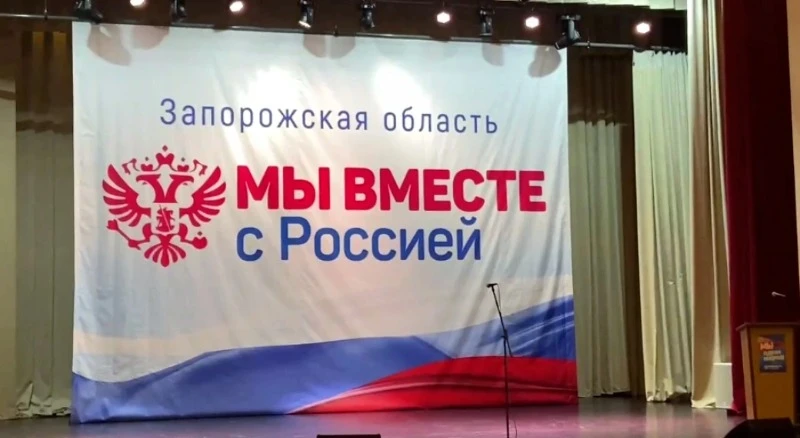
This information was denied by the mayor of Melitopol Ivan Fedorov.According to him, only 0.5% of residents of the region voted in the pseudo-referendum.People were threatened with deportation and one person was forced to vote for several at once.In addition, Fedorov reported that in Melitopol people were forced to vote instead of dead relatives.
Also, the head of the Zaporizhzhia Regional Military Administration, Oleksandr Starukh, noted that so many people could not "vote" physically, because now only 25% of the entire population of the region, which is about 400 thousand inhabitants, lives in the temporarily occupied Zaporizhzhia.Moreover, on the eve of the pseudo-referendum, the Russians drove buses with people from the temporarily occupied Crimea to Melitopol and Berdyansk.
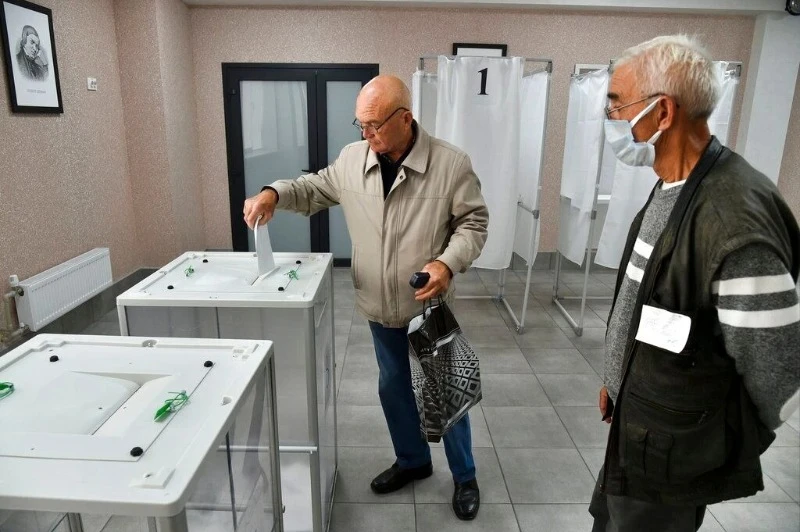
According to the Main Directorate of Intelligence, residents of the temporarily occupied Energodar were also forced to vote in pseudo-referendums as they received threats regarding mobilization.
In some cities of the oblast the Russians tried to create the appearance of "voter" turnout.In Berdyansk people together with the Russian military repeatedly carried out "door to door" inspection and looked for those who had previously refused to "vote".
However, according to the Berdyansk City Council, local residents refused to vote even after threats.Then the occupiers resorted to tricks and threatened to turn off the lights in order to force people who ignore this "referendum" to "vote".
Against the background of the pseudo-referendum, the occupiers began to distribute summonses.According to the General Staff, those residents of Zaporizhzhia and Kherson regions who previously received Russian citizenship got summonses to the military commissariat.
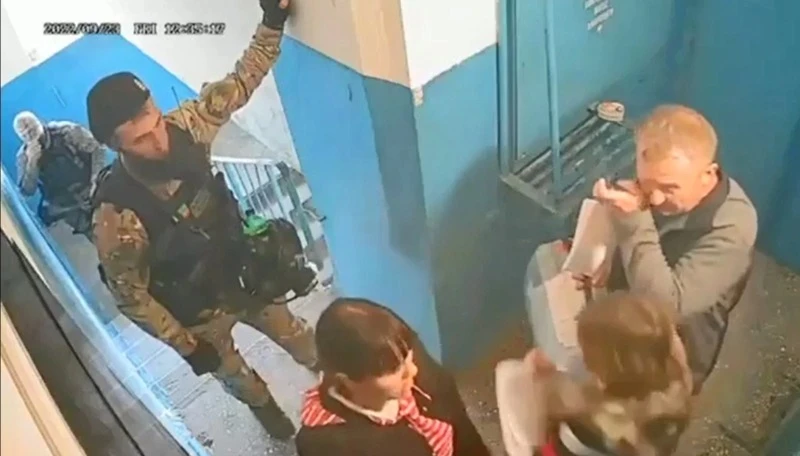
In some towns and villages, those people who refused to vote were immediately detained and taken to an unknown destination.According to Vladyslav Morok, director of the Department of Culture and Information Policy of Zaporizhia Regional Military Administration, he received this information from people who stayed in occupied Vasylivka.
Meanwhile, the SSU says it has identified more than 4,000 people whom the Russians planned to involve in organizing a pseudo-referendum in Zaporizhzhia.Among them are more than 1,000 Russian security forces from the Russian Guard, military police and the Russian Ministry of Emergency Situations.
What does the law say?
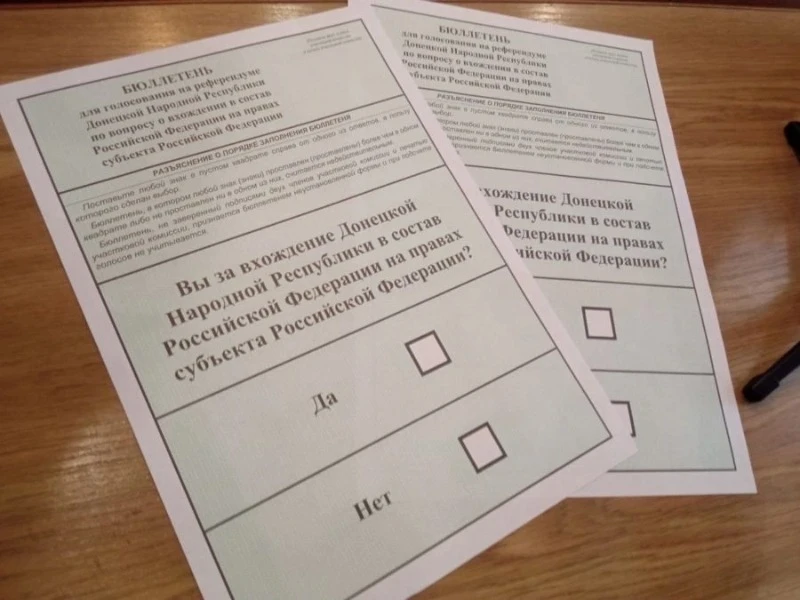
Referendums held by the Russian Federation are illegal.By annexing these regions, Russia violates Article 2 of the UN Charter, which prohibits threats to use force or its use against the territorial integrity of another state.The Ukrainian side does not recognize illegal referendums.The heads of foreign affairs of the G7 countries and the European Union also noted that they do not recognize pseudo-referendums and in response introduced the eighth package of sanctions. The EU adopts the eighth package of sanctions against Russia.
According to Ukrainian legislation, referendums cannot be held in certain regions.The change of the territory of Ukraine is considered only in the all-Ukrainian referendum, which is held at the request of at least 3 million citizens with the right to vote.Also, a mandatory condition for the all-Ukrainian referendum is to collect signatures in at least two-thirds of the regions and at least 100,000 in each region.
What do they say in Russia?
The so-called "referendums" were held not only in the occupied territory, but also in Russia itself.In particular, there were four polling stations in Yuzhno-Sakhalinsk for refugees from the Donetsk, Luhansk, Kherson and Zaporizhzhia oblasts.
Earlier in Moscow it was claimed that the referendum cannot be held under shelling.Moscow also says that voting in Zaporizhzhia oblast without controlling Zaporizhzhia makes no sense, that a large part of local residents left the occupied territories, that willpower will only come after the "operation" or "full stabilization" is complete.
In April a bunch of demands were put forward to the occupied territories in the State Duma:
“ It is necessary to restore capable government, social services, develop new education programs for children who have been brainwashed for eight years, start restoring infrastructure, housing, social facilities, and only after that referendums can be announced.”
All these problems are still relevant, but someone somewhere changed their mind and Russian propaganda ignored their own words, but distanced themselves from the "referendums".
For example, the "authorities" of the occupied part of Zaporizhzhia - Yevhen Balytskyi - claimed that he had talked with the residents of the oblast and personally made the decision to hold a "referendum".
The occupation telegram "Hlavnoe v Hechycheske" said that the "authorities of Kherson" supported the idea of the "authorities of Zaporozhizhiа" regarding the "referendum" on one day.
Collaborators insisted that the survey would be "fair, honest and legal" and emphasized that: "The return of the Zaporizhzhia land to Russia will be strictly in accordance with Russian legislation."
The first and so far the main argument for being with Russia is not to be with Ukraine.If you believe the Russian mass media and Telegram channels, our state takes revenge on the occupied territories, like a "wife to a husband who left her".Texts about the "referendum" were often accompanied by lies about terrorism, Nazism and shelling of peaceful people who simply want to be with Russia, and tied almost all high-profile news events to the "vote".
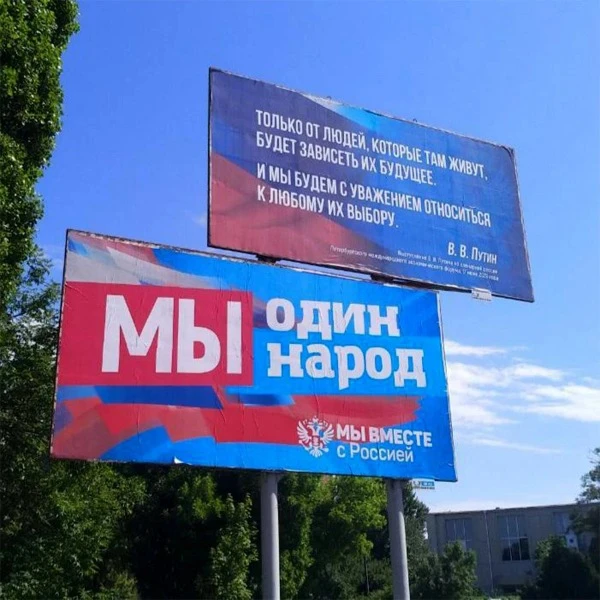
For example, the evacuation is an attempt to reduce the turnout in the referendum, and the HIMARS strikes are an attempt to disrupt the preparations for the poll.
In addition, Russians often like to accuse Ukraine of "eight years of "Western-legalized Bandera terror."Ukraine allegedly forced children to start physical education lessons with Nazi salutes, forbid customers to communicate in Russian in stores, and damaged economic ties with Crimea.The most popular reasons for joining Russia in materials about the "referendum" can be divided into three categories.
The first block is historical. The occupiers never get tired of repeating that the south of Ukraine is "originally Russian lands" that were mastered by "great people".
The second block is economic. Collaborators promise, for example, that "Lands of Kherson oblast will finally stop being sold in pieces."Or vm.ru claim, that there are more opportunities for development with Russia than with Europe and the USA, because it "can accept a significant amount of agricultural products".In another text, vm.ru promises the occupied Ukrainians the possibility of lending, which they already had before the invasion of Russia.
The third block is moral. If the collaborators are to be believed, then integration with Russia will bring people a "normal Russian order", by which for some reason they mean the rule of law.
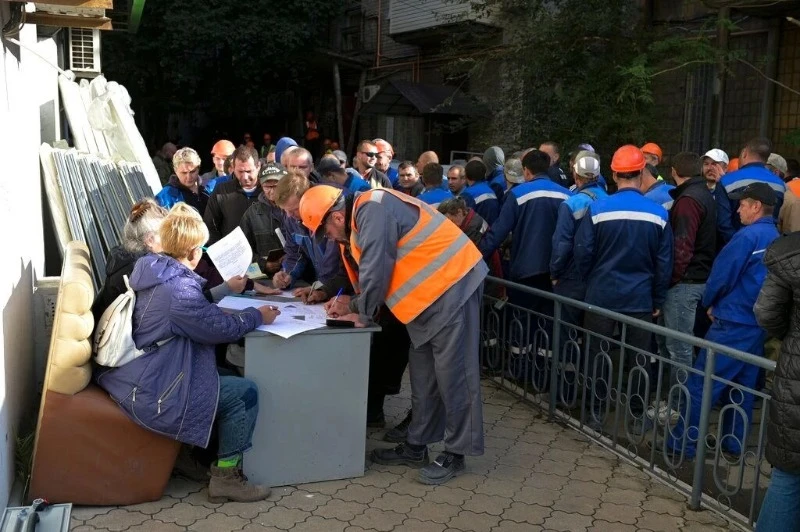
Also, in this context, the argument about the well-being of the occupied Ukrainians is often heard: "We will finally become a full-fledged territory that will belong to the state, and not to some residents."
Author: Anton Malinovskyi