

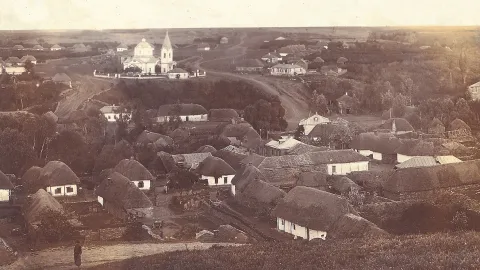
Since the late 16th century, the Ukrainian population began mass settlement in Luhansk region. Over the next two centuries, stable settlements already existed in the region, which administratively belonged either to the Izyum and the Ostrogozhsk regiments of Sloboda Ukraine or to the Kalmiuska Palanka of the Zaporizhian Sich.
Historian Oleksandr Naboka told the TRIBUN everything he knows about pottery in Makarovy Yar.
Oleksandr Naboka - Head of the Department of History of the Luhansk National University named after T. Shevchenko, author of many publications on the history of the Luhansk Region, author of books, scripts of theatrical productions, publicist and organizer of performances.

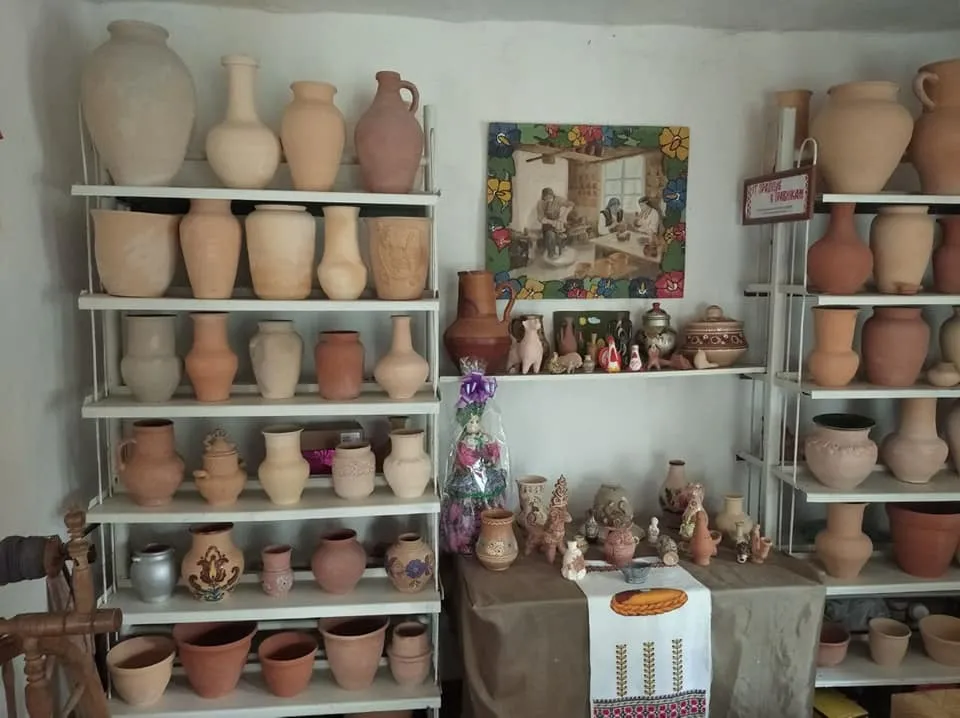
Migrants brought with them technological and economic traditions from their former native places, which they successfully spread to neighboring Russian or Don settlements. Among the most noticeable sectors was the production of white clay ceramic ware, according to the technologies noted by leading specialists from the Institute of Archaeology of the National Academy of Sciences of Ukraine, Lesia Chmil and Liudmyla Myronenko, prevalent in central Ukraine since the medieval times. This production later spread to all districts of Luhansk region (our own archaeological surveys attest to its presence in Starobilsk, Bilovodsk, and Milovshchyna) and actively developed until the second half of the 20th century.
However, the main center for the development of white clay pottery industry was the village of Makariv Yar, located in the south of Luhansk region. The local pottery production will be discussed in this article.
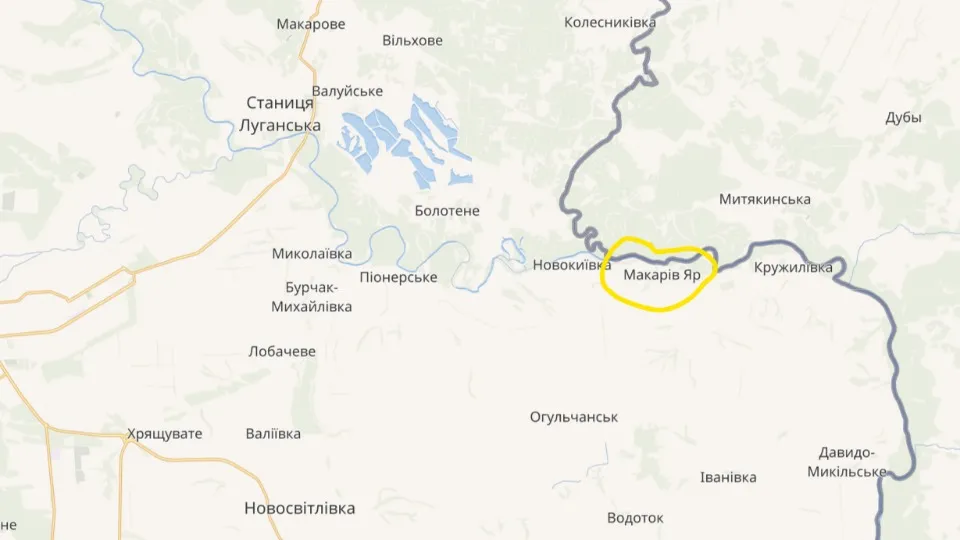
Ukrainian History of Makariv Yar
It is precisely unknown when the village was founded. A memorial sign at its outskirts suggests that the settlement was founded as early as 1654. However, Wikipedia dates its beginning to the 1660s, while the historian of the Orthodox Church life of the 19th century in Katerynoslav Governorate, Feodosiy Makarevsky, wrote about the year 1738. Most likely, all these dates are true - they simply record different stages of the village's development. It is likely that in the 1650s-1660s, there existed a guard post of Zaporizhian Cossacks who monitored possible movements of Tatar raids and the actions of rival Don Cossacks, whose settlement was forming on the opposite bank of the Siverskyi Donets River.
Furthermore, according to the assertion of the leading researcher of the local pottery industry, Lyudmyla Ovcharenko, there was a Zaporizhian Cossack outpost at the intersection of routes between various Cossack enclaves on the site of the modern village as early as the beginning of the 17th century.
"In the year 1600, the so-called 'secret Cossack path' from the Zaporizhian Sich to the Don River and the Kahalnyk River passed through this area. By 1650, Zaporizhian outposts were already stationed near the village of Sukhodil, and from 1660 onwards, a part of this outpost, by the order of Kosh, was relocated to the outskirts of the future village of Makariv Yar, from where provisions were delivered to the Bakhmut Fortress," noted the researcher Ms. Ovcharenko.
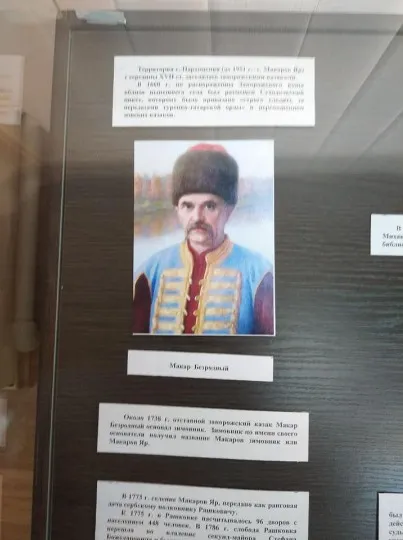
In the 1730s, these lands, which administratively belonged to the Kalmiuska Palanka of the Zaporizhian Sich and served as a "corner of the common land," were transferred to retired Cossack Makar Bezrodnyi (the village was named after him). He established a large Cossack settlement here, called a 'wintering place,' consisting of dugouts. These dugouts were also known by another name - 'bordyuhi'.
Initially, agriculture predominated in the village, but later, as noted by Lyudmyla Ovcharenko, technologies for creating white clay ceramics appeared. They either spread from the Kharkiv Governorate in the 19th century or even earlier, from the mid-18th century, introduced by "passing people" or "lytvini".
In the 1770s, amid the Russian imperial government's liquidation of the Zaporizhian Sich, Makariv Yar was taken from the Cossacks and given to Serbian settlers who fought on the side of Russia in the war against Turkey. This likely occurred in 1773 when the village was granted as a "ranking estate" to Colonel Avram Rashkovich of the Bahmut Hussar Regiment. In his honor, the settlement was renamed Rashkivka. In the 1780s, it was briefly called "Arkhanhelske," after the Archangel Michael, whose temple was built in the village. In the early 19th century, the village was again called Makariv Yar.
Later, it changed owners several times. Possibly, in the late 19th to early 20th centuries, it belonged to the Illienko family, who established a horse stud farm here before the 1917 revolution.
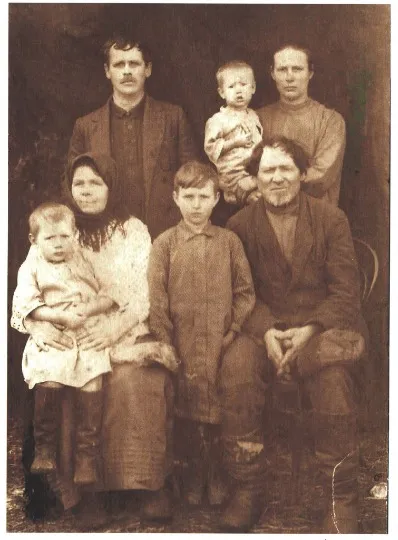
“During this period, my ancestors also arrived in Makariv Yar. In the first half of the 19th century, they were serfs with the surname "Soroki" in the Cherkasy region, but later they were exchanged for hunting dogs and thus ended up in the village under the surname "Soroki-Sobaki." Lyudmyla Ovcharenko noted that during this period, the practice of resettling peasants, especially from the Katerynoslav Governorate, was quite common.
According to family legend, at the beginning of the 20th century, the patriarchs of the family were Ivan Dudak, known for his extraordinary strength. Once, in a fit of anger, he killed a stubborn bull with a punch. Family legends also mention that he once engaged in a duel with the famous circus strongman Ivan Piddubny.
Despite this, Ivan was engaged in a peaceful craft - pottery. His son, Fedir, who inherited his stature, married a petite woman named Maria. His small stature and weight led him to become a jockey at the Illienko horse stud farm.
Interestingly, during this period, local "khokhly" or "poor folks" were in a state of chronic hostility with the proud Don Cossacks ("rich folks") from the Russian side of the Siversky Donets River. There was mutual distrust between them, despite the proximity of their settlements, with no permanent contacts or intermarriages.
During the revolution of 1917, the village gained fame through the hero-martyr of the Soviet pantheon, Oleksandr Parkhomenko, known locally as "Bosyak Shurka" (he was teased with this nickname in the village), after whom the village was renamed during Soviet times. Later, he was killed by Nestor Makhno, who fought against Soviet power here in the fall of 1920. Fedir Dudak served as Parkhomenko's adjutant. For this, Makhnovists (Makhno followers) several times took his mother out to be shot. Once, he himself narrowly escaped their swords when he visited home. During this time, there was another Makhnovist raid on the settlement. Fedir was saved by being lowered into a deep well that his relatives were just digging.
Pottery Craft in Makariv Yar
Neither wars nor revolutions hindered the potters of Makariv Yar from carrying on with their craft. For some time, serfdom posed a hindrance to the development of the industry. Potteries were forced to combine pottery production with labor obligations to the landowners. However, after the "great reforms" in the second half of the 19th century, their craft became fully commercialized. Local masters finally detached themselves from agriculture and focused solely on their craft. According to the renowned Ukrainian archaeologist Natalia Kaplun, local craftsmen preserved Ukrainian traditions in the production of white clay ceramic ware.
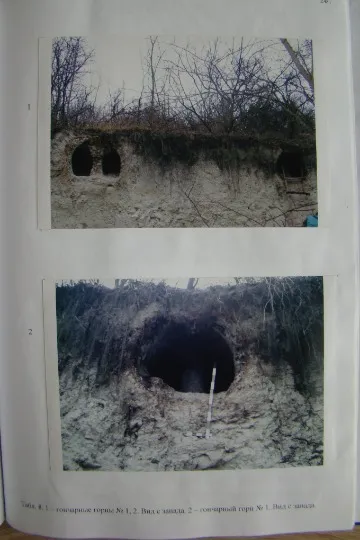
Ancient objects associated with the pottery industry of Makariv Yar have repeatedly been the subject of archaeological research by employees of the Luhansk Regional Local Lore Museum and the Institute of Archaeology of the National Academy of Sciences of Ukraine. In November 2008, archaeological excavations were conducted here under the scientific supervision of Oksana Stadnik. The focus of the research was on openings in chalk outcrops near the village, in an area historically known as "Bylosove Spring." It turned out that these were the remains of pottery kilns - specially dug channels used for firing finished ceramic ware.
Interestingly, the number of professional potters in the village remained unchanged for a long time. Lyudmyla Ovcharenko noted that at the time of serfdom's abolition in the village, there were 239 people. In 1885, their numbers remained the same. Based on the memories of a local master, the researcher described that on the eve of large-scale firing of pottery (which was done simultaneously for all masters), there were 40-50 incoming merchants in the village who immediately bought up the finished ceramic ware.
Quite often, craftsmen did not trust the "middlemen" and tried to sell the pots themselves. Lyudmyla Ovcharenko provides the following statistics on production and sales: "Each year, artisans produced up to 100,000 pots. Half of the produced pottery was mainly sold in Makariv Yar (39.5%, for 2.44 kopecks each) or in its vicinity (26.5%), while the rest was sold in Luhansk (17.8%, for 3.3 kopecks each) and in Rostov-on-Don (16.4%, for 3.9 kopecks each)."
However, the commercialization of the industry had certain negative consequences. Local landowners, from whose lands potters extracted clay, now demanded payment for it. In particular, the local landlord Bulatsev charged 1 ruble and 50 kopecks for a cart of raw material. Illienko, on the other hand, only charged 35 kopecks, but the clay was of much poorer quality.
The industry actively developed until the second half of the 20th century. The popularity of metal and faience ware during this period made the artisanal production of pottery products non-competitive, and it gradually declined. For us, descendants, this history is important because it shows that the grassroots commercial and production initiative of Ukrainians allowed them to create important cultural enclaves in Luhansk oblast without the "care" of the Russian Empire, which local enthusiasts of the "Russian world" often like to talk about today.