

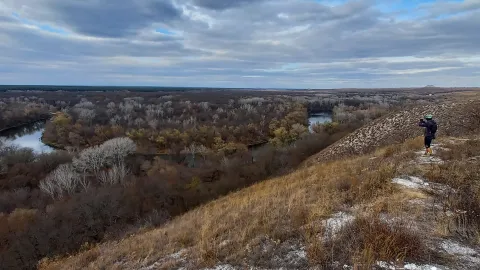
A unique archaeological site - the summer residence of the Tatar khans of the Golden Horde was discovered in 2012 by archaeologists and local historians in the territory of Popasna district. Found ancient coins and items indicate that Khan Abdullah from the Batu dynasty stayed here. We should be proud of our unique region, which has attracted people who made history for millennia.
In the article for the TRIBUN publication, historian Valerii Nehmatov explored the summer residence of the Tatar khans and explained why we should remember history.

Incredible discovery
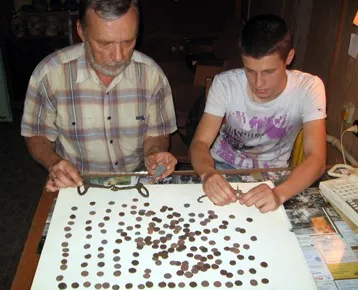
On May 12, 2012, Oleksii Britiuk announced in his Livejournal that archaeologists from the Eastern Ukrainian National University named after V. Dal made an incredible discovery - they found a Golden Horde khan's residence in Luhansk region, dating back to the mid-14th century. The finds were not in one treasury, but scattered over an area equivalent to three to four stadiums. The total number of coins found here exceeded 3500. Even a pair of coins provides a good reference point for excavating a specific household artifact. Moreover, 99% of the found copper coins have clear frames of 1361-1370, the years of Khan Abdullah's rule.
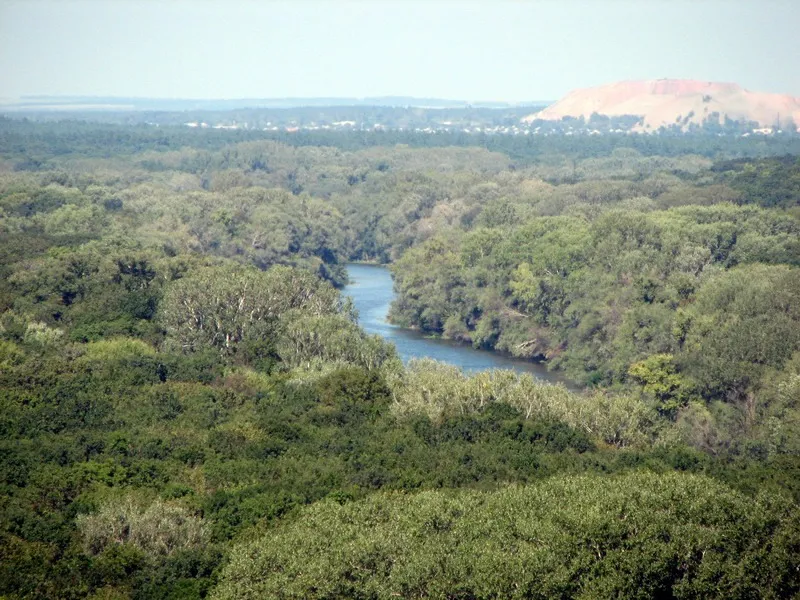
The locality where the capital of the khans was found
The period of the Golden Horde in the history of Luhansk region is poorly studied. The main sources for analyzing this period are archaeological finds. "In Wikipedia, this period is characterized by a single sentence: 'After the Tatar invasion and the formation of the Golden Horde, the territory of the region remained sparsely populated for a long time.' Due to the lack of information, the purpose of the survey is to analyze economic processes and military events in our region based on new finds of Golden Horde coins in the area of the village of Shypilivka in Popasna district of Luhansk region," Natalia Makarova noted in the collection "Donbas at its origins."
Since the 1960s, when irrigation canals were laid through the fields, water has been washing ancient coins and household items from the soil. Later, this attracted "black archaeologists" who constantly searched for valuable artifacts with metal detectors. In 2013, the press service of the Security Service of Ukraine in Luhansk region reported: "An attempt to smuggle abroad numismatic items that are of historical and cultural value has been prevented in Luhansk region. According to the forensic art examination, two coins from the seized collection belong to the cultural treasures of Ukraine. These are Tatar coins from the 13th and 14th centuries, minted during the reign of Khans Abdullah and Menhli Hirei."
Serhii Sanzharov, the discoverer of the Horde capital
The summer Horde capital near the village of Shypilivka was discovered by Serhii Sanzharov, the scientific director of the Archaeological Center of the Eastern Ukrainian National University "Heritage," thus introducing the concept of the "Summer residence of the Golden Horde khans of the 14th century" into scientific circulation. Once, the parents of one of his students approached Serhii Sanzharov: they knew a place where the local population constantly finds Tatar coins. The archaeologist remembered that a few years earlier, excavations were carried out at a burial mound near Lysychansk, and coins were also found there.
The Kalmyk Steppe
The Khan's residence was found near Pryvillya. The Izium Road passed there. The roads, known as "sakmas" in Tatar, were usually large watersheds, not cut by ravines. The Tatars easily moved along these sakmas, both as a horde and with captives. The Izium Road went from Crimea, along the western bank of the Kalmyk River, crossed to the source of the Lugan, and then here. Ancient Russian chronicles of the 15th-16th centuries record that this road crossed to the Borova River (where it flows into the Siverskyi Donets, there is a crossing), then up and into Muscovy. By the way, not far from the modern city of Severodonetsk, where the Kalmyk Steppe also passed, there was a Tatar ford across the Siverskyi Donets River. This was the farthest point of the Ukrainian frontier-border of the 16th-17th centuries. Today, there is the Pavlograd Bridge, which connects the cities of Lysychansk (right bank) and Severodonetsk (left bank). In the middle is the Siverskyi Donets River. According to the calculations of local historians, this is precisely where the Borova ford of the Kalmyk Steppe was located.
The Khan's residence, what it represented
It existed in two variants: one - winter, for example, Batu's saray, and the other - summer. The summer residence of the Khan did not have a permanent location; his court roamed in the steppe, changing its location. The presence of two variants of the ruler's residence was characteristic not only of the khans of the Horde. For example, the princes of Kyiv, in addition to Kyiv, had Vyshhorod and Belhorod as their summer residences.
The residence occupied a large territory. In its center was the Khan's yurt, next to which stood his banner. In the first circle were the tents of the Khan's wives. The next circle included the yurts of military leaders and the Khan's relatives. Then came the outer guard, craftsmen, and traders. Where the Khan lived, coins were minted. Therefore, if we find a certain number of coins, it confirms the existence of a Khan's residence in that place.
Khan's coins
Silver coins of the Golden Horde in the 14th century were called "dang," and copper ones - "pulo." One dang consisted of 16 pulo. Silver dangs indicated the name of the ulus where the coin was minted, the date of issue, and on the other side - the name of the Khan and wishes. The design of pulo was more diverse: adorned with drawings and ornaments . Pulo had a Muslim appearance, using the Arabic alphabet. Some researchers believe that the depiction of animals on the coins of the Golden Horde is related to the Muslim calendar. Most coins depict a dog, panther, or horse. Later, when Islam became the official religion, depicting animals was prohibited. On the coins found near Shypilivka, it was written "Khan Abdullah, may his reign endure," and the place of minting was indicated. Some of the coins found depict a beast: a panther or a snow leopard. And the snow leopard was the totem of the Abdullah clan.
Who was Khan Abdullah
Wikipedia indicates that he was a Khan of the Golden Horde during the Great Disorder. He was of the Chinggisid lineage. He did not play a significant role, acting as a nominal ruler. Interestingly, in 1362, Abdullah's army was defeated by the Grand Duke of Lithuania and Ruthenia, Algirdas, on the Sinyu Vody (Sinyusi) River in the autumn of 1362, which led to the Ukrainian lands being freed from the Mongol yoke. Eventually, the Beklerbek Mamai, seeing the loss of support from the Golden Horde nobility, decided to replace Abdullah. He executed him, replacing him with Muhammad-Bulak Khan.
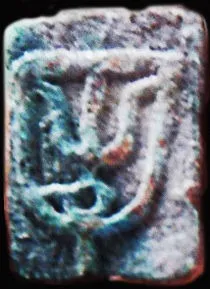
Interesting ornament on the found plate
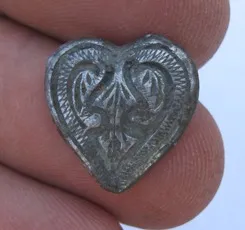
In addition to coins and other artifacts, historians are intrigued by the plate, or more precisely, the ornament on it. There are two interpretations of this ornament: the first - it depicts a tamga, the clan symbol of the Giray khans; the second - it depicts a variation of the trident. Time will establish the truth.
Why do we need this
Firstly, there is a geopolitical aspect. Russia has always tried to appropriate our history and culture, and continues to do so to this day. In particular, Moscow claims succession in the Golden Horde. Accordingly, the territory where the Golden Horde resided is considered Russian territory. We must defend our history and culture, always emphasizing their Ukrainian identity.
Secondly, there is a historical aspect. We currently have no analogues of such findings in Luhansk region. Further study of this site can change a lot in our history.
Thirdly, there is a tourist aspect. Luhansk region does not have many historical and cultural landmarks, so we should not miss the potential of the found summer Khan's residence. As an option, creating a historical park "Summer Capital of the Golden Horde" could be considered.