

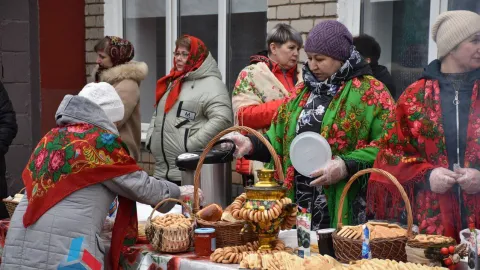
During the week from March 11 to 17, Maslenitsa was celebrated. It is also known as Cheese Week, Kolodiy, or Butter Week. This is a Ukrainian holiday with its own special ancient traditions. For example, making dumplings with cheese, performing rituals with a log and so on. However, Russian propaganda had an influence here as well. In the occupied territories of Luhansk and Donetsk regions, the occupying authorities introduced the celebration of "Maslenitsa" in the Russian manner.
Journalists from TRIBUN found out what the difference is between Masnytsa and Maslenitsa, which traditions are imposed by Russian culture and how it was celebrated this year in the occupied settlements of the Luhansk region.
Celebrating Masnytsia or Maslenitsa
Masnytsia is a Slavic holiday before Lent, during which winter was bid farewell and spring was welcomed. It lasted a week. In the past various rituals and festivities were held during these days, dumplings with cheese and butter were prepared.
Although this week has different names: Butter Week, Maslenitsa, Cheese Week, Kolodiy, its celebration and traditions differ from Russian "Maslenitsa".
It's not surprising that the Russian authorities in the occupied territories of Luhansk and Donetsk regions promote the celebration of Maslenitsa according to their traditions. After all, this is one way of shaping the "correct" cultural life of the regions — the destruction of Ukrainian traditions.
What is the difference between Masnytsia in Ukraine and Maslenitsa in Russia?
"I want to emphasize: Masnytsia in Ukraine and in our northern neighbor are two big differences. In Ukraine, Masnytsia is a holiday that symbolizes the coming of spring. Many people don't know this, but it wasn't celebrated very loudly, unlike the holiday of the Meeting of the Lord. Shortly before Masnytsia, Ukrainians even started singing spring songs if the first warm sun came out. But in Russia, during Maslenitsa, strong frosts still prevailed and folk festivities with strings of bagels around the neck, sledding, pancakes and skating on ice slides were rampant," - noted folklorist and cultural anthropologist Natalia Leshchenko for "Osvitoriya Media".
Ukrainian traditions destroyed by Russian propaganda during Maslenitsa
During Masnytsia various festivities and rituals took place every day. For example, on the first day, jellied pork feet were cooked, so this day was also called "pork foot day".
"In Slobozhanshchyna boys and girls after dinner on "pork foot day" gather the bones from the table, go out into the yard, stand under the attic and throw the bones at the gate. There is a belief that whoever doesn't throw a pork bone from the attic to the gate on this evening won't live until Easter," - notes Oleksa Voropai in the ethnographic sketch "Customs of our people".
Married women throughout the week performed a "log" ritual. They "birthed" and "buried" the log. They gathered in a house or tavern and had a celebration in a playful form.
"After getting drunk, the women disperse and the log remains in the tavern until the next day. So they drank until Saturday, because on Monday the log was born, on Tuesday it was baptized, on Wednesday it was christened, on Thursday the log dies, on Friday they bury it, and on Saturday - they cry. Obviously, no one cried for it, but they drank and celebrated just the same - both at its "birth" and its "death"," - it says in the ethnographic sketch.
But the events with the log did not end there. According to tradition, it was tied to unmarried boys. Married women went around the houses to the men who didn't dare to get married. If they promised to choose a girl this year, they didn't tie the log, but those who refused were tied to it by a rope to their leg. The log could also be tied by mothers who hadn't married off their sons or married off their daughters. All this was done with jokes and laughter.
On Thursday the hostesses organized festivities "so that the calves would frolic!". And "so that the butter wouldn't turn bitter!", they didn't spin in festive days.
Oleksa Voropai in the book "Customs of our people" described another custom that was observed on Friday during Maslenitsa.
"On Friday, there was a custom of treating the mother-in-law. In Ukraine, there used to be a custom to treat the mother-in-law twice a year - 'so that her throat wouldn't dry up'. Those who got married in the autumn but celebrated Christmas later would ceremoniously invite their mother-in-law to visit on the second day of Christmas - if she was kind or on the third day if she was angry. Those who got married during Christmas would deal with their mother-in-law on Friday during Maslenitsa. Other relatives were also invited along with the mother-in-law. While treating the guests the son-in-law would say: 'Drink, good people, to the brim, so that my mother-in-law's throat doesn't dry up!' (hinting at her quarrelsome nature)."
On the last day of the holiday -Forgiveness Sunday it was customary to ask for forgiveness three times from friends, relatives, and neighbors. They would say "Forgive me!", and in response three times - "God will forgive and I forgive too." By the way, this tradition has survived to this day.
After celebrating Maslenitsa, Ukrainians would say: "Maslenitsa, Maslenitsa, how little you had, - if only you had seven Sundays, and only one Lent!" And on Monday, the Great Lent would begin, during which a strict dietary regime was observed.
"The first day of Great Lent is called 'lean' Monday, because on this day the hostesses bake rye cakes - 'lean cakes'. Apart from these cakes, no other food is prepared and they eat only grated horseradish with beet kvass and radish," - writes the author in the ethnographic sketch.
Customs influenced by Russian culture
According to ancient Ukrainian traditions, dumplings were prepared for Maslenitsa, not pancakes. This was the main dish. However nowadays pancakes are mostly prepared. To find out what should be cooked on festive days, it is worth turning to Oleksa Voropai's research.
"The main dish for Maslenitsa is dumplings with cheese and sour cream, but buckwheat pancakes fried in butter or lard are also ritual food on these days in Ukraine. Such pancakes or something similar are also baked by other Slavic peoples. This custom has been observed since ancient times, as even in the Holy Scriptures, in the Slavic language, King David gave 'a millstone to the people'".
We are accustomed to burning the effigy of winter during Maslenitsa festivities, but according to Natalia Leshchenko such a ritual was not present among Ukrainians. This tradition is present in Russian culture.
"This tradition is Russian, they really burned Winter, while in Ukraine, it was already warm and snowless during Maslenitsa. In some regions of Ukraine, in spring, it was customary to burn Baba: garbage collected during the winter. Another option was to burn Kostrub. This is such a structure that was placed at intersections during snowy winters so that people could orient themselves where to go or drive if the road was covered with snow. Kostrub was highly respected - it served as a beacon. Men passing by Kostrub would stop to give it some tobacco: 'Here, light up, Uncle Kostrubatyi!' And when the snow melted and these Kostrubatyi uncles became unnecessary - they were burned. It could be either before Maslenitsa, during or after," - says the folklorist and cultural anthropologist.
Similar rituals are now taking place in the occupied territories of Luhansk and Donetsk oblasts, where Russia is trying to destroy Ukrainian culture.
How Maslenitsa was celebrated in occupied Luhansk
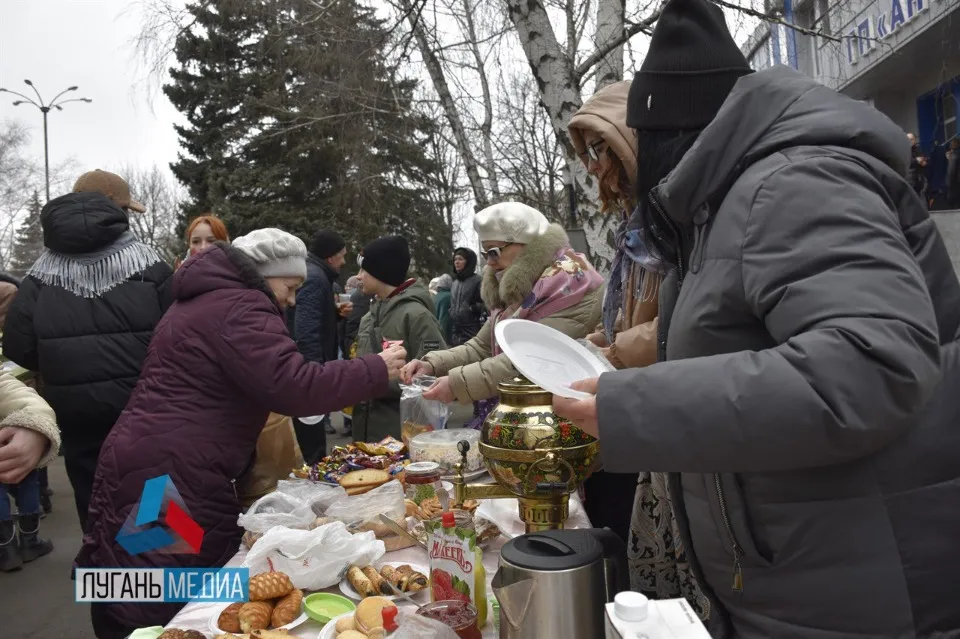
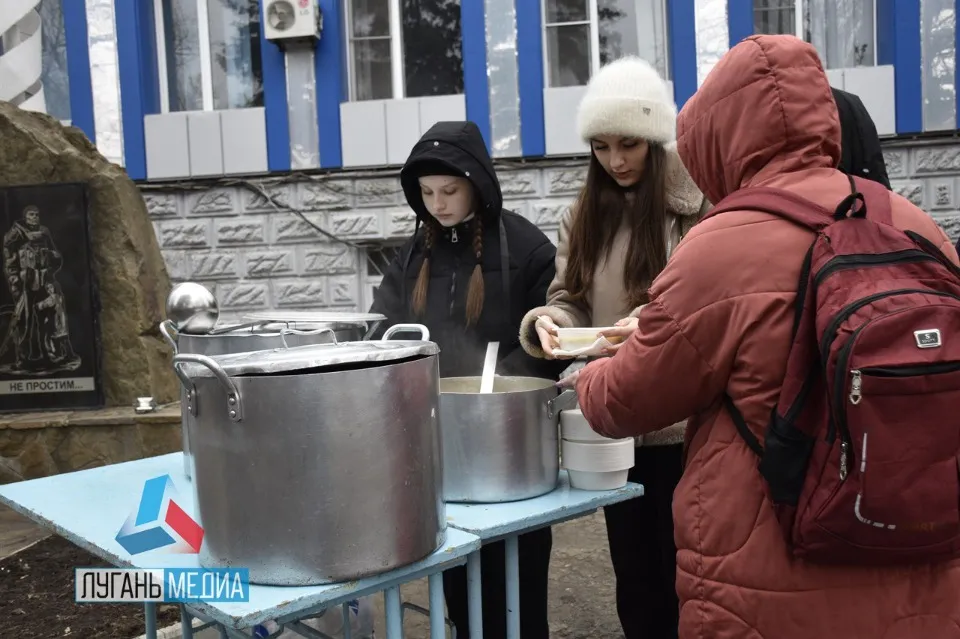
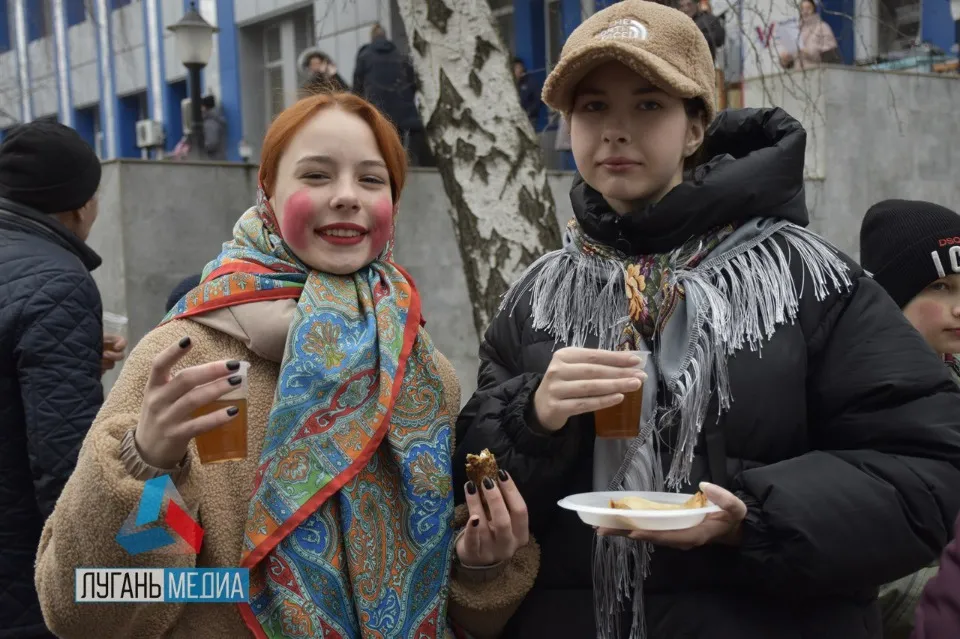
The occupation authorities prepared programs for celebrating "Maslenitsa". Festivities were held in each city according to Russian traditions. Competitions, music, round dances, "national" costumes, samovars, pancakes, bagels - all this could be observed in the main squares of settlements.
For example, in Sievierodonetsk, "Maslenitsa festivities" were held with the support of the "United Russia" party. The Russian occupation administration of Sievierodonetsk reports that "festive songs were heard, everyone danced in a circle, and residents had the opportunity to participate in competitions, competing for memorable prizes, as well as to treat themselves to the main symbol of Maslenitsa - golden, fragrant pancakes. And, of course, at the end of the event, according to ancient tradition, the effigy of Maslenitsa was burned: 'Burn, burn brighter, so that summer is hotter!'"
In the Russian style, Maslenitsa was celebrated in Perevalsk as well. In the photos taken by the occupying information agency "LuhanskInformCenter," the results of propaganda can be traced. Festive tables are adorned with samovars, bagels, and balloons with the inscription "Russia."
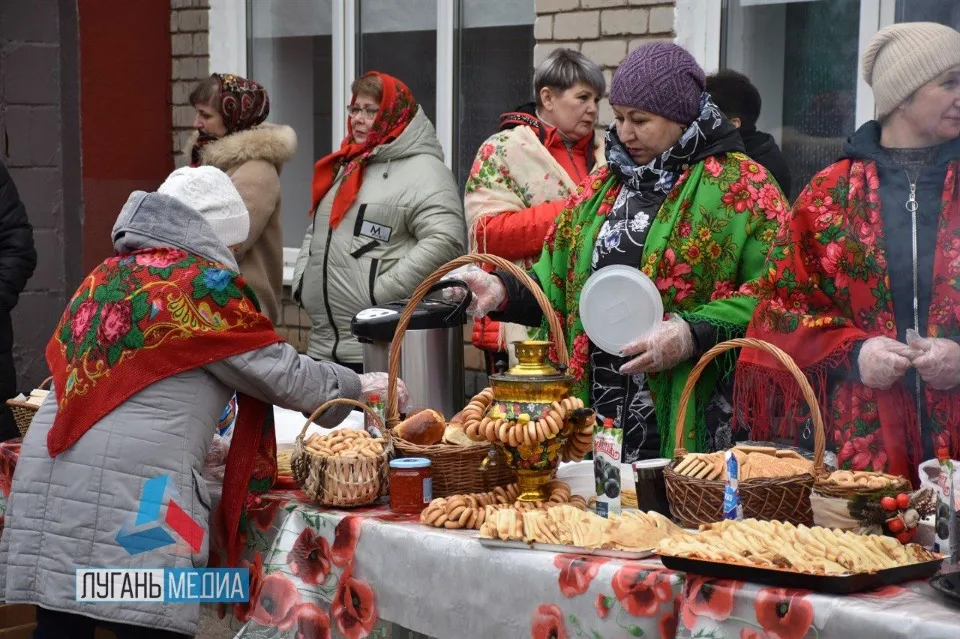
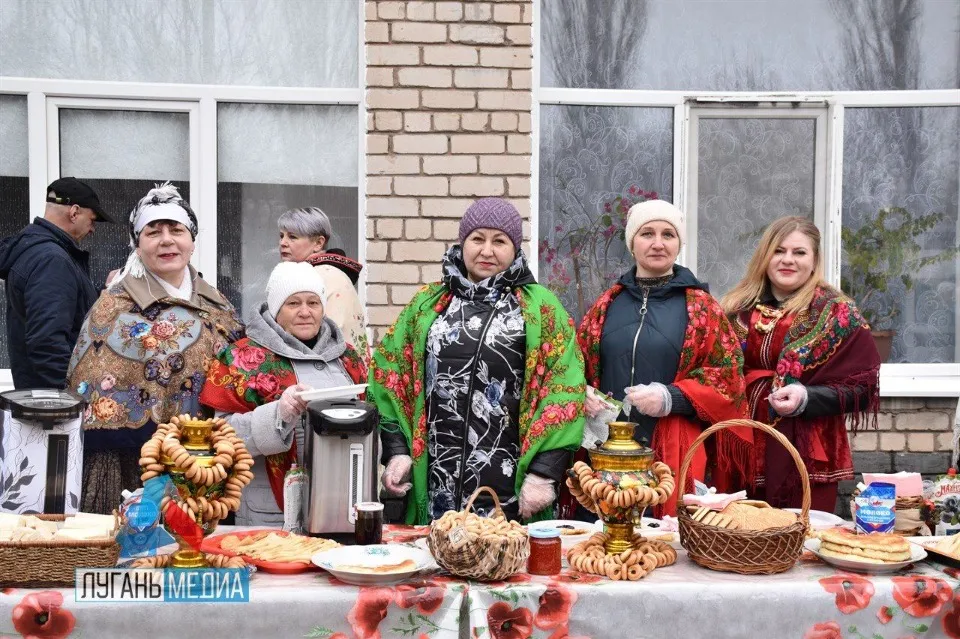
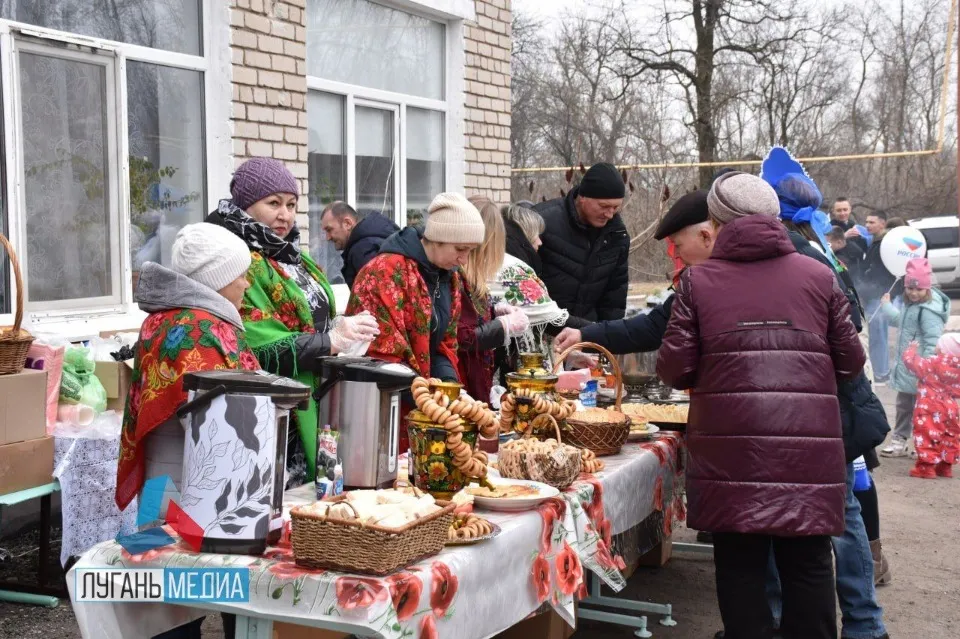
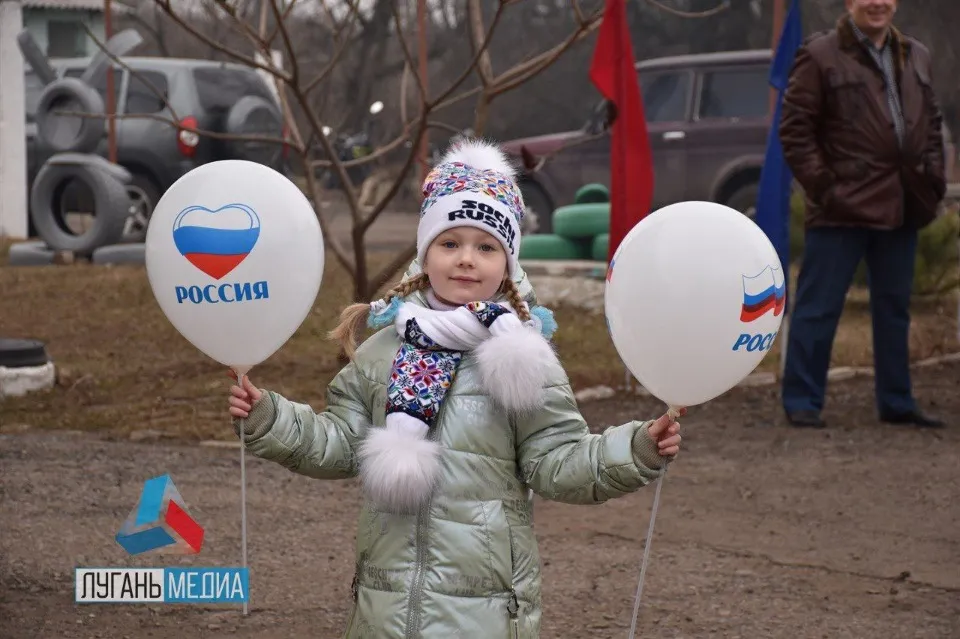
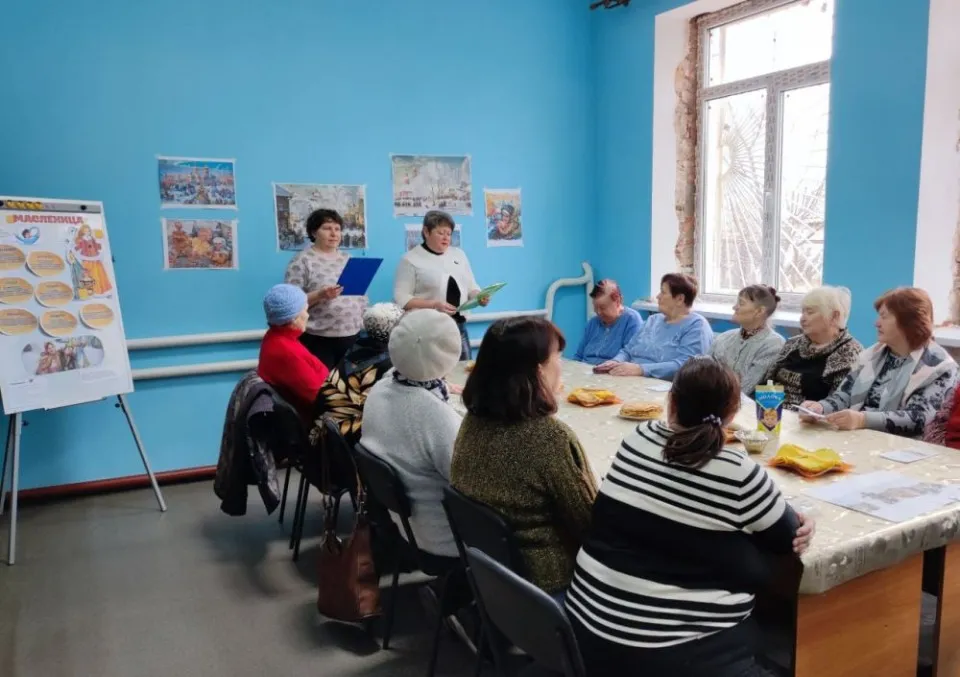
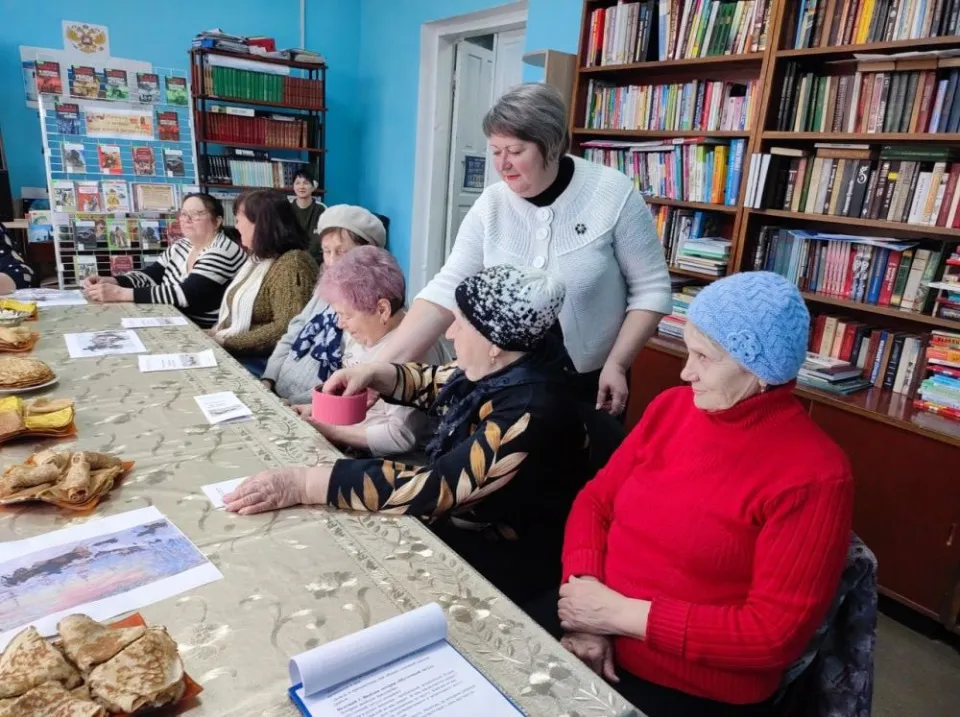
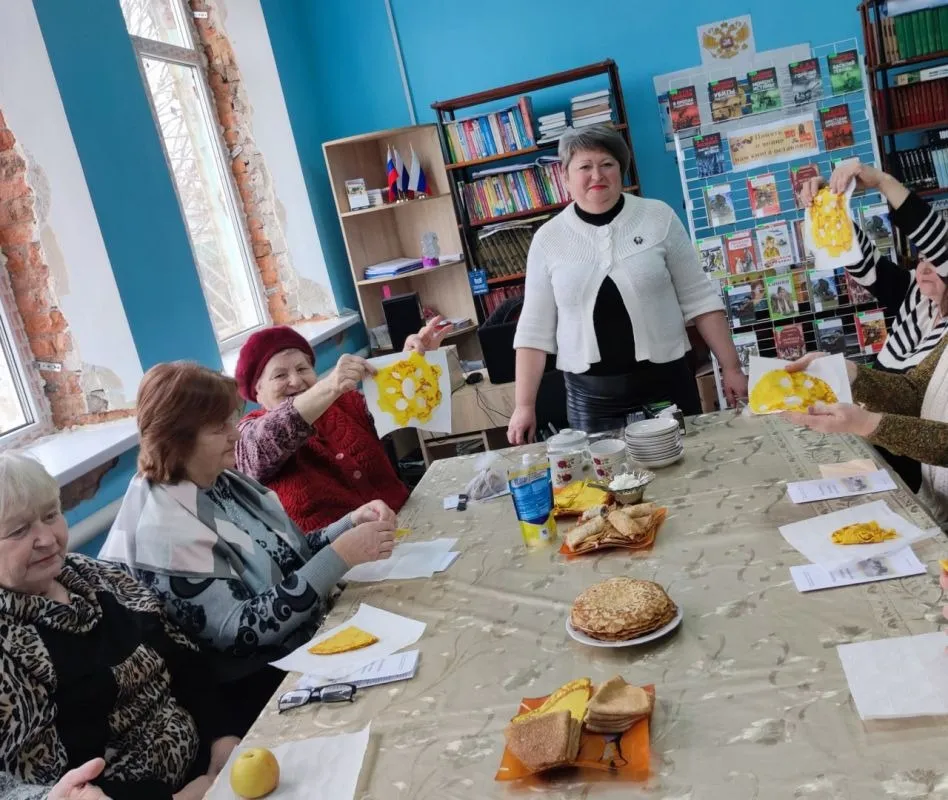
In Stanytsia-Luhanska, the "library-branch for children" together with employees of the "Department of Social and Domestic Adaptation of the Stanychno-Luhansk Complex Center for Social Services to the Population" organized "folklore gatherings 'Lady Maslenitsa' for the population."
"The participants of the event familiarized themselves with the traditions and signs associated with the holiday, as well as answered questions in the quiz and participated in the contest for the most delicate pancake," - reports the information portal "ZOV LNR".
This year from March 15 to 17 presidential elections were held in Russia. Therefore, great attention was paid to voting in the occupied Luhansk oblast. In order for local residents to vote, the occupiers created all the necessary conditions and even organized a theatrical performance on the occasion of "Maslenitsa" for voters. This took place in Kadiivka.
"In Stakhanov, a theatrical performance 'Celebrate, Wide Maslenitsa' was organized for voters. Delicious pancakes and bagels, fragrant tea from the samovar, Russian folk songs - a guarantee of good mood for the whole day," - notes "LuhanskInformCenter."
In Anthracite on the territory of one of the polling stations, festive tables were also prepared for the residents on the occasion of "Maslenitsa".
"The creative teams of the children's creativity center gave the residents of Anthracite a good mood by performing cheerful songs and dances. After all during these days our country celebrates the beloved holiday of Maslenitsa. People enjoyed traditional dishes, delicious pancakes, and sweets that everyone liked," - reports the hostile resource "LuhanMedia."
The author: Yuliia Kanzeba