
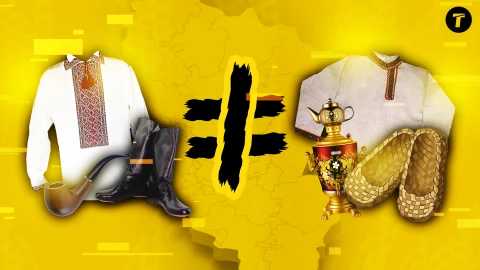
"We are saving the brotherly nation!", "Luhansk is a Russian city!", "All Ukrainian in Luhansk oblast is artificial" — Russians propagandists use these and other narratives, working with the subconscious of people in the currently occupied territories. But is it really so?
TRYBUN has found out what myths are being actively imposed on the occupied territories of Luhansk oblast and whether there is historical confirmation of that.
There is no spoiler!
We are (not) brothers
"This is some kind of obsessive cult," Liliia Ivanchenko from Luhansk says.
The woman returned to live in her native Luhansk at the end of 2016 after the divorce.
"I have something to compare with. I lived in Luhansk all my life, and and I am already 63 years old, just a moment! I don't count those almost two years when my family and I went to the territory free Ukraine. Then, due to family circumstances, I returned to Luhansk, buried parents and stayed here.Earlier, until 2014, you could hear somewhere in in the news or in conversations that we are of the same blood as the Russians, because we are the Slavic people.However, phrases about brotherhood are heard from everywhere" the woman shares her thoughts.
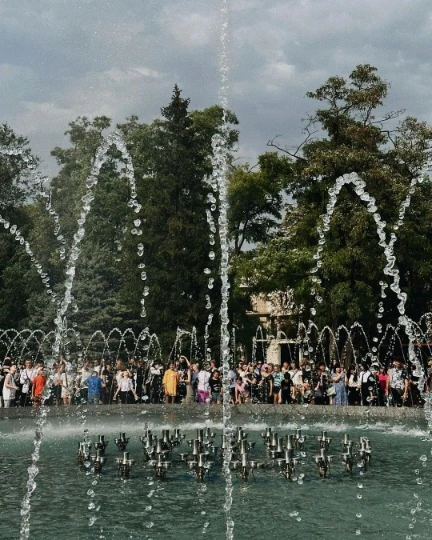
She emphasizes that she is already starting to get angry when she hears such statements.
"It's hard for me to accept it. Before, I didn't care, because I understood that it was really almost or not every family has some connection with Russia:someone went to work, started a family, or moved his loved ones from Russia.It is true that someone's grandparents came from there to work at a factory or a mine, as it was customary in the 1950s. However, now, when the peoples of the Caucasus or Asia come, position themselves as Russians and consider us brothers, it stresses me out."
Lilia claims that it is not about racism.
"I'm not against their language, traditions, skin color or religion, but it's a matter of mentality.Mentally, we are not brothers and sisters with them. They say that we are supposed to be we live well now, but until 2014 we lived even better... They constantly complain that they lack money, while giving birth to 2-3 children, receive apartments or military personnel buy apartments for their families. It confuses me that men who come to Luhansk to earn money, are insolent in relation to women, if you can say that. I would like mutual respect," the woman says.
The residents of the newly occupied territories also talk about the great number of migrants.
" I live in Lysychansk and my in-laws live in Sievierodonetsk. We don't feel it that much influx of foreigners, like them. Probably, it is connected with the fact that they come to Sievierodonetsk from everywhere to rebuild the city, but they forgot about our city... However, there are really many Uzbeks, Yakuts, Tajiks. Some came to work, some - to fight. In-laws say that children of Asian appearance are studying in schools, because those who settle, bring families and occupy good apartments," Valentina Bohun says
Her words are confirmed by a video from Sievierodonetsk, where Darima is from Buryatia names the city her home.
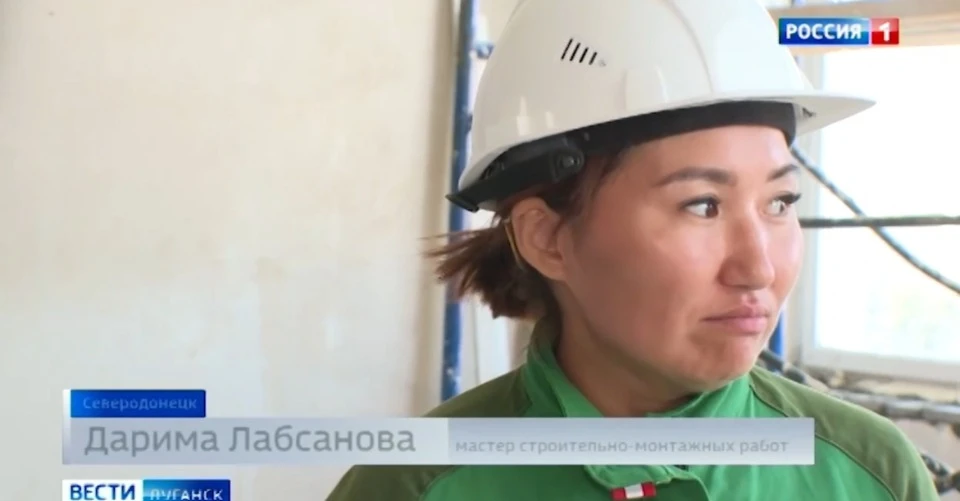
"Believe me, we ourselves are not happy. This video shocked me and my surroundings. This is our home
and now people who are strangers to us live here. It turns out that our past is worth nothing?", — the resident of Lysychansk adds.
Cossack roots
History confirms the fact that we are not brothers with the occupiers and those who settled in our homes.
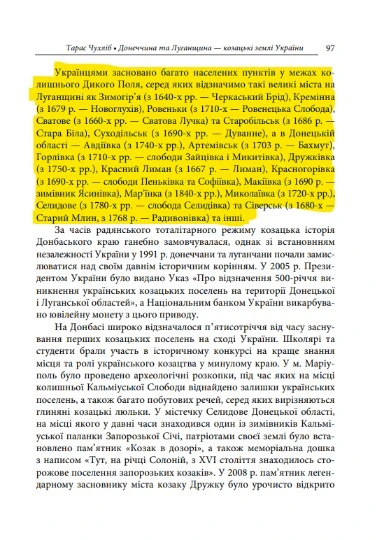
"More than half a thousand years ago, the Ukrainian Cossacks boldly paved the way to Kalmius, Mius, Seversky Dinets, Luhany and Don," Taras Chuhlib writes in his book "Donetsk and Luhansk - the Cossack lands of Ukraine (XVI-XVIII centuries)".
The writer also notes that now large cities and towns exist where they once were Cossack winterers.
"Today there is the million-strong mining city of Donetsk on the site of the Ukrainian Cossack settlements Oleksandrivka and Krutohorivka. It is the regional center of Ukrainian states; the former wintering grounds Kamiany Brid, Krasny Yar and Vergunka farm gave an impetus the emergence of the city of Luhansk as the modern center of Luhansk oblast; Cossack winterers Lysychy Bayrak gave its name to modern Lysychansk in Luhansk oblast."
In the text of the publication of the occupation authorities, it is said that Lysychansk is allegedly founded by Peter I when he was looking for a place for ore mining, and Luhansk- by Catherine II's decree about the establishment of the first iron foundry in the south of the then Russian Empire.
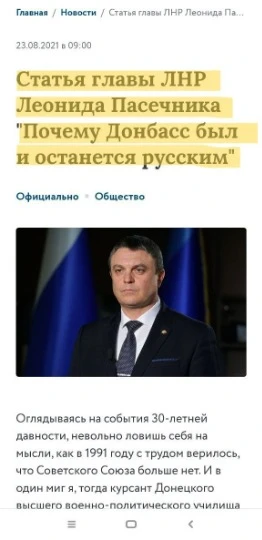
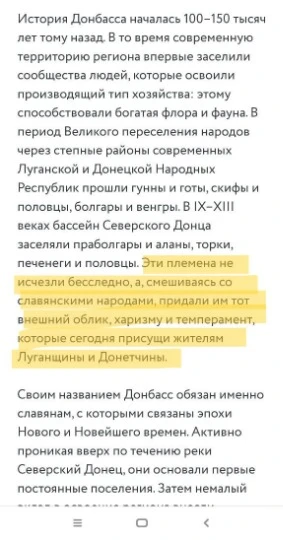
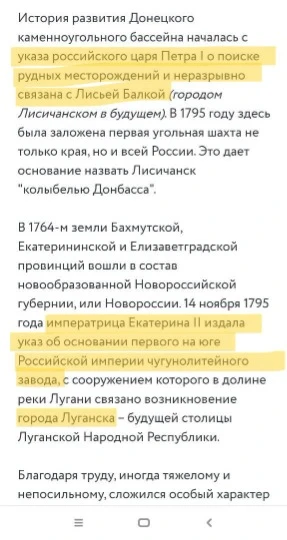
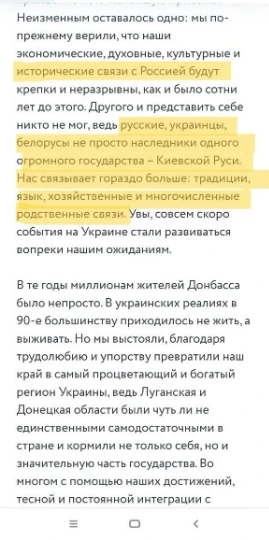
At the same time, all these supporters of "Russian peace" forget to read the decree.
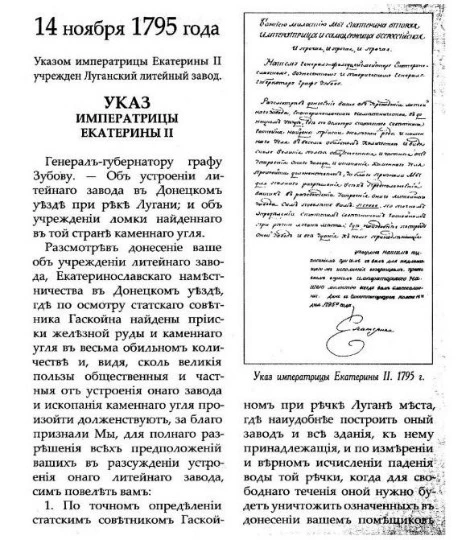
It determines only the allocation of money for the creation of the plant, but there is nothing the city. Therefore, the myth about the Russian roots of Luhansk and Luhansk region can be easily denied.
Differences in household
"Everything starts with housing. Look carefully - we have different roofs on our houses," local historian from Sievierodonetsk Arif Bahirov explains.
He says that hipped roofs on mazankas are characteristic of the Ukrainian steppe.
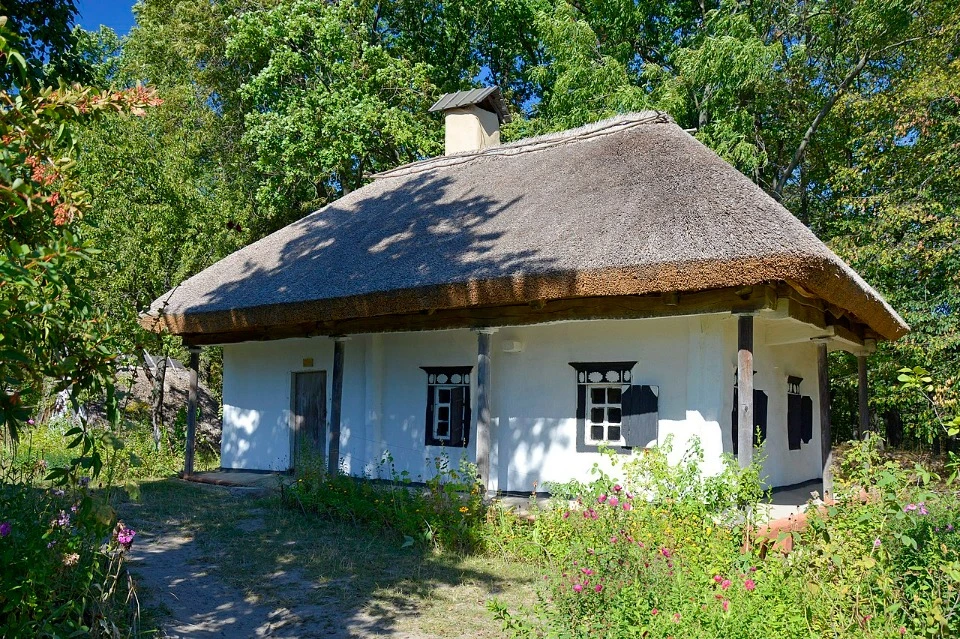
"It's all natural. We lacked wood, so we built mazankas with only woody beams. The roofs are inherently hipped due to the strong steppe winds. Russia didn't have such problems, the houses there were built of wood, and the roofs were gabled. They don't need it additional aerodynamics," the regional ethnographer says.
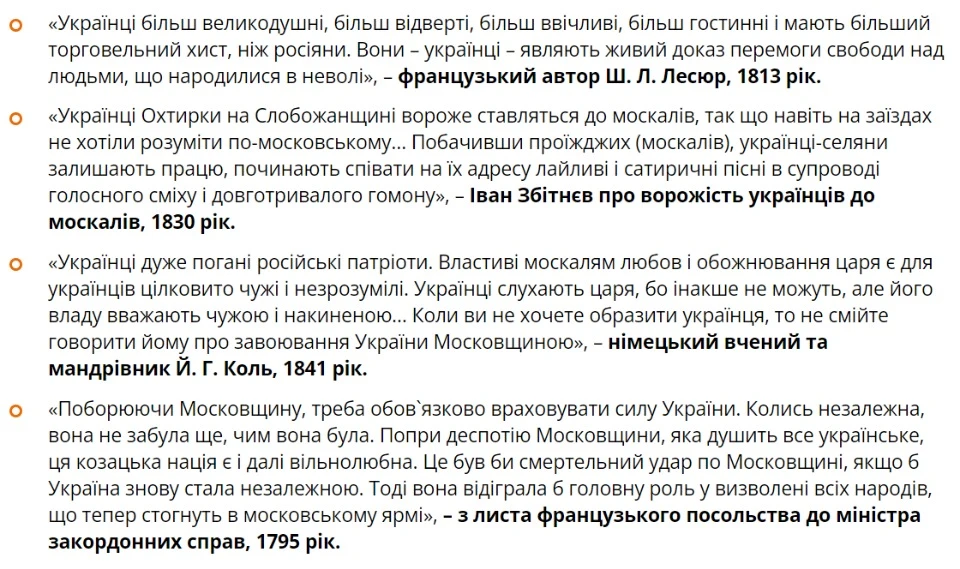
Europeans writers, scientists and public figures have long written about the difference between the Russian and Ukrainian village.
Many layers of clothers
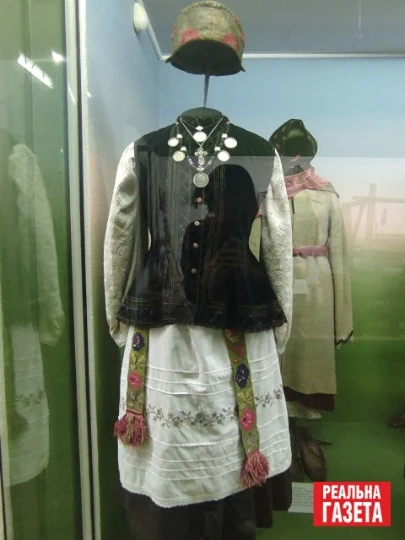
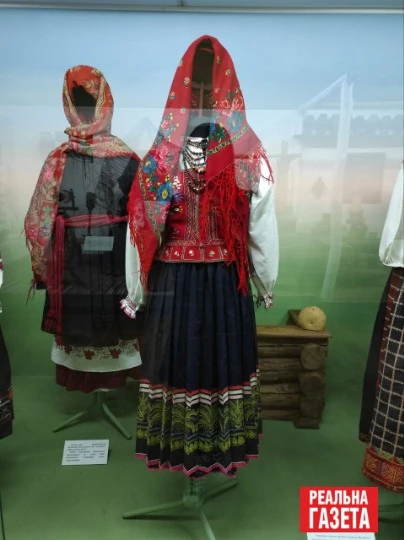
Russian women wore sundresses, Ukrainian women wore shirts. Russian woman wears kokoshnik, Ukrainian woman wears a wreath or povoynik. It was like that in everything.
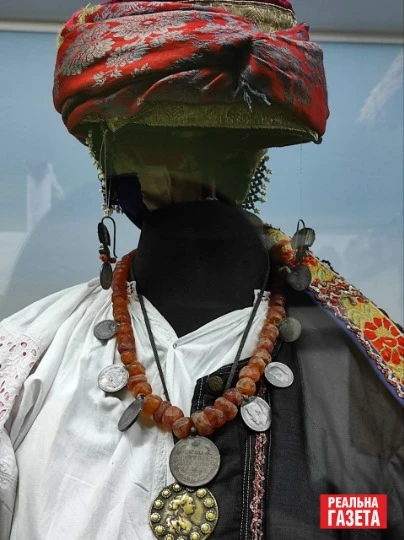
Our great-great-grandmothers would be incredibly stylish today because they loved layering in clothes that changed during growing up and becoming. It was the same situation with headdresses: before the wedding - ribbons and wreaths, after - povoynik, wimples, handkerchiefs.
In general, the clothes of Ukrainian women from Luhansk oblast consisted of a fitted shirt or a shirt "with a hem". In Slobozhanshchyna, shirts were sewn most often from bleached hemp cloth, less often - from home-made linen. Sleeves of shirts were sewn more often with a solid cut and collected it so that it was voluminous.
They embroidered with silk, linen, hemp threads. The most common colors were
red, blue, brown and their shades. The shirts were coloured with natural and affordable dyes.
Over the shirt is worn a richly decorated corset and a woolen sheet, a spare or an apron, and necessarily - an edge and a pocket for various important little things. In the cold the time of the year, a yupka was added - a traditional outer garment without a collar.
Today, despite the occupiers' propaganda, the Luhansk city museum of local history preserves a collection of clothes, shoes and accessories that belonged to the residents of the oblast.