

Ancient Ukrainian traditions connect modern society with ancestors by delicate threads of spiritual connection. Christmas carols sung by children at Christmas echo the congratulatory songs of the god Kolyada, whose birthday was celebrated on the winter solstice. And the rites associated with the celebrations of Ivan Kupala dances, weaving wreaths and searching for fern flowers are intertwined with pagan traditions of worshiping nature.
Each region of Ukraine has its own, special customs related to local history, lifestyle and even cuisine. What were these traditions for the Luhansk oblast - TRIBUN journalist found out.
Who is Shubin and why should he be appeased
Luhansk region is inextricably linked with the mining business, the south of the region is rich in deposits of coal and iron ore. Mining work is dangerous for life and health. And it was the high risk of dying in the field that caused the appearance of a kind of mining folklore, and in particular the character of Shubin - the spirit of the mine, which helps miners or, on the contrary, punishes them.
There are many versions of the history of the origin of this legend. One of the most common among miners tells about a gas burner - a person who, due to the lack of ventilation in the mines, had to burn methane. According to this version, the man wrapped himself in a water-soaked fur coat and descended into the mine with a torch. If there was little methane, it quickly burned out, if there was a lot - it exploded. According to the miners' belief, Shubin is the spirit of a gas worker who died in the mine.
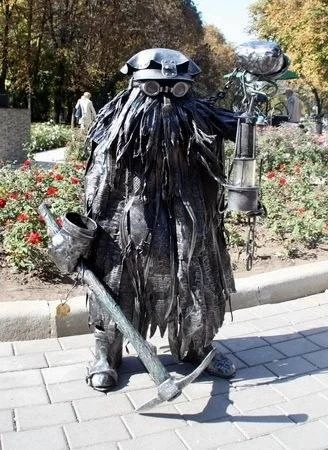
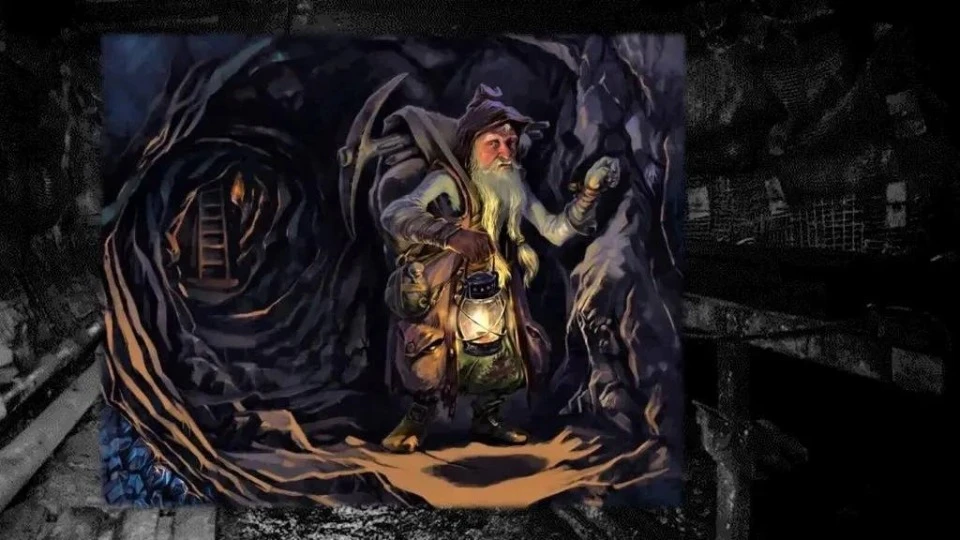
The description of the appearance of this character is also interesting. This is what the miners say: "... a skinny, hunched man in an old miner's jacket. In one hand he holds an ancient lamp with a thin, burning wick, in the other - he holds a torch (a mining tool for chipping lumps of coal from a block of stratum in a mine - a light bulb). Passing the tunnels, he coughs like an old man. Shubin likes to joke: he scares miners, suddenly bursts into laughter in the dark or grabs a leg, can tickle to death."
In Luhansk oblast, people believed in the ambiguity of the nature of this character. According to the stories of the miners, Shubin can both save life and harm it. So, for example, the spirit was kind to the poor, ordinary workers or those who were not satisfied in life. According to one of the legends: "Shubin used to help the miners - he drove carts with coal, and one boy, whom a local beauty did not want to marry because of his poverty, dropped a whole mountain of coal at his feet - and the boy immediately became rich."
But who he did not like - arrogant rich people who received jewels without putting in any effort. From the same legend: "The sudden enrichment of the worker did not please the tyrant-owner of the mine, who shouted: "I am the boss! I do what I want!" Shubin immediately proved who is really the master here, completely ruining the mine with mine gas explosions, collapses and floods."
In order to appease the spirit of the mine and receive his blessing for the continuation of work, the miners shared with him their "lunch boxes" - lunches that they took with them.
Shubin was an important person for the miners of Donbas. In conversations, and especially near the deposits, it was impossible to talk about him in a bad tone - people believed that he heard everything and if he understood that they were talking about him badly, he would not save him during the collapse. The miners said that sometimes the spirit grabbed their legs and did not allow them to go to places where a collapse or explosion might occur, and sometimes led lost workers out of the mine labyrinths.
Beliefs and rituals that blessed the land of Luhansk oblast
The northern part of Luhansk oblast cannot boast of a large number of mines or enterprises, but the real wealth of the Luhansk Slobozhanshchyna is its land. That is why a large number of customs and rites, performed by the ancestors of modern Luhansk people since ancient times, are connected with the future harvest.
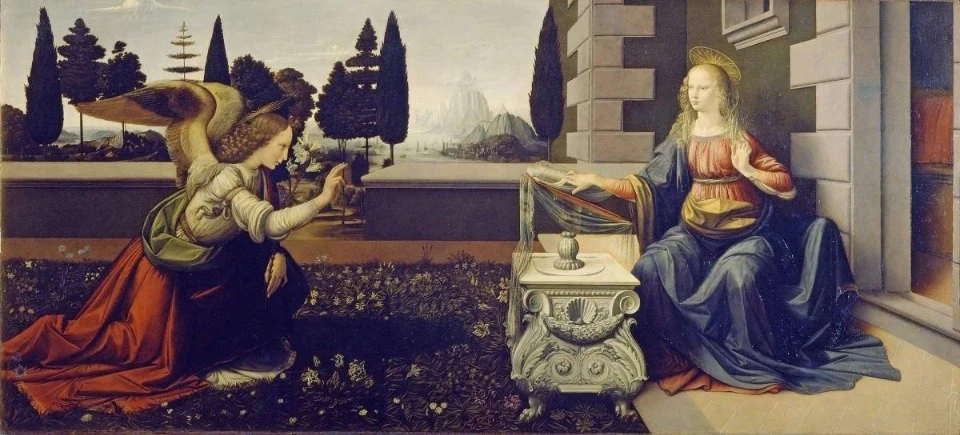
An especially important holiday for the residents of the oblast was and actually remains the Annunciation - the day on which the Archangel Gabriel announced to the Virgin Mary that she would give birth to Jesus Christ. It is this day, in the belief of Ukrainians, that is the day when winter recedes, God blesses the land and field work. According to folk beliefs, field work could be started only after the Annunciation. Earlier, disturbing the earth was considered a great sin.
In Svatove region, where, in addition to working on the land, they also engaged in beekeeping, there was a belief that "Pike-fish, caught and cooked for the Annunciation, has magical power, because it is the "Annunciation pike." In the fodder honey, the beekeeper pours the crushed head of the herald's pike, dried and ground ants and pepper into powder - "so that the bees are toothy like a pike, hardworking like ants, and angry like pepper."
Another holiday, which with the passage of time, nevertheless faded into oblivion, but was of great importance for the Ukrainians of Slobozhanshchyna, is the Day of St. Rufus, the saint of the "viper". According to folk beliefs, it was not possible to go to the forest on this day, because "vipers crawl there, and they are very biting on this day, because it is their day."
"On Rufus’ day, everything from the earth will move: both grass and all greenery, and everything that was sown and planted on this day will start to grow upwards. And every reptile will crawl out of the ground, and a bird will fly out of the air," believed the residents of Slobozhanshchyna, which also includes part of the Luhansk oblast.
How vipers help against evil spirits
Another important rite connected with these snakes in Luhansk oblast and Donetsk oblast is "chasing vipers". This rite is connected with the first day of Great Lent, which was called "stringy Monday". According to folk beliefs, on this day women are strictly forbidden to visit their neighbors, as it was believed that they bring bad luck to other people's homes.
"Chasing" means cleansing the house from evil spirits, poverty, calamity and diseases, which are called "serpents" or "creeps". This rite is performed exclusively by boys and men, who are called "polazniks" (from the word "to climb", which means to move around the village - light bulb).
Men visit every house, call the owners and offer to drive the "snakes" out of the yard with sticks.
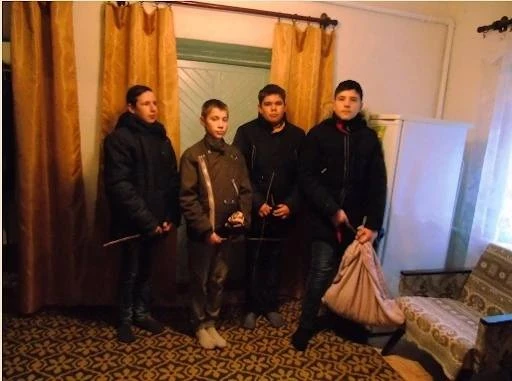
The action ends in a village in the steppe with the burning of auxiliary "tools" and a communal dinner from what the hosts treated them to. Recently, as they write in the Donetsk Regional Educational and Methodological Center of Culture, adult men have started using willow vines, which were consecrated in the church during Palm Sunday. The runner leaves this straw in the last house of the owner, who then uses it to drive the cattle to the first pasture.
Braiding a wedding braid in Bilokurakyny
Wedding ceremonies are an equally important part of folk beliefs. Creating a new family has always been a sacred event for Ukrainian, and especially peasant, society. As ethnographers wrote, there were three most important events in the life of a Ukrainian peasant: birth, marriage and death. In Chernihiv oblast, for example, a woman began counting her age for the second time after getting married, which marked the beginning of a completely new period of life.
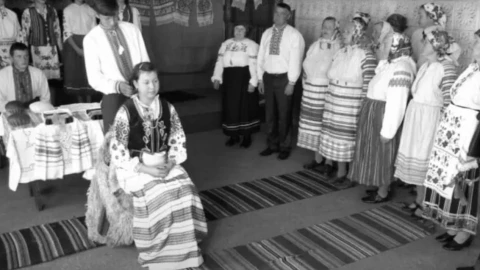
On the territory of Luhansk oblast, certain wedding rites have been preserved, such as the braiding of a wedding braid, which is characteristic of the Belokuraky region of the Svativ district. By decree of the Ministry of Culture and Information Policy, this tradition was included in the list of intangible cultural heritage of Ukraine.
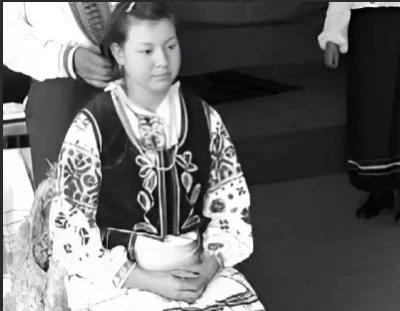
In modern wedding traditions, it is customary at weddings to unbraid the bride's braid, remove the veil and put a scarf on her head - this is considered a rite of farewell to the life of an unmarried woman and the beginning of married life. However, in Luhansk oblast, the braid was still braided - the bride sat on the bed with a blanket, and her older friend braided her braids and decorated them with colorful ribbons. The girl had to be dressed in a traditional Ukrainian cut and red shoes. At the same time, other friends usually sang songs, for example: "The pine was burning, it was burning":
Oh braids, my braids,
You served me for a long time.
You will no longer serve
You will go under the white curtain.
Under a white veil, under a handkerchief,
You will no longer go as bridesmaid
Wearing a wreath on the bride's head was also considered a separate element of this ceremony. The wedding wreath is an important element of the ceremony, which was woven by girlfriends at the bachelorette party. He is a talisman that was associated with the sun and the shining sky:
It's not the fire that burns, the flame burns,
A golden wreath shines on our Mariyka
Usually, a wreath of periwinkle and viburnum was woven at wedding celebrations. Viburnum, which was considered a symbol of love, happiness, respect, beauty and girlish beauty, was necessarily included in the wedding ceremony as a "wedding tree". Periwinkle was woven into the wreath in order to obtain a blessing from the ancestors: it was believed that during the weaving, good spirits bring love and understanding to the newlyweds.


