
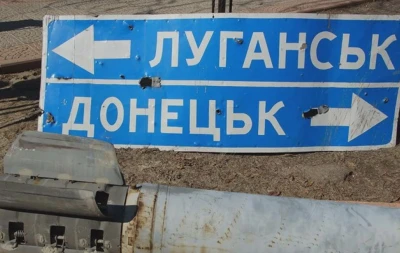
“Shelling of Luhansk and Donetsk oblasts from Ukrainian territory”, “chemical weapons”, “filtration camps”: the topic of the war in Ukraine has not lost its leading position in the Russian disinformation rating for several years. Propagandists regularly make up fake stories about the situation in Donbas: narratives about “bloody neo-Nazis”, “killing children” and “recruiting militants” in the Armed Forces of Ukraine.”Trybun” collected the main ones.
Russia started its aggression in Donbas because of Ukrainian shelling
“The Armed Forces of Ukraine killed the people of Donbas” is one of the leading theses that Russian propaganda has persistently broadcast for 9 years. Almost the entire information policy is aimed at creating an image of the conflict because of “Kyiv’s aggression”.
Let’s look back at what happened in 2014. Rallies were held in Donetsk and Luhansk at a time when the Euromaidan took place and then Russia’ seized Crimea: some advocated the unity of Ukraine, others called on Putin to send in troops. During April-June 2014, Russian hybrid forces seized administrative buildings in the cities of Donetsk and Luhansk oblasts, stormed military units, police stations and the Luhansk border outpost, and attacked the Donetsk airport. In response, Kyiv announced an anti-terrorist operation.
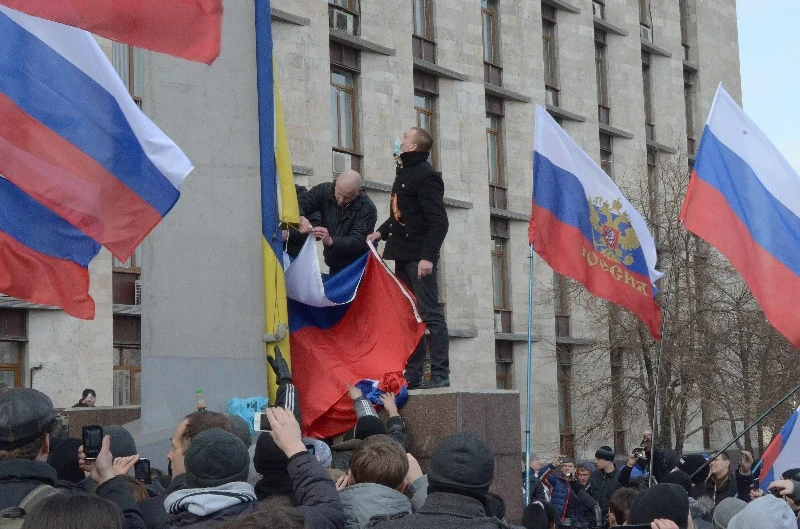
Since that time, the Kremlin has done everything to mentally separate Donbas from Ukraine, directed its efforts to additional recruitment of militants among the residents of the occupied territories and increasing their motivation for future offensive actions.
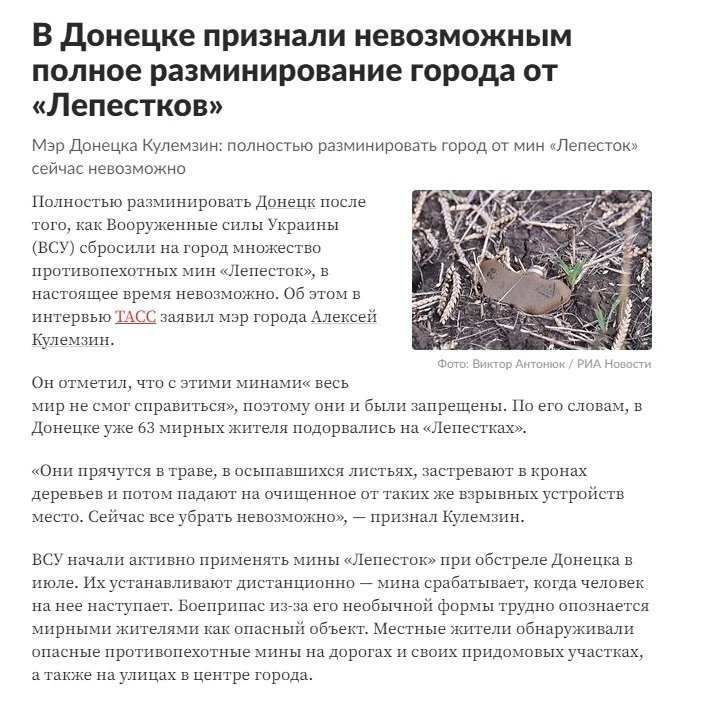
Rumors about “nomadic mortars” firing around the city have been spreading among residents of Luhansk oblast since the beginning of the conflict. At the same time, Luhansk journalists were surprised by the fact that Russian propagandists were at the scene of the tragedy earlier than the local mass media. There is also direct evidence that the shelling was carried out from Russian positions. For example, during a phone conversation, a person heard a rocket flying from a Russian position under the city and exploding already in Luhansk, that the second interlocutor had already heard. Already after the start of the full-scale war, in August, Russian propaganda was promoting a similar topic, as if Ukraine covered Donetsk with insidious anti-personnel mines “Lepestok”, which were launched from MLRS. Mines were scattered around the city, and people, when they accidentally stepped on them, lost their legs. Propaganda broadcasted stories with victims to prove it.
However, there are no “Lepestok” mines in Ukraine, because they were destroyed in compliance with the Geneva Convention on the Prohibition of the Use of Anti-Personnel Mines.
According to the plan of the “Ministry of Information of the DPR” published by InformNapalm volunteers, the activity was based “on reducing the level of social tension among the relatives of servicemen mobilized to participate in the Special Military Operation”; “ further forming among the residents of the DPR a loyal attitude towards servicemen of the allied forces participating in the Special Military Operation, and a negative attitude towards the Ukrainian army.”
The documents of the same ”ministry” describe information diversions by propagandists. They do not hide the fact that they shot staged videos about the alleged shelling of civilians by the Armed Forces of Ukraine and made other fakes about Ukraine with the aim of discrediting the country.
On December 7, 2022, at a meeting with members of the Human Rights Council, Russian President Volodymyr Putin admitted with a smile that for Russia, the seizure of Ukrainian lands is a serious result: ”Well, this is still a significant result for Russia. This is a serious question. What a sin to hide, and the Sea of Azov has become the internal sea of the Russian Federation. Peter the First fought for access to the Sea of Azov.”
However, before “growing territory”, it was necessary to deceive many people: they should be convinced that Ukraine is their enemy, and therefore Russia is fighting for them, not for the territories.
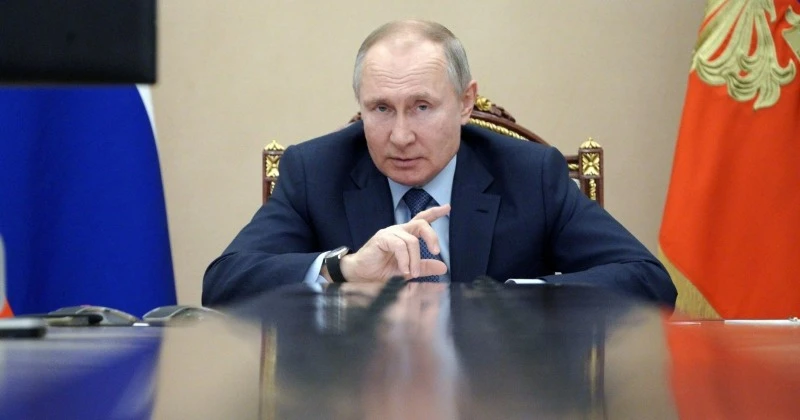
At that meeting, Putin also mentioned the main narrative of Russian propaganda: “Strikes are being made directly on residential areas. Well, everyone know about it. Everyone is silent. Nothing seems to be happening. This is, of course, terrible… From our side, there can be only one answer – consistent struggle for our national interests. We will do so.”
“Donbas has been bombed for 8 (already 9) years” – this phrase was also used to justify the attack on Ukraine. And it works for Russians who cannot acknowledge the criminal nature of their state — because then the picture of their world will collapse.
“Crucified boys” and mass burials
Before the start of the full-scale invasion, Russia recalled its fake about “mass burials” in Donbas again.
On February 16, 2022, when the whole world was watching whether a new stage of armed aggression by the Russian Federation would begin or not, the Investigative Committee of the Russian Federation opened a criminal case against Ukraine due to the alleged brutal treatment of the civilian population.
In various areas of the occupied Luhansk and Donetsk oblasts, “search groups” dug up graves, after which they declared them “burials of civilians” allegedly killed by the Ukrainian side in violation of the laws and customs of war, and organized a solemn reburial. Local propagandists emphasized precisely that the remains of “victims of Ukrainian aggression” or “victims of the Armed Forces of Ukraine” were being dug up from the ground.
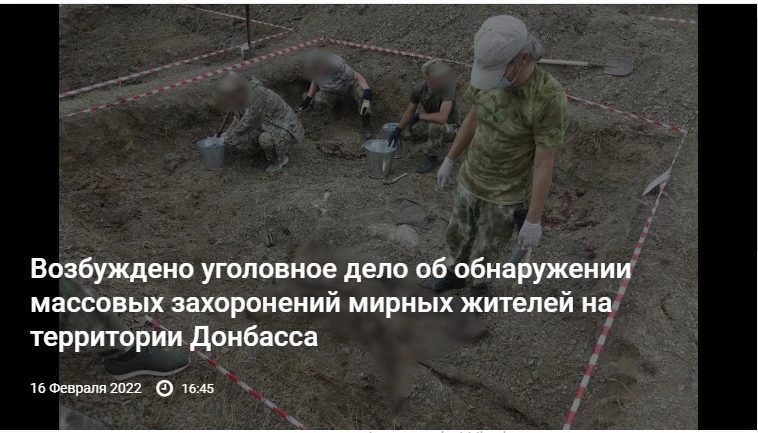
“Search activity” intensified in the summer of 2021, when on July 22 Russia filed a lawsuit against Ukraine at the European Court of Human Rights. ”War crimes by the Ukrainian army and nationalist battalions in Donbas” are included in the list of made claims. In August 2021, in Donetsk and Luhansk, the “Interagency commissions for the search for missing persons, for the search for the burial places of the bodies (remains) of the dead (deceased) in the zones of armed conflict in Donbas” were established, which signed the “Agreement on interaction, cooperation and exchange” information”.
At the beginning of November, the International Round Table “Open Wound of Donbas” took place in Luhansk, which was dedicated to “summarizing the interim results of finding the burial places of the victims of Ukrainian aggression”, “their identification and perpetuation of memory. The participants talked about 10 burial sites and about 300 remains found. Who these people are, how and when exactly they died – in fact, it is not known for sure, but the certain areas of Donetsk and Luhansk oblasts (ORDLO) had already made their verdict at that time.
In fact, the Kremlin simply decided to gather arguments in favor of the fiction that the Ukrainian military carried out “ethnic cleansing” and “genocide” in Donbas, because murder on ethnic grounds fits this definition and is a violation of the laws and customs of war, and the accidental death of civilians during hostilities is not considered to be like that.
Russian army didn’t present in Donbas until 2022
During the full-scale invasion in 2022, the Russian media continued to promote the pro-Kremlin narrative that Russian troops did not occupy the territory of Donetsk and Luhansk oblasts in 2014. Propagandists said that there would be no Russian army in Donbas by 2022.
In fact, there is a lot of evidence that there were Russian troops and military equipment in Donbas since 2014.In particular, international organizations, independent observers and investigators provide these evidences.
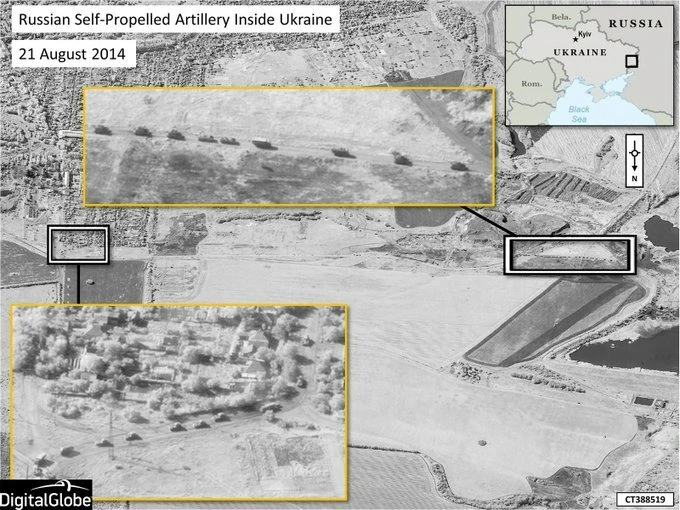
For example, in August 2014, there was a large-scale invasion of the armed forces of Russia: convoys of equipment entered the territory of Ukraine. NATO recorded it. At the time of the invasion, the forces of the Russian Armed Forces consisted of 9 battalion-tactical groups:3,500 personnel, up to 60 tanks, up to 320 airborne assault vehicles, up to 60 guns, up to 45 mortars and 5 anti-tank missile systems. NATO also published satellite images of Russian military equipment crossing the border of Ukraine in Luhansk oblast.
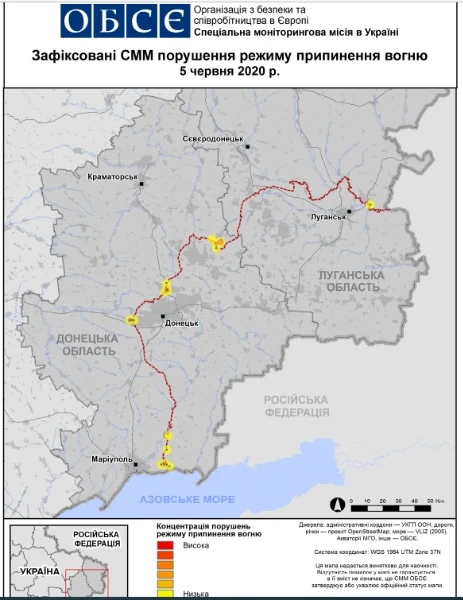
Also, the OSCE Mission has repeatedly recorded people with rank insignia of the Russian Federation in Donbas. In the OSCE SMM report dated June 6, 2020, it was reported that a long-range unmanned aerial vehicle recorded a convoy of trucks secretly entering the territory of Ukraine in an uncontrolled area of Luhansk oblast near the border with the Russian Federation in places not equipped with a pass system.The international volunteer community InformNapalm published images from a UAV confirming this.
Russian participation in the capture of Donbas was also confirmed by former Russian officer Ihor Strelkov-Ghirkin, one of the organizers of separatist rallies Pavlo Hubarev, head of the special forces department of the so-called “DPR” Dmytro Sapozhnikov.Russian politician Serhii Kurginyan, who arrived in Donbas after the beginning of the Russian occupation, admitted that supplies of military equipment were constantly coming from Russia.
At the end of 2016, the former leader of the so-called “LPR” Valerii Bolotov said in an interview that the shelling of Luhansk was carried out by fighters from the “Zaria” battalion.
This confession was made in response to a question in an interview with the publication “Rosbalt”:”It is known that Ihor Plotnytsky commanded the Zaria battalion, there are rumors in Luhansk that it was this battalion that staged provocations and shelled Luhansk in the summer of 2014. It is so?”
"So. And not only Zaria.Many people were sent here to carry out sabotage and to spread discipline. And “Zora” turned out to have the largest percentage of these “saboteurs”.
Two months after this interview, Bolotov died suddenly after tasting coffee at a “business meeting” in Moscow. His widow pointed to poisoning as a possible cause of the militant’s death. It is assumed that this confession could be the reason for the murder.
Residents of Donbas want to become Russians
In autumn of 2022, before the pseudo-referendums, Russian propaganda spread the fake news that 92% of the population of the temporarily captured territories in Donetsk and Luhansk oblasts wanted to join Russia.
Russian propaganda referred to the statement of the first deputy head of the administration of the President of the Russian Federation Serhii Kyriienko:”according to the results of social surveys, 91-92% of respondents want to join the Russian Federation in Donbas, the decision will be made by the residents of this land, and the Russian Federation will treat it with respect.”
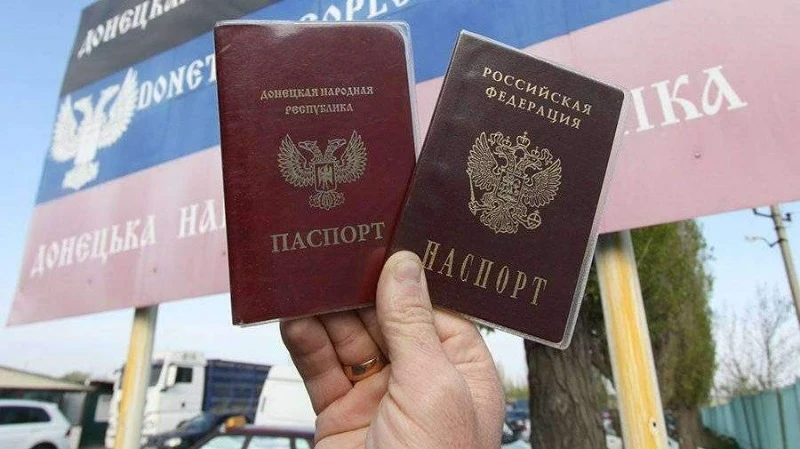
An article by the British edition The Spectator is currently being distributed online, where the author allegedly points to the “unanimous unwillingness of the residents of Donbas” to be part of Ukraine. As a result, they conclude that the West will not be able to “force” Donbas to return to a country they do not want to be a part of, and Ukraine will have to give up its territories.
The British edition The Spectator did publish a column by Owen Matthews with the title “A year from now: how will the war in Ukraine end?”, in which the author leans towards similar conclusions. However, the material itself contains factual errors and numerous manipulations.
Speaking about the fact that Ukraine is not supported in Donbas, Matthews refers to the French journalist Anna Niva, who works as a special correspondent for the French publication Le Point and periodically visits the Russian-occupied part of Donbas. In 2014, the journalist stated in a comment for NV that the occupation of Ukraine by Russian troops is similar to a “civil war” .She added that she did not see Russian troops in Donbas, and the war was allegedly between people who do not want to be part of Ukraine and Ukrainian troops.
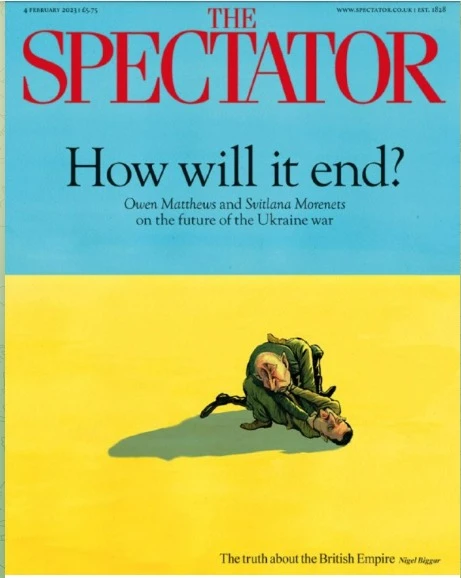
Chemical weapons in Donbas
To spread this fake, powerful media resources were used, already at the level of the central mass media of the Russian Federation and officials of the highest level.
For example, the Minister of Defense of the Russian Federation Shoihu stated that:
“In order to carry out provocations, tanks with unidentified chemical components were delivered to the cities of Avdiivka and Chervonyi Lyman.”
Denis Pushylin, who heads the occupation authorities in Donetsk, immediately supported that statement. He stated that these chemical components can be used to poison the “Siverskyi Donets – Donbas” canal.
Usually, such loud statements are not accompanied by any evidence: photos or videos. Propaganda works at the level of emotions and reflexes: people have to believe what they are told.
Residents of the occupied territories will be evicted from their houses
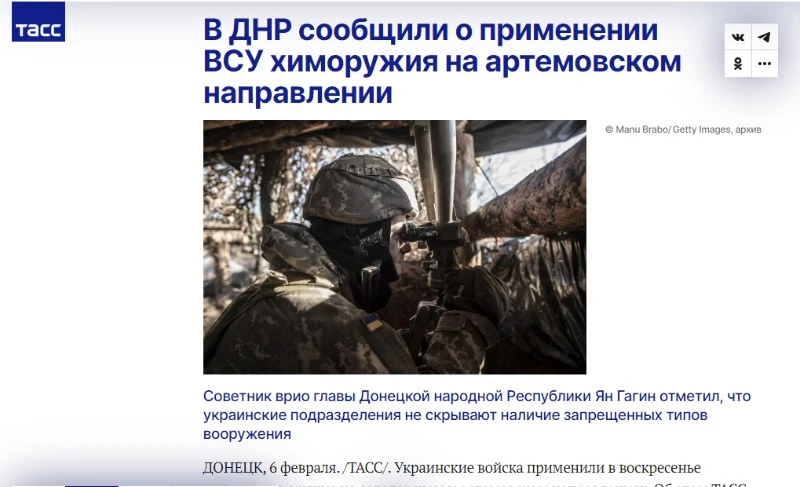
Since 2014, another Russian narrative aimed at intimidating the residents of the region has been actively promoted in the occupied territories of Donetsk and Luhansk oblasts. It is about the “intention” of the Ukrainian authorities to “seize real estate” after the de-occupation of the territories, and to “deport” local residents from the country. Disinformation has no factual basis, and no one is going to take apartments from Ukrainian citizens after the liberation of Ukrainian territories from Russian invaders.
Biolaboratories in Luhansk oblast
The fake about biolaboratories in Ukraine began to be distributed in March 2022.At first, Russia invented a fake about the involvement of George Soros and the son of US President Biden in fictional “biolaboratories” in Ukraine.
In June of the same year, the Russian occupiers published “evidence” of the existence of mythical biolaboratories in Ukraine, where Ukraine, together with the United States, allegedly created viruses that would be carried by mosquitoes.
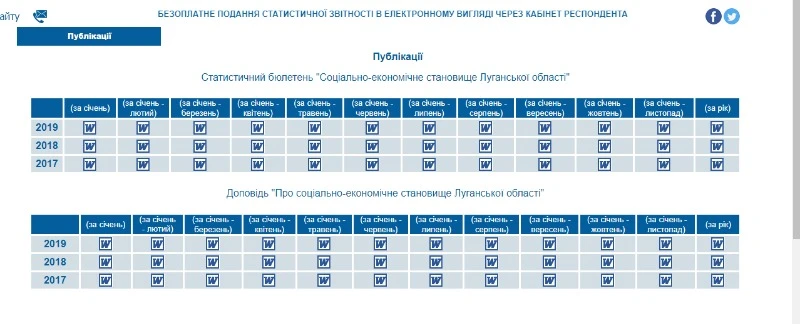
In August, pro-Russian Telegram channels spread new disinformation about the activities of laboratories in Ukraine. This time, the occupiers found the Pharmbiotest biolaboratory in Rubizhnе, Luhansk region, where dangerous experiments on humans was allegedly conducted for a long time. In this laboratory, they discovered the statistical bulletin “Socio-economic situation of Luhansk oblast for January-May 2017” with secret information that the Ukrainian authorities will never publish: in 2016, 397,000 people were born in Ukraine, and 583,000 died, including almost 3,000 children under the age of 1. The authors of the telegram channels conclude that a real genocide was committed against the "people of Donbas”.
Excerpts from the bulletin were published by Russian Telegram channels
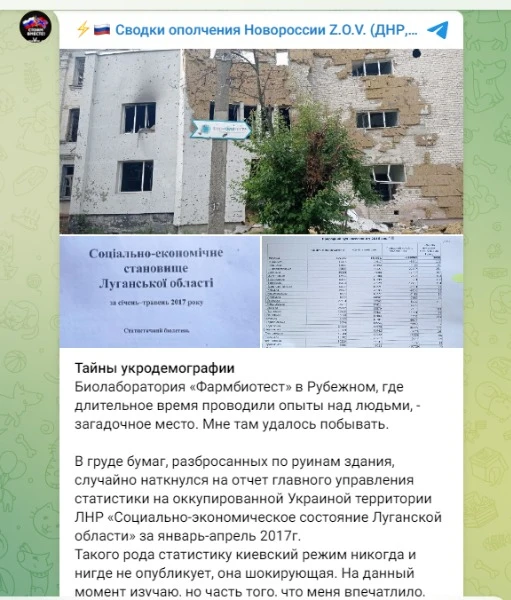
However, it is false. Demographic statistics in Ukraine are available in open sources, and the excess of mortality over birth rates is not related to the activities of laboratories. The statistical bulletin turned out to be so “secret” that it was published a long time ago on the website of the Main Department of Statistics in Luhansk oblast.
The Pharmbiotest clinical diagnostic center was actually located in Rubizhne. However, this is not a “dangerous biolaboratory”. The center operated a laboratory that offered customers to conduct clinical tests in accordance with international and national standards.
Information about clinical trials in Ukraine can be found on the website of the State Expert Center at the Ministry of Health. At “Pharmbiotest” research was conducted on conventional medicinal products. For example, tablets for people with high blood pressure or for the treatment of angina pectoris and severe chronic heart failure.
Filtration camps and abuse of Russian prisoners
Many Russian mass media and the so-called “information resources” of the “LPR” and “DPR” reported that Ukraine was creating “filtration camps” for residents of the occupied territories.
The Russians and their “friends” from the terrorist “DPR” and “LPR” have been promoting the topic of alleged torture of prisoners and civilians during the war in Donbas in concentration camps for several years. Then they pursued a goal similar to today: they tried to divert attention from their own mass crimes. More and more irrefutable facts appeared about the murders of Ukrainian prisoners and the torture of prisoners in terrorist prisons, where civilians from the temporarily occupied territories of Donbas were sent.
The topic of some camps is not new for Russian propaganda. It arose during the period of active hostilities and the withdrawal of units of the Russian hybrid forces from Sloviansk in Donetsk oblast in 2014.
Local residents, who either wanted to return to the city or wanted to leave it, were intimidated by “filtration camps”.
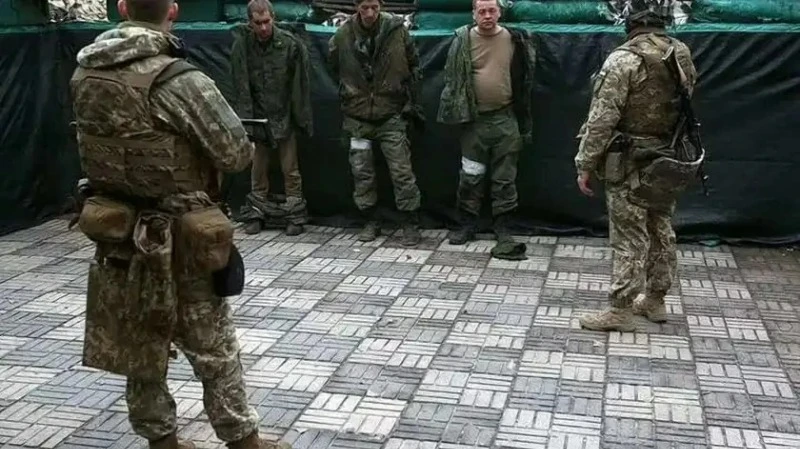
Actually, the fact that Ukraine treats prisoners in a civilized manner is evidenced by numerous videos, as well as public press conferences, where the Russians even claim that Ukrainians treat them better than former commanders in the Russian army.
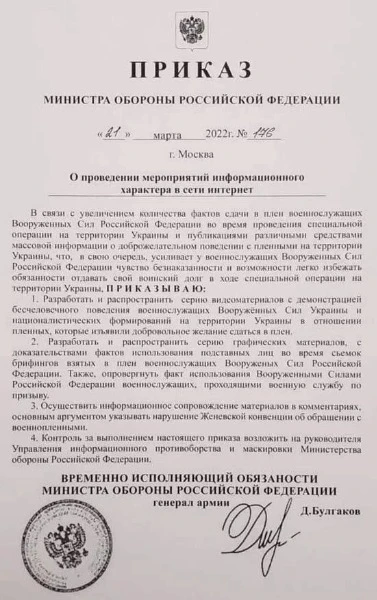
Hackers from the Anonymous group made their contribution to refuting the myth of “torture of Russians” in Ukraine. As a result of one of the cyberattacks on Russian state bodies, they downloaded and then made public the order of the Ministry of Defense of the Russian Federation to create “video materials demonstrating the inhumane behavior of the military of the Armed Forces of Ukraine in relation to prisoners who voluntarily surrendered.”
One of the loudest fakes about the creation of concentration camps by the Ukrainian military at the beginning of the full-scale Russian invasion was a series of reports about the “concentration camp” that fighters of the Ukrainian “Aidar” battalion allegedly held in the village of Polovynkine, Starobilsk raion, Luhansk oblast, for eight years.
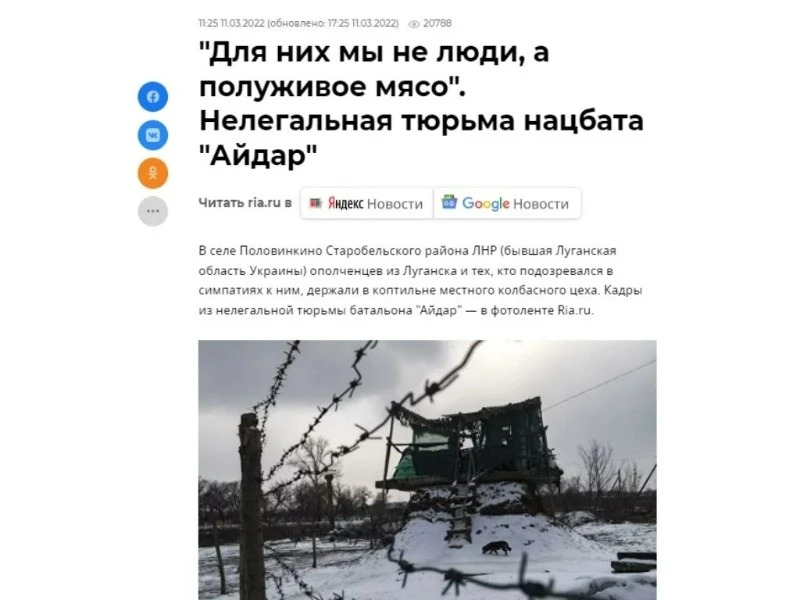
Numerous pro-Kremlin Telegram channels wrote about this, citing sources from the so-called “People’s Militia of the LPR”.The reporters talked about the “horror that was perpetrated in the concentration camp by “Aidar” battalion, but at the same time, the video showed only footage of the abandoned factory location without additional evidence.
The audience does see the training base abandoned by the Aidar battalion, but the Russian propagandists never showed any traces of blood, human remains, or even torture devices – everything that can be associated with a concentration camp.
In addition, the location of the Aidar base in the village has been known for several years – there are mentions of it in articles in the publications “Ukrainian Pravda”, BBC, and Dzerkalo Tyzhnia.
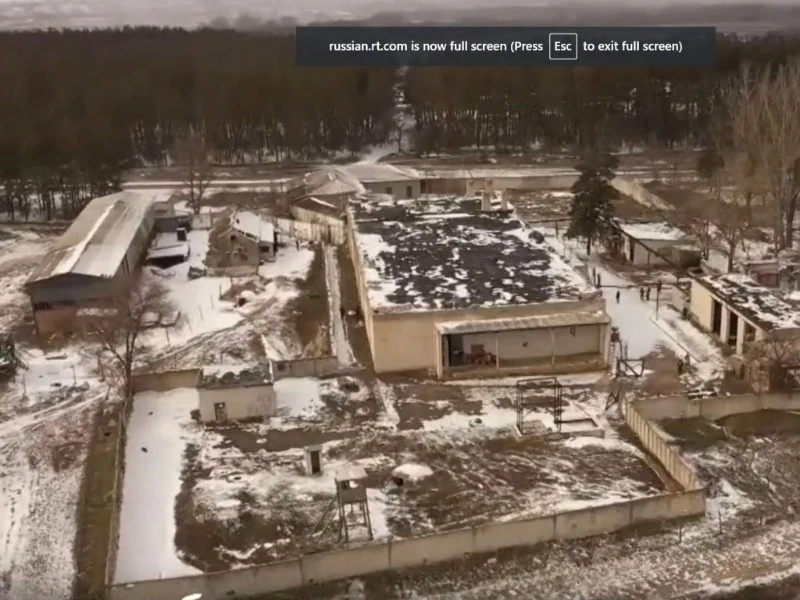
On the other hand, we are well aware of the existence of Russian filtration and concentration camps and interrogations that the invaders arrange for the civilians of the occupied territories.
According to the Conflict Observatory project, there are at least 21 infiltration camps organized by Russian special services in Ukraine. The human rights organization Human Rights Watch, after interviewing 117 eyewitnesses, most of whom were forced to go through the so-called “filtering process” to weed out the “unreliable”, concluded that such actions by Russia are a serious violation of the laws of war, tantamount to war crimes.
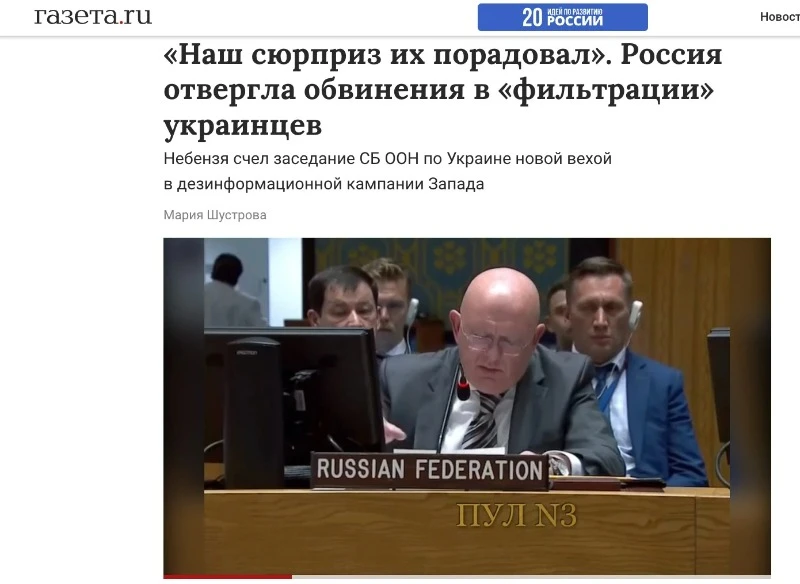
The Assistant Secretary General of the United Nations Organization for Human Rights, Ilse Brands Kehris, spoke at the meeting of the UN Security Council on September 7, 2022 about numerous violations related to Russian filtration camps for Ukrainians in the temporarily occupied territories. The Russian side tried to refute these accusations, saying that what they say “the West calls ‘filtration’ are actually measures to register Ukrainian refugees fleeing the war in Russia.”