

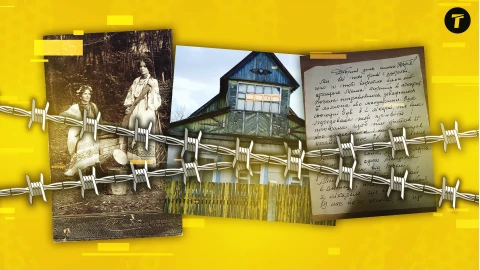
Russian propagandists constantly claim and emphasize that Luhanshchyna is "originally Russian land inhabited by Russian people", but this fact isn't real. There are many confirmations of the Ukrainian past of the oblast: architecture, national clothing, language, insurgent movement, culture, etc. It confirms the future of the Ukrainian east once again.
TRYBUN provided examples and explained why Luhansk oblast was never Russia.
Historical side. Insurgent movement
There are many facts proving that Luhansk oblast was not and is not Russia, it carries the very historical past of Ukraine and its east. Oleksandr Naboka, doctor of historical sciences, told TRYBUN about this.
"I would say that despite the Russian segment, which especially began to strengthen from the second half of the 18th century, Luhansk oblast was part of the world that was created and shaped mainly by Ukrainians at that time.The first permanently operating enclaves began to appear in the oblast at the end of the 16th and the beginning of the 17th century.
Ukrainians brought here, in particular, water and air mills, which were originally common in the Polish-Lithuanian Commonwealth, ceramics manufacturing techniques and etc. Of course, then the Russians, taking advantage of their status as the ruling nation in the empire, took leading positions in cities, state administration, industry.It allowed them, the bearers of imperial messianic ideas, to speak for the entire oblast, calling it the place where the Russian imperial project was brilliantly realized.However, the Ukrainian population did not go anywhere," the historian says.
According to Oleksandr Naboka and taking into account the censuses of the 20s of the 20th century, the Ukrainian population was dominant everywhere in the countryside. The Russian population prevailed at a level of slightly more than 50% in large cities.The countryside was the environment where the various insurgent movements that spread in Ukraine were supported.
"In particular, in 1917-1921, peasants willingly joined the rebel units of local leaders who supported Nestor Makhnо.
Ataman Kamenyuk also joined such units.
Many also supported the Ukrainian People's Republic and the Directory.
In addition, before collectivization and the famine, Ukrainian and Russian villages of Luhansk oblast lived separately.There was even a certain hostility and mistrust between them.During the fall of the Russian Empire, it even went beyond domestic mistrust and became the cause of bloody clashes," Mr. Oleksandr notes.
An attempt by the Don Cossacks to establish control over Bilovodsk, where mostly Ukrainians lived, led to a major uprising.The Cossack emissaries who arrived in the city from Stanytsia Luhanska were hanged on rafts and sent through the Yevsug River to their homeland.
"Only collectivization, disarmament and the great terror might unify the oblast, take away not only Ukrainian but also regional identity from it, impose exclusively Soviet narratives," the doctor of historical sciences comments.
National clothes
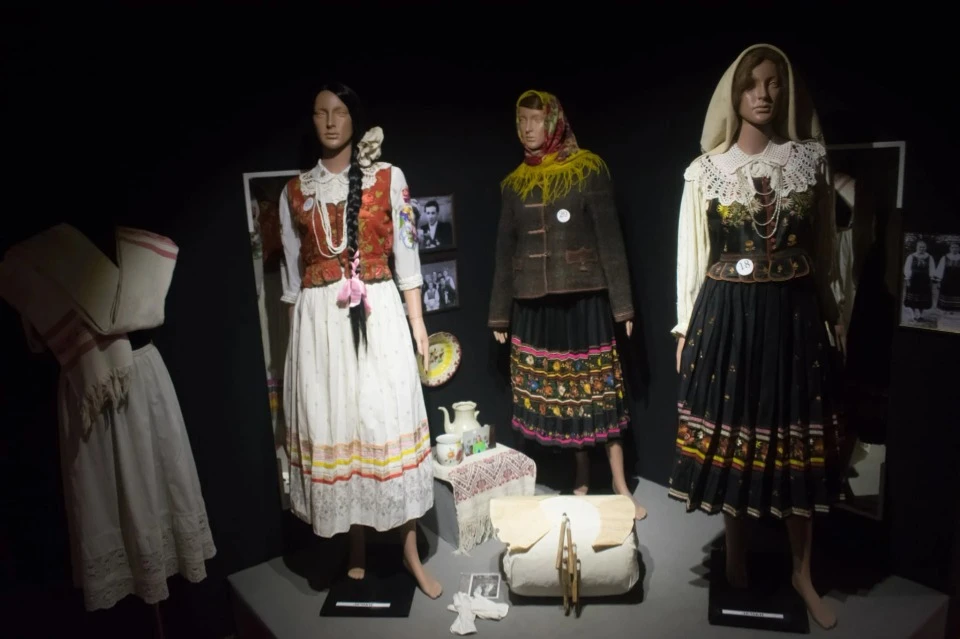
The difference between Ukrainian and Russian national clothes is obvious.It proves that Luhansk oblast does not belong to the Russian Federation once again.Let's compare the clothes of Ukrainian and Russian women. The residents of Luhansk oblast, as throughout Ukraine, wore the same national clothes, which only differed in some decorative elements depending on the oblast.
However, the main components of the wardrobe were: a shirt, a fragrant skirt, a belt, an embroidered shirt, a scarf and shoes.Women's embroidered shirt usually consisted of two parts.The bottom layer was sewn mainly from strong, high-quality fabrics (linen or hemp).Women wore a sheet on top, which was wrapped around the waist and tied with a belt or they supplemented it with a spare part, which can resemble an apron now.
Decor is also an important part of the outfit.Ukrainians decorated their clothes with a large number of colorful ornaments and patterns.The parting of the skirt was usually decorated with ribbons, ruffles or embroidery. Jewelry complemented the image.Women liked to wear a necklace, massive wreaths and covered their heads with no less bright scarves. There is a photo of the clothes that the residents of Luhansk oblast wore in past years:
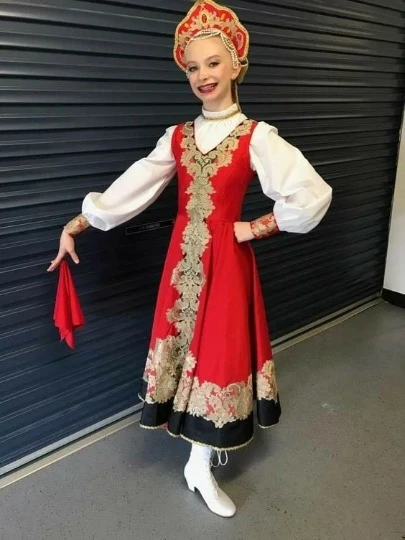
Russian national clothing usually consisted of a sarafan, which was worn over a white shirt, and a high kokoshnik, which is completely different from the Ukrainian crown.Women often used shawls and scarves to protect against the cold.
Today the Ukrainian people wear vyshyvanka in all corners of Ukraine.
Designers improve this element of clothing, adding modern decorations to it, making a new, relevant design work.
The Russian language is the burden of Luhansk oblast
The Russian language in the Donbas, in particular in Luhansk oblast, is one of the main arguments of the Russians and supporters of the "Russian peace".
It is not surprising, because firstly, Luhansk oblast is adjacent to Russia, which is why its residents adopt the lexicon of their neighbors.
The second reason is the active russification of Donbas.After the famine of 1932-33, whole echelons of Russian immigrants were transported to the east of Ukraine. They were forced to look for a better life, inhabiting empty houses. At that time, many people suffered and died from the repressions of the "Great Terror" and the Holodomor, and there were not enough hands for work.Therefore, it can be argued that the resettlement of Russians was forced.Since 1939, in the post-war period, a large number of residents of the Russian Federation were also sent to its territory under the motive of reconstruction of Donbas.This is what happens during a full-scale invasion in 2022.The occupiers forcibly populate the occupied territories with their own people, kidnap children and place them in Russian families for the purpose of russification.Ukrainians are forcibly taken to remote parts of Russia. It is called "evacuation".
In his research, Ukrainian ethnopolitical scientist Oleh Kalakura wrote about a survey in Luhansk oblast on the topic of native language for the residents of this oblast.According to the results of survey,87% of the population considered Ukrainian to be their native language in 1959, 78% - in 1970, 72% - in 1979, 66% - in 1989, and only 50% - in 2001. Russification of the population of Luhansk oblast became more and more effective every year. However, it cannot be claimed that the inhabitants of the eastern region have always spoken the language of the occupiers. Telegram channel ARTIUKH published the letters of residents of Kreminna in 1968 as an example:
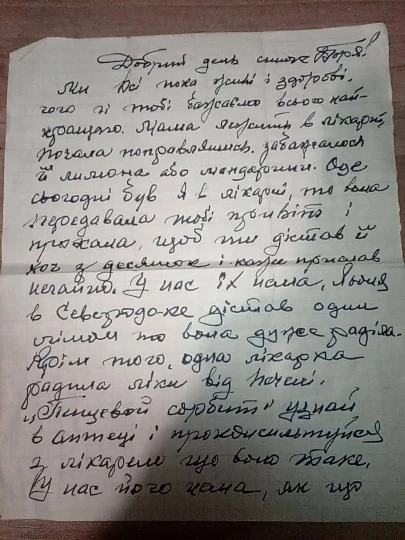
During the entire period of Luhansk oblast's existence, the Russians always actively wanted to russify it, imposing their narratives.However, the Ukrainian language remained native despite everything. The fact that the language of the occupiers was always spoken in Luhansk oblast is a myth.
A hut or a house?
Russian propagandists claim that Luhansk oblast is a Russian land because of its culture, particularly its architecture and housing of Ukrainians.
Regional historian Arif Bahirov commented why Luhansk region is not Russia from the point of view of architecture:
"The fact that we do not have a single izba, i.e. a traditional Russian dwelling, indicates that Luhansk oblast is not a "Russian land".At least I haven't seen it. Although I traveled to the villages of oblast a lot and looked for them. Typical Ukrainian mazankas are everywhere," Arif says.
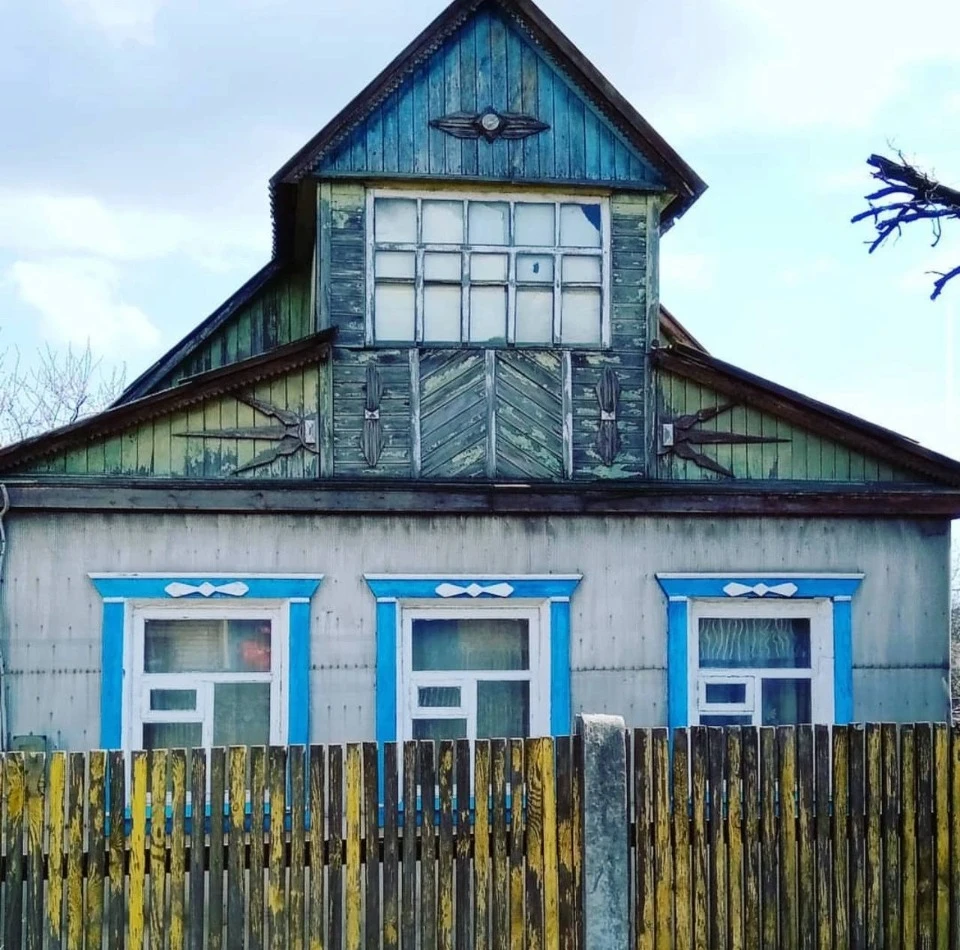
Mazankas are no less popular Ukrainian housing, which has its own characteristics depending on different districts.For example, in the outskirts of the city of Sievierodonetsk, mazankas have a one-story structure and a small area, while in other areas they can be larger and multi-story. Most often, they are built from clay, straw and wood.The main structure consists of two parts: basement and residential. The first one provides protection from cold and moisture, and the second one is intended for living.
"A hut and a house differ very easily. The first is high and made of wood, with a roof on two sides.The second one is low, and the roof is on each side, in modern language "four-pitched", or "Polovtsian type". This is because we are a people of the steppe, where there is little forest, but there are many winds. Wooden houses in Ukraine are widespread in the west or Polissia, but not in Luhansk oblast," the local historian notes.
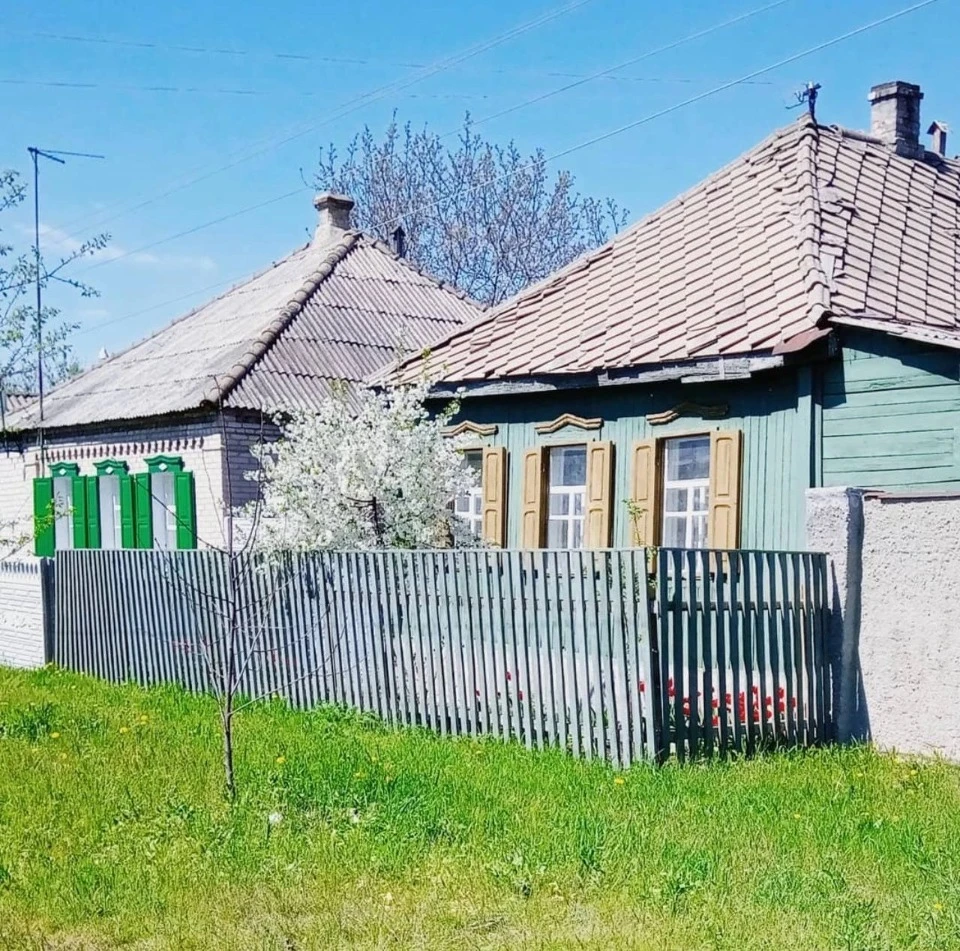
Roofs on Ukrainian and Russian houses also differ. For Ukrainians, it consists of four slopes that converge at the top of the roof. These roofs were always widespread in Luhansk oblast due to the climatic and geographical location of the oblast. Such type also provides better protection from the strong winds and snowfalls that often occur in this oblast. Houses with hipped roofs provide a larger area of housing on the same area of land, which is an important factor for peasant farms.
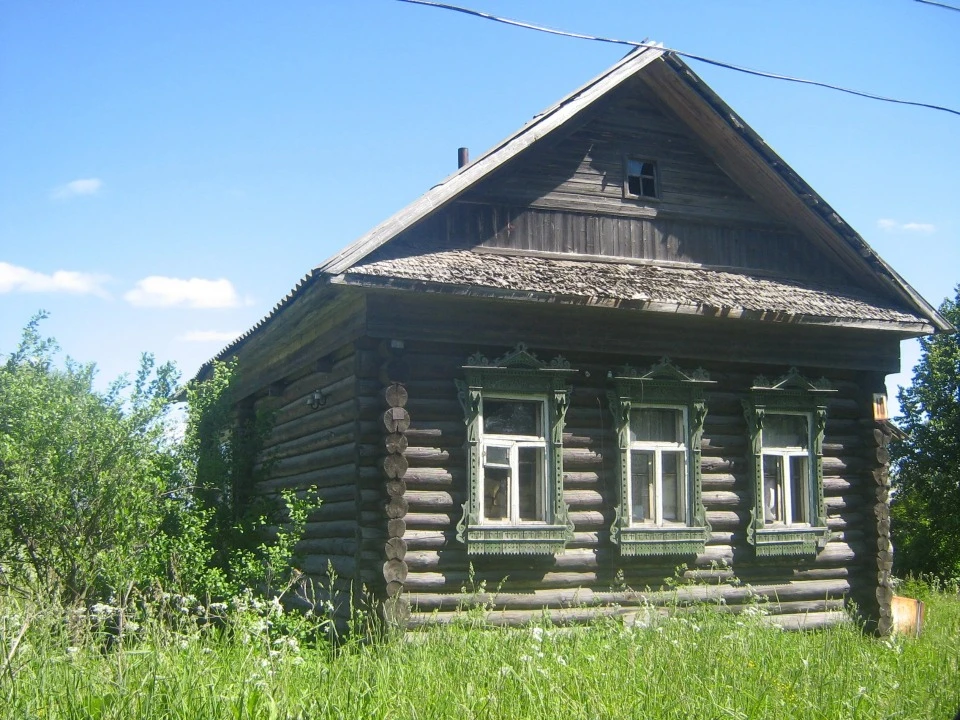
The Russian two-slope izba has a simpler design and it consists of two slopes that meet at the top of the roof.
All the above points confirm that Luhansk oblast is Ukraine, and all Russian fakes and narratives used by propagandists have nothing to do with reality.