
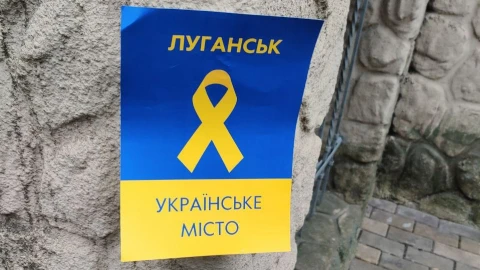
The occupiers say that Luhansk is mines. However, there is only one mine in the city.
They develop a narrative about "ordinary people", forgetting about cultural achievements. All of them talk about "prospects for young people" in Luhansk, but cherish nostalgia for the Soviet Union.
TRYBUN asked the residents of Luhansk oblast how they remember their hometown and refuted several fakes.
Is it a mining city?
Not at all.
Russian mass media write about Luhansk as a mining industrial city.
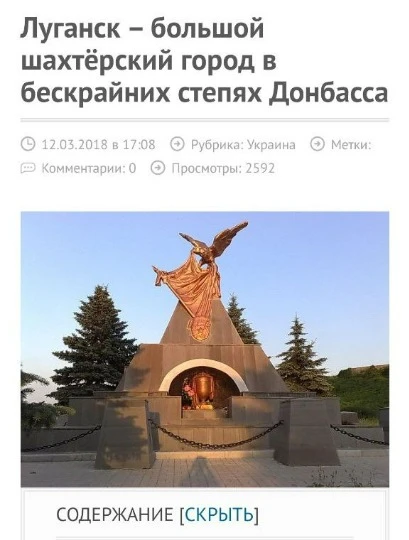
There are a total of 150 mines in Ukraine, 92% of them are located in Donetsk and Luhansk oblasts. Most of them don't work due to the full-scale war or occupiers' actions. For example, in Khrustalne Russian invaders preserved all mines and men were mobilized in winter of 2023.
As for Luhansk itself, everything is complicated. For the sake of justice, we should note that Luhanshchyna is truly a mining region. In good times, when the coal industry was developing and mining in our region had a high image, approximately one third of all mines in Ukraine were concentrated. However, all the mines were concentrated in the cities around the regional center — Lysychansk, Kadiivka, Sorokyne, Dovzhansk, Rovenky, Zolote, Khrustalne, etc.
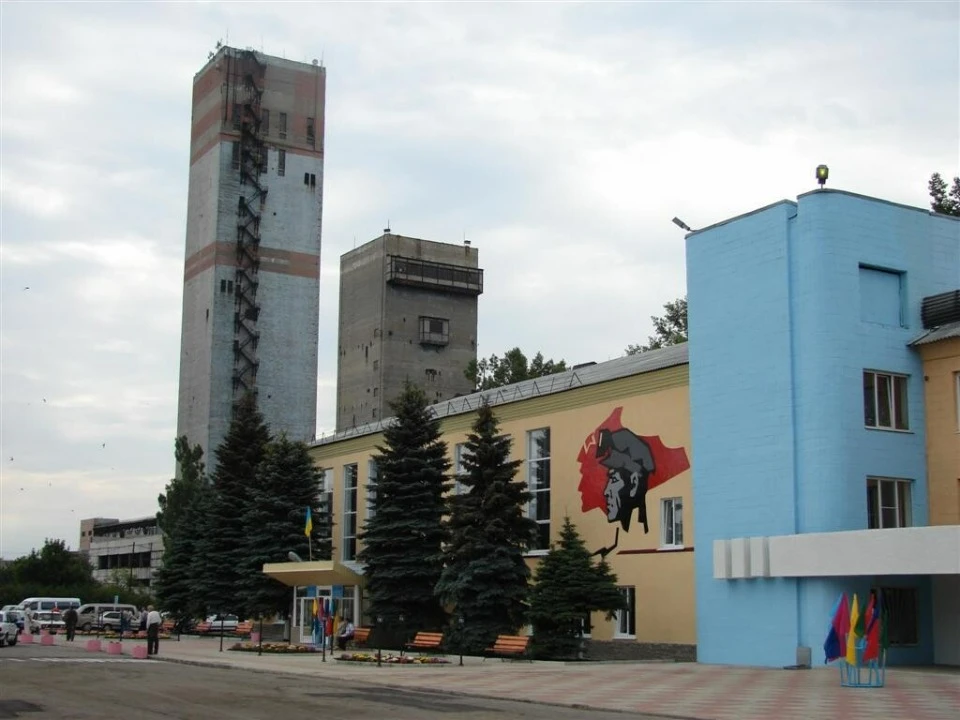
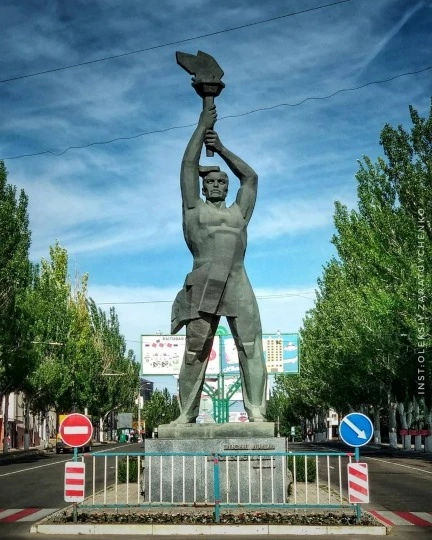
There were mines everywhere, but not in Luhansk itself.There is nominally only one mine in the city - "Yuvileina" - and it is located in the village of Yuvileina, which terriroty was joined to the city around 1970.
At one time, a legend was even passed around the city that tunnels stretch from Yuvileina to the "Workers' Luhansk oblast" memorial. However, this is just another myth, of which there are thousands in the city.
So it turns out that Luhansk has only the miner's quarter in the village of Yuvileina, a cake and the same "man with a torch".
Was there a culture?
Yes! The city was cultured and civilized. Before the Russian invasion Luhansk was detached from the Ukrainian context of cultural life. Everyone knew about festivals and events in Lviv, Kyiv, Kharkiv, butthere was an opinion that "there is nothing to see in Luhansk".
Moreover, there were two educational institutions in Luhansk that trained future actors, directors, screenwriters, journalists, artists and other creative people: the Luhansk State Academy of Culture and Arts and theInstitute of Culture and Arts of Luhansk national university named after Taras Shevchenko.
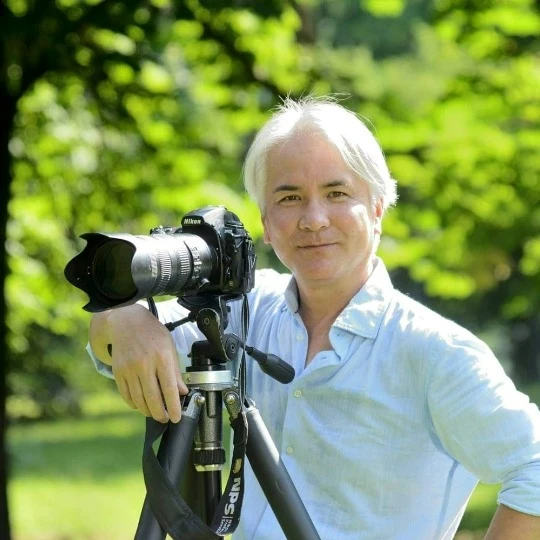
There was a powerful school of photography from the famous Japanese photographer Takashi Itozawa with exhibitions and practices for those who wanted to visit it in Luhansk.
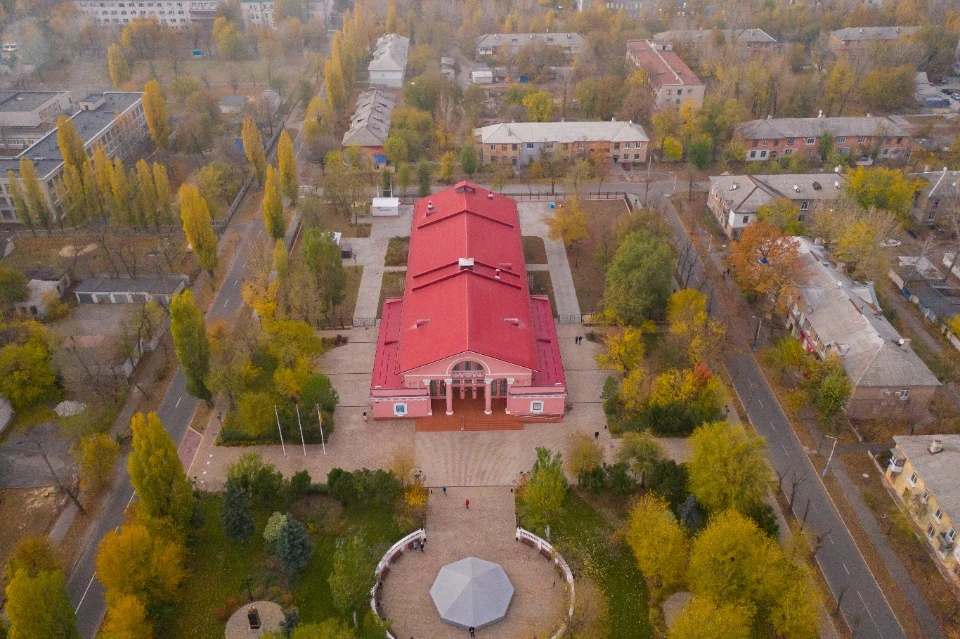
The Luhansk Regional Academic Ukrainian Music and Drama Theater gently Ukrainianized the city's residents even before it became mainstream.
"Our theater has a legendary history. It was created on June 15, 1941. Theater never played a play in Russian.This is not because we do not like the Russian language.
We simply believe that it is necessary to protect Ukrainian culture", the artistic director Mykhailo Holubovych noted in an interview with the newspaper "Express" in November 2009. The late Mr. Holubovych went over to the side of the occupier, twice relocated theater continues to nurture the Ukrainian heritage under the leadership of Serhii Dorofeev.Before the full-scale invasion the theater was located in Sievierodonetsk. Today Luhansk Academic Theater is set up in Sumy.
The repertoire of the Shchepkin Theater will soon include performances by both Sumy and Luhansk troupes, as well as joint projects.
Every year the regional children's festival of Ukrainian song "The Golden Piper" took place in the city. Just imagine in 2003 in Luhansk, which seems to have been alienated, about 200 children from different parts of the region participated. They all sang in Ukrainian.
The festival took place in three rounds and it was broadcast on regional television.
Our own sources in occupation note that it is spreading a narrative about "opportunities for ordinary people" in the local society.Young people are promised free education and various prospects for leisure, which apparently did not exist in Ukraine. In practice, everything is much more complicated.
"Now in Luhansk, you can hear that with the arrival of Russia, they allegedly began to develop culture and started with children. Children have become more educated and polite.But what about those children who spoil the newly opened sports fields around the city? What about the draft of boys at the age of 17?” Liliia Ivanchenko from Luhansk says.
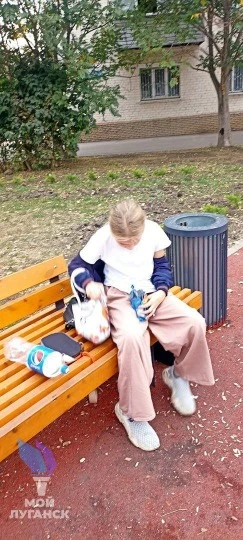
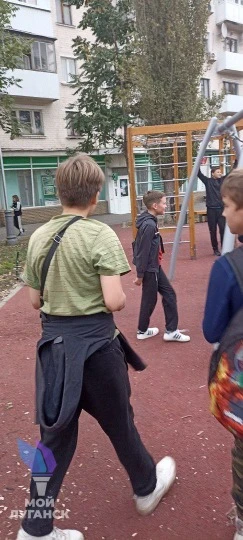
he woman agreed to tell us about her feelings about the cultural component in occupied Luhansk based on her own life experience.In 2014, she left the city, but later the woman returned due to personal circumstances.
"I am very surprised to hear that under Ukraine everyone was poor and unhappy, it was just like that called "hopota". I have a daughter. While she was still studying at school, she wrote works for Small Academy of Sciences, later went to the theater studio at the local Palace of Culture.During her student years, she joined a youth public organization and went to literary readings in "Svitlytsia".
And it's not from my submission, because I've never had time, I worked a lot. She somehow found everything herself, like most of her friends.So, on the example of my child and her environment, the cultural life in Luhansk was raging. I couldn't keep up with her pace, and I was very happy about it, because in my time there was nothing like that," the woman says.
Her words are also confirmed by journalist Oleksii Falin.
"Before the Russians came to "save" us and I had to leave home (in 2014 - approx. ed.), I can definitely say that there was a cultural life in Luhansk.Territorial proximity to Russia had a strong influence, as well as political component played a role. However, despite everything, there were exhibitions, festivals, and literary contests, creative evenings and lodgers.There was a lot. For example, I played in "What? Where? When?" together with friends.Every year we held the All-Ukrainian one, and in some places it acquired international status, the festival of intellectual games "May bug". It waslarge-scale and exciting," Oleksii recalls.
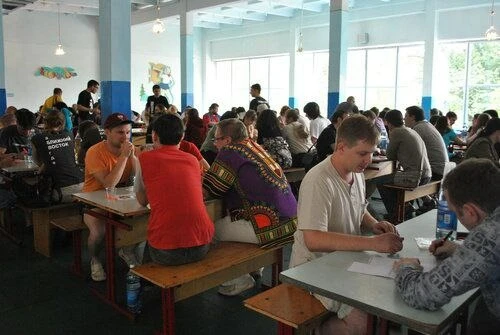
According to Lilia Ivanchenko, everything is different in Luhansk now.
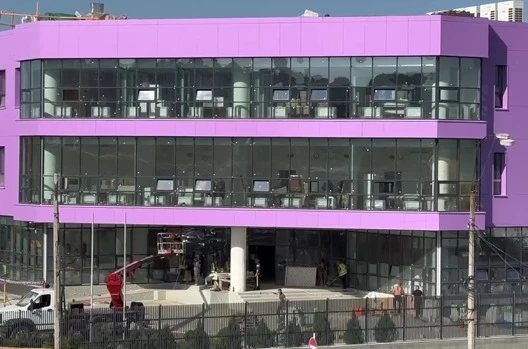
"Recently, a huge youth center was opened near the railway station, but no matter how many children or grandchildren of my friends went there and asked what was there and how to join, they did not get a clear answer.It seems that everything is done for a beautiful picture on social networks," Ms. Liliia says.
The woman from Luhansk also notes that, in her opinion, the city currently lacks places for youth leisure.
"Of course, there is a youth organization from the pro-Russian party, but children are zombified there.In just a few months, children begin to speak differently - they repeat about the Russian roots of Luhansk, about the fact that we used to live badly, although like them. Can they remember it? Do you know the worst thing? There is a former classmate of my daughter, who now works with high school students from the mentioned party. They are nostalgic for the Soviet Union. I don't have such a thing in my head," — the woman is indignant.
Steps to self-identification
In 2012, the first road sign in Ukraine appeared in Luhansk.Yes, it is here, where the Russian invaders now rule. Then they painted 45 meters of embroidered ornament in red, black and yellow colors on a road tile in the city center in front of the monument to Taras Shevchenko."5-year-old children, and elderly people, and young people also drew - this is symbolic," the organizer of the action Vyacheslav Bondarenko commented.
Oleksii Falin thinks that shortly before the Russian invasion, we had every chance to revive their pro-Ukrainian self-identity.Literary evenings appeared in Ukrainian, books in Ukrainian translation could be bought more freely, more and more young people became knowledgeable.
"I remember the Vyshyvanka procession in Luhansk. There were less than twenty people then, but me I am sure, if it were not for the "Russian Spring", there would have been fifty in 2014, and today they would have been released thousands", - the journalist shares his thoughts.
In 2013, as part of the worldwide Megamarch, 11 people - public activists and journalists - came out in embroidered jackets on street in Luhansk. One of the participants wore embroidery that her grandmother used to embroider for her.
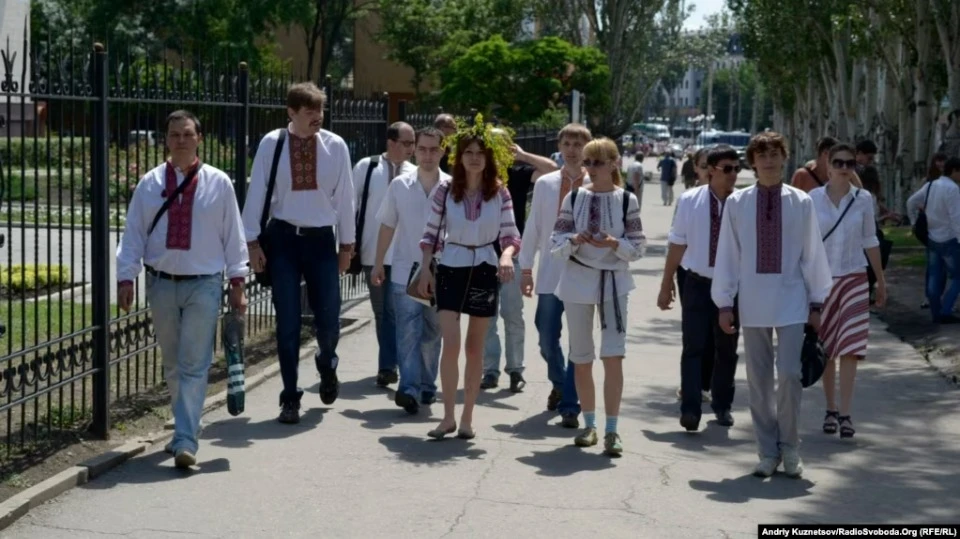
"Yes, it was not a large-scale action, but it attracted attention and laid the foundation for the first one a brick," Falin continues.
Oleksiu also says that, in his personal opinion, we lacked at that time several generations and the desire to explore the region in which we lived.
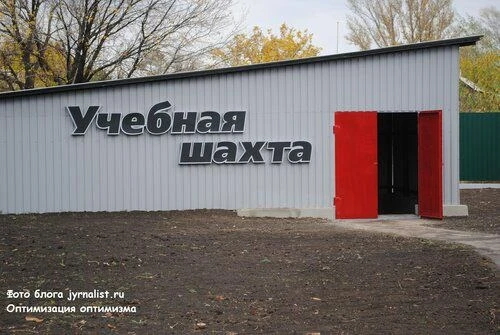
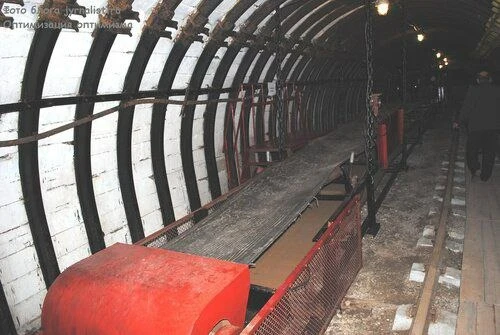
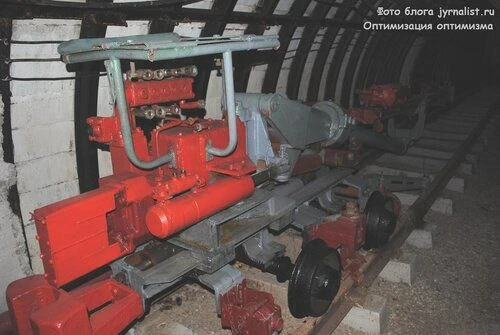
"We ourselves did not know our region, history and culture, traditions very well. Who knew that in Luhansk oblast every year there was a festival of Lemki culture "Stezhkami Lemkivshchyna"? We had a bunch of potentially tourist-attractive places that could contribute to the development of culture and, I think, art.For example: it is Luhansk aviation and technical museum and educational mine-museum in Dovzhansk.Everyone somehow knew about the "Young Guard" museum, but noone heard of the Derkul horse factory and the mine museum," Oleksii says.
In his opinion, it was Sovietization that led to what we had at the beginning of the Russian invasion in 2014.
"You know, they say that people were pro-Russian, but I believe that they were pro-Soviet.Russian propaganda hits on emotions and memories, as if supporting people's reluctance to learn and learn something new.During the Soviet era, everything Ukrainian was eradicated, the reverse process was very slow, although it was happening.I think we didn't have enough one or two generations to return mentality", Oleksii Falin concludes.