

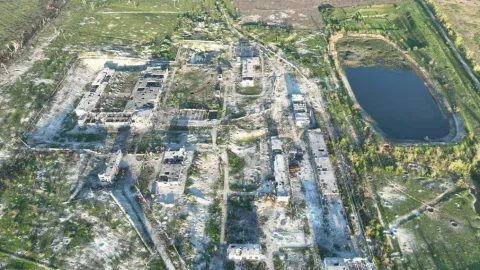
Since the beginning of Russia's invasion, the small village of Bilohorivka has become the hottest frontline in the area, an outpost of the Ukrainian Armed Forces in Luhansk region, which the Russian occupiers have been shelling with precision fire from all available weapons. Due to its geographical location on the dominant heights, framed in the north and northwest by the Siversky Donets river, Bilyohorivka seems to close the gates to the Donetsk region, ensuring the defense of the entire free part of Donbas. Modern military experts call Bilohorivka the second Chornobaivka, and historians see the phenomenon of the village in a historical context.
The article was written by historian Victoria Pylypenko for “TRIBUN”.
Background information: Viktoriia Pylypenko, PhD in History, lawyer, researcher of the history of Luhansk and Donetsk regions.

The fact is that the territory of Bilohorivka was part of the summer capital of the Golden Horde khan, which was once considered impregnable compared to others. Such statements were made possible by the discovery of the summer residence of the Golden Horde khan in the village of Shypylivka, Lysychansk city community, Sievierodonetsk district (at the time of the discovery, Bilohorivka village council, Popasna district) in the summer of 2013
Why Luhansk region?
The steppe expanses of Luhansk region, despite the widespread myth, have never been empty. It was part of the contact line between two civilizations, Christian and Muslim, which for a long time coexisted quite peacefully. The steppe areas, which were called the Cuman steppe until the XVIII century, witnessed the existence of such a long peaceful economic symbiosis between the two cultures.
The Cuman steppe was called that for a reason, because the Cumans, even after the arrival of the Tatar-Mongols, continued to form the backbone of the nomadic element of Eastern Ukraine. After the elite was destroyed or fled under the protection of the Kyiv princes, the Cuman tribes were included in the Golden Horde.
The Golden Horde yoke, as the period of political dominance of the Golden Horde is often called, was an example of a new system of conquered territories economic dependencу. Its essence was to maximize benefits by receiving payment for reigning edicts (charters), the (value of which increased for each new prince as at an auction), financial or in-kind charges from conquered households, and the development of new trade routes. The latter is precisely where the positive impact of the Golden Horde on the development of the eastern territories, primarily those that today form part of the Luhansk region, is manifested.
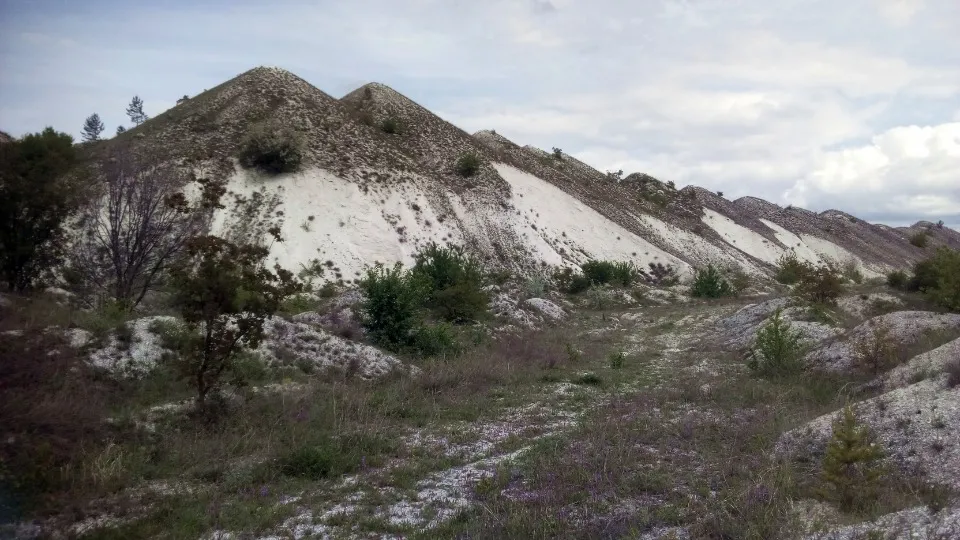
“Sakmas” were the routes of movement of the Tatar-Mongols from the capital of the Golden Horde to the territories they conquered and the centers of trade operations. Several such routes passed through the Luhansk region, including the Izyum, Bakhmut, Muravsk, and Kalmius routes.
Of strategic importance for the Golden Horde was the Kalmius Road, which started from Perekop, along the right bank of the Kalmius river to the Luhan river, through it and the Bakhmut river approached the Pryvilnyansky ledge of the Seversky Donets, and then turned east along the Rubizhne gully to the ford across the Borova river and further north to Moscow. This was not a random set of travel routes, but rather based on the experience of previous nomads and the existing cultural layer, primarily of the Saltov and Zarubynets cultures, the remains of which were found on the territory of Bilohorivka.
Given the peculiarities of the relief and the strategic importance of the Kalmius Road, it is not surprising that the plateaus located on this route were used to accommodate the summer residences of the khans of the Golden Horde.
Luhansk region - the summer capital of the Horde
The official capital of the Golden Horde since the end of the XIII century is Sarai al-Jadit in the Volga region. Here, according to all the canons of nomadic life, there was a harem of the khan, his residence and a mint for coinage. It was the presence of the mint that primarily determined the status of the capital, strengthening the role of the city in comparison to others. Tribute was brought here, and agreements on alliance or cooperation were concluded here, mostly verbally. However, during the lush grass season, when the steppe, as an ideal place for nomadic livestock, is especially beautiful, the khan would move his capital to a pre-selected plateau of one of the sakmas.
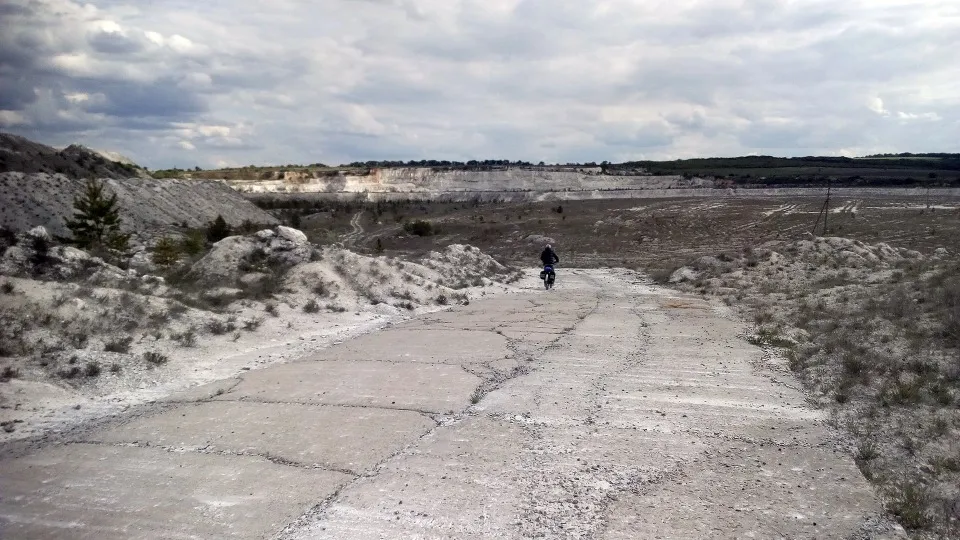
According to archaeological excavations, the Pryvilnia plateau, an area of 8 km between Bilohorivka and Shypylivka in the Luhansk region, was perhaps the most favorite khan's residence in the 14th century: The Golden Horde entered a period of great strife in the 13th century, during which 25 khans changed. Since the Kalmius Road played a central role in exercising logistical control over the lands of the empire, it becomes clear that whoever controlled the plateau in the Luhansk region controlled all three important Tatar sakmas. It is worth noting here that the Kalmius Road at that time had a branch to the Krasna river, and thus was the only trade route connecting the khan's possessions with Muscovy. The latter was completely dependent on the Golden Horde, as evidenced not only by the payment of tribute but also by the institution of “baskatstvo”, appointed Tatar governors of dependent lands, which existed in Moscow. Thus, the khan's residence in the Luhansk region was ideally located, enabling the khan to exercise full control not only over trade operations but also to keep all dependent territories under military control.
The high, to some extent even sacred, status of the khan's residence is evidenced by the presence of a mint and a preserved Cuman shrine, which contradicted the declared state traditions. The Cuman sanctuary looked like mounds with stone statues on them. Since the Cumans were accustomed to depicting their commanders on statues, the preservation of the sanctuary near the pond shows special respect for the Cuman past of our lands and recognition of its influence on the Golden Horde elite itself.
As for the coins, they are represented by copper and silver specimens, with their own overstriking and countermarking. These are coins from the time of Khan Abdullah, who ended decades of strife and was able to regain control of the Golden Horde territories.
The analysis of the found coins made it possible to establish an approximate chronological framework for the highest peak of the Horde summer mint between 1360-1370. The coins of this date indicate the place of residence, the New Horde, and variations in the images of feline predators that had no analogues in the issues of other courts. Coins depicting the family coat of arms of Khan Abdullah, the trident tamga, have also been found. All of this indicates that the territory between Shypylivka and Bilohorivka was not just a part of the Golden Horde, but a springboard for restoring the integrity of the Tatar-Mongol state, continuing its state-building after internal strife and external defeats.
The figure of Mamai, known to Ukrainians as the Cossack Mamai according to folklore tradition, played a significant role in this. Although Mamai himself had nothing to do with the Cossacks, he controlled the Muravskii road, which also passed through Luhansk region, and therefore became a favorable ally for Abdullah. After Abdullah's death, Mamai facilitated the transfer of power to the khan's son Muhammad, remaining the real ruler of the Horde. However, the numerous defeats of the Golden Horde army under Mamai's command by Muscovy and its allies, as well as the seizure of power by Khan Tokhtamysh and the subsequent transfer of power to Khan Tamerlane, led to Mamai's loss of power and the decline of the khan's summer residence in the Luhansk region.
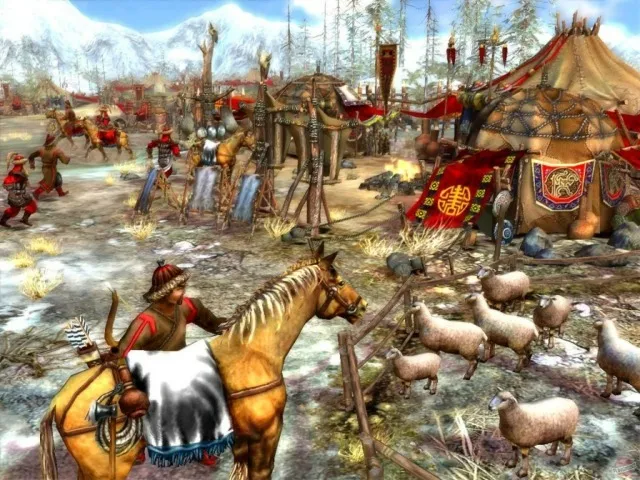
The discovery of the summer headquarters of the Golden Horde khan on the Pryvilnia plateau with numerous finds in the form of coins, jewelry, weapons, and household items completely rejects the popular thesis that Eastern Ukraine had no historical past because it was a wasteland or Wild fields. The absence of written sources about the actual second capital of the Golden Horde in the Luhansk region, to which Muscovy and other Russian principalities paid tribute, is fully compensated by the rich archaeological material that is the primary evidence base for the struggle for the true history of Donbas. Such findings once again prove that in the XIII and XV centuries, Eastern Ukraine, being a link between two civilizations, was able to preserve unique traces of nomadic states on its territory, which are chronologically superior to the most Eastern European states of the time. The Luhansk region was one of the centers of a unique state formation that combined the experience of the Cumans, the Tatar-Mongols, and local traditions of Slavic cultures.
This fact is one of the pieces of evidence against the thesis of the Russian component of Donbas, and thus shatters the Russian propaganda idea about the roots of the Russian people in the Luhansk and Donetsk regions.