

Today, the Luhansk region is almost completely occupied by Russian troops. But about 20 years ago, things were very different. The region was considered one of the most developed areas of Ukraine during the Soviet period (1922-1991) and the first years of independence (1991-2000). The investments from European partners became a solid foundation for development. They saw great potential in the modern Luhansk region, so they actively invested in its development.
The “TRIBUN” has found out which foreigners have invested in the Luhansk region and for what purpose.
Scotland
Scottish businessman Charles Gascoigne played an important role in the early development of the Luhansk region. It was he who oversaw the construction of the foundry. Most historians also rightly call him the founder of the city of Luhansk, because it is with this enterprise that the history of the regional center begins. Preparations for the development began in 1795, and in the spring of the following year, construction work began in the lower reaches of the Luhan river, namely at the mouth of the Olkhova river. The first engineers of the plant were British, and the workers were locals from the surrounding villages: Orikhove, Petropavlovo, Horodyshche, and others. Workers from the Russian Empire were also brought to the foundry.
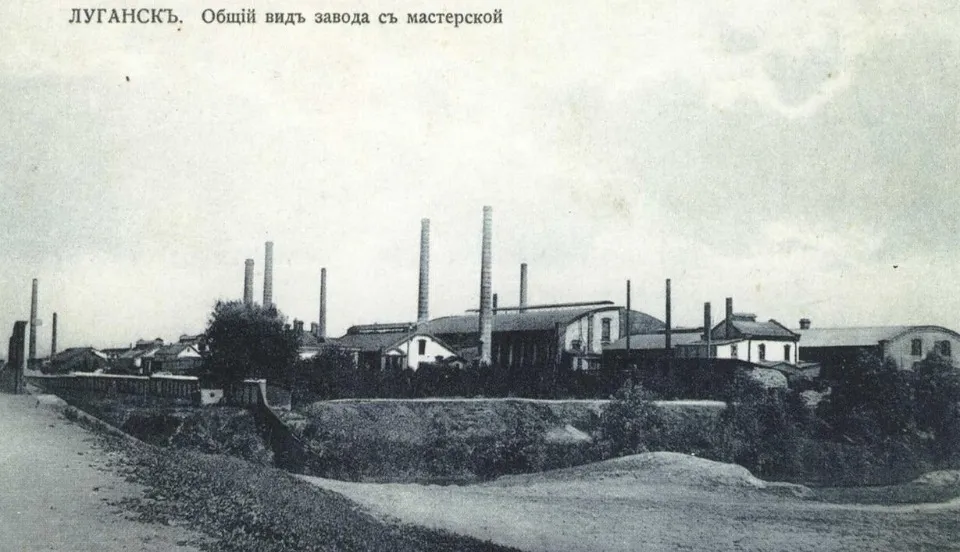
"The Luhansk Foundry had a significant feature. Unlike the metallurgical plants in northern Russia and the Urals, which at that time were still working on charcoal, the Luhansk foundry planned to master metal smelting using coal coke," wrote Vladimir Podov and Vitaliy Kurylo in their book “History of Donbas”. In it, the authors describe in detail the cultural heritage of the region.
In 1795, with the construction of the Luhansk Foundry, a coal mine was opened in Lysycha Balka to supply the plant with coal. In April 1796, the Lysychansk mine produced its first coal.
However, the use of coal coke was not successful, although this variant of smelting was used more than once afterwards. Still, it did not become the main method because the crude iron was always of poor quality. The plant mostly operated on imported Ural crude iron.
It is a well-known fact that from the end of the eighteenth century, the Luhansk Foundry began systematic production of shells and guns for the Black Sea Fleet. In addition to that, they also produced axes, scythes, horseshoes, saws, seeders, steam engines, and many other useful items.
In 1844, the plant produced a direct-acting steam engine for water drainage at the Kapitalnaya mine of the Lysychansk minery.
Russian professor Ivan Augustovich Thieme emphasized that this was perhaps the first direct action water drainage machine.
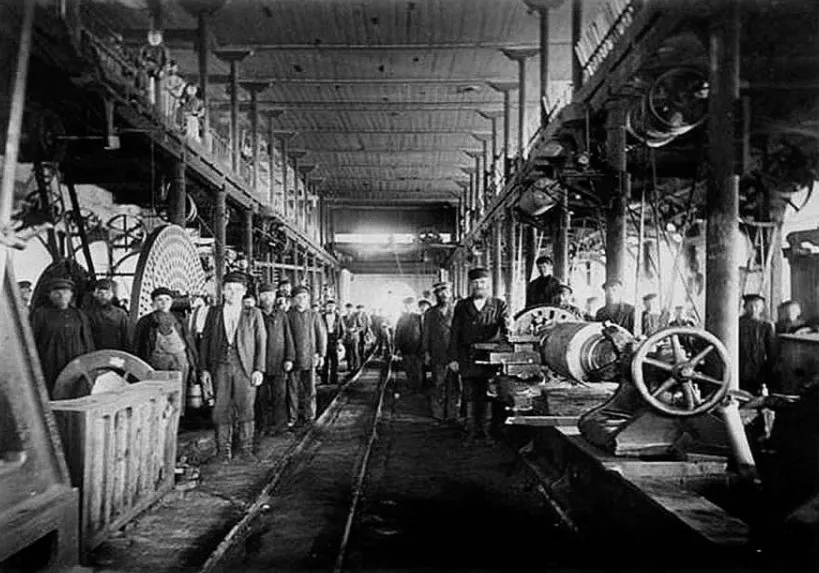
According to the authors of the book "History of Luhansk Region" by Yefremov, Kurylo, and Brovchenko, 650 thousand rubles were spent on the Luhansk plant.
However, due to the lack of a railroad, it was extremely difficult to export the products, and if it was possible, they grew significantly in price.
"An indicator of the high skill of Luhansk foundry workers was the artistic casting produced at the plant. A bas-relief of the first director of the plant, K. Gascoigne, busts of Peter I and A.Suvorov, a monumental column with details for the Monument of Glory in honor of the victory over the Swedes near Poltava, a monument for the city of Polotsk in honor of the victory of Russian troops over Napoleon, and many others were cast here," Podov and Kurylo wrote in their book “History of Donbas”.
On June 20, 1887, the plant was liquidated by government decree. The state-owned Luhansk Cartridge Factory was organized in its place.
The establishment of the Luhansk Foundry laid the foundations for the industrial development of the region. Gascoigne made a great contribution to the industrial revolution not only in the region but throughout Ukraine. Thanks to his work, industrial coal mining began, transport and industrial infrastructure began to develop, the latest technologies were mastered, and the factory village, which later became the city of Luhansk, grew. The closure of the plant did not stop these processes of industrial development in the region.
Belgium
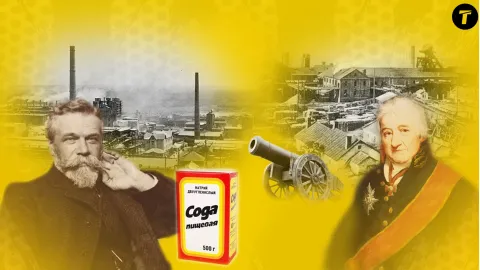
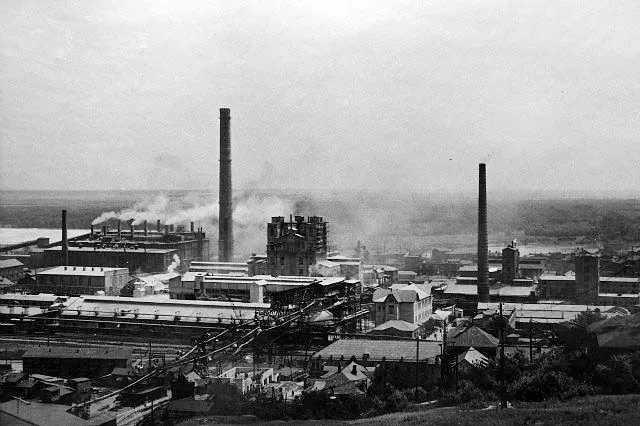
The city of Lysychansk is associated with Belgium in the Luhansk region, as it was there that in 1887 the Belgian engineer Ernest Solvay and local businessman Ivan Lyubymov established the “Lyubymov, Solvay & Co” joint-stock company. They laid the foundation for the advanced production of soda ash using the ammonia method. Initially, the plant was named after the Donets river on which it stood - “Donetsk soda plant” - and later it was renamed “Lysychansk soda plant”.
Lysychansk was chosen by the Belgian engineer for several reasons: the availability of running clean water, chalk quarries, a railroad, and cheap labor. The plant was built near a chalk mountain in the village of Verkhne, which later became part of Lysychansk.
Podov wrote in his work "A Path Equal to a Century: A Sketch of the History of the Lenin Order of Lenin Soda Plant in Lysychansk":
"The location for the soda plant was chosen very well. The Siverskyi Donets River is nearby. There are chalk deposits tens of meters away. Coal was available in abundance four kilometers away, in Lysychansk, where its rich deposits had been mined for about a hundred years. The most distant raw material base - a salt pit - was located near Bakhmut."
Solvay founded a soda factory, and at the same time he pioneered an industrial method of producing soda, called the Solvay Method. This method replaced the previous one by Nicolas Leblanc, which was less efficient.
Ernest Solvay practically became a monopolist in the production of soda: within 3 years of operation, the plant in Lysychansk became the largest soda producer in the Russian Empire, and in terms of soda production, it was then ranked 2nd in Europe.
Along with the state-of-the-art production facility, a whole neoclassical town was built: a school, a hospital, and houses for management and workers. A total of 33 buildings were erected near the plant.
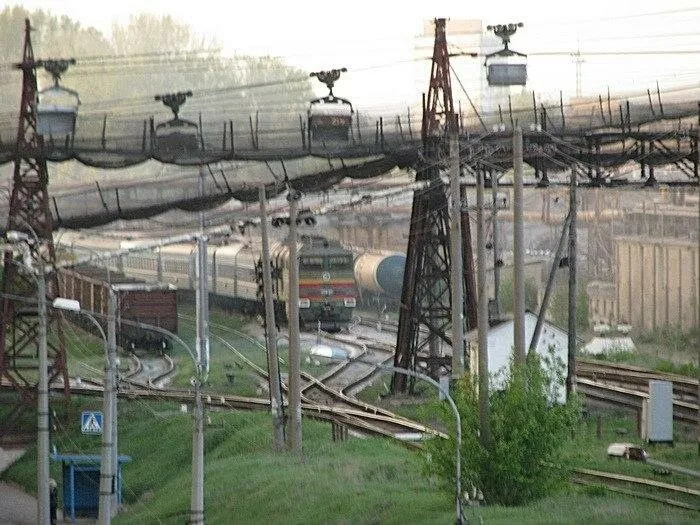
A railroad and the first mines were built to support the plant's operation. Subsequently, soda production stimulated the construction of a glass factory in Lysychansk. And to deliver chalk and coal to the plant, the longest cable car in Europe was built.
The main jewel of Lysychansk is the Soda Plant Hospital, which was once one of the most modern hospitals on the continent. The hospital even had an elevator, one of the first in Eastern Ukraine.
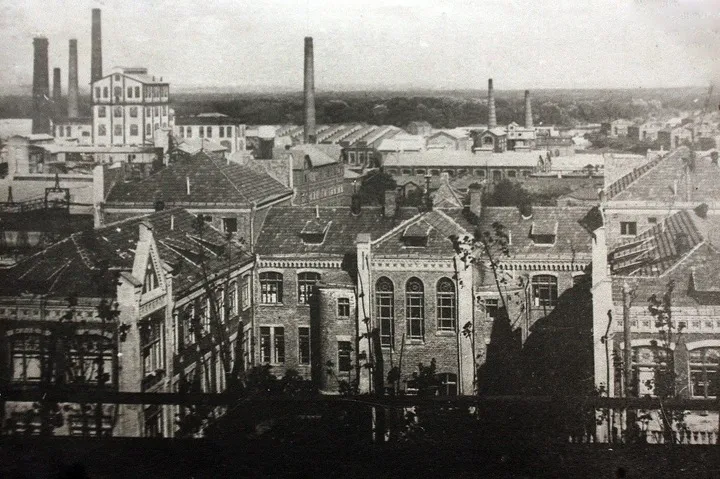
In February 2018, Lysychansk received the Belgian Heritage Abroad award. The city's complex of buildings was among the five nominees for the competition, which is held annually with the support of the King of Belgium Foundation.
In 2007, the soda plant was acquired by Russian Soda Company, the largest supplier of soda ash in Russia. Three years later, the plant was declared bankrupt. The production assets were sold to “Dukat M”, a company registered in Cherkasy that specializes in dismantling industrial facilities. Demolition work began in 2011. The cable car and all the scrap metal were removed, and the buildings were blown up. Today, only a few remnants of the destroyed buildings remind us of the great industrial past.
It is this history of the rapid development of industry in the Luhansk region that the Soviet government tried to erase, and now the Russian government is continuing the "work". Therefore, the industrial giant actually emerged not only due to Soviet industrialization, but also due to the efforts of desperate Europeans who saw the potential of the Luhansk region in the 19th century.


