

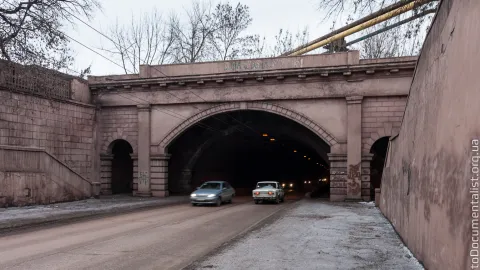
The construction of pompous underground transportation facilities was a special obsession of the Soviet government. Such projects had not only economic but also ideological significance for party functionaries. Thus, a trolleybus tunnel appeared in Alchevsk, the city of metallurgists.
Historian Oleksandr Naboka spoke to “TRIBUN” about the epic "construction of the century," as it was called in the Luhansk region fifty years ago.
The conquest of the underground was no less important than the conquest of air, space, or sea for demonstrating all the "advantages" of the socialist system. The first manifestation of this somewhat excessive "underground hysteria" was the construction of the Lazar Kaganovich Moscow Metro in the early 1930s. For the rest of the Western world, the subway network was nothing more than a convenient infrastructure project, each part of which had only practical significance. But in the USSR, it became an ideological "idée fixe”
that motivated the transformation of metro stations in cities with more than a million inhabitants into real palaces. Soon, the fashion was picked up by smaller cities and industrial enterprises, which implemented various projects for the construction of underground transport facilities, focusing on the pompous style of the capital's subway.

Alchevsk, the leading metallurgy center of Luhansk region (until 1992, Komunarsk), where a metal-furnace plant of all-Soviet significance operated, was no exception. Despite its economic importance, the city was not big enough to have its own subway. Therefore, in the 1950s, construction of a trolleybus service began here, the second in Donbas after Donetsk. In September 1954, the first trolleybus ran through the city. This necessitated the construction of a transport tunnel, which, upon completion, became one of the symbols of the "city of metallurgists".
Reasons for building of the tunnel
As noted above, the Khrushchev era began for Alchevsk (at the time, Voroshylivsk, the name the city had from 1931 to 1961) with the construction of a trolleybus service, which was considered a demonstration of the benefits of socialism. The main mastermind of the project, who personally kept it under his watch, was the "legendary" director of the Alchevsk Metallurgical Plant, a hero of socialist labor, Petro Hmyria (1905-1967). Managing one of the most important enterprises of the Soviet Union in 1937-1961, he is considered the most important Alchevsk "businessman" who brought the legacy of the Alchevsk entrepreneurs to this new, all-Soviet level.
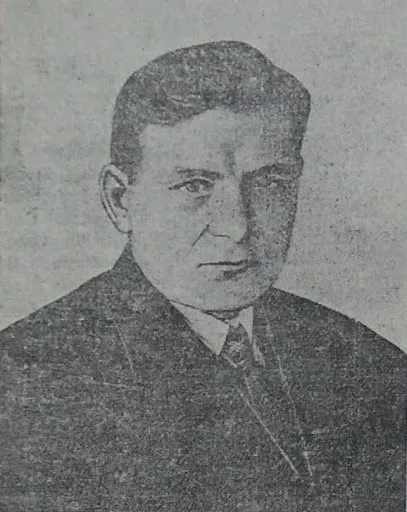
Since the plant was a city-forming enterprise, Hmyrya was one of the most important bosses in the city, and thus directly influenced the construction of housing, educational institutions, hospitals, and kindergartens. He was also responsible for the creation of the city's transportation infrastructure. It is likely that Hmyrya ordered the construction of the trolleybus tunnel, for both subjective (satisfying his own ambitions) and practical reasons.
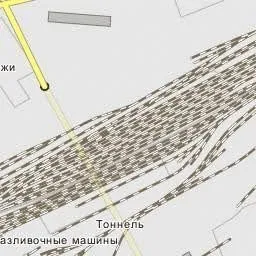
The practical significance of the underground structure was to connect two parts of Alchevsk, which was separated by a huge massif of the metallurgical plant. The Gorky settlement (Zhylivka), “Administrativne” settlement and the railway station were isolated from other city districts by the plant. This created many infrastructural problems for the city and became an obstacle to organizing a trolleybus service.
Instead, in the 1950s, the enterprise developed rapidly, "picking up" more and more new territories, thus widening the infrastructure gap between the southern and northern parts of Alchevsk. The constant expansion of the plant put the trolleybus line builders in a dilemma: how to lay the trolleybus line. If it was built "bypassing" the plant, there was a risk that sooner or later it would end up on its territory. In turn, it was impossible to build a bridge over the plant, which covered an area of more than 10 kilometers, for technical reasons.
The construction of a regular road through the plant's territory also did not solve the problem, as it had to cross a dense number of railroad lines, which made it impossible to build the required number of crossings. In addition, like any "special" facility, the plant had to be closed to the public.
Construction that lasted four years
After long discussions and approvals, it was decided to create a tunnel under the plant, involving a team that participated in Moscow Metro construction.
According to the plan, it was envisaged to dig an underground line of more than 400 meters under the plant, which passed under the plant's workshops and numerous railway lines. This was a rather difficult task, given that the construction was slowed down by groundwater, which created a risk of collapses and other industrial disasters.
As noted on the Facebook page "Alchevsk: City and People," construction began in 1953, even before the trolleybus line was created in 1954, but soon became a "long-term construction project" that lasted for 4 years. The page contains a link to the newspaper “Bolshevik Way” from 1957, which noted: "the construction of the 415-meter-long city tunnel, which is of great importance, oddly enough, has been going on for more than 4 years. It is necessary to involve everyone to complete the construction in 1957".
It is likely that the construction conditions and difficulties forced the abandonment of the previous project, which envisaged the most pompous design of the structure in the style of the capital's subways. The page "Alchevsk: City and People" displays copies of plans that allow us to imagine how the tunnel was envisioned by its planners.
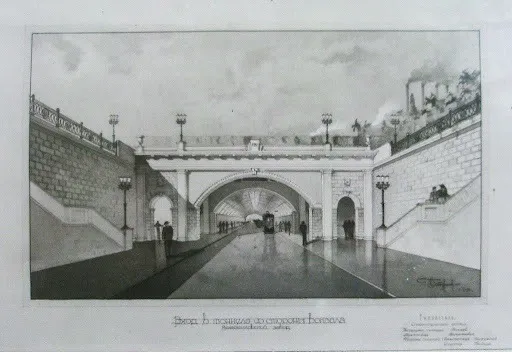
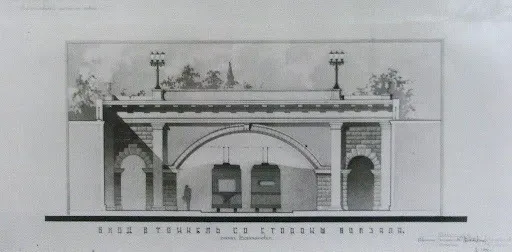
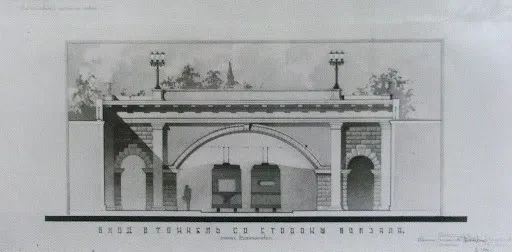
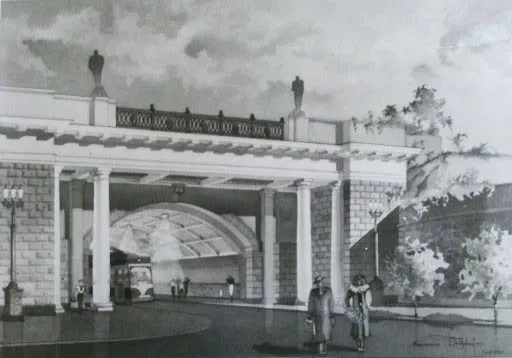
The construction was actually completed in 1957, when freight and passenger vehicles were allowed to use it, and the following year trolleybuses were already running through it. Despite the fact that the realities of construction necessitated the abandonment of some elements of its pompous decoration, the tunnel was a very important achievement in itself. The more than four-hundred-meter underground branch was the only one in Ukraine to have a tunnel trolleybus line.
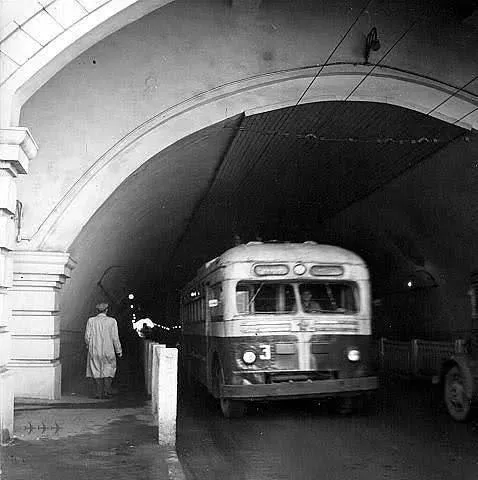
An elegant openwork fence separating the vehicular and pedestrian parts was an element of the tunnel's decor. However, it was soon replaced with a regular concrete parapet, as the fence could not effectively deter possible vehicle collisions with people in the event of accidents.
The loss of certain decorative elements did not affect the perception of the tunnel as one of the key symbols of socialist industrial achievements. Throughout history, the structure was repeatedly used as a backdrop for Soviet films. In particular, the exit from the tunnel (decorated with tiles with "Ukrainian, embroidered" ornaments) was shown in the 1971 film “Anthracite”, dedicated to miners preparing for a production record.
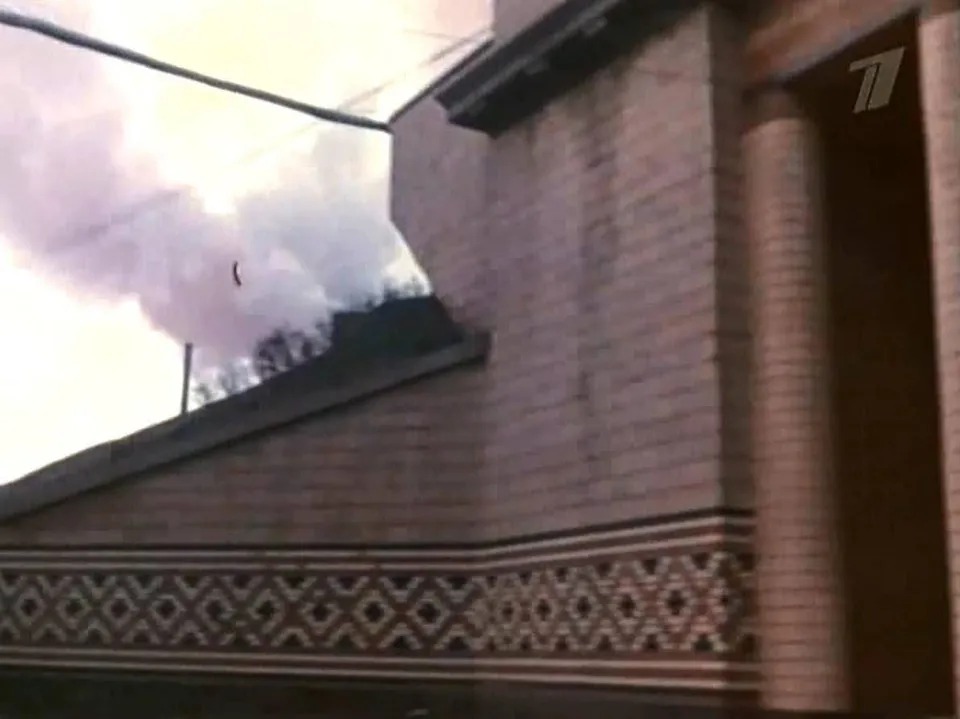
The next time the tunnel was shown in a movie was in the days of independence, in 2007. It was the movie “Murder in Winter Yalta”. This detective film tells the story of the murder of a beautiful accountant of a successful company from Yalta. The logic of the investigation eventually leads the detectives to Alchevsk.
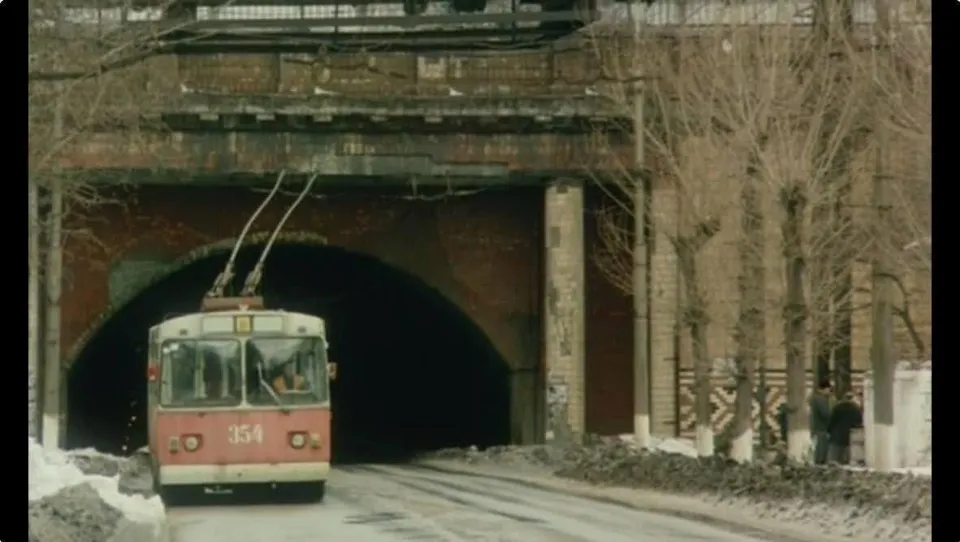
The freeze-frame from the movie shows that at the beginning of the XXI century the tunnel looked abandoned. Its main feature, the Ukrainian ornament, is visible.
Thus, the Alchevsk tunnel is both an ideological ambition of the regional Donbas elite and an important urban transportation hub. It became one of the main symbols of Luhansk's controversial Soviet industrialization. In any case, today it attracts attention and is a specific but important asset of Luhansk region.