

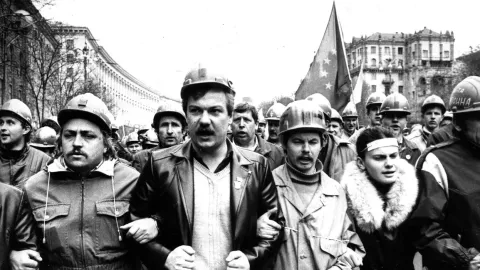
On August 24, 1991, the Supreme Council of the Ukrainian SSR adopted the Act of Declaration of Independence of Ukraine. Preceding this were economic crises, the strengthening of national-democratic movements, and dissatisfaction among the population with the policies of the then leadership. Also, coal miner strikes shook the country in July 1989.
The reasons, features, and, most importantly, the consequences of these protests were investigated by the journalist of TRIBUN.
The first thing that comes to mind when one recalls the beginning of the 1990s is shortages. Indeed, shortages existed throughout the history of the Soviet Union, but it was during this period that they peaked - there was a lack of food products, particularly sausage and meat, and the prices for them were high for the average citizen. In the same year of 1989, heavy industry sectors, including the mining industry, found themselves in a difficult situation - low profitability, physical wear and tear, and aging of production assets led to dissatisfaction among workers with the conditions in which they had to work.
"We descended into the mines. I know what the average life expectancy of a miner is - about 48 years. There was nothing to buy in the stores, not even soap. Miners worked in terrible conditions. The working day lasted eight hours, of which about an hour and a half, sometimes two, was spent on the descent to the bottom of the mine shaft, another four hours they literally crawled on their knees, up to their ears in dust, extracting coal of not the best quality, and almost two more hours were needed for them to get out of this hole. That's how miners extracted coke. Similar conditions existed in the United States a hundred years earlier," - said American historian Daniel Valkovich, who studied the strikes.
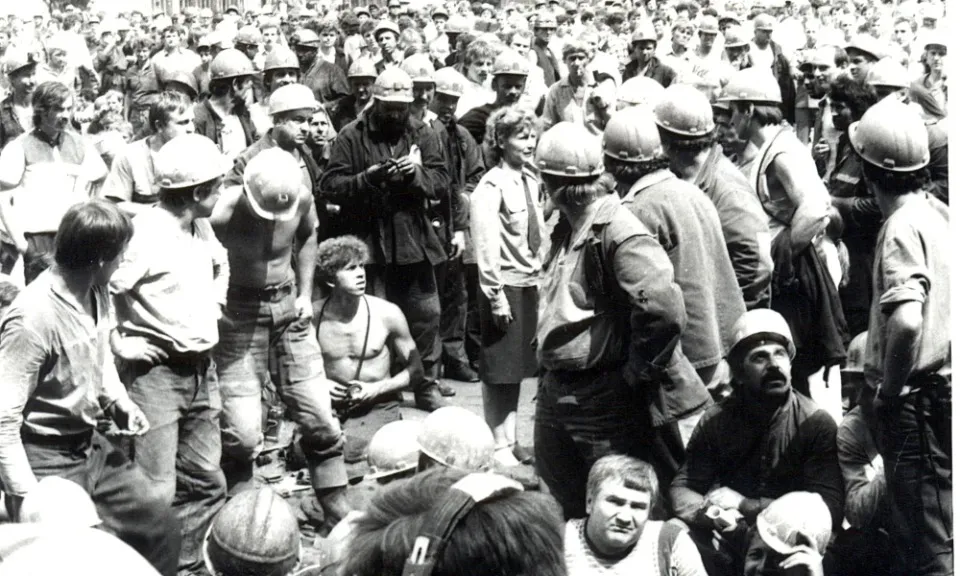
The dissatisfaction of miners also grew due to insufficient provision of safety equipment, which often resulted in the death of their colleagues. The Soviet authorities and enterprise managers demanded constant growth in coal production from miners, while there was no observable improvement in the decent payment for the life-threatening work and the quality of life of the workers.
The first protests began on July 10, 1989, in the Kuzbass region of the Russian Federation, but for the miners of Donbas, this was an anticipated signal - they were planning to come together. The first strike took place in Khrustalny, in Luhansk region (formerly known as Krasnyi Luch) - local demands of the miners were usually met, but principle decisions that could lead to systemic changes were not made - the central authorities did not heed the signals from the regions.
Yuliy Ioffe, the former director of the Hirska mine in the Popasna district, recalled:
"Instead of addressing the problems of the region or the industry as a whole, issues were resolved only for individual mines. It was as if invitations were being issued: if you want to get something, go on strike, guys. And they did."
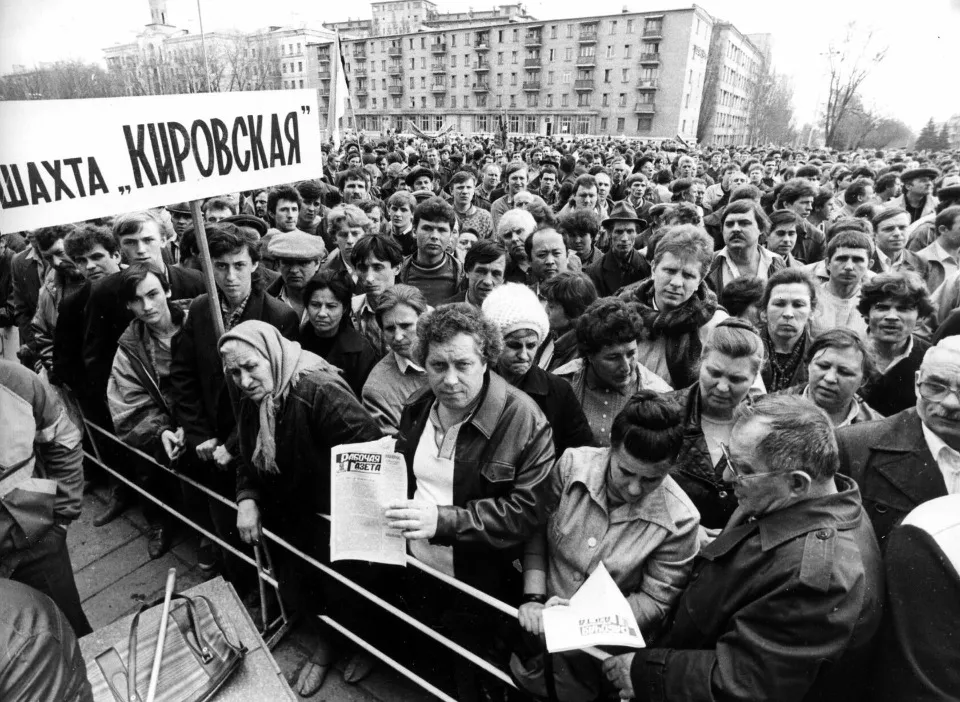
On July 18, 1989, six mines in Donbas region ceased operation. In their demands, presented to the Minister of Coal Industry in 38 points, miners called for increased vacation time, additional pay for night shifts, improvement of pensions, and provision of food supplies. Later, other mines in the region, as well as in other parts of Ukraine, joined the strikes. 86% of the strikers named the main reason for the strikes as the shortage of food and industrial goods. Hence, their demand was to supply mining towns with consumer goods of the first category.
However, some mines of the production associations "Luhanskvuhillya" (Luhansk Coal) (including miners from the mining towns Novodruzhesk and Pryvillya) and "Sverdlovs'kantatsyt" (including towns such as Dovzhansk (now Sverdlovsk) and Voznesenivka (now Chervonopartyzansk)) did not strike at all. Nevertheless, miners from these enterprises presented their own demands and expressed solidarity with the strikers.
The total number of miners who stopped working at that time exceeded 200,000 people; they gathered in city squares and formed strike committees. Such rallies could sometimes last for a day or even longer.
In Kadiyivka (renamed Stakhanov as part of decommunization in 2016), workers who participated in the strike demanded the resignation of local party leadership and Soviet authorities, as well as the immediate convening of an extraordinary plenum of the city party and a session of the city council. As a result of the miners' protests, every third mine director, as well as numerous party and Soviet officials, resigned.
In the cities of Holubivka (formerly Kirovsk) and Bryanka, strikers demanded the resignation of local leaders and the immediate convening of extraordinary plenums of the city party committees and city council sessions to address the problems raised by the miners. After lengthy negotiations, the demonstrators achieved the fulfillment of their demands - in Bryanka, 7 city officials were dismissed.
The specific result of these strikes was the adoption by the Supreme Council of the Ukrainian SSR of the Law "On Economic Independence," which aimed to ensure decent living conditions for the people of Ukraine, satisfy their social and cultural demands, subordinate social production to the needs and interests of the individual, and create conditions for free creative work and self-affirmation of the individual.
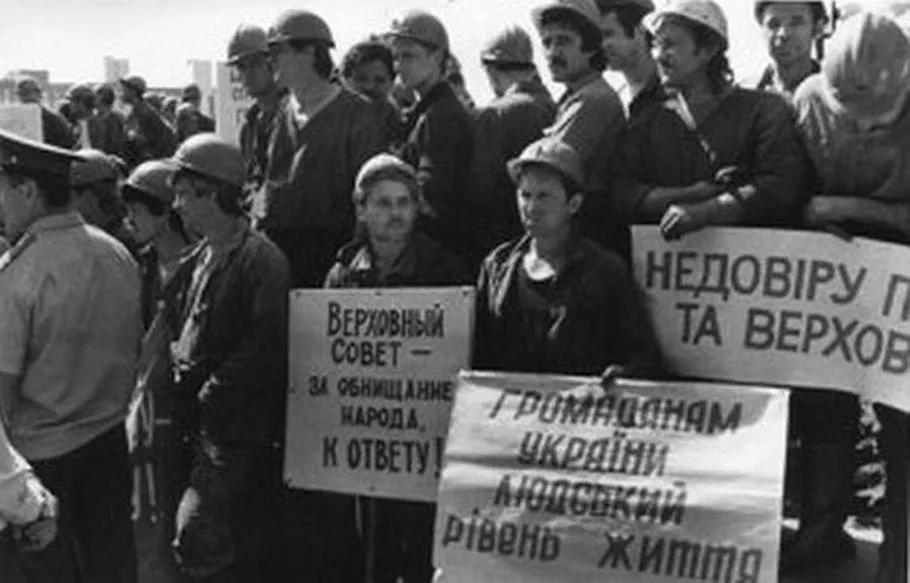
Despite attempts by the central government to appease the miners, the problems that the industry had been facing for many years remained unresolved. Wholesale coal prices were still low, there was no improvement in the technical equipment of mines and the supply of spare parts, and technologies and organization of production processes were not being improved. The working conditions of miners did not improve, and wages and working hours remained the same. The supply of consumer goods to mining towns remained insufficient.
All these factors significantly complicated overcoming the crisis in the industry and contributed to the emergence of new conflict situations. These problems became one of the factors that led to the downfall of the authoritarian communist regime during its "perestroika" stage.
The Protests Persisted, And New Demands Emerged.
Since the central government at the time could not satisfy the miners' primary demands, political demands began to emerge among the miners in the 1990s. These demands included granting constitutional status to the Declaration of State Sovereignty of Ukraine, ensuring real sovereignty. This goal was achieved on July 16, 1990, with the adoption of the Declaration of State Sovereignty of Ukraine.
This declaration became a catalyst for uniting all democratic forces in the country, including, according to Yevhen Holovakha, the miners of the Ukrainian east.
"The miners were the main force that represented democracy at that time. They were truly a political force. They had nothing to eat, they were not paid their wages," he said.
Both the miners' strikes and the national-democratic parties advocated for self-determination and independence of Ukraine from the USSR.
On March 1, 1991, a strike by Donetsk miners began, which was joined by workers from coal enterprises in other regions.
"We are no longer asking, we demand the resignation of M. Gorbachev and the dissolution of the parliament. We now want the independence of Ukraine, our own Constitution, our own banking system," said a worker from the Stakhanov mine, Nahorny.
The strikers of this mine not only put forward clearly formulated political demands that pressured the authorities at the time but also appealed to the population of western regions of Ukraine, including Galicia, to unite. Even then, by dispelling all Soviet myths about the division of the country and differences in mentalities, the miners called for unity throughout the country in the struggle for real sovereignty.
"It is necessary today for only an independent Ukraine to exist. Our independent republic. We can live, we have everything for it. It is easier for one master to bring order to the house. We were on strike in Kyiv in April, we saw how Kyivans treated us, but they did not support us then. Everyone now needs only an independent Ukraine," said one of the miners, as documented in the State Archives of Donetsk Oblast.
A quote from Lviv journalist Vasyl Tereshchuk became famous:
"Strangely enough, today the mining collectives have become the main bearers of the idea of our statehood. In a few weeks, the Donbas Ukrainized to such an extent that Lviv residents, in my opinion, risk losing the palm of primacy in the national-liberation movement."
On March 1, 1991, a general strike of Donetsk miners began, which was joined by workers from coal enterprises in other regions of the country. One of the main political demands of the strikers was to grant constitutional status to the Declaration of State Sovereignty of Ukraine.
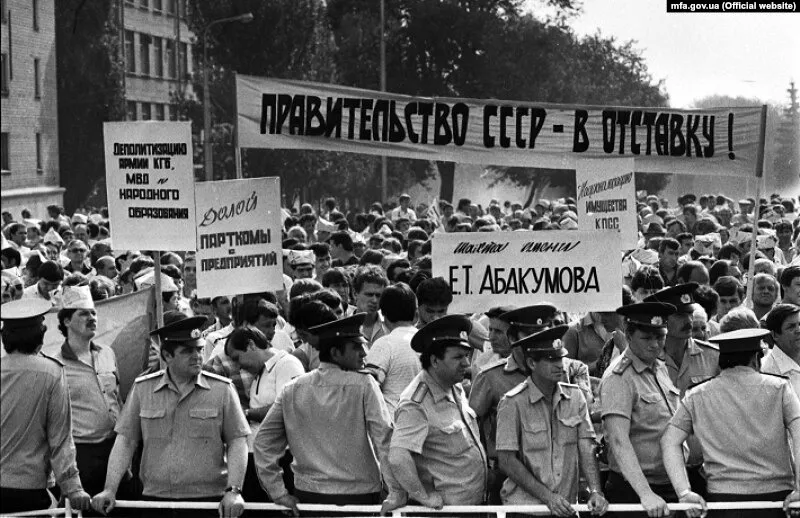
On August 24, 1991, at an extraordinary session, the Verkhovna Rada of the Ukrainian SSR adopted the "Act of Independence of Ukraine" and the resolution "On the Proclamation of Independence of Ukraine" with a constitutional majority. The decisions adopted by the parliament were to be approved or rejected in an all-Ukrainian referendum, which the Verkhovna Rada scheduled for December 1, 1991.
In Donetsk Oblast, 83.90% and in Luhansk Oblast, 83.86% of the people answered "Yes" to the question in the ballot: "Do you confirm the Act of Proclamation of Independence of Ukraine?"
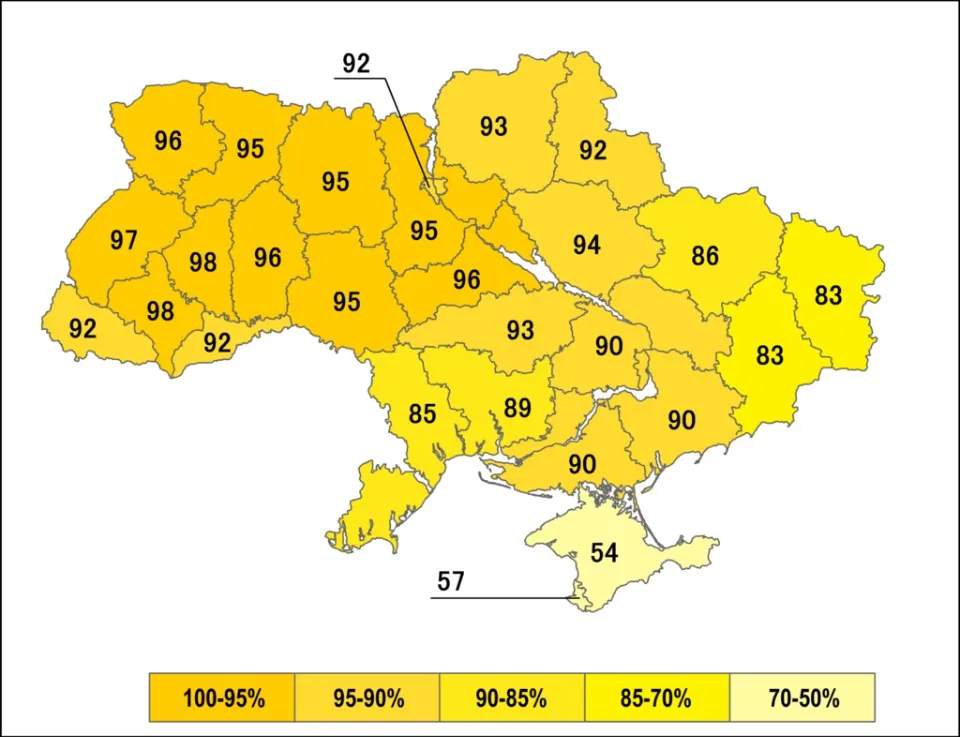
Of course, to claim that only the miners of the Donbas led to the long-awaited proclamation of Independence of Ukraine would be incorrect. This decision was the culmination of decades of repression, secret work of dissidents, the formation of the Ukrainian Helsinki Group for Human Rights, the People's Movement of Ukraine, protests, and hunger strikes by Ukrainian students - the Revolution on Granite, the August coup. However, it would be equally wrong to deny the role of the miners in achieving sovereignty, creating conditions for the adoption of laws and acts, and, perhaps even more importantly, uniting Ukrainian society.