

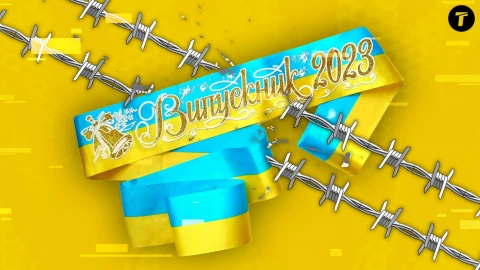
Russians don't stop talking about the fact that the Ukrainian authorities have forgotten about their citizens and that they do not need the residents of the occupied territories. Instead, the Ukrainian side continues to charge them pensions, child benefits, salaries of temporarily occupied territories residents and allocate preferential places in higher educational establishments.
The coordinator of the human rights organization "Donbas SOS" Violeta Artemchuk told the Tribun about how the admission campaign for residents of the occupied territories will take place this year.
Every year, starting in May, when the admission campaign approaches, young people from temporarily occupied territories contact the hotline of the NGO "Donbas SOS" to learn about the rules for admission to Ukrainian universities. We look forward to such appeals and prepare for them in order to provide the most complete information on such important issues, urging young people to make a choice in favor of Ukrainian institutions of higher education.
This year, applicants from the temporarily occupied territories are concerned about the following issues:
- We want to enter a Ukrainian university, but we did not study in Ukrainian schools, is it possible to enter?
- How is it better to leave the occupied territory, if the applicant did not receive a passport of Ukraine in time, but only has a birth certificate?
- Is it possible to join remotely? Is attendance at exams obligatory?
Violeta Artemchuk emphasized that this year, as since 2016, there is a simplified admission procedure for applicants from the temporarily occupied territories of Ukraine. To support such applicants, the "Donbas-Ukraine" and "Crimea Ukraine" centers were created at higher education institutions. They are kinds of admission commissions for applicants from the temporarily occupied territories, where you can find out information about admission and get advice. Educational centers work from June, 1 to September, 30.
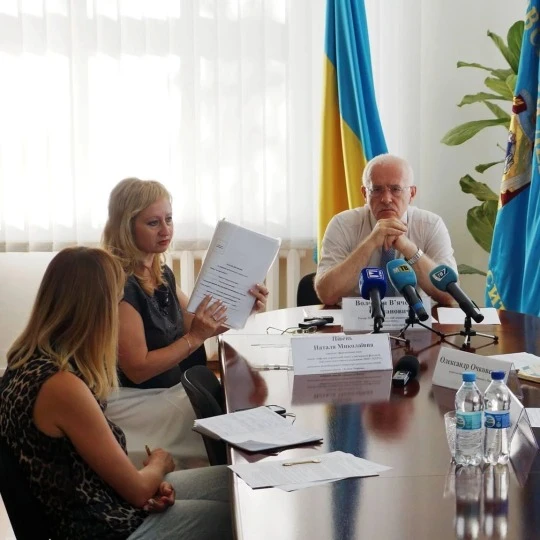
Applicants from the temporarily occupied territories can enter higher education institutions, even if they did not study in Ukrainian schools and do not have a Ukrainian-style certificate.
The first thing an applicant from the temporarily occupied territories should do is to decide on the university where he plans to enter (you can submit 5 applications for different specialties, but only in one institution of higher education). Having decided on a university, you should contact the educational center at the university. Contact details of the centers can be found here: https://mon.gov.ua/ua/osvita/visha-osvita/arhiv-vstupnoyi-kampaniyi-2017-2020/vstupna-kampaniya-2022/osvitni-centri).
List of scanned copies (photocopies) of documents:
1) application (for adults) or application of parents (one of the parents), other legal representatives (for minors);
2) an identity document (if not available, a birth certificate);
3) a photo card with a size of 3 × 4 cm (1 MB in electronic form).
If personal arrival to submit the application is not possible, the applicant sends the documents to the e-mail address of the authorized general secondary education institution. For those who do not have a certificate of the Ukrainian model, they should take 2 exams - an annual evaluation of the Ukrainian language and the history of Ukraine. The enrollee will be told about the place and rules of the exam at the educational center and will determine the school for taking the exams. If it is not possible for the applicant to come to the school in person, then the annual evaluations are conducted through a remote individual interview with video recording.
After completing the general subject assessment, the applicant must take the university's profile exam (which can also be conducted online with video recording).
After passing 2 general exams and one specialized exam, the applicant is enrolled in a higher education institution. For entrants from the occupied territories, budgetary places are provided under the so-called quota-2. Each higher education institution allocates a certain number of places (sometimes up to 10%) specifically for such applicants. The chance to enter a budget form of education and get an education is quite real and possible for young people from the temporarily occupied territories.
After entering the university, a student receives guaranteed accommodation in a dormitory, has the right to a social scholarship and payments from the state (accommodation allowance). The most important point is that admission is an opportunity to receive a diploma that is valid both in Ukraine and abroad, a chance to continue education in European universities.
Realizing such chances, the "universities" under the control of the pseudo-government are launching an advertising campaign for their educational services, introducing special programs to keep young people in the occupation.
"Diplomas" of these so-called universities are just pieces of paper that have no force or meaning. They are not accepted either in Ukraine or in most countries of the world.
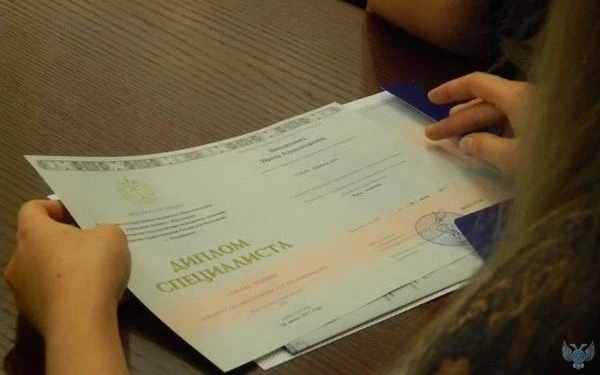
We would like to remind that even the Russian Federation recognized diplomas of fake republics only in 2022. According to our source in the educational institution of occupied Luhansk, before that, children went to confirm their "diplomas" again at partner universities: Rostov, Voronezh, Tahanroh, etc. Without them, they were not recognized.
Once again, we emphasize that the civilized world does not recognize the documents of the occupiers, and therefore the holders of these "diplomas" have two options: to stay in the pseudo-republics or to go to places where these papers are worth something (Belarus, Cuba, the Democratic People's Republic of Korea, Syria, Abkhazia, South Ossetia).
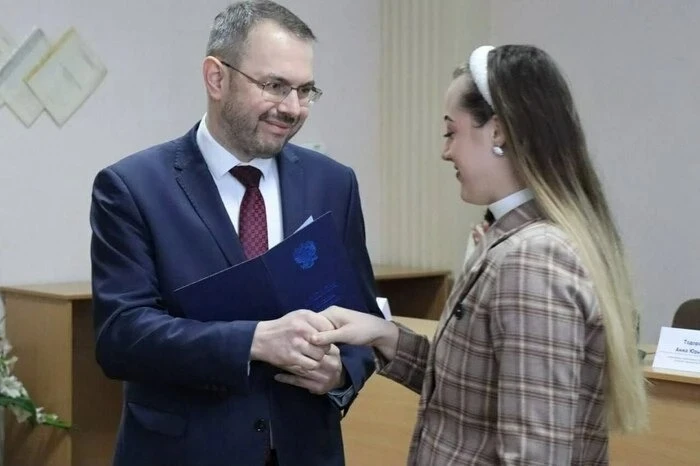
According to the Center of National Resistance, in the temporarily occupied territories of southern Ukraine, the occupying "administrations" informed parents that their children would not be admitted to school if they did not have Russian passports.
Besides, teenagers aged 14 and over are required to have a Russian passport. Otherwise, their studies will be terminated.
Read about how the Russians manipulate the issue of passporting in our previous material.