

The Soviet authorities skillfully cultivated the legend of the "comprehensive Donbas" as the "heart of Russia", which was a source of coal and metal for all the republics of the former union, in the public's imagination.However, powerful propaganda covered even those regions where agriculture or food production were usually practiced.
TRYBUN journalist researched the history of the northern part of Luhansk oblast and once again became convinced of the Ukrainian spirit of the oblast.
What is Donbas?
To begin with, it is still worth understanding what exactly is called Donbas - Donetsk coal basin.
In his book "Encyclopedia of Modern Ukraine", scientist Mykola Chumachenko writes: "Donbas is a historically formed region of Ukraine, one of the most developed industrial and energy complexes of the country with significant natural resources and powerful production potential.Donbas is located in the east of Ukraine and it administratively covers Donetsk and Luhansk oblasts."
We are interested in the last sentence: "it covers the entire Donetsk and Luhansk oblasts". If we look at the map of "Ukrainian Donbas", we will see that the main industrial forces of this region are located in the southern part of Luhansk oblast and the central part of Donetsk oblast. Northern parts of Luhansk oblast, northern and southern parts of Donetsk oblast do not have such a cluster of industries.
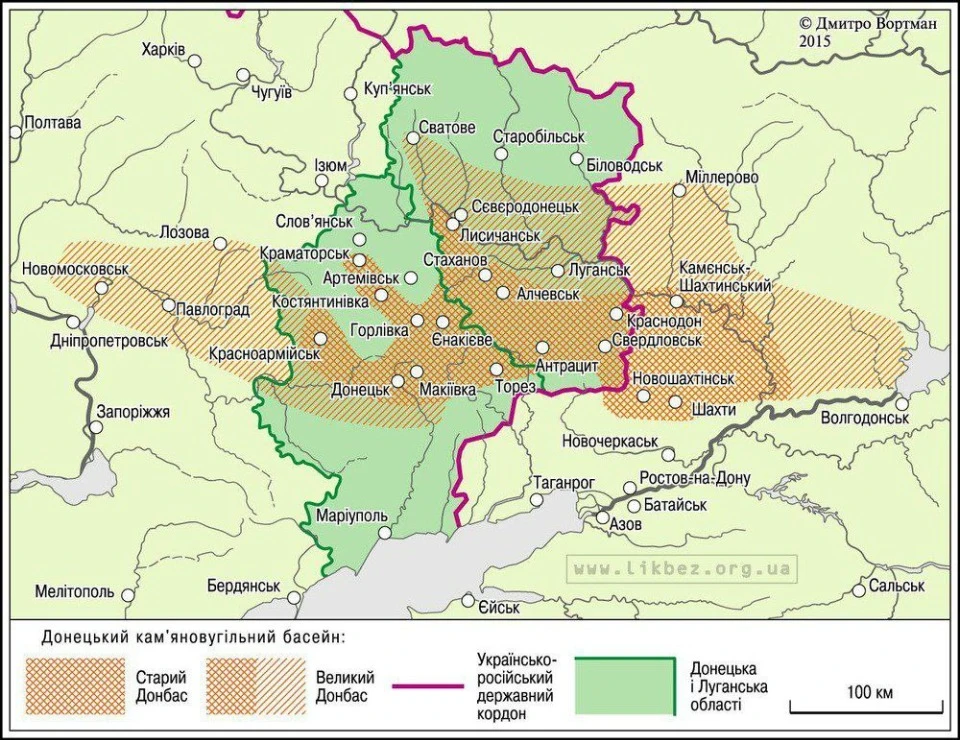
What is it related to? It's simple: there are no massive deposits of coal in the above-mentioned areas.Beekeeping, agriculture, fishing and hunting were usually practiced on these lands. Saltpeter and salt were also mined as, for example, in Soledar and Bakhmut.
So what kind of Donbas was Russia able to find in Starobilsk, Svatovo, Bakhmut or the much-desired Slaviansk and Kramatorsk?
In fact, these lands belong to another historical region, and its name is Slobidska Ukraine or Slobozhanshchyna.Maps of Slobidska Ukraine, taken from the "Encyclopedia of Ukrainian Studies".
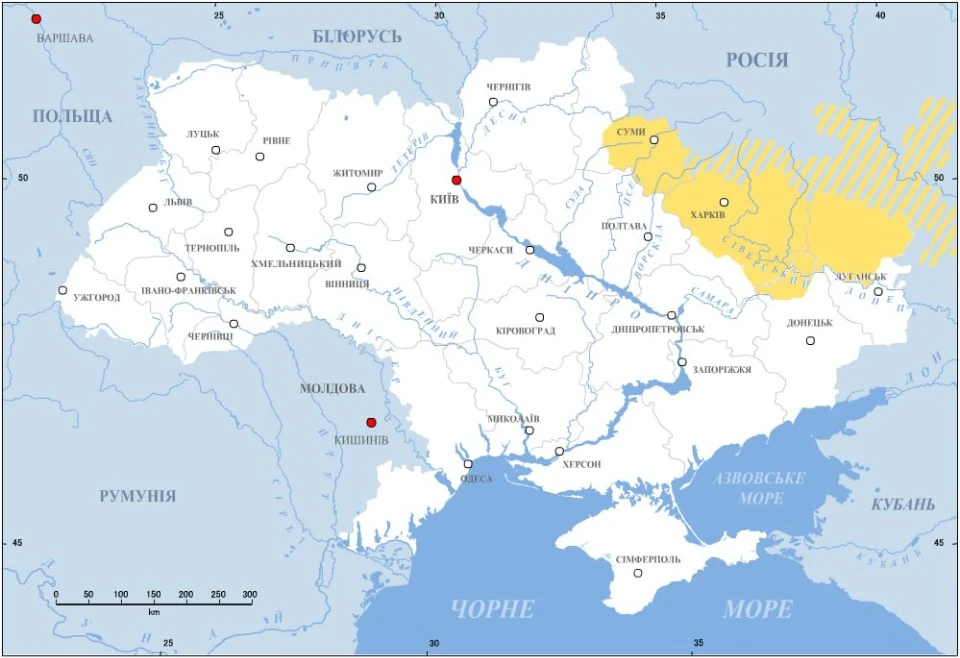
Within this historical region were the same northern parts of Luhansk and Donetsk oblasts, together with Kharkiv and Sumy oblasts.
Despite the fact that Luhanshchyna belongs to two different historical regions at the same time, the Russians continue to impose their right to occupy these territories and fill the information space with populist statements about the "liberation of the historical lands of Slobozhanshchyna".
What is the Ukrainian origin of this land?
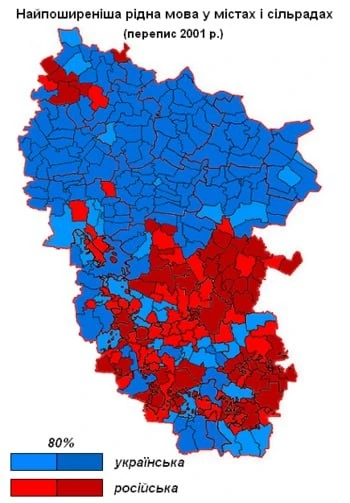
Most likely, this is related to the settlement of the oblast by Russians from the province, which began with the industrialization of this oblast.After the October Revolution, workers from Russia began to settle in the industrial Donbas.
Ukrainian peasants had no need to abandon their land and go to work at enterprises, accordingly, the local population continued to speak Ukrainian in its majority.
However, disputes over language also occurred in the north of the region - let's take two neighboring villages as an example: Yevsuh and Novooleksandrivka of Starobilsk raion.
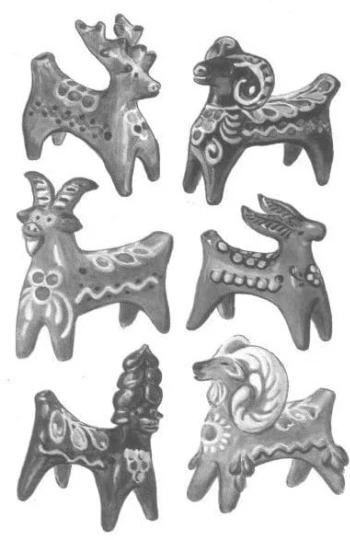
The first village has long been famous for pottery. The residents of Yevsuh were called "whistlers" because of their skill in making clay whistles, in addition, the village was engaged in agriculture - in particular, harvesting hay for the horse farm mentioned below.
The village of Novooleksandrivka was founded in connection with the creation of a state horse farm.To service this plant, Russians were brought to the territory of the settlement en masse.
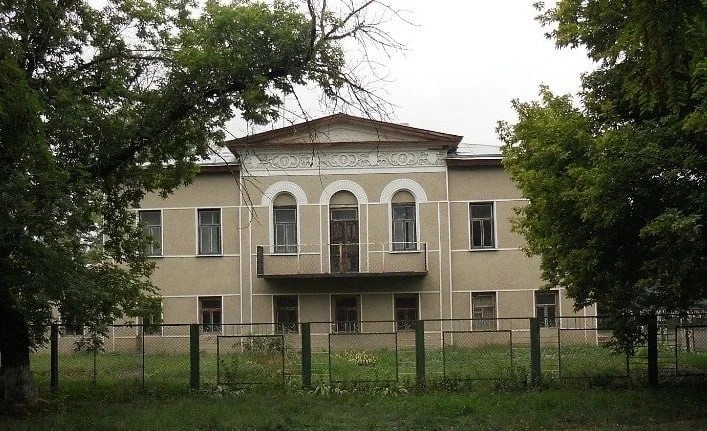
This is where such a big difference comes from: in Yevsuh (according to the 2001 census), more than 90% of villagers indicated Ukrainian as their native language, and only 37% - in Novooleksandrivka.Ukrainian, which is spoken in the villages of Luhansk oblast, cannot be called a pure literary language.Above all, this language is more similar to Poltava one, read the explanation below.
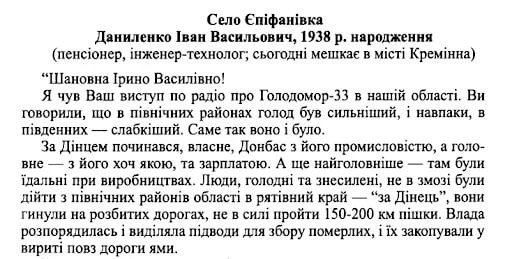
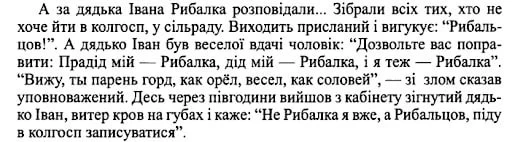
During the Holodomor, the policy of Russification of the population, forced change of surnames, as well as forced involvement in collective farms was actively pursued.Such a case is also described in the book "Saved Memory" from the memoirs of Mykola Starykov, a native of the village of Baranivikka in Starobilsk raion.According to him, one conversation with the sent Russian erased the history of an entire family with a distinctive Ukrainian surname.
Who did these territories really belong to?
The middle of the 17th century, the Treaty of Zboriv was signed, which marked the formation of the Hetmanate.Exhausting war, constant danger, and later - the times of ruins - forced the population of this state to flee from the power of the hetmans and move to the east.
Moving to slobodas in oral speech for the Ukrainians of that time meant moving "to Ukraine" - to a land not only free from lords and hetmans, but at the same time to a foreign and distant one.
Ukrainian folklore is filled with songs about resettlement, successful or unsuccessful adaptation to life in the slobodas, which once again emphasizes the Ukrainian origion of this region.
Leave the father, leave the mother, leave all the cattle, Go with us Cossacks to Ukraine, to the sloboda,There are a lot of things in Ukraine - both pashas and brags, There are no enemy lakhs, Cossack enemies;In Ukraine, dry fish with saffron: You will live with a Cossack, as with a sir, And in Poland, dry fish with water.
Due to mass resettlement from different regions of Ukraine, the population of Slobozhanshchyna consisted of different ethnographic divisions of the Ukrainian people.This was the reason why the language here was not Zadnyprian, not Galician, not Chernigov, but actually local, as if intermediate between them;now it is known as the Slobozhan dialect with its phonetic and lexical peculiarities - the same dialect that before the occupation could be heard on the streets of every village in Luhansk oblast.
It was impossible to live in the realities of the 16th century and not interact with the Russian Empire on the territory of Slobozhanshchyna.Even then, the Russians sought to move south to strengthen their border, which passed through Belgorod and needed protection from raids by Crimeans and Nogais.
To protect the borders, the imperials recruited Cossack settlers, who later participated in many battles on the side of Russia at the time.The residents of Slobozhanshchyna paid with blood for the privileges and tax exemptions granted to them, fighting for the interests of the empire.
The Russians sought to gradually but completely subjugate the residents of Slobozhanshchyna to their political features.Ukrainians settled in slobodas had their own habits and traditions:they had procedures for selecting and removing the leadership, resolving major issues at meetings - the Cossack Council.At that time, the legal culture was common, disputes were resolved by judges, lawsuits and appeal procedures.
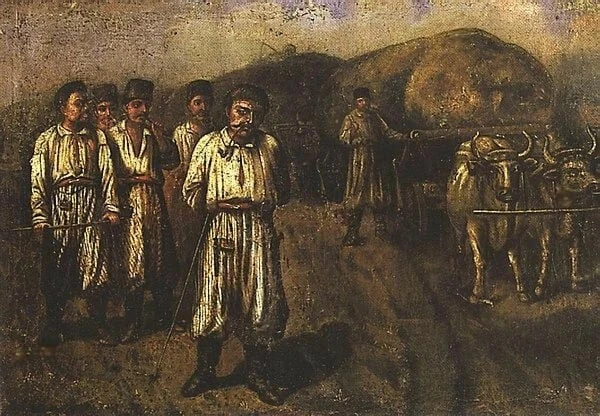
However, muscovites did not give up their ambitions: they limited the electoral system, denying the accepted candidatures of leaders from Cossacks and appointing Russians themselves to the post.They also eliminated customary law, conducting trials according to Russian "regulations".At the same time, they tried to encourage the Cossacks: praise for loyalty, abolition of taxes, generous gifts.
The destruction of both the regimental system and Slobidska Ukraine itself happened on the time of Catherine II.In 1765, all five sloboda regiments were liquidated, and regular hussar regiments took their place.The sergeant received Russian nobility, and the ordinary Cossacks, who were not flattered, were turned into state peasants and soon enslaved.In place of the regiments, the Slobidska-Ukrainian province arose, which was later renamed Kharkiv.
In 1917-1918 Slobozhanshchyna, together with Luhanshchyna became part of the Ukrainian People's Republic under this name. Thus it became an inseparable part of Ukraine.
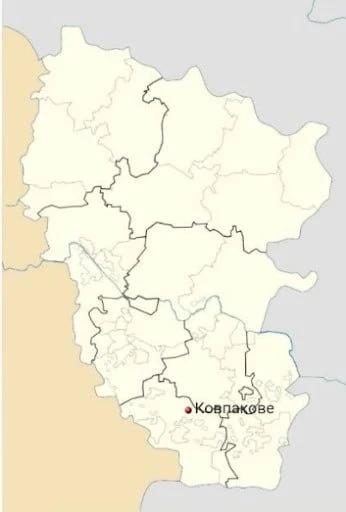
This is how this operation was mentioned in the official reports of the sergeant of the General Staff of the Army of the Ukrainian People's Republic, who signed himself only with the initials "V.A.":
"As soon as the telegraph line was established, I sent a telegram to the Military Minister, the Chairman of the Central Council, General Natiyev and Symon Petliura:
"On April 24, 1918, at 3 hours and 26 minutes, the troops of the Slavic group occupied the Kolpakovo station, which is on the border of Ukraine, the lands of the Don troops, and drove the enemies far abroad.Since that day, the yellow-blue flag on the border of these lands has let the whole world know that the Ukrainian people have their own unified and independent state.Glory to the Ukrainian people who freed their mother from the shackles that she wore for three hundred years."
The happiness from the liberation of the lands from the Bolshevik invasion did not last long.Not far away was the Soviet occupation, which lasted for 70 years: collectivization, the Holodomor, the Second World War and Russification, with which they already wanted to erase the Ukrainian face from Luhansk oblast.
However, despite this, Luhanshchyna - from the northernmost point to the southernmost point, from Slobozhanshchyna to Donbas - is Ukraine, which will be free!
The Author: Kateryna Kovalenko