

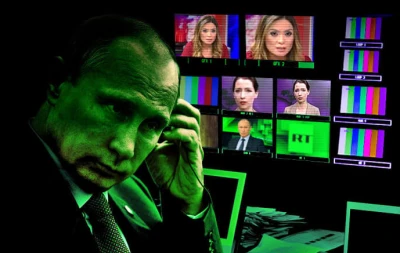
As a result of the war with Russia, there is more and more disinformation.More fakes appear in the news, but in addition to text deception, Russians can use photo manipulation.Manipulation with images has long become a tool of struggle for the human mind and emotion, because a photo is also a weapon in the information war.It is difficult for an ordinary person to immediately notice changes in the image, and if they contain provocative text, it becomes almost impossible to critically evaluate the "sensation".This material is devoted to Russian usage of photogs in propaganda.
As a rule, photo content is used as a mean of manipulation in such cases:
- a preconceived plot made by the author himself/herself;
- fakecontext, where one fact is mistaken for another;
- retouching, where reality is corrected by programs like Photoshop;
- changes in the perception of the material through the use of perspective, composition, etc.
Fake photo
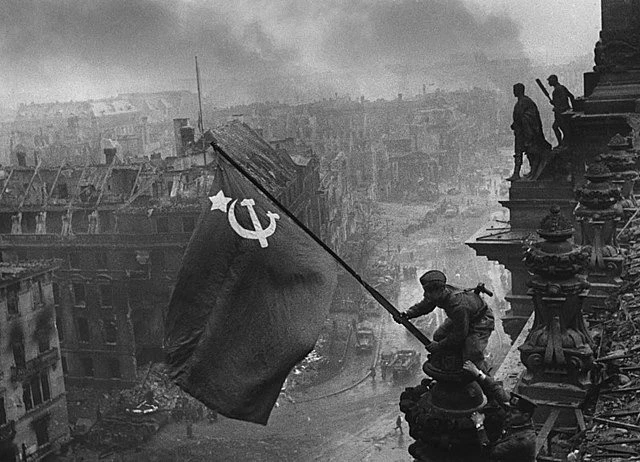
Russia has been using photo fakes since the Second World War.the raising of the flag over the Reichstag, photo by Yevgen Chaldei is an excellent example. This is a very well-known case of manipulation at all levels.This is a specially staged photo, it did not exist - and it was made.This is a classic example of masquerading propaganda photos as photojournalism.
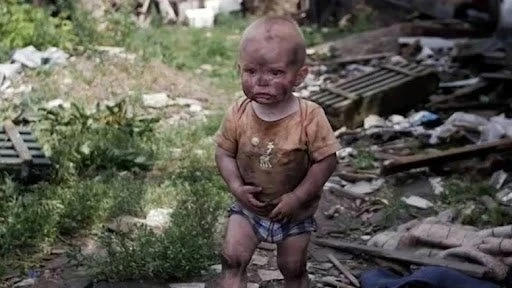
In 2015, a photo of a boy against the background of destroyed buildings was spread. According to its description, the boy was "looking for his mother among the ruins" allegedly after shelling by the Armed Forces of Ukraine.
In fact, this photo is a production shot from the video clip of the pro-Russian singer Dan Levy.
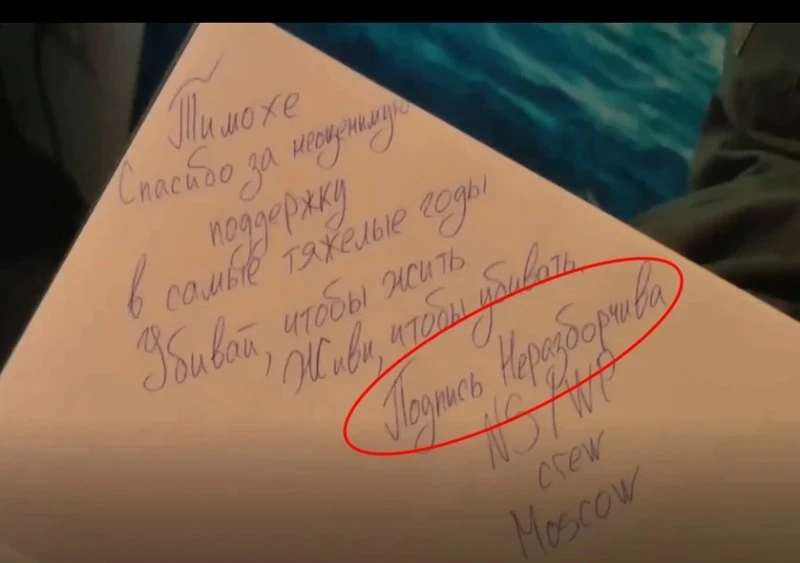
Attack on Solovyov and a book with the signature "Signature illegible" as evidence is considered to be one of the most stupid photo fakes during the full-scale invasion.
Vladymyr Putin said that Ukraine was allegedly preparing an attack on a "famous Russian journalist." One of the leading Russian propagandists Volodymyr Solovyov, was the "victim" of the "planned" assassination.The Russians found indisputable evidence of guilt - a home-made explosive device, eight "Molotov cocktails", six pistols, a cut of a hunting rifle and an RGD-5 grenade, Ukrainian passports and "nationalist literature" with the autograph "Signature illegible".
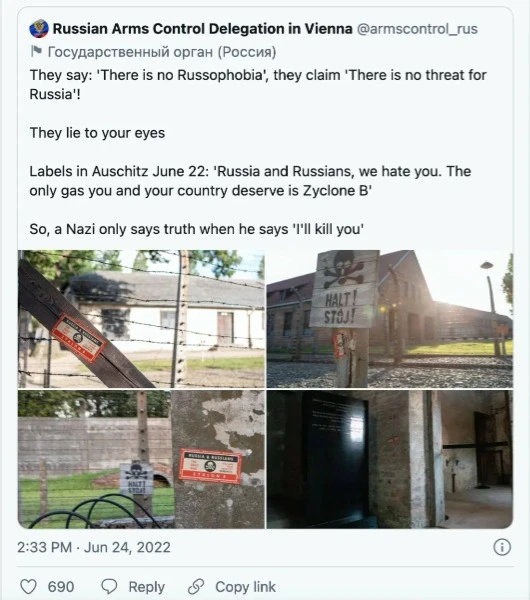
Russia actively uses staged photos to spread propaganda as well.In June the Russian arms control mission in Vienna posted a tweet with photos of anti-Russian stickers on the grounds of the Auschwitz-Birkenau concentration camp and museum in Poland.The stickers, placed in the museum until June 22 - the day of the German attack on the Soviet Union, contained the text: "Russia and Russians, we hate you. The only gas you and your country deserve is Zyklon B (which was used to kill in concentration camps). The Ministry of Foreign Affairs of Russia shared this tweet on its account.
The Auschwitz-Birkenau Museum responded to the publication and denied the spread of false information by official sources of the Russian authorities:"Everything points to the fact that the photos are a manipulation and the incident should be seen as primitive and crude propaganda."
On May 25, Russian President Vlodymyr Putin allegedly met with Russian soldiers wounded in the war in Ukraine in a hospital.However, in reality, the role of the military was "played" by fake people.It is interesting that one of the "soldiers of the Russian Armed Forces wounded in Ukraine" has already participated in Putin's productions as a mask actor. Then he played the role of a factory worker. Such "theatrical performances" are a common thing for the Russian president, apparently he is very afraid to meet people.
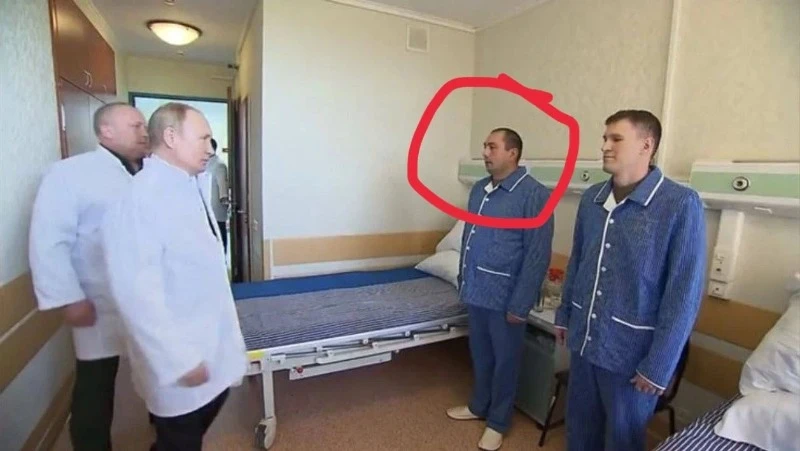
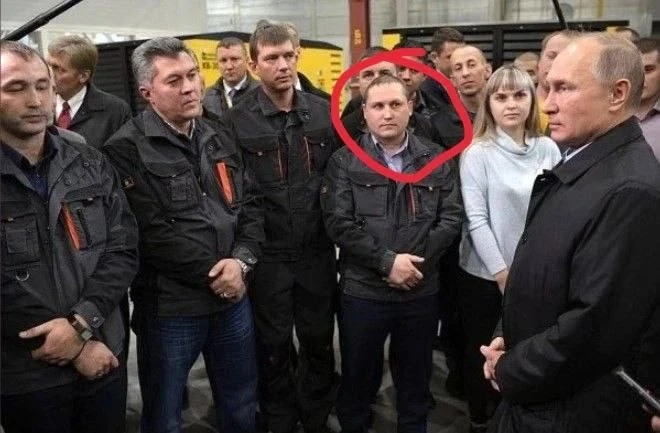
Photo out of context
This is the most popular type of photo fakes.
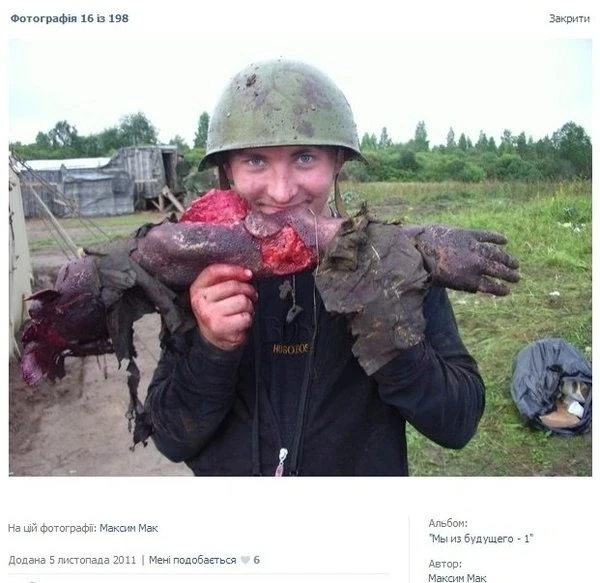
In 2014 news appeared on Russian portals that a photo showing a Ukrainian allegedly eating the hand of a Russian was circulated on the blogs and social networks of "Banderivtsi".
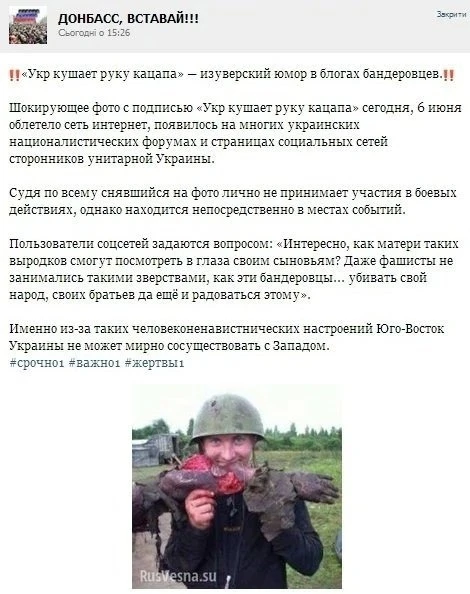
However, it turned out that this photo was not from Ukraine, but from the filming of the 2008 Russian fantasy film "We are from the Future".
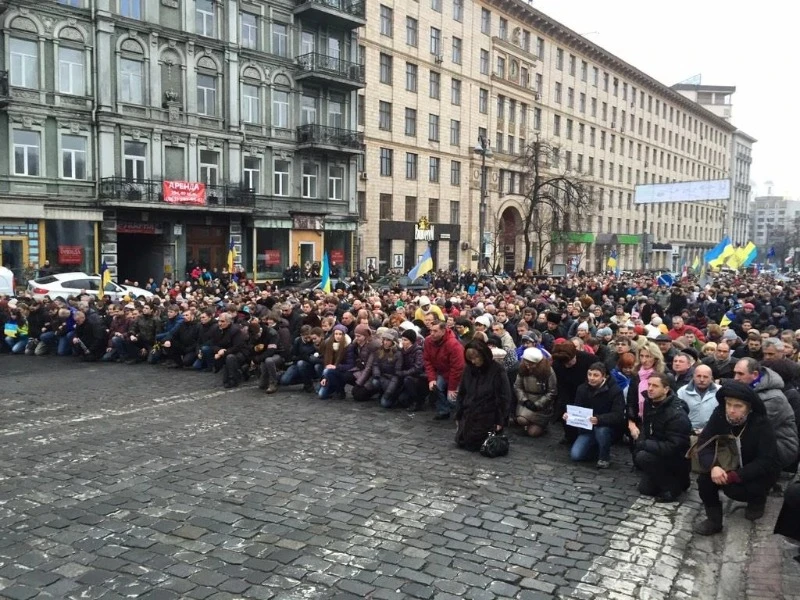
When the US Vice President Joe Biden visited Kyiv in 2015, a photo of people kneeling near the building of the Cabinet of Ministers of Ukraine was spread.The caption under the photo wrote that these were residents of Kyiv "who appealed to Biden to save them from Yatsenyuk".However, then thousands of people went to the center of Kyiv to honor the memory of the first victims of clashes during the Euromaidan.
In the spring of 2022 a photo of what appeared to be a message from the Russians on the ruins of Buch was published on the Internet: "Who gave you permission to live beautifully?" Facebook community " Chernihivskyi kisil" was one of the first sources that shared the photo on April 7.Then Anton Herashchenko, adviser to the Minister of Internal Affairs of Ukraine, published the photo on his Telegram channel.
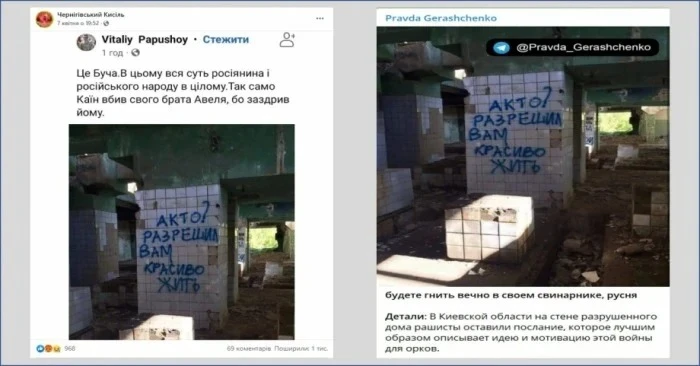
The photo even appeared on the Facebook page of the information agency ArmiyaInform, and the publication "Today" made a news.
However, fact-checkers suspected something wrong with this picture and checked when it was created.The photo was taken not in Ukraine, but in Russia, and it was first shared in 2016 on the website "jokes for 300".Another detail that indicates the fakeness of the photo is that it is not a spring landscape behind the ruins.There you can clearly see the greenery, which has not even had time to appear in Bucha yet.
In yet another photo fake, pro-Kremlin sites used the Iversky Monastery destroyed during the fighting for the Donetsk airport in 2014 as an illustration.
"Ukrainian troops are purposefully shelling Orthodox churches in the Krasnolymansk district of the Donetsk People's Republic," agitprop writes.
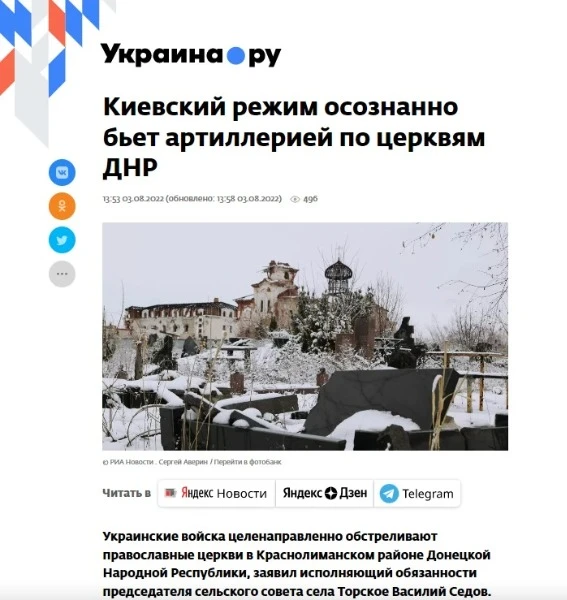
In fact, the Iversky Convent, which the propagandists used to illustrate the material, belonged to the Moscow Patriarchate and suffered as a result of the battles for the Donetsk airport that took place in 2014-2015.
Videos of the damaged monastery, which the Russian propaganda machine is using today to illustrate new lies, also appeared back in 2015.
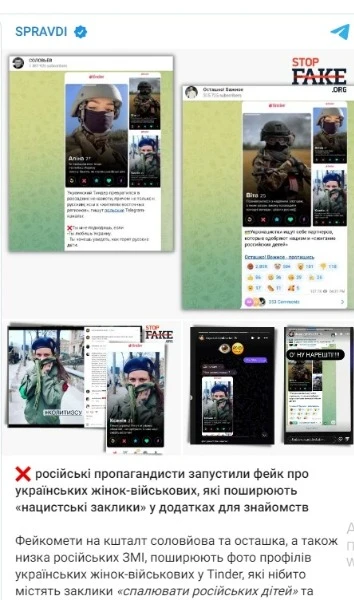
During the full-scale invasion, Russian propagandists published a fake that Ukrainian female soldiers were allegedly spreading Nazi slogans on the dating app Tinder.
Investigators of the StopFake fact-checking resource spoke with Shura Ryazantseva, one of the girls whose photos were published by propagandists.
The girl serves in the Armed Forces and does not have a Tinder profile. The photo for the photo fake was taken by the Russians from her Instagram account. According to her, subscribers started sending her publications.
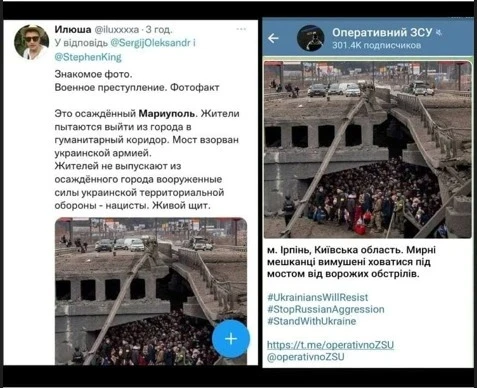
Russian mass media create an image of good Russian soldiers who do not shoot peaceful Ukrainian citizens, but on the contrary, try to create humanitarian corridors and remove local residents from the hot spots of hostilities.For example, in the spring, the Russian mass media published a photo of the destroyed bridge in Irpin, under which local residents, waiting for evacuation, were hiding from Russian shelling.According to Russian propaganda, the bridge were located in Mariupol and people were also there, the evacuation was disrupted by the Ukrainian side.
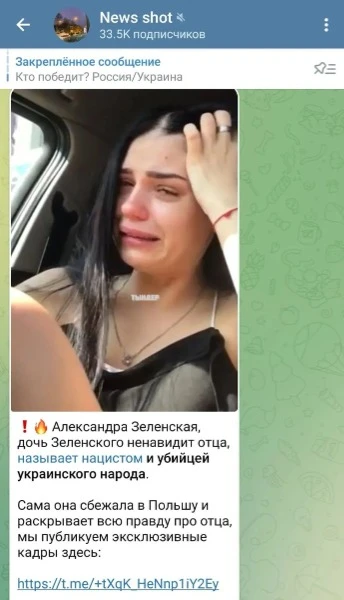
Today the residents of Russia believe the staged shots on television.However, propaganda outside of Russia during a full-scale war in Ukraine seems to be unsuccessful.During the full-scale invasion, propaganda telegram channels spread a photo of a despairing girl who was called the daughter of President Volodymyr Zelenskyi.The girl, who does not look like the president's daughter at all, apparently "calls her father a Nazi". In fact, Russian propaganda uses a screenshot from a video where a girl desperately asks her boyfriend for a new iPhone.But the Russians call her the daughter of the President of Ukraine. To dispel this fake, it is enough to write "Zelenskyi's daughter" in the search field, but few Russians do it.
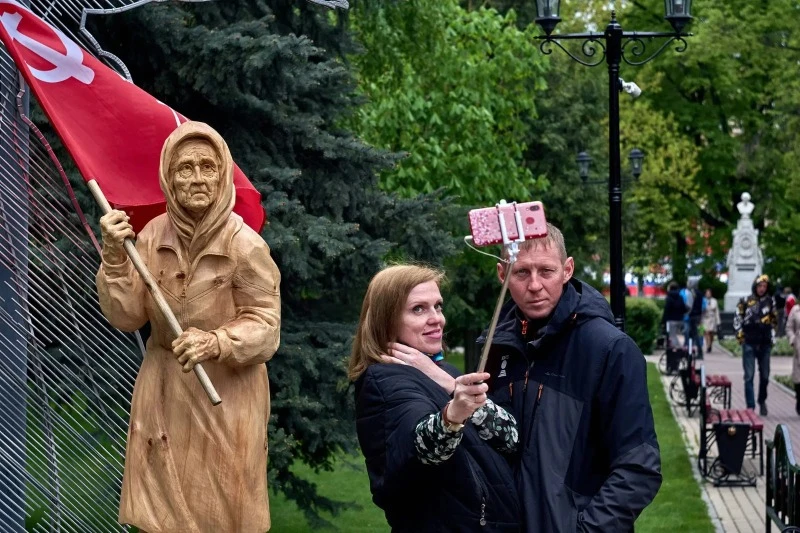
Also, a woman with a Soviet flag in her hand became a symbol of visual propaganda in support of the occupation of Ukraine. When one of the Ukrainian settlements in Kharkiv oblast was liberated, a grandmother with a Soviet flag in her hand approached the Ukrainian soldiers.She confused the Armed Forces of Ukraine with the army of the Russian Federation and congratulated them on the occupation.The soldiers gave the grandmother food and took the red flag away.The grandmother did not want to accept help from them and spoke in support of the occupation regime.
Russian propaganda immediately used the plot with the grandmother.Advertising banners with the image of a grandmother with a red flag were hung on the streets of Russian cities.On May 9, the grandmother's sculpture was installed in several Russian cities as a new symbol of support for the actions of the Russian army in Ukraine.
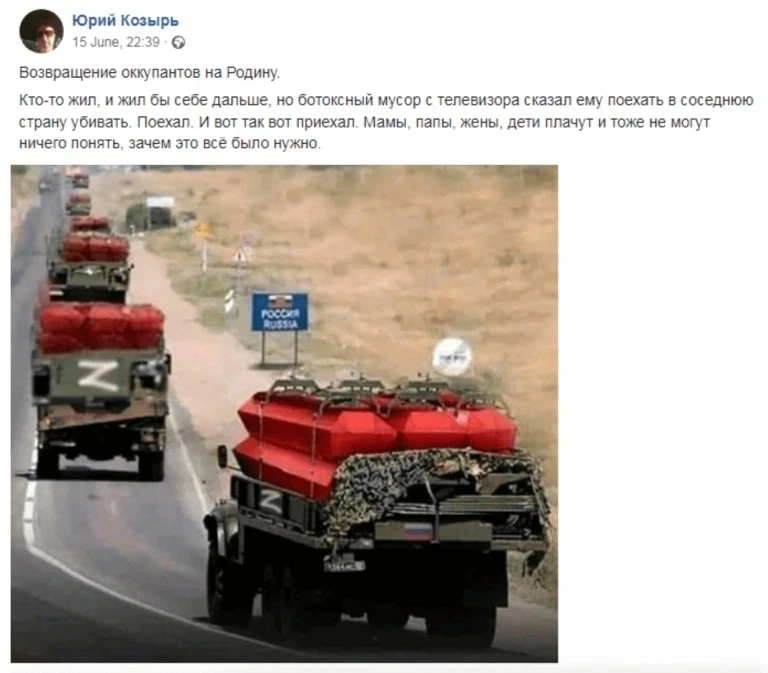
Photos of alleged coffins with the bodies of Russian soldiers on trucks with the letter "Z" returning to Russia were also spread on social networks.
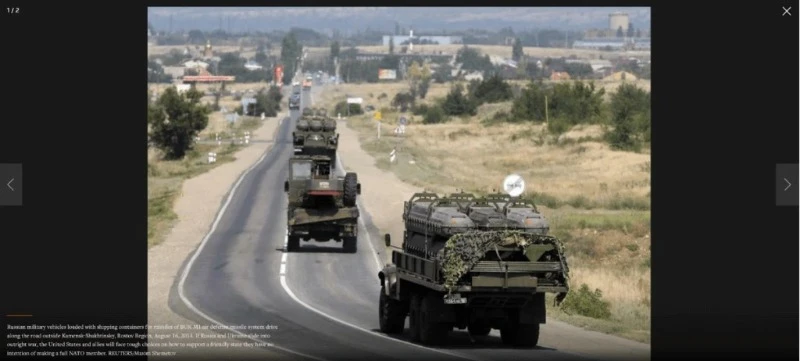
However, the original photo shows trucks with containers for Buk air defense missiles and no "Z" markings, the photo itself was taken in 2014. There is no letter "Z" and the pointer "Russia" in the photo, the containers are dark green.
A photo of an alleged examination of a Ukrainian prisoner in Donetsk was also popular, there is a tattoo with the image of fascist symbols on his body.The photo was taken in June 2005 in a Belarusian prison.
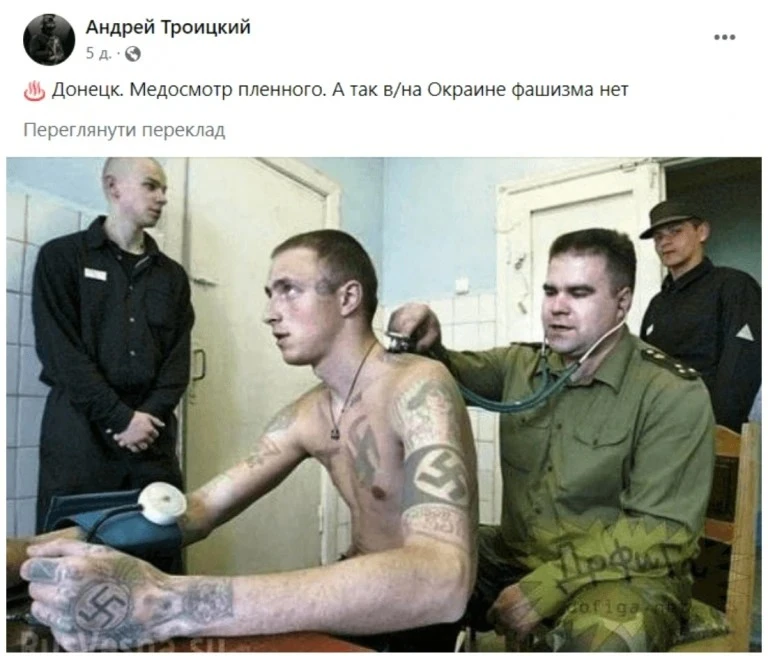
A reverse Google search shows that the photo was published on Getty Images under the category "prisoner tattoos".This is a medical examination of a prisoner in the 15th colony of Mohylov (Belarus) on June 22, 2005.
The photo has been spreading on the Internet for many years and it is used as proof that fascism is supported in various countries.The depicted prisoner was also mistaken for a Polish conscript.In 2015 the same photo was spread with a caption, allegedly showing a recruit of the Ukrainian army.
Adding "effects"
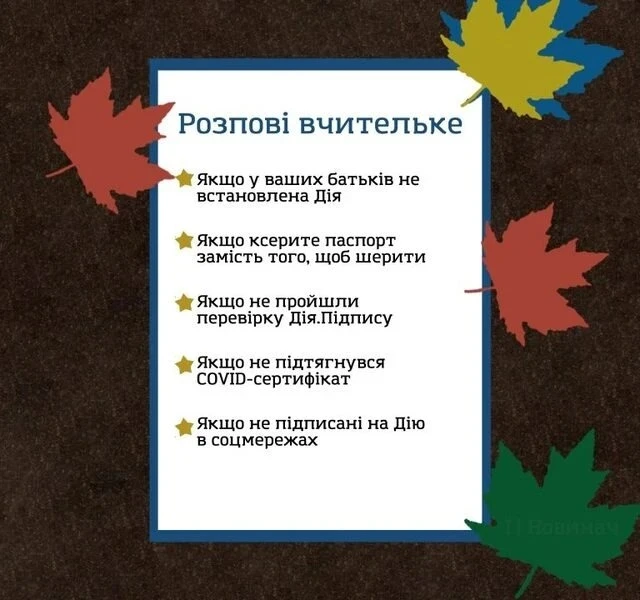
The publication "Donpres", which is controlled by the occupying "authorities" of Donbas, reported that readers sent a photo from a class of one of the Ukrainian schools to the editorial office.The photo shows a poster urging students to tell their teachers if their parents speak Russian at home or if they have relatives in the Russian Federation.
However, the network drew attention to the fact that the poster's call in Ukrainian is written incorrectly.There are other grammatical mistakes in the picture.In addition, if you analyze the picture in detail, it will turn out that the picture of the Patron dog is taken from one of the YouTube channels, and the picture of the bird is from a site where you can download vector images for design for free.So this image is a designer's work and not a real photo.
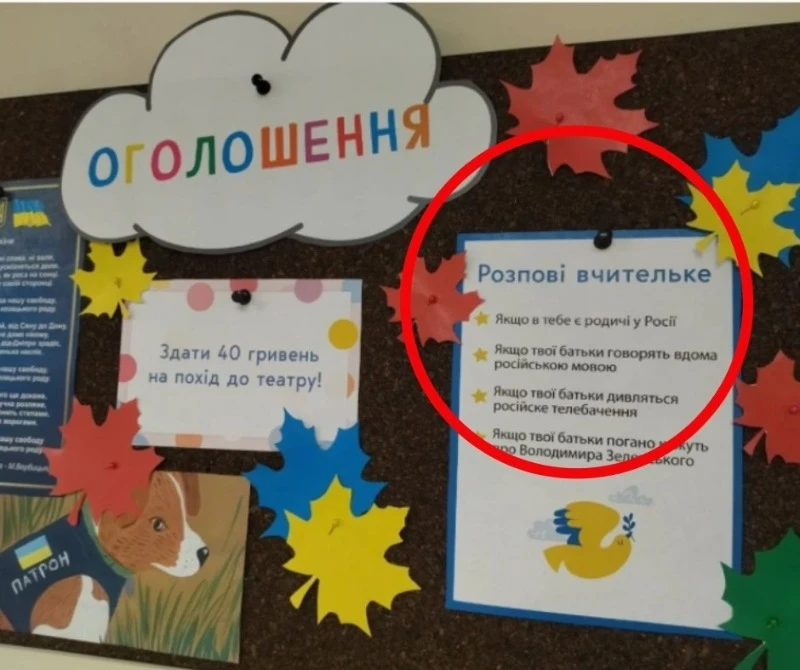
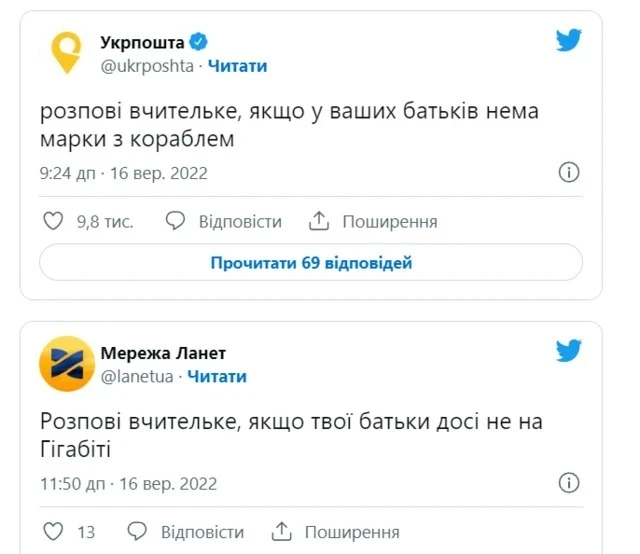
The propagandists' mistake has already become a meme on the Ukrainian Internet next to "cotton". For example, "Diia" offers instructions on how to recognize a true citizen of a digital state.
"Ukrposhta", "Kyivstar", Freelancehunt, "PUMB" and others also took part.
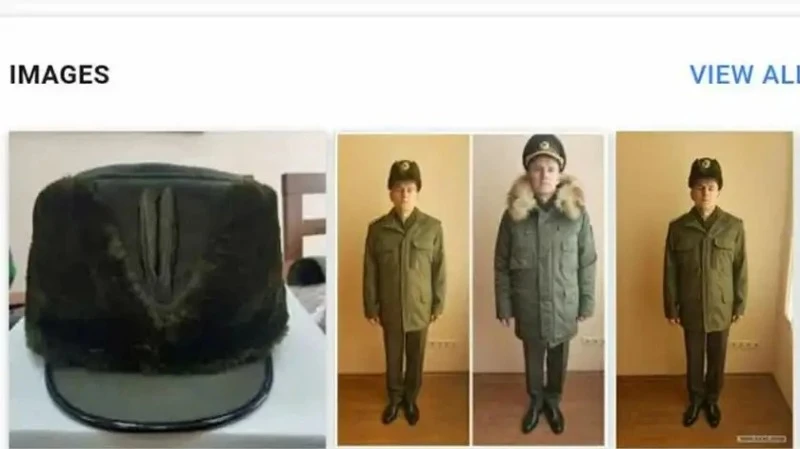
This is not the first year that Russia has been spreading fake news about the uniforms of Ukrainian soldiers, which the Russian media call "indecent."
However, there are no such caps on the balance sheet of the Ukrainian army. That is, the photos published on Russian sites are photoshopped.
The press service of the President of Russia does not shy away from using Photoshop.
For example, in spring, Volodymyr Putin allegedly met with female pilots and flight attendants and told them about the purpose and situation of the "military operation" in Ukraine. The Center for Countering Disinformation quickly discovered that no meeting had taken place. There was only a recording of Putin against a green background, and the flight attendants were then "painted" with the help of special programs.When studying the video in detail, you can make sure that it was made using chromakey technology, when shots taken in different places are combined in the frame.
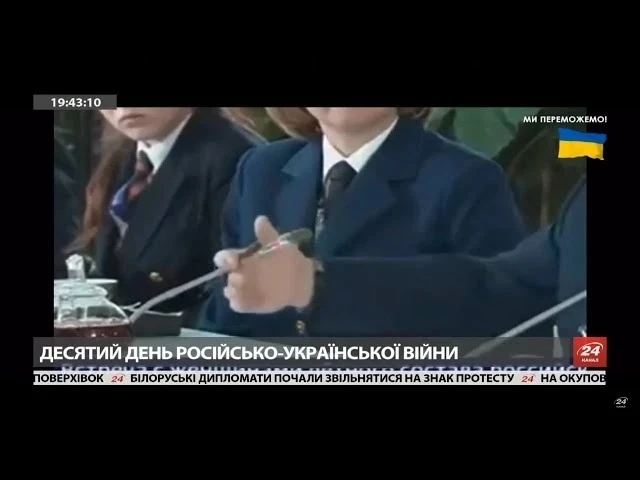
Moreover, it turned out that the flight attendants were not real, but actors from the FSB.Evidence appeared in the media that one of the "stewardesses" was previously recorded сlose to Putin, but in other guises, for example, she played an ice cream seller.
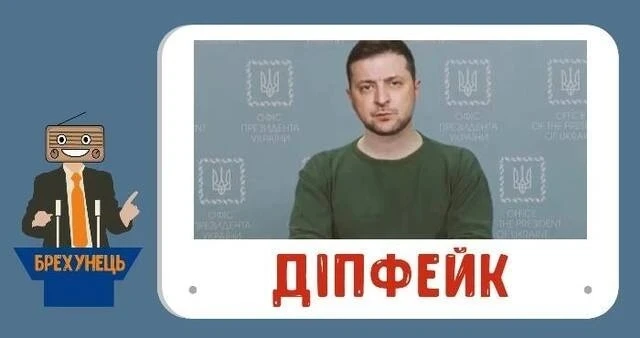
At the beginning of the war, the representatives of the aggressor country tried to use Deep-fake from the image of the President of Ukraine Volodymyr Zelenskyi in order to disinform and force the Ukrainian troops to lay down their arms.
However, the quality of Deep-fake was low.
In the video, the President of Ukraine's body hardly moved when he spoke, except for his head.His voice sounded distorted and almost rough.
Subsequently, fake videos were actively used in NATO countries.For example, with the BBC News digital logo, one video said that Poland's military commander had ordered army troops to be on "highest alert".
The BBC later claimed that no such video existed and that their brand had been used to create a fake film.Polish officials have also accused Moscow of carrying out cyber attacks on the country. Propagandists often create fake videos or use Deep-fake technology.Here is a simple example of a fake photo created by editing the original in Adobe Photoshop.
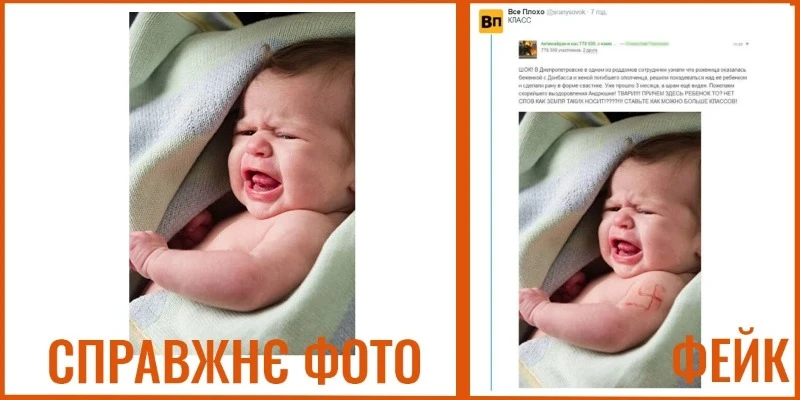
This is a screenshot from the page of one of the pro-Russian groups in the Russian social network Vkontakte.The widely spread picture shows a baby, allegedly with a swastika on its arm.The inscription on the photo: "Shock! The staff of one of the maternity hospitals in Dnipropetrovsk learned that the woman was a refugee from Donbas and the wife of a fallen soldier.
They made a wound in the shape of a swastika on the child's hand. Three months have passed, and the scar is still visible."
This photo is, of course, fake. The original can easily be found online. The child in the photo does not have any wounds.
Russian mass media also spread a fake photo with Ukrainian soldiers allegedly stealing a cow.However, the original image shows something completely different from what the Russians are reporting.
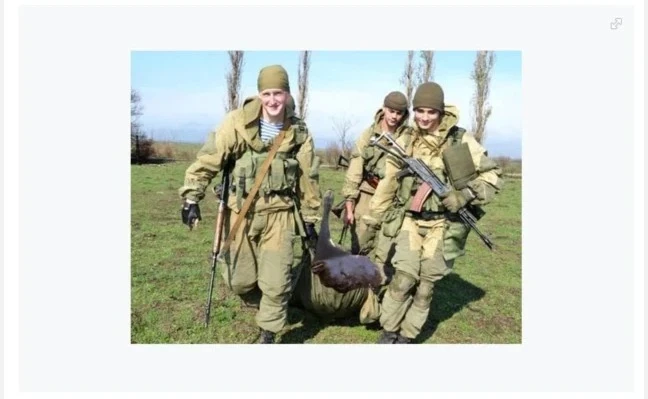
So, Russia published the photo with the headline: "Kyiv security forces steal cattle from civilians." In the photo Ukrainian servicemen seem to be carrying cattle.
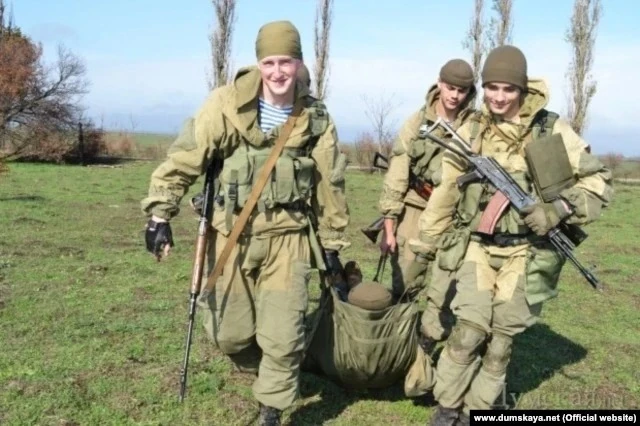
The original photo can be seen on the Ukrainian portal "Dumskaya", with a publication date of October 24, 2014.These photos were taken at one of the training grounds in Odesa oblast, where the field trip of the cadets of the Military Academy took place.
For three weeks, freshmen and sophomores of this higher education institution worked out educational issues in tactical, fire, engineering, military medical training, intelligence, RKBZ, military topography and performed parachute jumps from the Mi-8 helicopter.
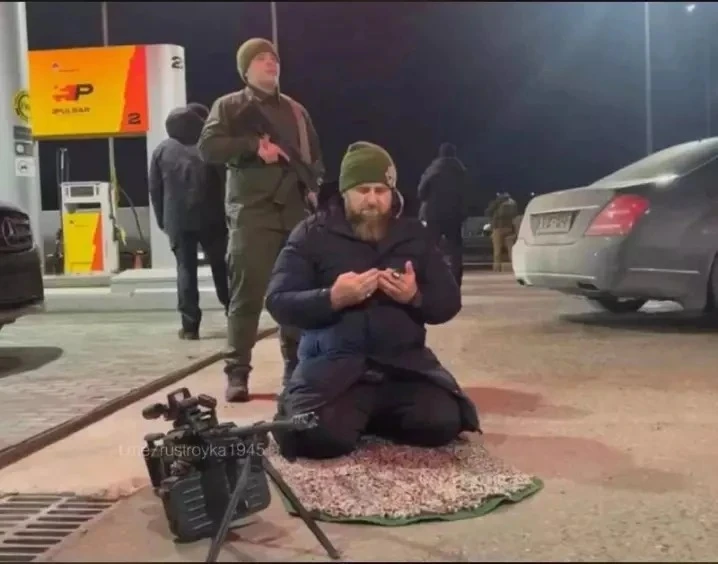
A photo with the leader of Chechnya Ramzan Kadyrov can be also used as an example.On March 28, he reported that he was in Ukraine.On the same day, pro-Russian pages in social networks began to post his photo, where he is kneeling with a machine gun.Attentive users noticed in the background a gas station of the Russian brand "Pulsar", which is not available in Ukraine.
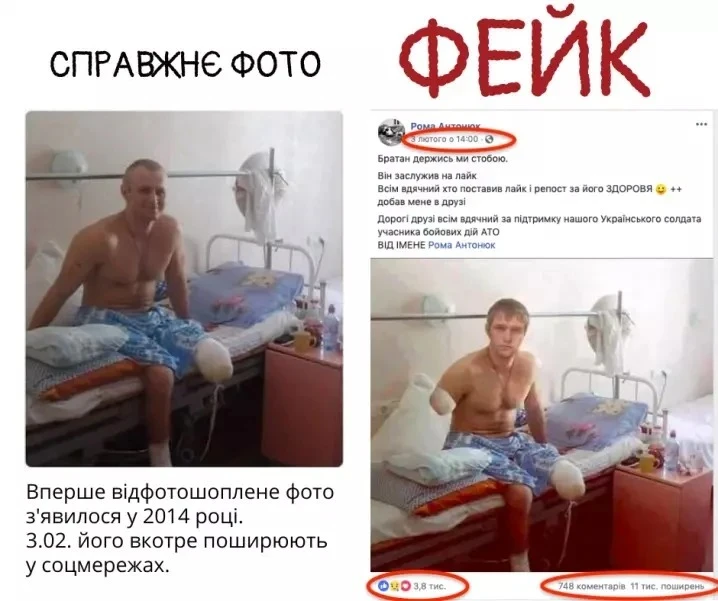
A photo of an allegedly seriously wounded Ukrainian military man who is in a hospital was also spread on Facebook.The image was with an emotional text that urge to like and repost. As it turned out, the photo was edited.This is noticeable by the unnatural lighting of the "military" body. The original photo appeared on Facebook back in 2014.
How is it possible to check the authenticity of a photo?
First of all, you should carefully examine the photo and pay attention to the details, comparing them with the accompanying text.For example, make sure that the weather, location, architecture, street names, and car numbers is real for that period of time.
In addition, you can pay attention to details that indicate image editing.These are unnatural perspective, shadows, reflections, focus, contrast and colors.
Another point worth paying attention to is the text, namely its emotionality.In particular, the words "shock", "sensation", "urgent" and the like ones.For example, photos of unidentified people with disabilities or disabilities regularly appear on Facebook.
To assess the veracity of the photo, you can also check the resource where it is published.The website or pages of a reputable mass media will most likely testify to its authenticity, while a resource with dubious news will indicate the need for a critical attitude to the photo.
Another way is to check photos through image search systems. The most popular of them is Google.To use the service, you need to right-click on the image, select "Search image using Google Lens", and in the window that opens - "Find image source". This will open a Google search window where you can see where else this image has been published.
It is also worth noting that photos can be mirrored before publication in order to avoid detection of falsification. If you are in doubt about a certain photo, you can mirror it with a photo editor and check it in the search.
Author: Anton Malynovskyi