
Donetsk oblast is not only about mines and slagheaps, not Kobzon and Anna Akhmetova, but dozens of talented painters, writers, and artists. At one time, Soviet propaganda did everything to make generations of eastern Ukrainians forget their surnames.
Historian Natalia Mykhalchenko helped Trybun remember them.
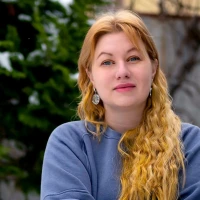
Natalia Mikhalchenko is from Donetsk. In 2014, she started living in Dnipro and created her own popular blog.She traveled through Donetsk and Luhansk oblast before the full-scale invasion — covered the historical past and cultural present, showed Donbas as the locals know it, and destroyed persistent stereotypes about the residents. Currently, she continues to popularize the Ukrainian East through her blog.
With its history
"In the tradition of post-Soviet times, the topic of art in Donetsk oblast remained and remains, unfortunately, and now for many, such a terra incognita.If we ask what kind of art, culture, and what artists, sculptures, photographers, and painters are famous in Donetsk oblast, something Soviet, industrial, or propaganda is usually mentioned.Well, they might mention Kobzon and Anna Akhmetova as part of a joke and nothing more," - historian Natalia Mykhalchenko says.
That is why the specialist considers it necessary to debunk Soviet myths.
"Let's be honest: a large number of very interesting Ukrainian artists are from Donetsk oblast If we talk about that period from the past, about which the most written references have been preserved, where we know the authors of artistic works, then it is the Cossacks," - the historian notes.
Donetsk oblast was a part of the Cossack region, its lands were included in the territory of the Zaporizhian Army.
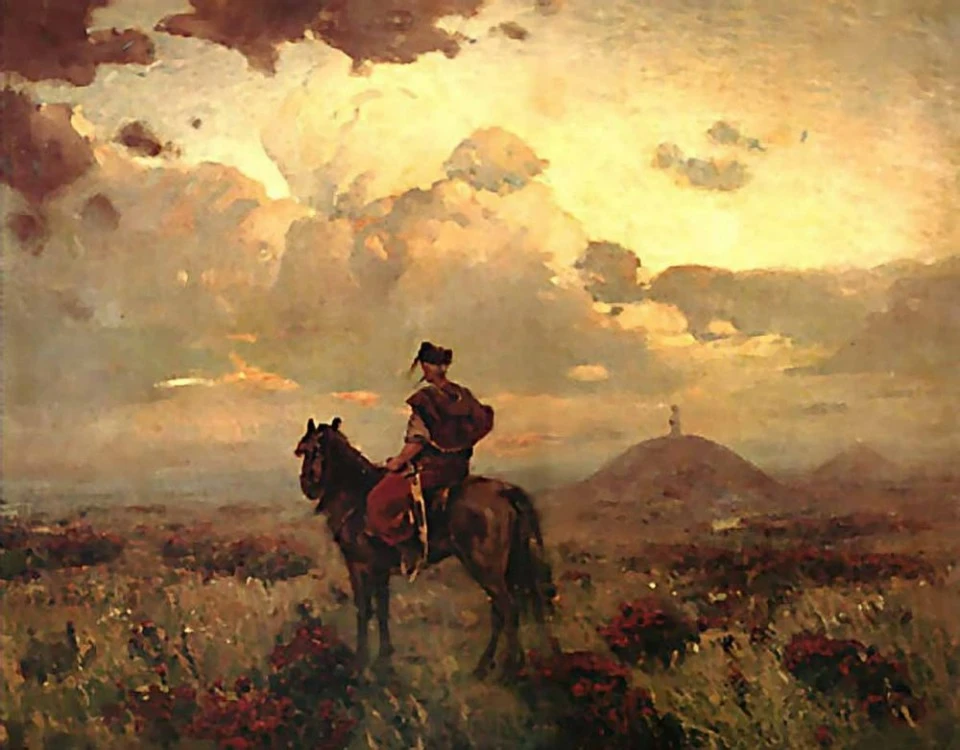
"Therefore, in fact, everything that we can mention about Cossacks, about Cossack settlements, about Cossack slobodas, concerns this land, that is, Slobidska Ukraine. And its name seems to hint that settlements, slobodas, forts were also here.This can be seen in Serhii Vasylkivsky's paintings - I even found two paintings about a Cossack in the steppe and Cossacks in the steppe. If you look closely, in one picture there is even a stone woman in the background, and mounds are an integral attribute of both images".
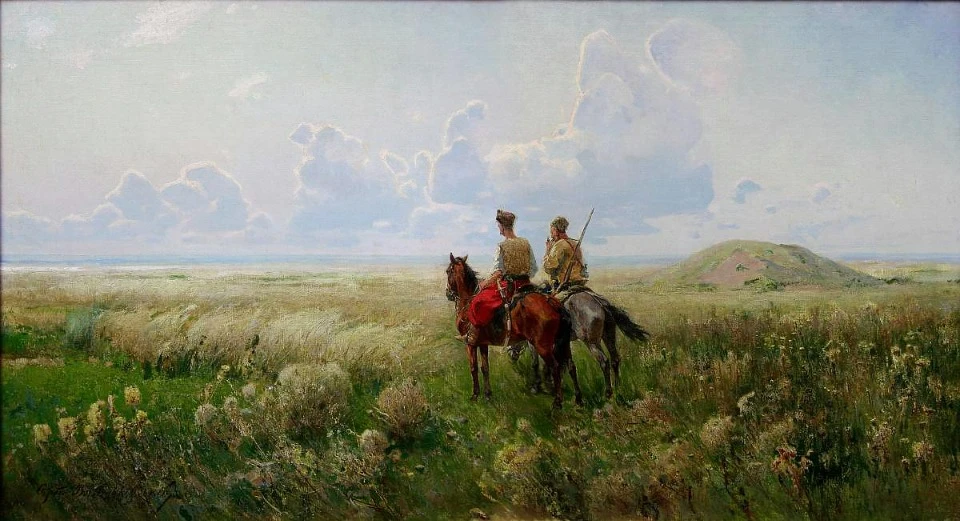
Ms. Natalia suggests that these may be the lands of Prychornomoria.
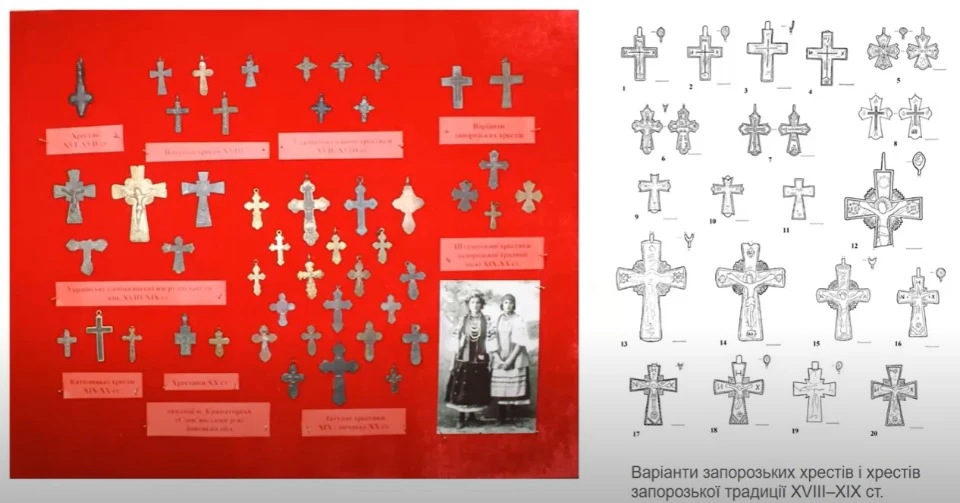
"Art and its manifestations certainly include many religious works, particularly, body Cossack crosses, which were very widespread in the 16th-19th centuries. And here is one of the collections of the city of Kramatorsk and the Slavyansk raion— very vivid," - the historian says and shows the illustrations.
Speaking about the art of the Cossack period, one cannot fail to mention architecture.
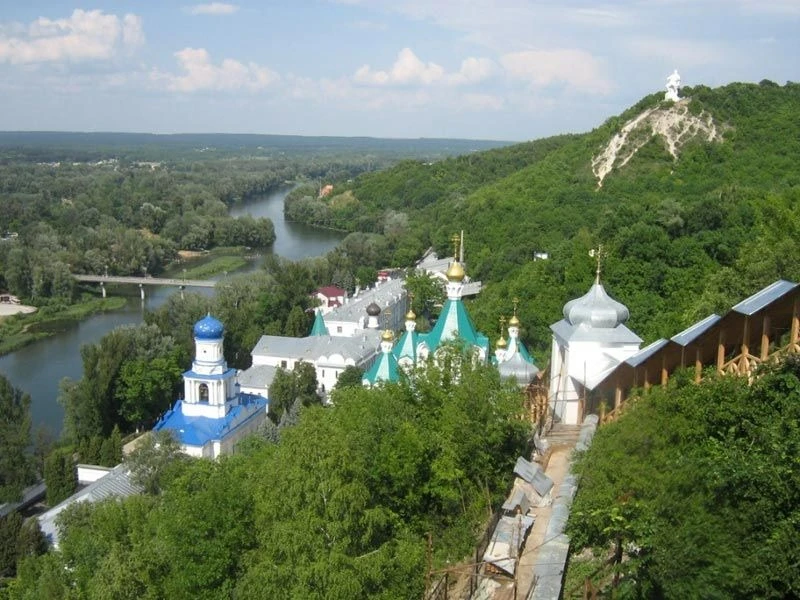
"Sviatohirsk Lavra is a monument of the Ukrainian Cossack Baroque. According to legend, as early as the 18th and 19th centuries, monks who fled from Byzantium from the persecution of iconoclasts settled here.Sviatohirsk was temporarily occupied last year, but the Ukrainian military liberated it. At the moment, battles are taking place nearby".
From the beginning, the monastery performed a fortification function.
Revolutionary period
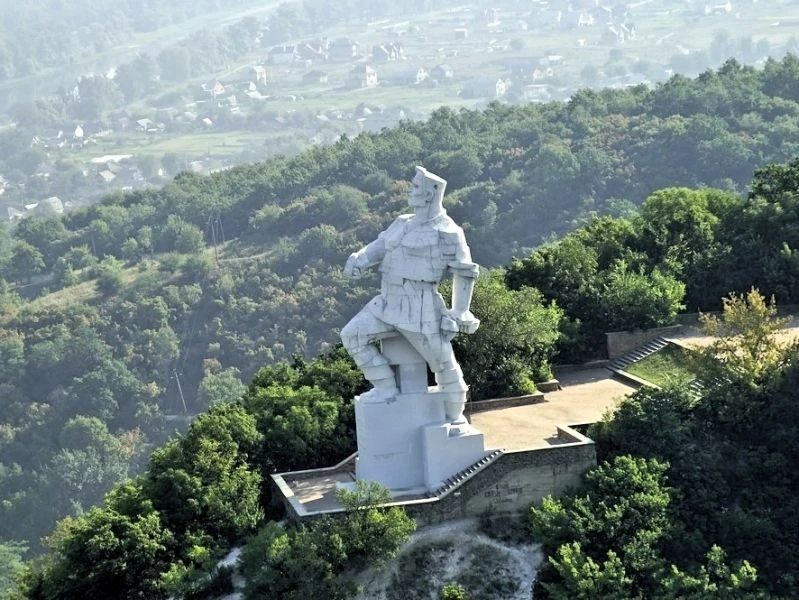
In 1927, a monument with elements of Cubism to the Soviet party and statesman Artem appeared next to the Lavra.As part of decommunization, it was recently renamed to the "Monument to the Authorship of the Outstanding Sculptor Ivan Petrovich Kavaleridze".
"The author is Ivan Kavaleridze, an outstanding Ukrainian sculptor of Georgian origin.He created at the beginning of the twentieth century. Among his most iconic works are the monument to Shevchenko in Romny and Olha, Andrii, Cyril and Methodius on the square near St. Michael's Cathedral in Kyiv," - the historian
says.
The works of an outstanding artist are valuable. If we talk about this statue, then it has a certain background.
"The author dedicated it to the revolutionary, but the monument itself is an incredible work! 28 eight meters, 800 tons of concrete on chalk rock.There were discussions about its fate, but nevertheless, a decision was made to preserve the monument, renaming it as part of decommunization".
There was another monument to Artem in modern Bakhmut, only taller than the one in Sviatohirsk. It was destroyed during the Second World War.
Salt monuments
"Speaking of monumental sights, it is impossible not to mention Soledar.In the underground salt mines, which existed for a long time and were recorded in history, the tunnels turned into a real museum. In one hall underground there is also a football field, a church, a concert hall where a symphony orchestra gave a concert, salt sculptures and paintings carved on the walls.Such salt museums were opened in the twentieth century and they operated before the full-scale invasion".
There were a lot of interesting things left in the salt mines in an artistic point of view.
"We will believe that they will remain even after the de-occupation of this territory. At a minimum, the salt reserves will be enough for many more generations, so these mines have a future. But let's see what will happen to art," - Natalia Mykhalchenko says.
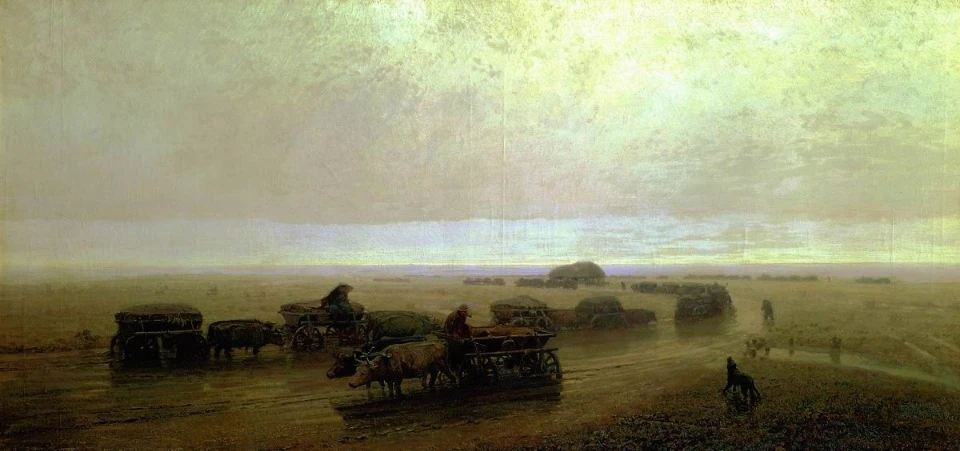
At one time, the Milky Way was depicted in paintings by Arkhip Kuindzhi.
"Salt was one of the products that chumaks transported a lot around Ukraine among other things. That's why they got into Kuindzhi's paintings for a reason".
Unstolen artist
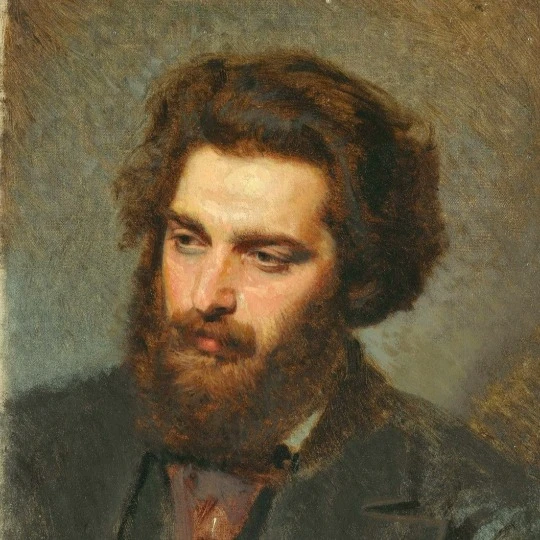
Arkhip Kuindzhi was a Ukrainian artist of Greek origin, born in Mariupol.This artist is one of those whom Russia is trying to appropriate and call him "Russian".
"He was born in Mariupol, spent a lot of time there. He depicted a lot of Ukraine and the surroundings of Mariupol, Slobozhanshchyna, Pryazovia, Prychornomoria. Many of his works were preserved in Ukraine even until recent times. But some of them, which were in Kherson, were taken away during the last occupations, some remained in Donetsk. We have not had access to them since 2014. The Arkhip Kuindzhi's museum in Mariupol was destroyed last year. There were no paintings by him, but there were sketches, originals and copies of works. We also consider them temporarily lost," - the historian explains in detail.
Mertsalov's palm
"The palm tree was made from a single railway rail in 1895 in Donetsk by a blacksmith of the Yuziv metallurgical plant," - Natalia says.
The 3.53-meter-high sculpture was made with only a hammer and chisel, according to old sources.In 1900, at the International Industrial Exhibition in Paris, the Grand Prix was awarded to the steel palm.Currently, the original sculpture " Mertsalov' s palm" is kept in the museum of the Mining Institute in St. Petersburg. And one of the copies meets people at the Lviv train station.
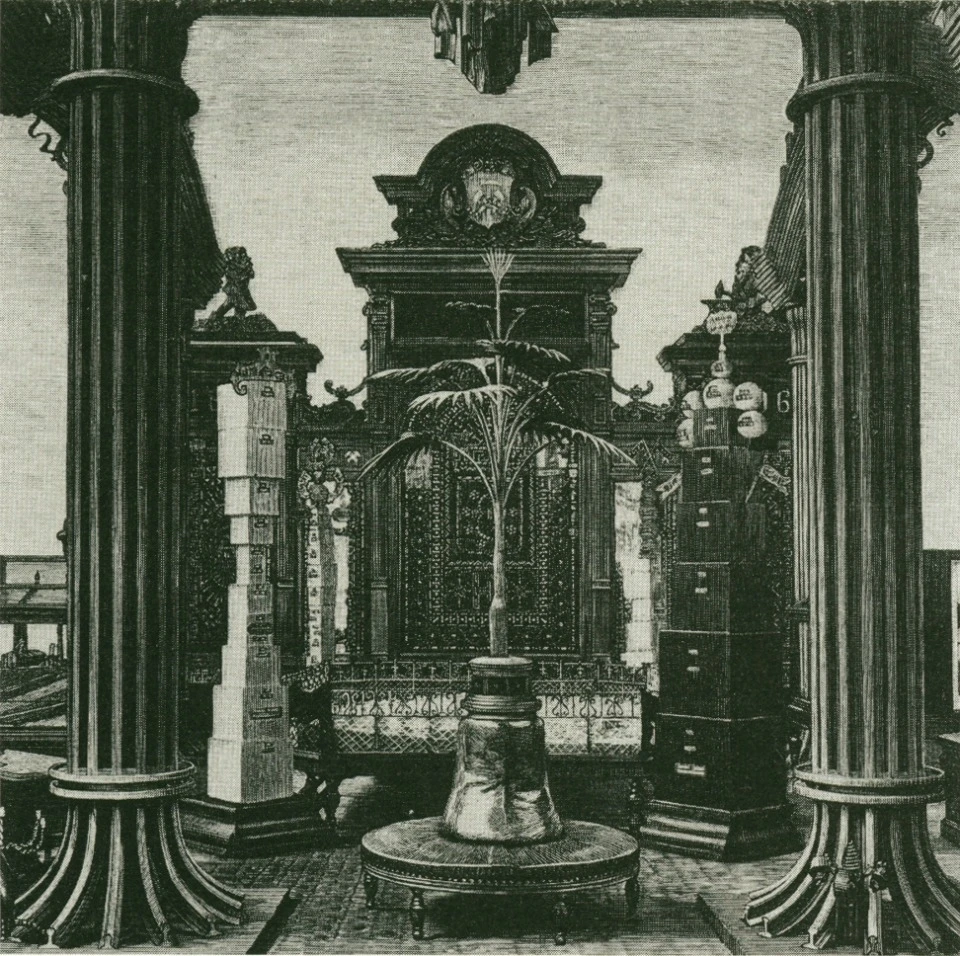
"I think that later this palm tree will be rethought, like many other monuments. But this is after the end of the war," - the historian says.
On August 17, 1999, based on the results of the competition, the session of the Donetsk Regional Council approved the coat of arms of Donetsk oblast, the central element of which is Mertsalov's palm tree.
Miner's image
Monuments to mining usually wore a male image, but women also worked in the mines.
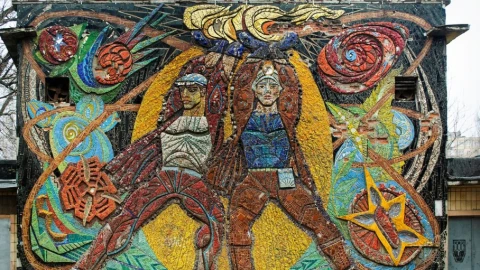
"This slightly romantic, but at the same time very picturesque image, was created by Alla Horska, a Ukrainian sixtier, a monumentalist artist, who devoted a large part of her work to the Ukrainian East".
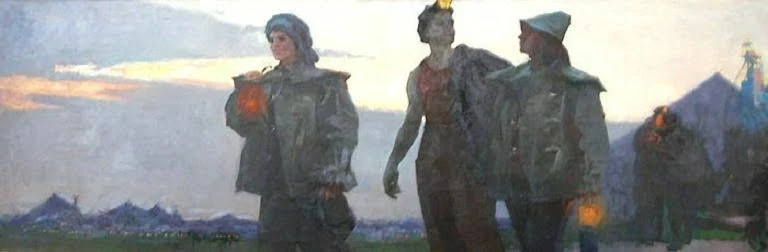
The artist is originally from Crimea, she lived in Kyiv in her youth, and then with her husband, Viktor Zaretskyi, who came from the east, devoted a significant part of her work to Donbas.
"This monument with miners, which, in my opinion, resemble Prometheus, was actively used in the propaganda of its time. However, this image and what is around them is already something fabulous, it is something mythological as in most of Horska's works".
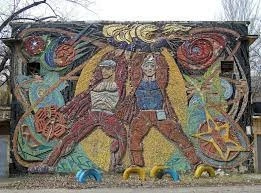
These mosaics decorate one of the schools in Donetsk.
"Horska's creativity is very colorful, and her images in some places are not at all typical for the sixtiers," - Ms. Natalia notes.
Last year, two of Alla Horska's mosaics were destroyed in Mariupol during the blockade of the city - Boriviter and Tree of Life.
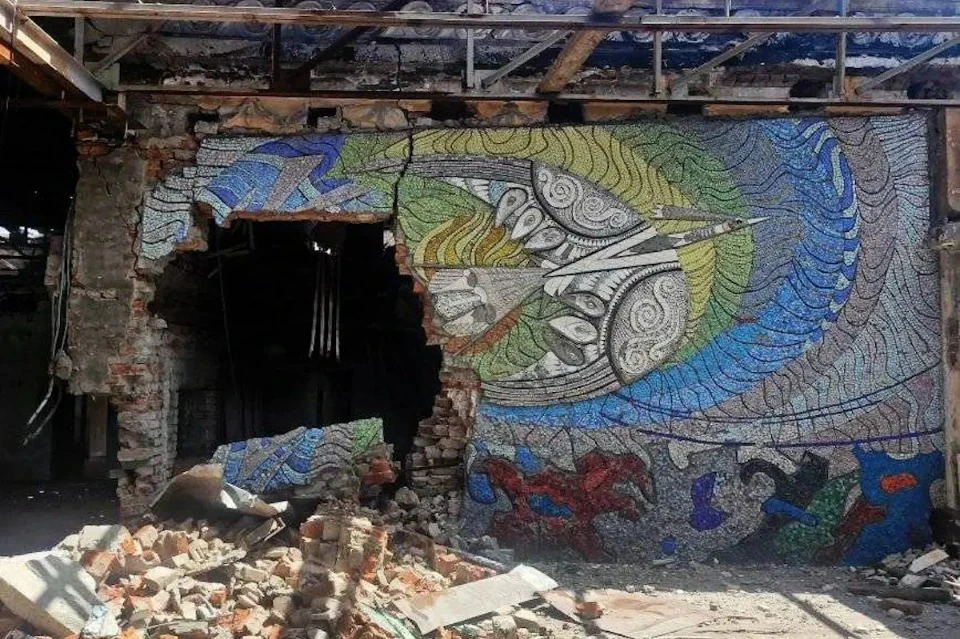
"In general, all of Horska's work in eastern Ukraine is such a pain, because it was almost completely destroyed," - the historian says.
For decades, Alla Horska's name was banned because of her active position, love of language and her own vision of Ukraine.Her assassination in 1970 was planned by the State Security Committee, and years later the Russians came to destroy her work in the east.
Read about more modern art history of Donetsk oblast in next TRYBUN articles