

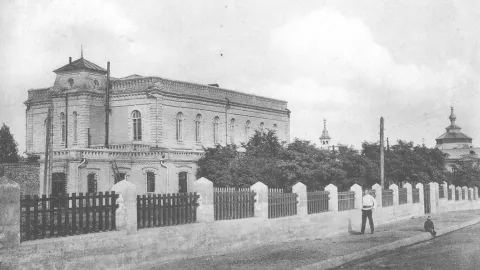
The arrival of European capitals at the end of the 19th century played a significant role in the development of the industrial potential and the construction of the modern city of Kadiivka. From that time until the Bolshevik onslaught, numerous French and Belgian joint-stock companies actively developed coal mining and metallurgical production in the territory of the modern Alchevsko-Kadiivka agglomeration over several decades.
TRIBUN gathered historical facts about Kadiivka and its entrepreneurs that were erased from public memory during Soviet times.
On August 13, 1894, the administrative council of the Belgian company John Cockerill (hereinafter referred to as "Cockerill") made a decision to create a joint-stock company "Societe anonym belge pour l'exploitation des charbonnages du centre du Donetz" ("Belgian anonymous company for the exploitation of coal deposits in the central Donets") for the purchase and exploitation of coal deposits in the Donbas region, and on August 29 of the same year, it was registered. On March 25, 1895, the board of directors of the company was authorized to adopt a special corporate name for operations subject to processing in the Russian Empire: the Almazna anonymous coal company (hereinafter - ACC). The company received its name from the so-called diamond seam it was developing, the coal of which was very clean and distinguished by high coking qualities. The company's headquarters were located in the city of Seraing, Belgium. The board of directors included Baron Fernand de-Macar (president), Adolph Greiner, Georgiy-Octaviy Pastor, Robert Surmont, Paul Trasenster, Alfred Gabec, and L. D'Aust.
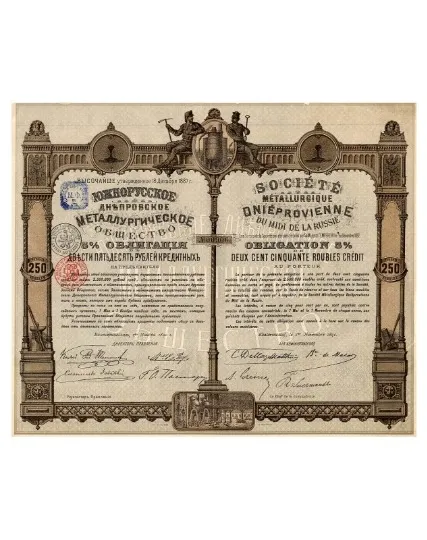
On May 16, 1886, as a result of the merger of the Warsaw Steelworks with the Belgian company "Cockerill", the Rauch group, and the French "Society of Krivoy Rog Iron Ores", the Southern Russian Dnieper Metallurgical Society (SRDMS) was formed. The board of the society included the majority of the board of directors of ACC, led by Fernand de-Macar, Ignatius Yasukovich, Edward Herbert, Wilhelm Rauch, and Karl Delwa. The main capital of the company was distributed as follows: 40% of the shares belonged to Belgian shareholders, 33% to Polish-German, and 27% to French.
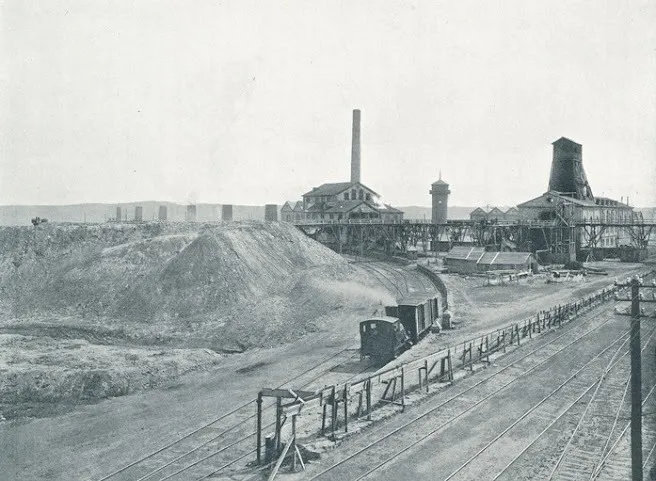
The Belgian ACC acquired ownership of two mines (of the aforementioned diamond seam) – mines of Semenivsk and Varvaro-Borysivsk, located close to each other. In the spring of 1896, Moscow (according to some sources - Kharkiv) sugar manufacturer Serhiy Shubin and mining engineer Albin Zavadsky laid a new shaft No. 1 on the territory of the existing Varvaro-Borysivsk mine, which was located on the land of nobles Varvara and Serhiy Savichiv and over the years counted up to 12 adits and mines belonging to various joint-stock companies, including also Bryansk, Oleksiivka, Kryvyi Rih, and others. The construction was financed by one of the largest shareholders of SRDMS, Belgian Karl Delwa, who was one of the main bankers of the company. Presumably, his name later unofficially became associated with shaft No. 1 as "Karl" (since 1924 - the Illich mine) and the railway station Karlivka. In the fall of 1896, this mine produced its first coal. Hoisting and lowering were mechanized. The mine owners installed steam engines from the "Cockerill" company. The daily coal production was 1200 tons. Next to this mine, in 1896, SRDMS/ACC founded a coke-chemical plant. At the plant, 8 coke batteries of the Belgian system Evence Coppée, consisting of 180 ovens, were built, and bricks for them were specially imported from the Belgian city of the same name. At the end of the 1890s, shaft No. 1 "Karl" fell into the hands of Belgian engineer Eugene Yulievich Ponselle (full name Eugène Marie Joseph Ponselle), who was managing ACC at that time. In 1898, near the Almazna station, the Almaznyansk metallurgical plant was founded, the first blast furnace of which started operating in 1899. This entire vast industrial complex eventually received the name Kadiivka Mine.
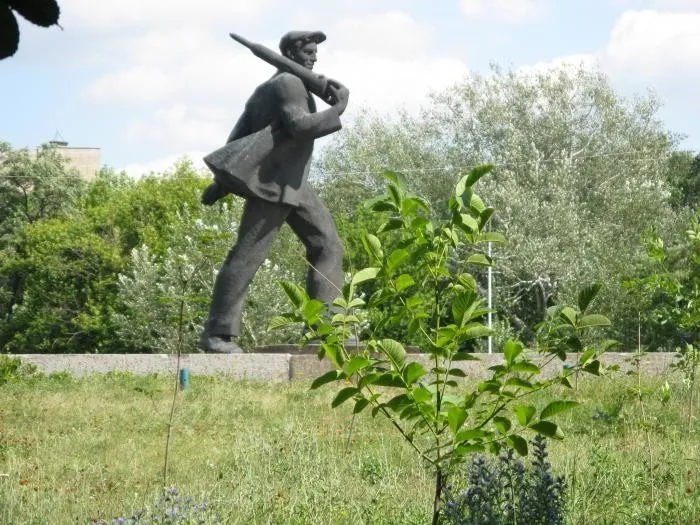
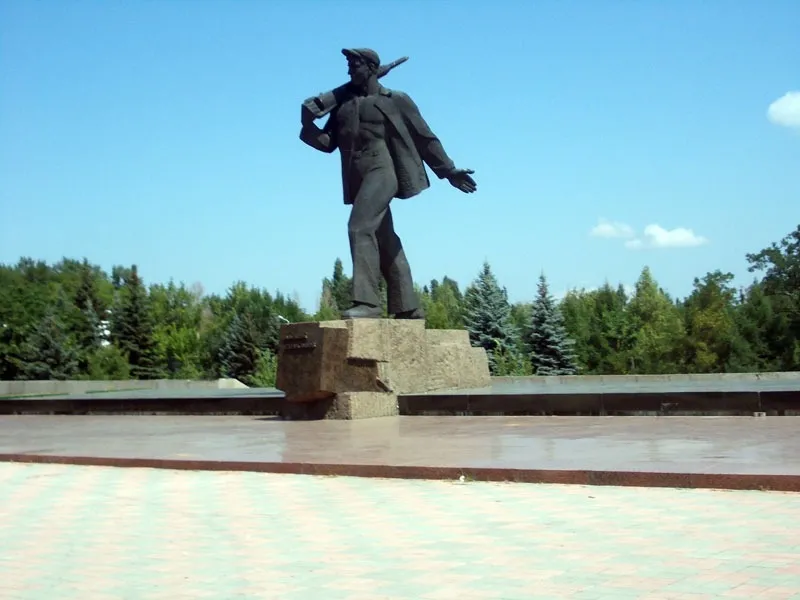
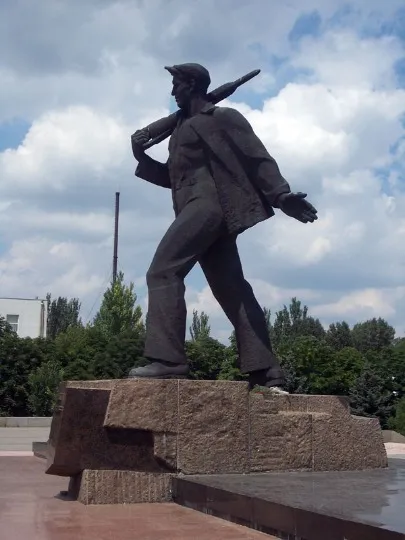
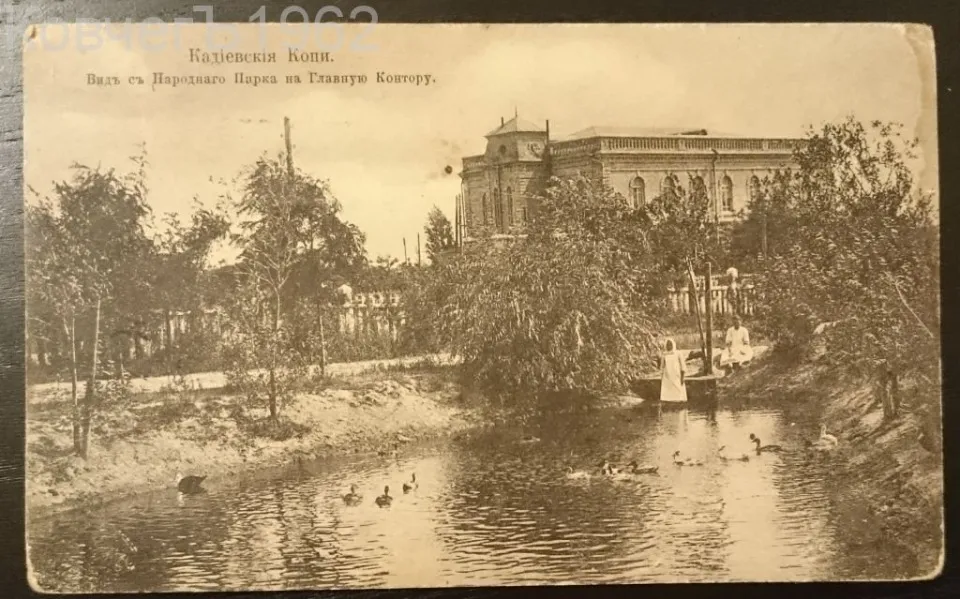
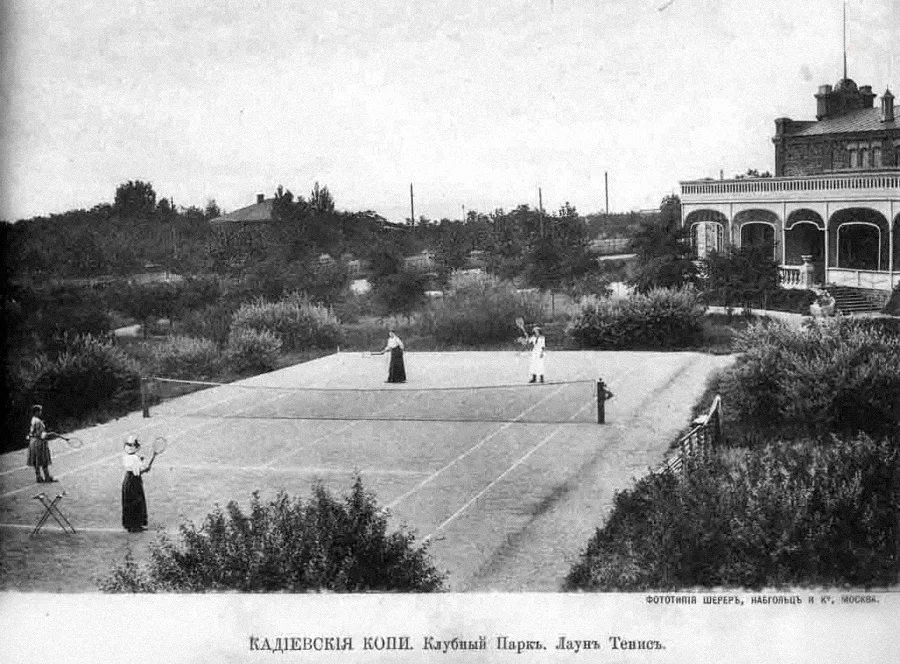
The construction and operation of new industrial enterprises required the recruitment of a significant number of engineering and technical specialists, as well as office staff. Most entrepreneurs and technical workers moved to the Kadiivka Mine with their families. They bought land plots and built elegant mansions for themselves. For example, Ponselle, who purchased a suitable plot for construction, built a magnificent house for his family at that time, surrounded by a garden. This garden eventually became the modern "Hirnyk" park, and where Ponselle's mansion stood, there is now a square with a monument to Oleksiy Stakhanov.
A similar mansion was built nearby by the assistant director of the mine, F. G. Hesh. These buildings marked the beginning of the formation of a street, which later became known as Cockerill Street (now Lenin Street) - named after the largest Belgian entrepreneur William Cockerill and his son John.
By the end of the 19th century, Kadiivka Mine became one of the largest in the Donbas region, encompassing 6 shafts. The settlement began to take on the characteristics of a small town. The general director of SRDMS, Ignatiy Yasukovich, a Polish Jew by origin, initiated the construction of housing for engineering and technical specialists of Kadiivka Mine: overseers, foremen, clerks, accountants. He mainly invited them from Poland. With the funds allocated by society, the construction of brick four-apartment buildings began, both for officials and for miners' families at the mine. The housing was built with minimal comfort. Basic communal facilities were located in the backyard. Soon, a whole street formed from these buildings, which was named after I. I. Yasukovich (now Zhovtneva Street). The drivable part of the street was paved with stone, along which sidewalk slabs made of cut limestone were laid. Between the road and the sidewalks, lawns were arranged, on which yellow acacia and lilac bushes were planted.
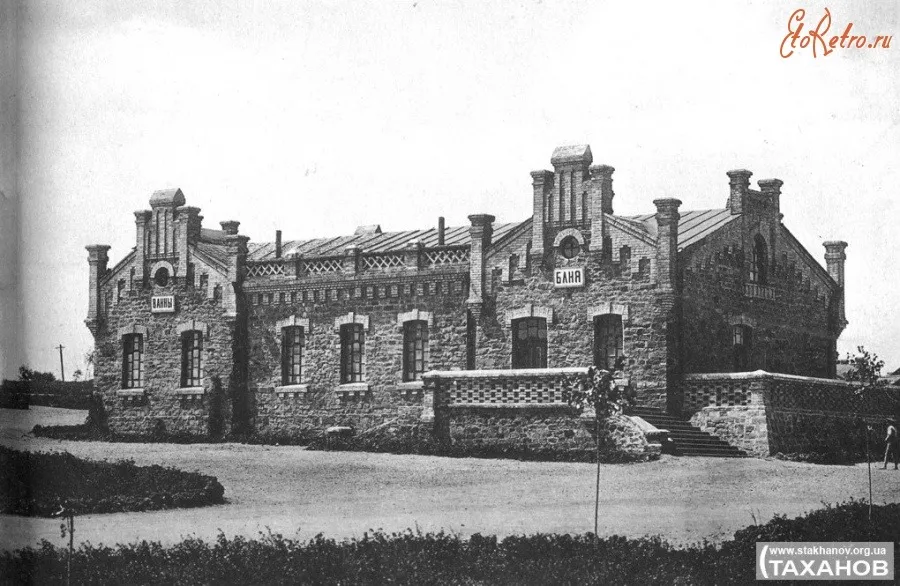
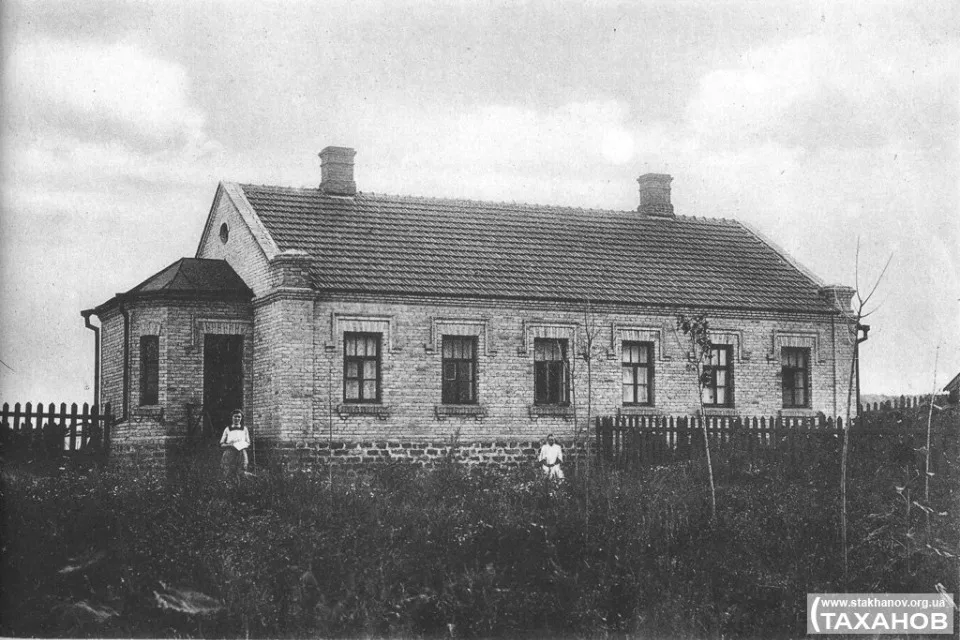
The increase in the population of the settlement, in turn, led to the creation of a commercial infrastructure. This role was mainly taken on by Poles and Jews. This group of entrepreneurs deployed a network of trade and communal establishments in the settlement: taverns, pubs, pastry shops, bakeries, tailor shops. Thus, the main street of the settlement emerged - Torhova (now Kirova Street). It was paved with stone. The main trade establishments of the settlement were concentrated here: the Batir and Shesheriv manufacturing stores, the grocery stores of the Urshansky brothers, the taverns and pubs of Bugayov, Pimonov, and Kapranov.
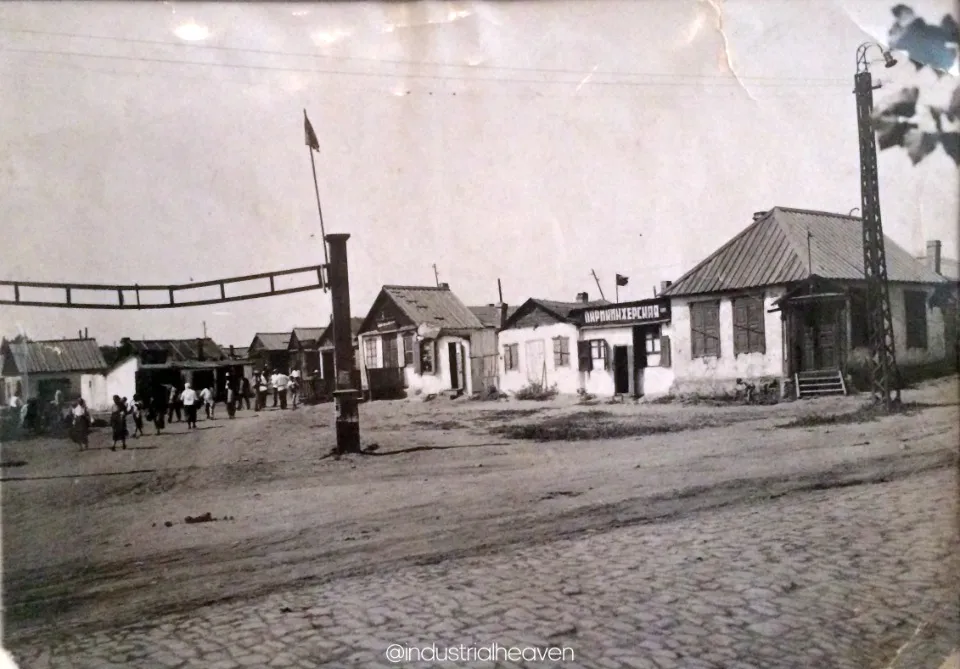
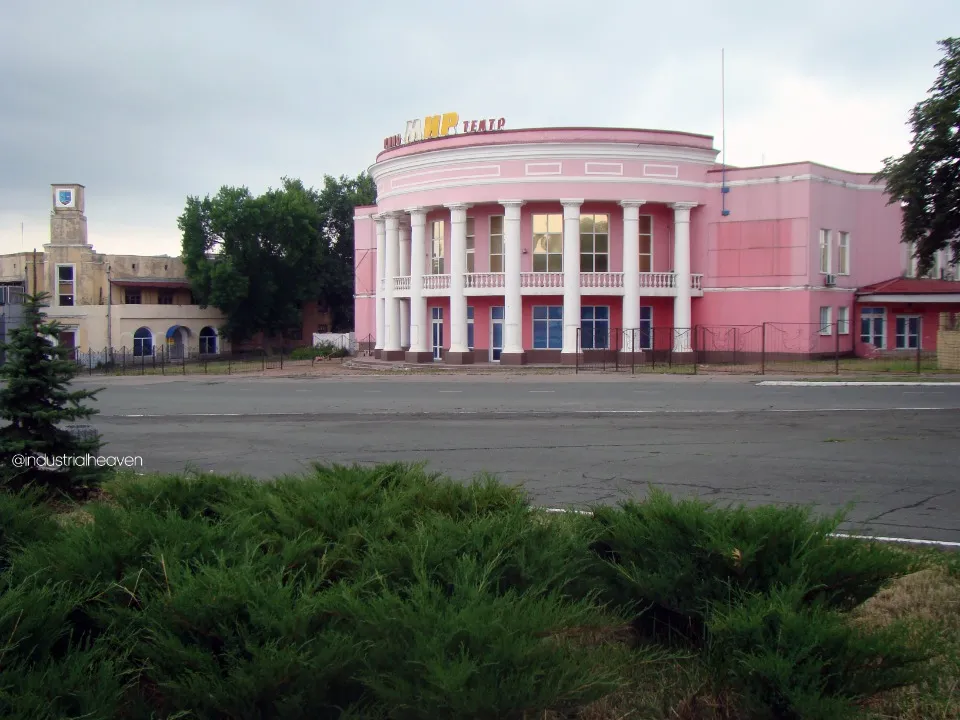
Not far from them was a bakery with a shop owned by merchant Adamov, which sold various bakery and confectionery products. Torhova Street was closed by the square of the mine market, which was located where the modern "Mir" cinema is.
In 1901, the management of Kadiivka Mine built and maintained a parish school for 300 children, where 7 teachers worked. The school building was located on the site of the right wing of the Palace of Culture of Gorky. When the construction of the Palace of Culture began in the second half of the 1930s, the school building was demolished. During the formation of the city center, all pre-revolutionary buildings on Torhova Street were gradually demolished, and in their place, the buildings that we see today were erected. Europeans also built a Catholic church in Kadiivka, which operated until the early 1930s. Considering that the church building ceased to exist in the 1950s, the exact location of the cult structure is currently unknown. Presumably, the church was located between the current building of the main post office and the building of the Stakhanov Vuhillia (Coal)production association, but not on the line of modern buildings, but was more recessed into the courtyard.
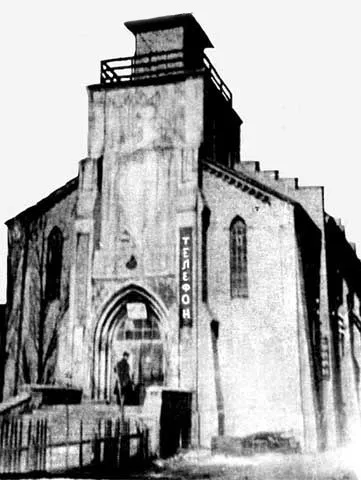
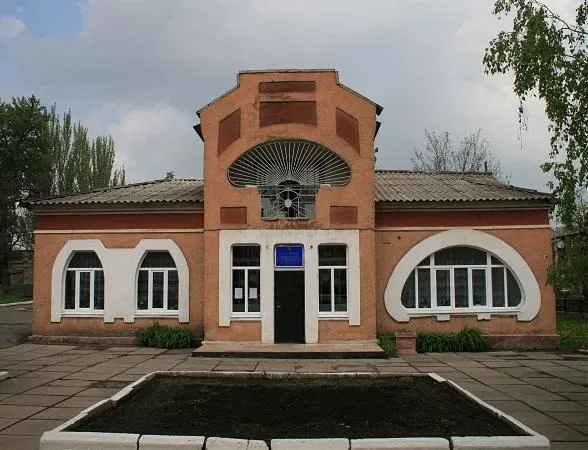
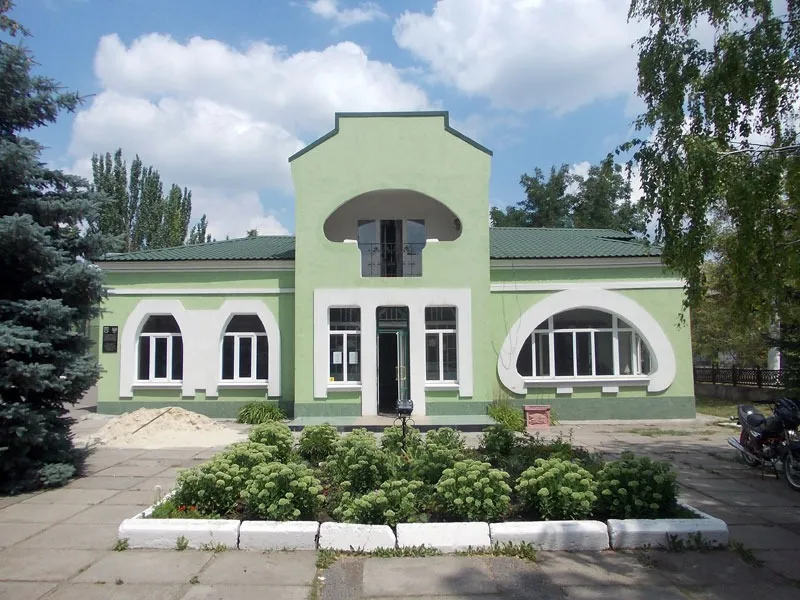
The place where the post office and the trust now stand was free and represented a square in front of the church. According to tradition, there was also a small Catholic cemetery behind it, where, among others, the wife of architect Karadini, who came from Poland, one of the representatives of the mine administration, whose house was nearby, was buried. Today, this Art Nouveau-style building (albeit significantly changed due to renovation) houses the Civil Registry Office.
Oleksandr Kuchynskyi