
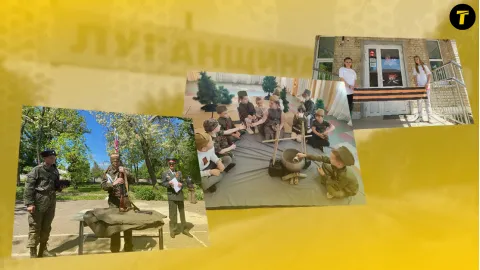
This year, on the occupied territories of Luhansk region, Russians organized large-scale festive events for the so-called 'Victory Day' on May 9th. This occurred while the entire civilized world commemorated Victory Day over Nazism in World War II on May 8th.
Previously in Ukraine, May 9th was also a public holiday, celebrated as Victory Day over Nazism in World War II, while May 8th was a day of remembrance and reconciliation. In 2023, the Verkhovna Rada of Ukraine adopted a law abolishing both holidays, instead establishing a new one on May 8th – the Day of Remembrance and Victory over Nazism in World War II 1939–1945.
Thus, Victory Day on May 9th is a Soviet tradition firmly rooted in countries that were formerly part of the USSR. Russia often manipulates dates and uses this as a propaganda tool against Ukrainians, claiming that Ukraine is rejecting its own past.
In European countries, victory in World War II is annually commemorated on May 8th, the day of Nazi Germany's capitulation. The explanation for this difference is quite simple:
On May 7th at 02:41 Central European Time, in the French city of Reims, the Act of Capitulation of Germany was signed, which came into effect on May 8th, 1945. However, at the demand of Soviet leader Stalin, the Act was re-signed late in the evening on May 8th near Berlin. Supposedly, Soviet Marshal Georgy Zhukov did not participate in the first signing, so Moscow demanded another ceremony. The Wehrmacht troops confirmed by signing that they were ceasing military operations at 23:01 on May 8th, 1945 (01:01 on May 9th Moscow time).
Today, Russia distorts the commemoration of victory over Nazism and creates a cult of Victory Day, actively spreading its beliefs in the occupied territories of Ukraine.
So, what happened on May 9th in occupied Luhansk region?
Connection with "SVO" (Russian`s "Special military operation")
In their statements, Russians draw parallels with the present and claim that they are fighting "neo-Nazism" in Ukraine. For instance, the leader of the "LNR" group, Leonid Pasechnik, in his greeting, writes about the so-called neo-Nazis.
"Today, the path of our legendary ancestors is followed by their grandchildren, who fight against neo-Nazism on the fronts of the SVO. The example of the heroes of the Great Patriotic War strengthens their resolve and confidence in the inevitability of our new Victory."
The "administration" of the occupied Starobilsk also emphasizes the connection with the "SVO" in their greetings.
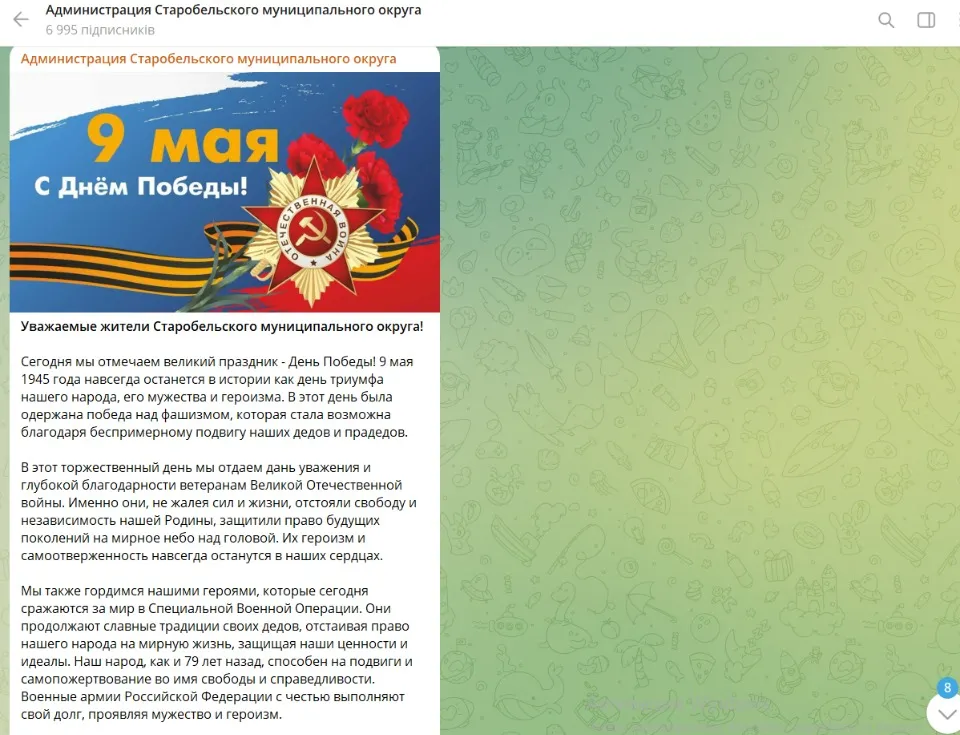
Besides that, the Russians have launched a flash mob on social media called "Immortal Regiment," where previously they honored only participants of World War II, but now they have added participants of the so-called "special operation."
For example, Sergey Viktorovich Botanogov died in 2022 near Lyman.
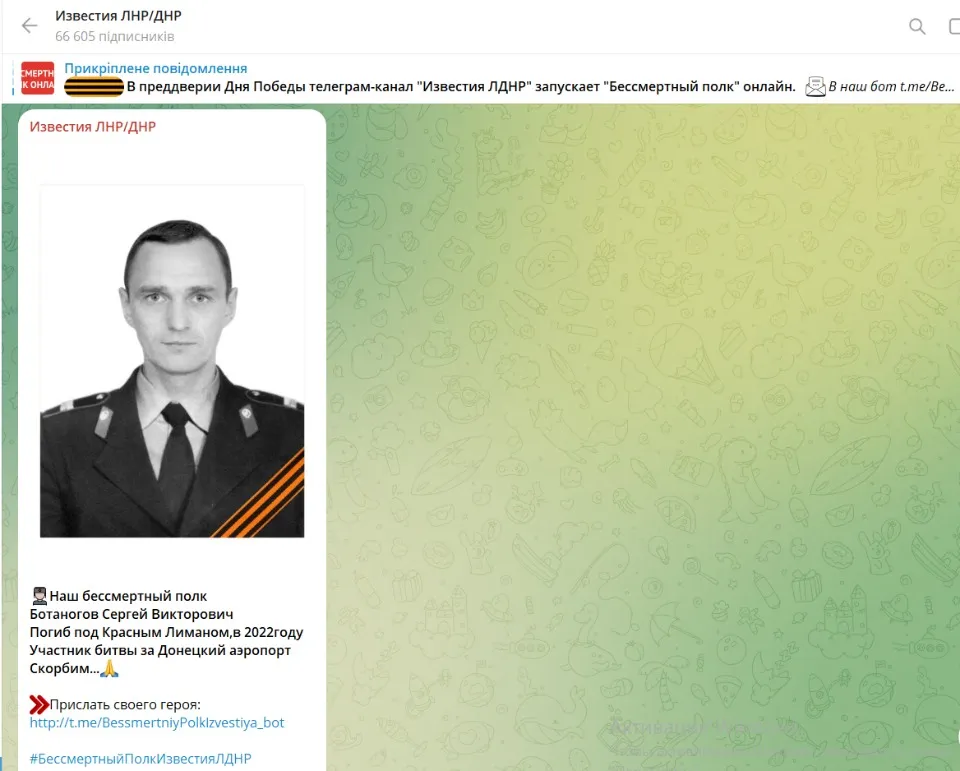
A screenshot from a resource controlled by the Russians. Deceased occupant. His photo and photos of other deceased Russians were posted alongside World War II participants.
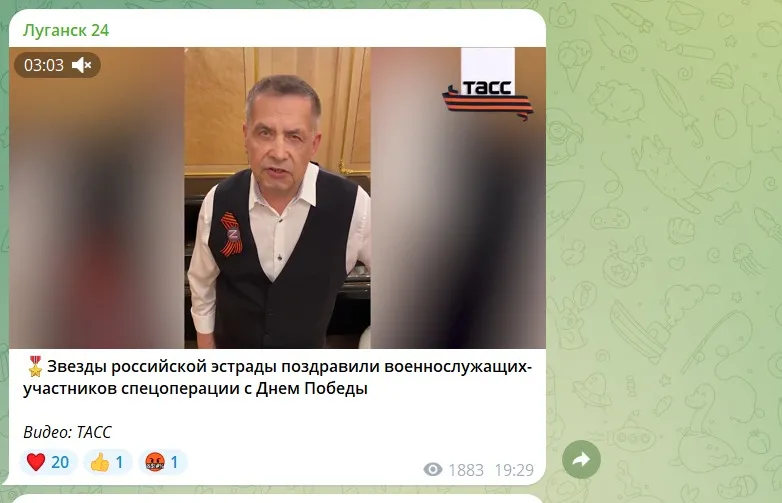
Also, on "Victory Day," Russian celebrities congratulated the military personnel participating in the so-called "special operation." Thus, Russia equates the events of the past with the present.
Russian celebrities congratulate occupiers on Victory Day.
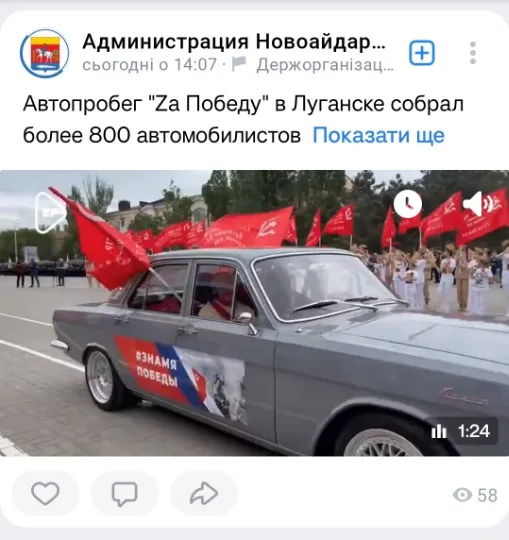
Car procession.
Car processions with flags of the USSR and the Russian Federation were mandatory, even in small villages. The event was given a rather interesting name - "Za Pobedu" ("For Victory").
The obligatory attributes included the St. George ribbon and other variations.
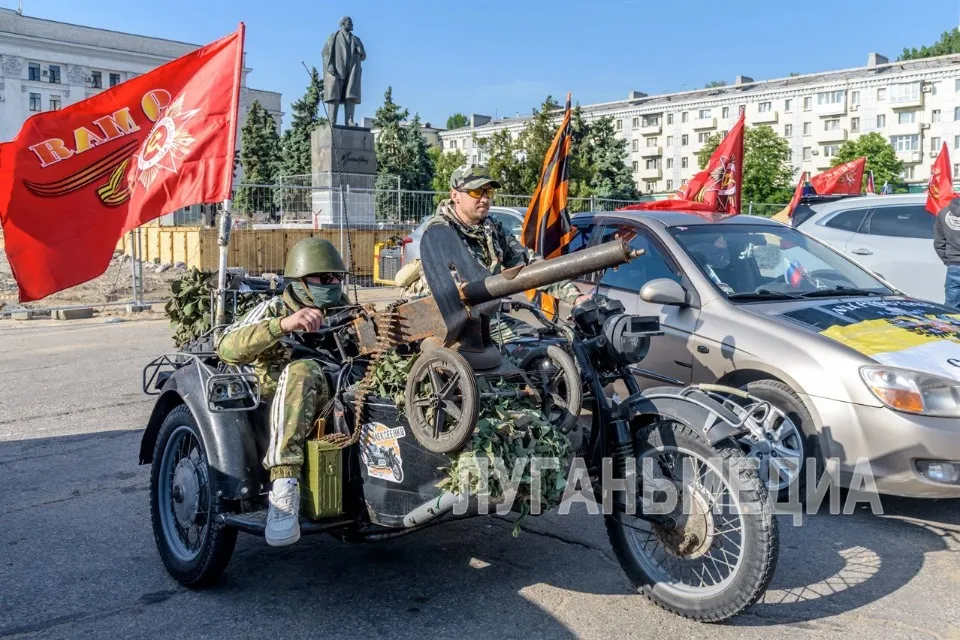
The organizers of the car procession were activists from "United Russia" and the "Deputy Chairman of the People's Council of the LNR" Denis Kolesnikov.
Involvement of Children
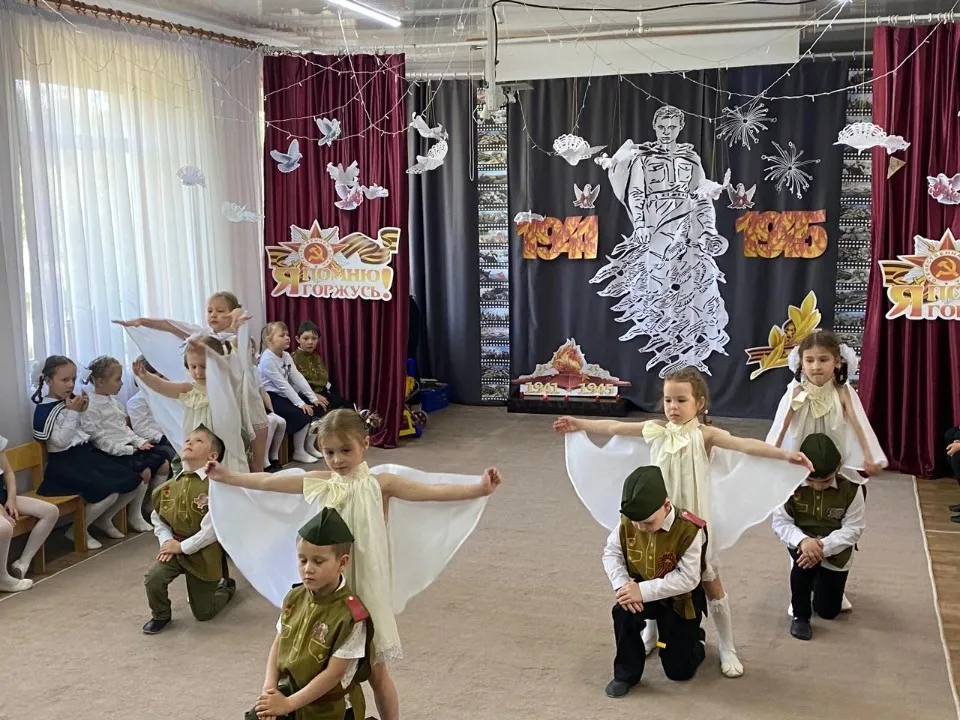
Russia never hesitates to use children, and May 9th was no exception. A campaign was conducted in schools where a convenient history was imposed on the occupants.
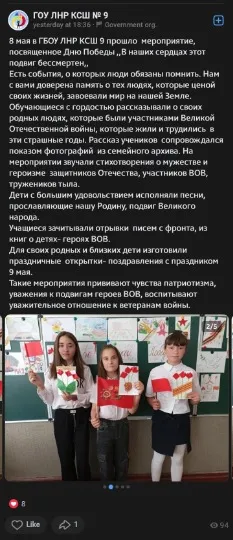
"The students read excerpts from letters from the front, from books about child heroes of World War II. For their relatives and loved ones, the children made festive greeting cards to congratulate them on May 9th. Such events instill feelings of patriotism and respect for the feats of the WWII heroes," – such actions took place at the Krasnodonska Middle School No. 9.
And such postcards were made by children from the Bilovodsky District Center for Children's and Adolescent Creativity, who then handed them over to participants of the "SVO."
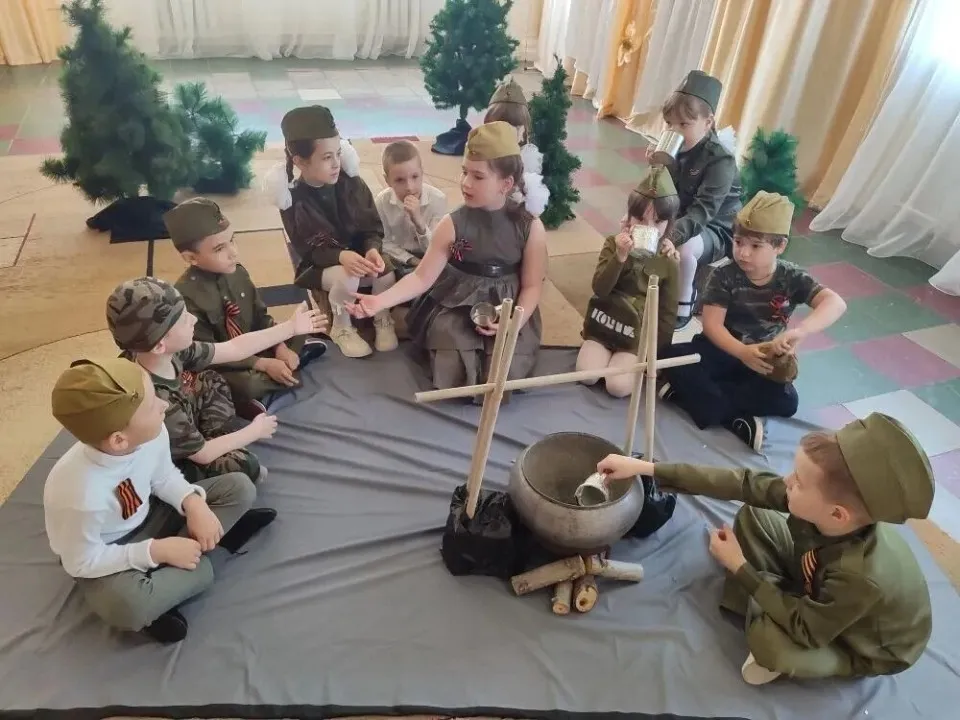
Nurseries were not exempt from this, and the following events took place at the "Forget-me-not" nursery in the occupied city of Kadiivka:
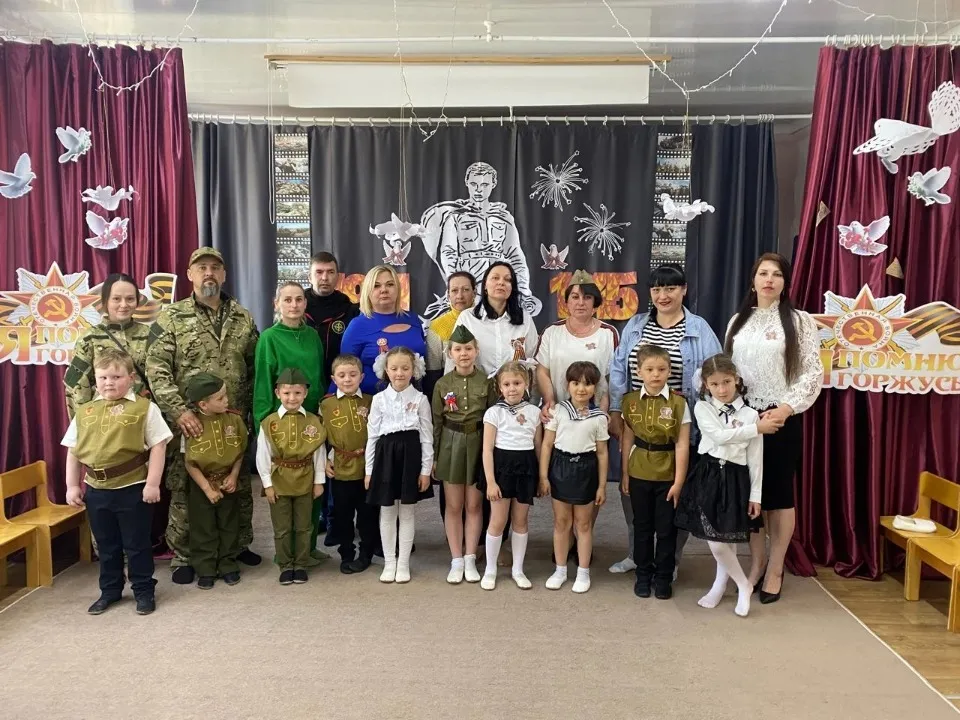
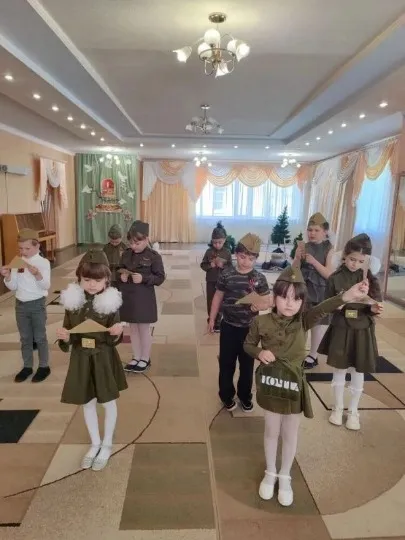
In the occupied city of Pervomaisk, boys danced with automatic rifles in the nursery:
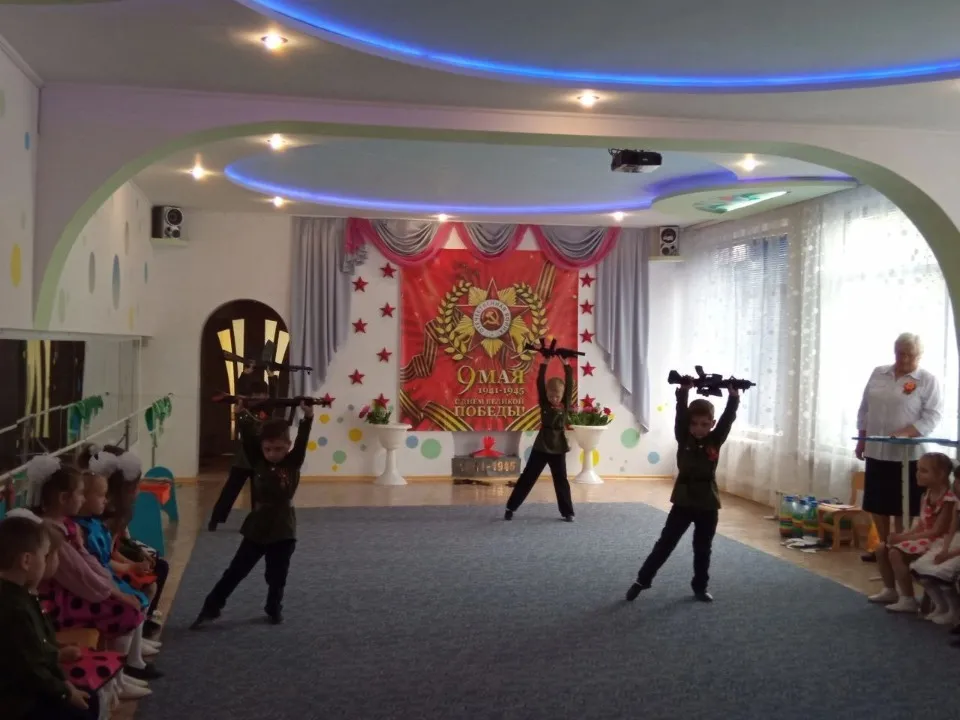
Military personnel are always obligatory guests at such events, as Russians aim to instill respect and love for the occupying army.
"For Donbass"
Earlier, we mentioned that Russians associate Victory Day over Nazism with the "SVO" and also with Donbas.
This year, at the military parade on Red Square in Moscow, Russian airborne units shouted "For Donbass":
Memory of the victory is utilized to portray Russia as a great power, while simultaneously preserving the status of the main victor for the Russian Federation. Moreover, Putin often uses the term "superpower" in his statements. Any denial of victory in World War II as described by the Russian Federation is seen as a direct threat to the existence of the Russian state.
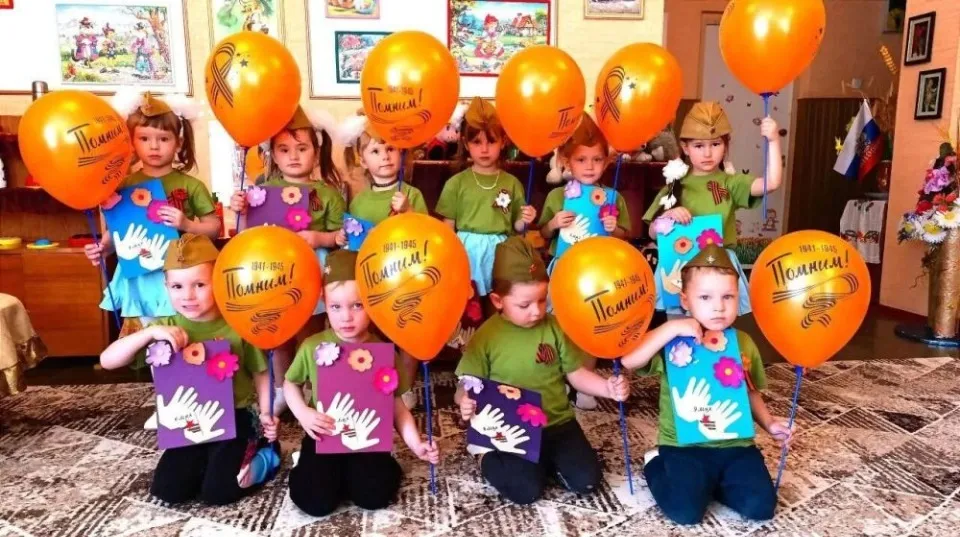
Here are a few more photos of "victory celebrations" from the nursery in the occupied village of Rodakove in Luhansk region:
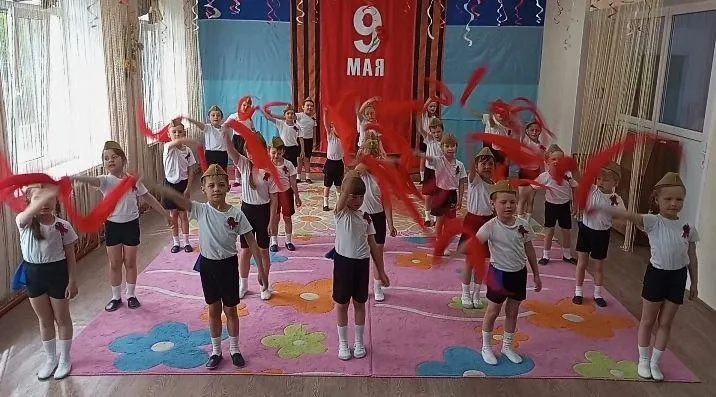
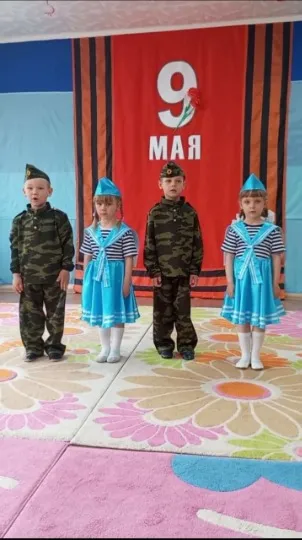
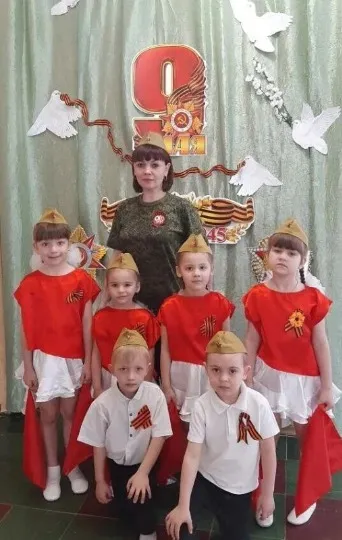
Or from the nursery in the occupied city of Alchevsk: