

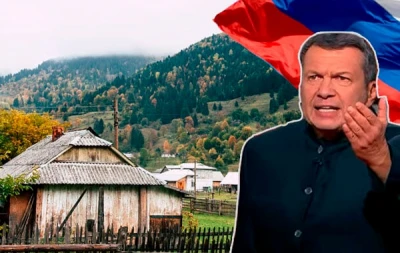
Russia has been making claims to the sovereign territories of Ukraine and trying to justify that the eastern and southern parts of our country are supposedly "historically Russian lands" for many years in a row.
However, many archaeological monuments, museum exhibits and toponymy of these regions prove the opposite fact. Today we will talk about some historical fakes that Russia spread about Ukraine.
Ukraine is part of Russia, and Ukrainians and Russians are brother nations
Let's start with the history of Russia.In 1147, Prince of Kyiv by title, and in fact Prince of Rostov-Suzdal - Yurii Dolhorukyi - decided to found a new city in the wild Prioksk marshes.
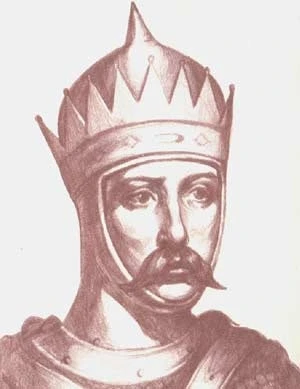
This area was inhabited by the Slavic Vyatichi tribes, whose life, according to historical records, was very poor: until the 13th century, they did not build houses and lived in dugouts.Excavations of Vyatichi hillforts near Moscow during the founding period of Moscow show that even an individual grave was a great luxury in those days. When Yurii Dolhorukyi founded the city here, people from local settlements immediately began to settle in it: Vyatichi, Erzya, Mordovians, Mokshi and Tatars, who had previously settled to the east on the banks of the Volga.
From the 16th century, the title "Russiia" began to be used in the titles of Moscow princes.This word was a tracing of the Greek word "Russia", which in medieval Byzantium denoted Russia with its center in Kyiv.Only at the beginning of the 18th century, the Muscovite tsar began to be called the "Russian Emperor", and the Muscovite Kingdom - the Russian Empire.
During this period, the population of the principality was docile and grew rapidly.
Horde brutality and Byzantine cunning quickly led to the following result - Moscow became stronger than Kyiv and captured all the surrounding principalities.
Over the past 500 years, Moskoviia has increased its area 600 times. Today it again wants to join new lands, which from the point of view of history and international law have nothing to do with it.
It is necessary to note that Kyivan Rus was primarily a European entity. If Europe is considered to be a large Christian community, if we look at the marriages of the princes from Kyiv, we see that at least 75% of them were oriented to the West, not to the East.Even after the Mongol invasion, those parts of Russia that remained in the West - the Galicia-Volyn principality - continued to maintain these ties.
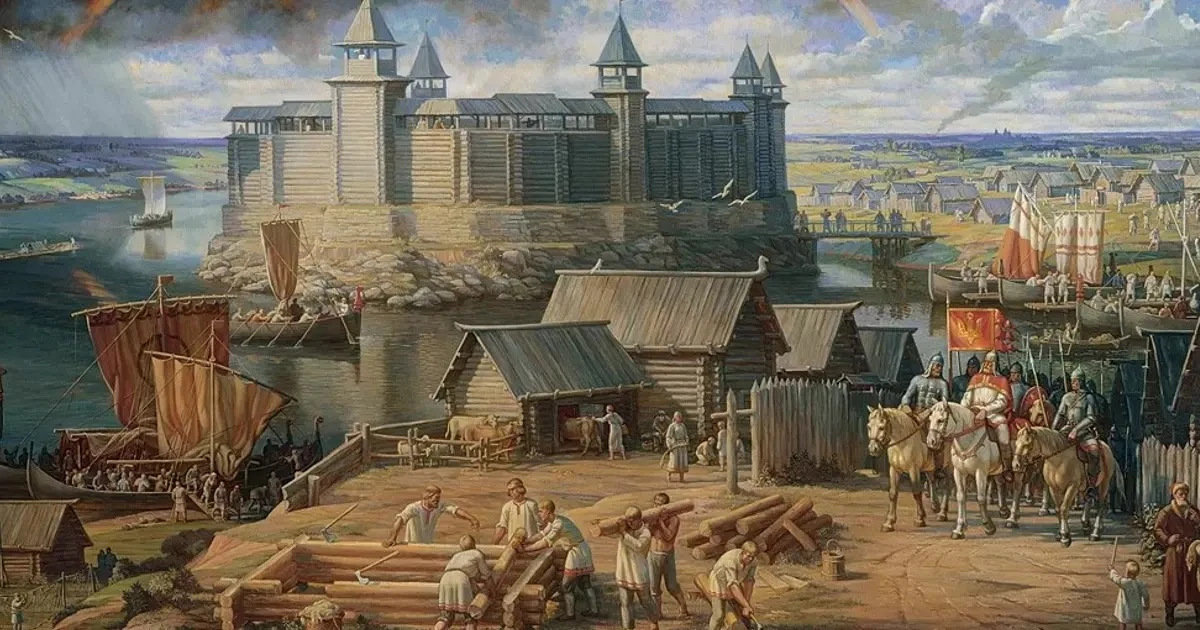
When the Cossack state became part of the Muscovite Empire, the future empire was large, but it was backward and in great need of an educated elite.At that time, our ancestors decided to strengthen this empire, because they considered it largely theirs due to the fact that it was an Orthodox state. They created a myth about the existence of the so-called Slavic people. For the first time, the existence of the "great Slavic people" was asserted in the "Kyiv Synopsis", and this textbook was reprinted for quite a long time, until the beginning of the 19th century.
Even then there was no idea of "elder and younger brothers". This idea appeared in late Stalinism after the Second World War, and it was most firmly established after the "celebration" of the 300th anniversary of the Pereyaslav Union in 1954. Actually, only then this mythologeme appeared and stated that the Russian people were an older brother and the Ukrainian people were a younger brother.
Several arguments why Ukraine is not part of Russia:
● when there was the first mention of this name in the 12th century, neither Russia, nor even the Moscow Principality, nor the Commonwealth of Nations, nor the Austrian Empire existed yet. Instead, there was Kyivan Rus;
● the ancient Slavic word "kray" meant a piece of land.Later, it got a new meaning - "territory belonging to a certain tribe, clan".When Kyivan Rus was divided into separate principalities, the word "Ukraine" meant "principality";
● there are parallel forms Ukraina and Vkraina. Vkraina breaks all the "fairy tales" of the Russian theory about the outskirts.In other words, Ukraine means native land, own land, home. Its antonym is a foreigner;
●linguistic argument.The Russians say that a synonym for Ukraine can be, in their opinion, "on the edge", i.e. "near, on the edge". Linguists refute this theory, because in Ukrainian the preposition "u" means "inside", not near.
Crimea is a native Russian land
In the Central Tavrida Museum in Simferopol, among hundreds of thousands of exhibits up to 1783 (the date of the first annexation of Crimea), there is only one Cyrillic inscription on a stone.This stone was left by Prince Tmutarakani in memory of how he measured the width of the frozen Kerch Strait with steps. Today Russia uses "Tmutarakan stone" as proof of the "primitiveness" of the Russian Crimea.The Russian names of the medieval cities Korchiv (Kerch) or Surozh (Sudak) are also cited as evidence.
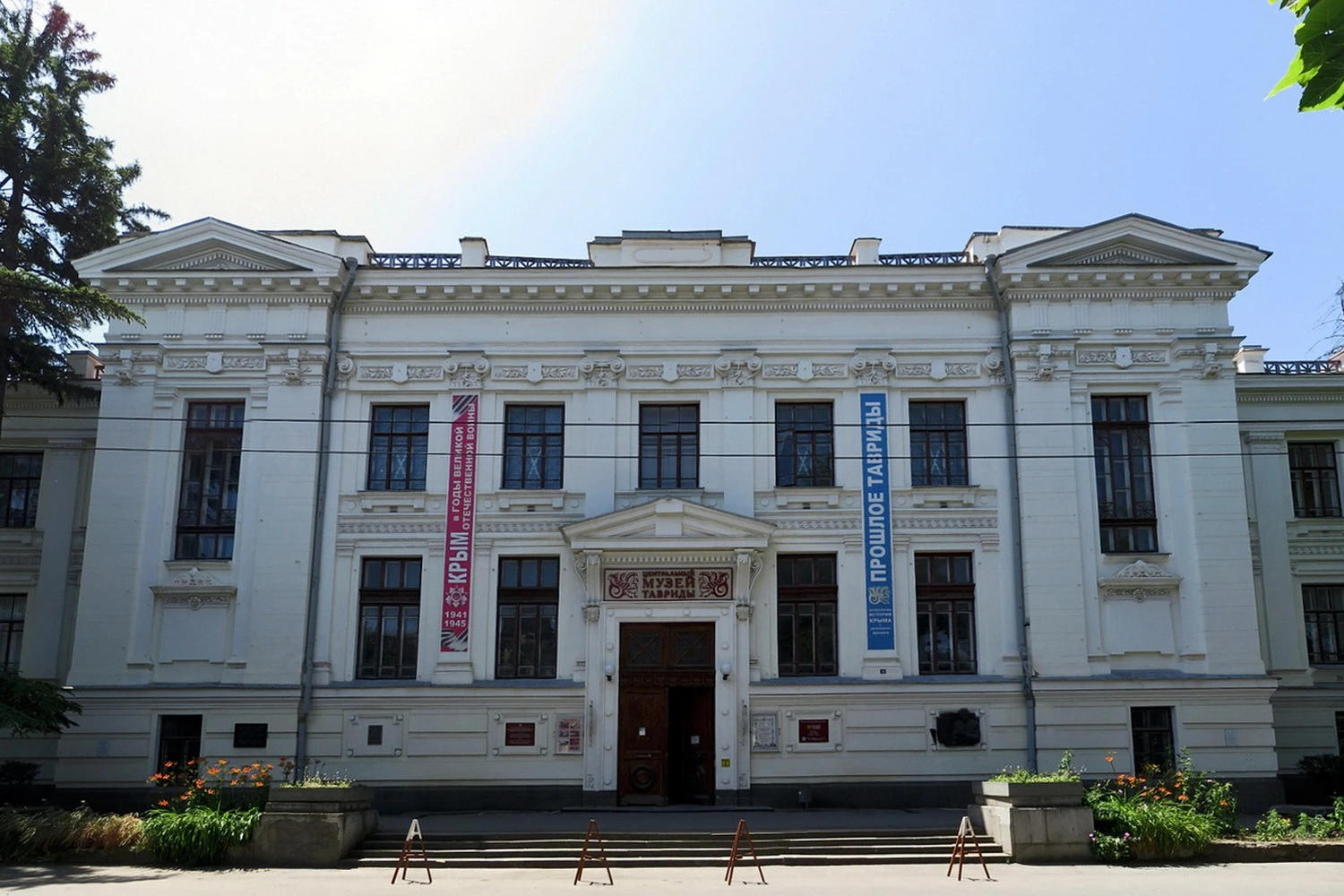
Russian historians also spread information that the Crimean Khanate had a small percentage of the Russian population — according to various sources, 2-3%. It is well known that not a single tombstone with the names of the same Russians or any other with Cyrillic inscriptions was found in Crimea before the first annexation.
In addition, the Russian Empress Catherine II signed the Manifesto on the annexation of Crimea by the Russian Empire only in 1783, and Crimea became part of Ukraine in 1954.Considering that Crimea was under Nazi occupation for three years, it turns out that the peninsula belonged to Russia for only 168 years.For comparison, the peninsula was under the rule of the Ottoman Empire much longer - about three centuries.From the 13th to the 15th century, the territories of Russia were under the control of the Golden Horde.
The famous historian from Crimea Serhii Gromenko gave very simple facts that only 5% of the written history of Crimea was Russian. means the first annexation of Crimea during Catherine's time, the Russian Empire, and then from 1954 it was no longer Russian. The same can be said about Donbas.
Russia ignores these facts and claims that Crimea is its territory.Moreover, they describe the inclusion of Crimea as part of Ukraine as a generous and short-sighted gift of Khrushchov, who single-handedly decided to give away a piece of land in 1954.If you read the history, you can learn an interesting fact: after the death of Stalin in 1953, there was no autocracy in the USSR, so all decisions were made collectively.
The decision to transfer Crimea was based on an economic interest.After the Second World War, the peninsula had to be rebuilt.Such cities as Kerch and Sevastopol were destroyed.In addition, in 1944, Stalin deported Crimean Tatars, Armenians, Greeks, etc. from the territory of the peninsula, which worsened the already difficult situation in Crimea.War and deportation reduced the population of the peninsula by almost three times, made it impossible to restore agriculture.The Soviet authorities simply shifted the responsibility to Ukraine.When Ukraine turned Crimea into a resort, Russia decided to occupy it.
Kharkiv is a Russian city from the beginning
Russians call Kharkiv a Russian city from the beginning because the residents of Kharkiv spoke mainly Russian.Analyzing the results of the first population census of the Russian Empire (1897), it is clear that 80.62% of residents of Kharkiv province spoke Ukrainian.
The city was Ukrainian-speaking at a time when the Russian rulers issued all kinds of laws prohibiting everything Ukrainian: teaching the language in public schools, reading sermons in Ukrainian, baptizing children with Ukrainian names.Even after the creation of the USSR, the city tried to defend its right to use its native language. However, the Stalinist regime did everything possible to eradicate dissent.So, the Ukrainian spelling of 1928, which is also called the Kharkiv spelling or Skrypnykivka, was changed already in 1933.
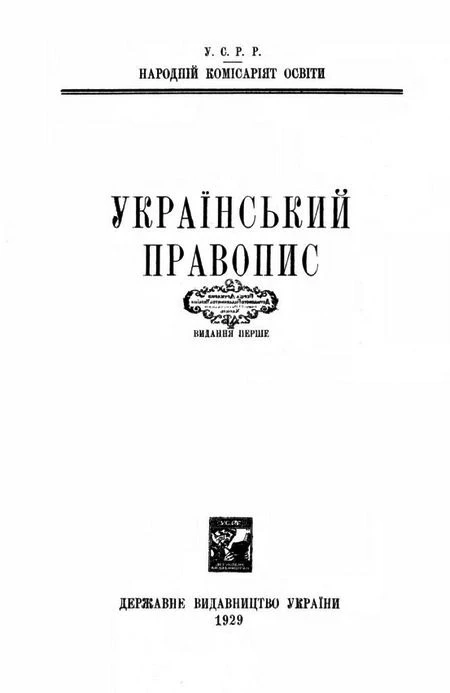
The Soviet authorities called this spelling nationalist and decided to bring the Ukrainian language closer to Russian.Stalin's supporters mercilessly removed even whole letters. For example, they got rid of the letter "Ґ", saying that it was "bourgeois-nationalist sabotage".
Because of this, it is more convenient for Kharkiv, Kherson residents and residents of other cities of the Ukrainian East and South to communicate in Russian in everyday life.
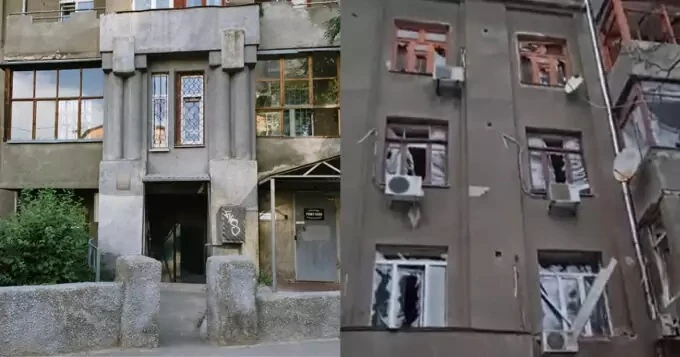
In addition to the change in spelling, 1933 was marked by even sadder events - the beginning of the Shooting Renaissance.Ukrainian poets and writers were arrested en masse, and then executed or repressed.Repression began with the arrest of Mykhailo Yalovyi in Kharkiv's "Slovo" building and the suicide of Mykola Khvylovyi.
By a cruel irony of fate, on March 7, 2022, when Russian troops attacked the so-called "own, Russian city", one of their missiles hit the Slovo building.
The south of Ukraine was a bare steppe until the 18th century
One of the most common Russian myths about the South of Ukraine: until the 18th century, when the empire came under the leadership of Catherine, there was nothing here, there was a bare steppe inhabited by wild nomads.Only together with Russia civilization came here and the lands were inhabited by Russians. Therefore, it is a "originally Russian land" - "Novorossia".
It is interesting that the main water artery of Kherson oblast is the Dnipro River.This name was given to it by the Visigoths - Danapr.Long before that, the ancient Greeks called the Dnipro river Borysthenes.
Let's take as a point of reference the city of Berуslav, named so after the annexation in 1783 by Catherine II.The historical name of this city is Kizi-Kermen. The Ukrainian Cossack chieftain Ivan Sirko was the first to capture this fortress and expel the Turks from it.
Downstream of the Dnipro river from Beryslav next to the Kakhovskaya HPP is the customs tower of the Lithuanian prince Vytautas. In the 14th century, there was a crossing here, and the border between the Crimean Khanate and the Grand Duchy of Lithuania passed.
Behind the village of Burgundka is the village of Tyaginka, in which the Tyagin fortress is located. The name of this fortress was given by the Cossacks after they recaptured it from the Turks. The Turks recaptured it from the Genoese 150 years before - built it and established a trading factory there.
On the Left Bank, the city of Kakhovka is named after one of the generals of Empress Catherine II, Prince Kakhovskyi. Its historical Turkic name is Tavan-Kermen.
The city of Oleshki is another famous place on the Dnipro Left Bank. The city was built on the site of Oleshkivska Sich, which was founded in 1711 after the destruction by Russian troops of Chortomlytska Sich in 1709, and the defeat of Kamianska Sich in 1711.
In the 18th century, the lands of Kherson oblast were colonized by means of military, economic and political enslavement. So, it is not about creating cities in the bare and uninhabited steppe. There is plenty of archaeological and factual evidence.And the first of them is logical thinking.The land on the banks of the river is an advantageous location, so there simply could not be people and fairly large settlements here, and the proximity to the sea indicates a one hundred percent use of these lands for trade and establishing economic ties.
As for the "wild field", this name was indeed used for the lands of modern Southern Ukraine during the Polish-Lithuanian Commonwealth (1569-1795), but this is not evidence of civilizational "wildness", because both Poles and Lithuanians themselves built here developed culture.
Odesa oblast was founded by Potemkin and Catherine II
During the times of the Russian Empire and Soviet power, it was believed that all the cities in the Northern Black Sea Coast were founded by Potemkin and Catherine II.However, the archaeological sites of Bessarabia indicate that Odesa was not founded during the time of the Russian Empire, but much earlier. It was founded in those times when there was no Russia yet.
Scythians from the south of present-day Ukraine served for many centuries for pure gold in the armies of ancient city-states, including those founded by Alexander the Great.
The Roman emperor Trajan unsuccessfully tried to seize this land. After his failures, he outlined the border of Rome here, building the famous Trajan ramparts, and did not go any further.
The collection of the Odessa Archaeological Museum includes 170,000 artefacts of the history of the entire Northern Black Sea region. And from the Stone Age to 1783 there is absolutely no mention of Russia and Russians among them.
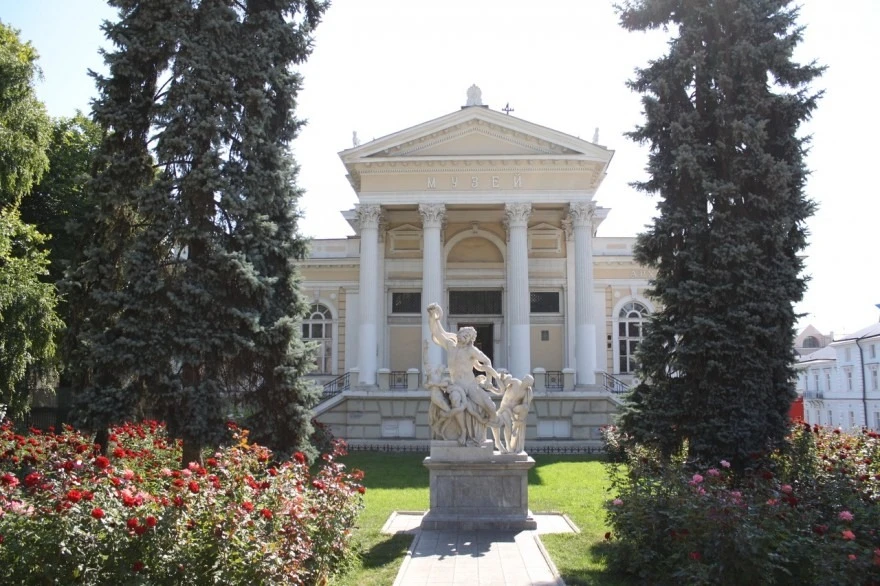
The city of Khadzhibey was renamed Odessa by order of Catherine II. And in the Turkish Empire, it was Muslim, Christian and Jewish, with self-government.
Lviv is the historical center of nationalism
Russian propaganda has long been spreading tales about Lviv as a city of far-right nationalists.Myths arose quickly, one after another.For example, one of the main stories said that a trip to Lviv could be dangerous for Russian-speaking tourists because of the nationalists there. Due to the long-term spread of fiction, Russians primarily associate the city with the followers of Stepan Bandera.
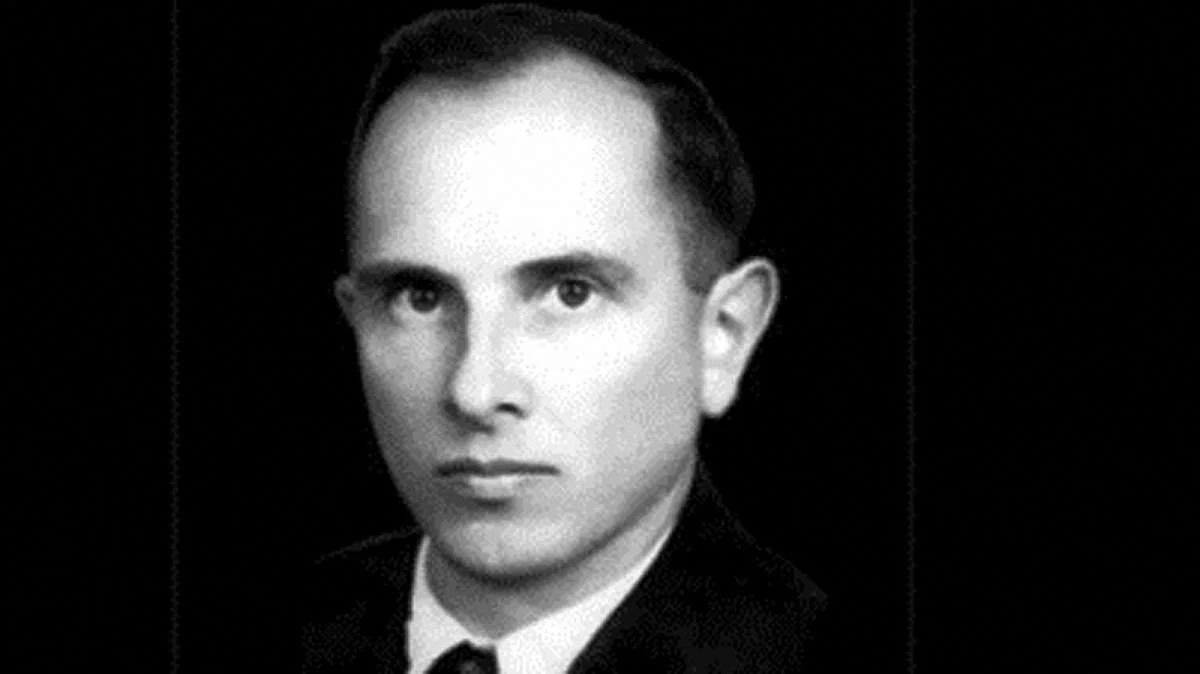
It is advantageous for the Russian mass media to describe Lviv as a nationalist city.In addition, by using the term "nationalism", they rely on the definition of nationalism as an ideology and policy that places one's own, dominant nation above all others and tries to suppress other nationalities. Lviv is a tourist city where everything is done for tourists. It welcomes foreigners from different parts of the world. This fact itself contradicts the image of Lviv created by Russia.
Lenin сreated Ukraine
If we talk about who created Ukraine according to the opinion of the Russians, it is not only Lenin. The list is longer: Austrian German headquarters, Galicians, Hitler, Washington headquarters, etc.
What Putin says about "Lenin's Ukraine" is almost the same as what Rosa Luxemburg said in 1918.She accused Lenin of corrupting Ukrainian nationalism and giving Ukrainians the right to create a Soviet socialist republic.At that time, Ukrainians, workers and peasants did not vote for Russian parties, but for Hrushevskyi, for Petliura, for Vynnychenko, for the Ukrainian Socialist Republic.
It was clear that any government that wants to gain power in the center, in Moscow, must do something with Ukraine.
There were two groups of Bolsheviks: the Ekaterinoslav Bolsheviks from eastern Ukraine, a more Russified region; and the Kyiv Bolsheviks, from whom Skrypnyk emerged, and who demanded the independence of Ukraine.
Both Lenin and the Ukrainian Bolsheviks thought of Russia as a predominantly socialist country.
Russia will start, but the outbreak of socialism must be in Europe. The Ukrainian Bolsheviks posed the question to the Russian: should we look back at Moscow? Because socialism exists where there is a proletariat, where there is an industry.It almost didn't happen in Russia, but it happened in Germany. However, in order for this spark to go to Europe, it must pass through the territory of Ukraine and Poland. And that's why these lands were important, key.
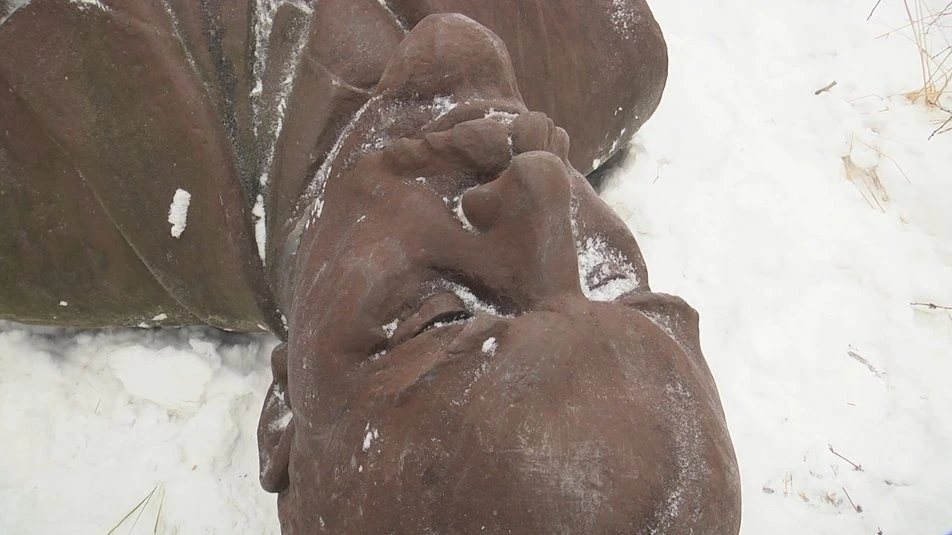
In addition, almost 1,000 years passed from the formation of Kyivan Rus to the birth of Lenin.During the Soviet rule, Ukrainian lands existed in the form of the Ukrainian SSR. And after the collapse of the USSR, Ukrainians once again restored their independent state.
Almost the entire history of the neighborhood of Ukrainians and Russians boils down to the fact that the former are forced to fight for their right to freedom, their native language, and an independent state.
Instead, Ukrainians received repressions and arrests, and now bombs on their heads. Truth is the first casualty of war, so we do everything we can to prevent it and bring it to everyone.
Author: Anton Malynovskyi