
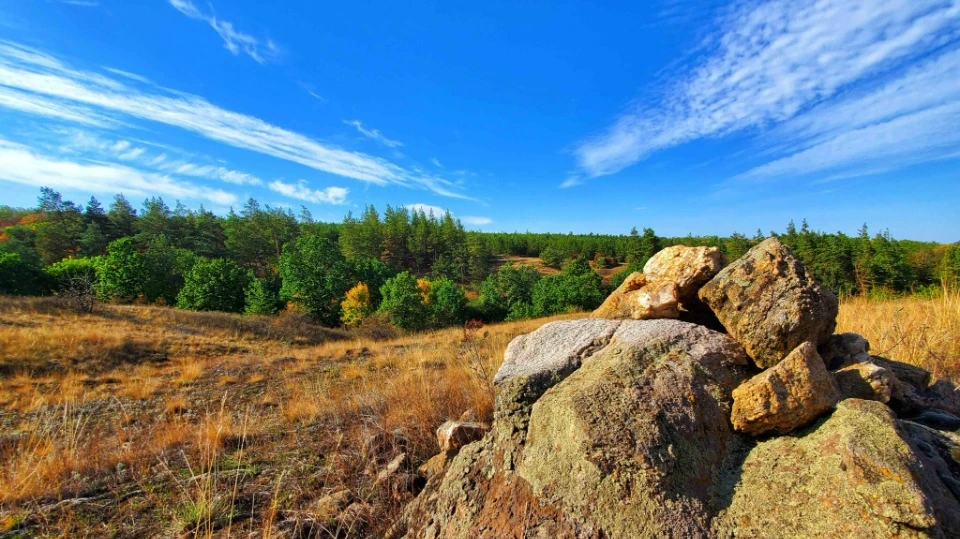
The territories of modern Donetsk oblast have been inhabited since the Stone Age. We can speak about Ukrainians such only from the sixteenth century. The statement that the east was inhabited exclusively by "Russians" is a complete lie. Besides, it is believed that the east from edge to edge - "wild steppe", but it is also false. Donetsk oblast is diverse: seas, rocks, caves, steppe, forest. Accordingly, life here was different, because people settled from all over.
Historian Natalia Mykhalchenko helped TRYBUN clarify details.
Natalia Mykhalchenko is from Donetsk. In 2014, she moved to Dnipro and created own popular blog.At the same time, she traveled a lot in Donetsk and Luhansk oblasts before the full-scale invasion — covered historical past and cultural present, showed Donbas as it is known local, and destroyed permanent stereotypes about residents.Now she is popularizing the Ukrainian East through her blog.
Settled since time immemorial times
Russian authorities widely spread the following fake: almost everyone cities in the east of Ukraine were settled by Catherine II, and before that there was only "wild steppe, inhabited by savages". This is not true.
"When we usually talk about Donetsk oblast, the beginning of human history, we imagine steppe, but such a landscape is far from everywhere. Donetsk oblast is a large, very diverse" Ms. Nataliа says.
The expert notes that Donetsk oblast was historically divided into three conventional parts - Slobozhanshchyna, Prychornomoria and Pryazovia.
"Geographically, the oblast is located in one steppe zone, but nature and geology
is very rich.There are very different zones: seas, rocks, caves, steppe, forest, etc.Of course, this landscape changed due to the activities of people, but mostly the main thing has been preserved for thousands of years," Natalia notes.
These lands have been inhabited since ancient times.
"The territories on which Donetsk oblast is located now were inhabited by people ten thousand years ago.Many Paleolithic and Stone Age monuments are located in Donetsk oblast. Amvrosiivska stoianka is one of the prominent, important and very well-preserved monuments.A large accumulation of animal bones was found there, on which hunted, and the first tools".
The historian notes that people settled here for a reason - there was a favorable climate, water, landscape and other living conditions.
"Another piece of evidence is the so-called Mariupol burial ground, found during the construction of Azovstal in 1930. This is a monument of the Neolithic period," Natalia says.
She adds that this was the first known mass burial of people from Eastern Europe with religious signs.One of those fragments was kept in the exhibition at the Mariupol Museum, it was destroyed by the Russians in 2022.
Another proof that people have always inhabited the modern territories of Donetsk and Luhansk oblasts: there are already branded Polovtsian and Scythian women.
"Once upon a time, Donetsk oblast was labeled as the land of mounds, not the land of tericons, and it was recognized by stone statues, a large collection of which was kept in Donetsk in the local lore museum.I would like to believe that the collection will wait for us, because at the moment it is not known where the exposition was taken from the Great Anatolian Forest Museum, which was occupied."
Natalia Mykhalchenko adds that these are a kind of symbols of what people lived in these territories for many thousands of years, built settlements, developed.
About a more familiar history
Cоzachchyna is a more familiar historical period of development and formation of modern Donetsk oblast.
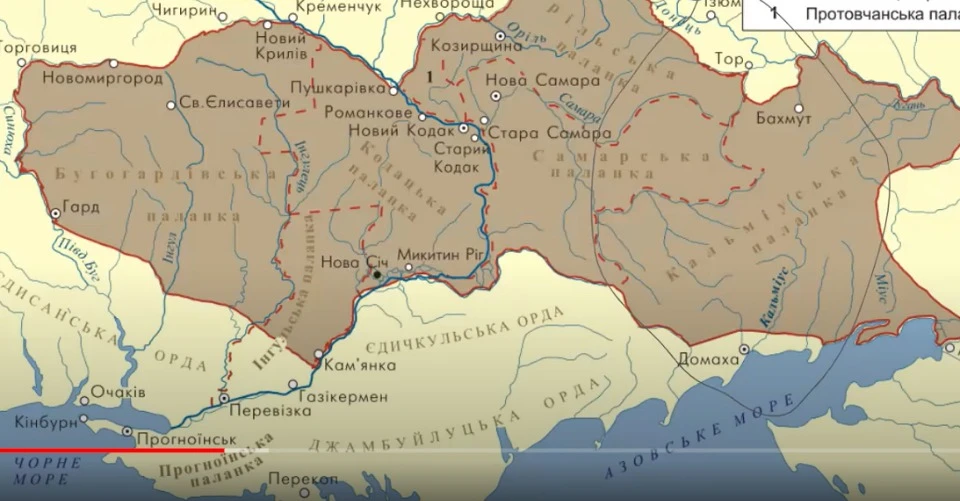
"For example, the scheme of trade routes of the 17th century is recognizable to us because of the directions have been preserved. Look at the map, we know the names here: Bakhmut, Tor (Slovyansk), Izyum, Balakleya, Pechenegy, etc.," Natalia Mykhalchenko notes.
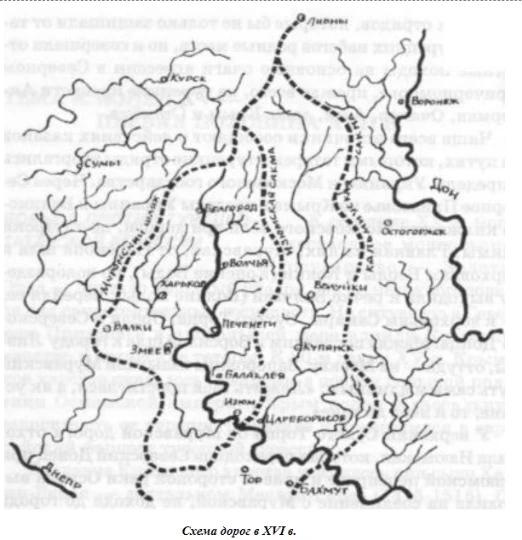
It shows that life was constantly raging on these sakmy - there was economic activity the struggle for resources between traders, local residents and Cossacks.
"If you look at the map, you can see that the territory of Kalmiuska palanka resembles outlines of modern Donetsk oblast.All these territories belonged to the Zaporizhzhia army.There were settlements, and watchmen, and fortresses, in particular the Domakh fortress, on the spot which will later become Mariupol," the historian says.
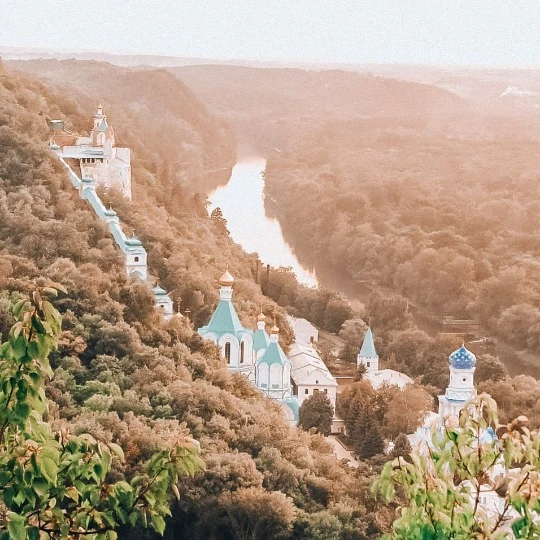
A local expert immediately mentions the monument of the Ukrainian Cossack Baroque — Sviatohirsk Lavra.
"According to legend, as early as the 7th-9th centuries, monks who fled from Byzantium from persecution of iconoclasts lived there.On the site of the modern Sviatohirskaya Lavra, there have always been many parking lots, settlements, and mounds, because people settled on the banks of the Siverskyi Donets River for centuries. There was a favorable geographical position. I also want to note: the Lavra was not only a religious center, but also a fort and a place of trade. That is, it was a powerful economic unit."
Today, traces of shrapnel can be seen on the walls of the Sviatohirskaya Lavra.It is the most surviving place in Sviatohirsk that has been destroyed and devastated as a result of the full-scale invasion.
When did Ukrainians appear in Donetsk oblast?
"The first and most important thing is that there is no exact date when the Slavs appeared in the east of Ukraine. But we have many findings of the presence of Slavs in these areas over the past few centuries," the historian emphasizes.
She also says that the path to becoming a modern Ukrainian is long.
"We must remember that Ukrainians did not become Ukrainians immediately. Antis are still non-Ukrainians. The Slavs of the 7th-9th centuries are not yet Ukrainians, but they are people with whom we have common features of ethnicity.We have certain convergences, the transmission of traditions in culture, in history. We can talk about Ukrainians as such only somewhere in the period of the sixteenth century".
Forced colonization
"Having destroyed Sich, Catherine II sought to populate the former Cossack lands with loyal military agrarians. To do this, she started the colonization of eastern Ukraine, inviting Germans and Orthodox subjects of the Ottoman Empire," Natalia Mykhalchenko says.
Foreign colonies arose in Donetsk and Luhansk oblasts. For them, the east was the edge of opportunity, where life could be started anew.
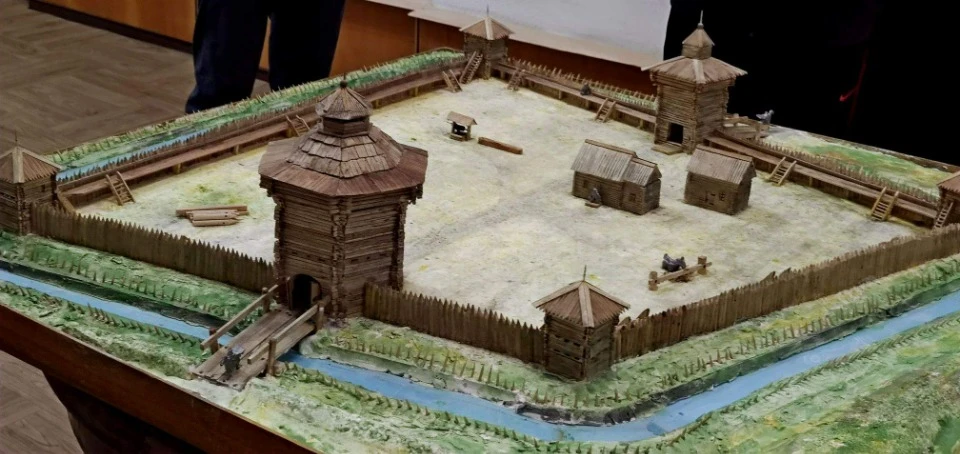
"This is how the ethnic group of these territories actually changed. The first major migration to the territory of Donetsk oblasts took place from the Crimea in the second half of the 18th century.The Orthodox population of Crimea, mostly Greeks, moved.They settled in the Pryazov regions and over time founded Mariupol on the site of the former Domakh fortress and several settlements," the historian explains.
She also notes that it was hard for the Greeks.
"Adaptation was difficult, because the coastal regions of Donetsk oblast are economically and climatically completely different from the Crimean ones. However, adaptation took place, and so did the Greeks became one of the large separate ethnic groups of nationalities on the territory of Donetsk oblast, which still live here today".
Mariupol was built not only by Greeks - the capital of foreign entrepreneurs was invested in the city, who were given certain benefits for resettlement and development due to the decline of the economy due to the defeat in the Crimean War.
"In the middle of the 19th century, a lot of engineers, entrepreneurs, bankers, scientists came to the east of Ukraine, engaged in research and building enterprises, mastered new territories very quickly," Ms. Natalia says.
Factories, mines, railways appeared, and labor migration arose.
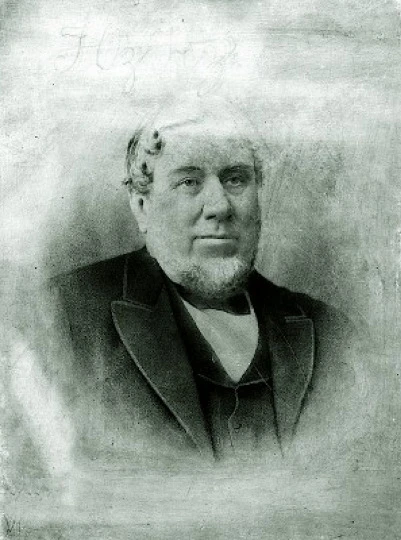
"Among them was John Hughes, a Welsh engineer. He received an order from Russia empire to manufacture armor for the Russian fleet.Having examined the already known deposits coal of Donetsk oblast, he decided to build a new plant there. He brought with him equipment, knowledge and Welsh workers.In 1869, the working village of Yuzivka - modern Donetsk - was founded. Life in this town, as in many other mining settlements, was difficult.Slaughter miners mined coal by hand, and sledge miners harnessed themselves to a sled with coal and dragged it to the main one mine wells. Under such working conditions, out of 1,000 miners, almost every third died," the historian says.
At the time of industrialization, in 1897, the population census of the Katerynoslav province (and it was a very large territory - both the modern Donetsk and Luhansk oblasts, and part of Dnipropetrovsk oblast) said that Ukrainians were the largest ethnic group, regardless of migration.
"In general, the province had 2 million 113 thousand inhabitants at that time. Half of them were Ukrainians, then Russians. Another 50,000 were Greeks. Germans - 80 thousand, Poles - 15 thousand, Turks - 5 thousand, about a thousand French and half a thousand British. 45 languages were raging in society in total, about 120 ethnic groups lived," the historian notes. Jews were among those who settled the lands of the east.
"Jewish settlements appeared in Donetsk oblast (the settlement itself, not individual representatives of the ethnic group) in the nineteenth century.This is how settlements appeared inv Volnovakha district: Khlibodarivka, Rivnopil, Zatyshsha. They were Jews from Russia and Belarusians, who were allowed to engage in agriculture in all the Black Sea regions Pryazov regions," the specialist continues.
At the same time, after the destruction of Sich and with the beginning of the imperial assimilation of the former Cossack lands, Mennonites - Belgians, Dutch, Germans - began to settle in Donetsk oblast. The latter, in particular, founded the city of New York.
Later, the Soviet authorities deported the Lemkas and Boikas to the East, who, despite everything, were able to preserve their culture.
"These people were forcibly transported from modern Poland and considered themselves Poles by nationality. But these are ethnic Ukrainians. The descendants of those immigrants, the Tymchak family, lived in the village of Zvanivka and founded the Lemko Center there to preserve the traditions of their ancestors. However, a full-scale war changed everything.The father of the family protects Ukraine while his family in a safer region of the country, continues to work of the cultural center", - Ms. Natalia says.
For one century, one single family was forced to move because of the Soviet government from west to east, and then because of the Russians to move again from east to west.
Labor glory
The creation of Donetsk and Luhansk oblasts as we know them was approved in 1938.Since then, the Soviet authorities displaced toponyms familiar to the historical population, organized mass resettlement of people, and staged genocide. And also - it thoroughly eradicated the past.
Another myth about the region, which everyone seems to know, is that "Donbas is a land of labor glory".At one time, the communists created it, doing everything to make socio-economic class supplant national identity.The myth is based on forgetting, exclusive focus on the present, "labor achievements".As Doctor of Historical Sciences Larisa Yakubova writes, during the Stalinization of the region, the communists actually managed to "etch the historical memory of the people in all its ethnic forms".
"After the Soviet power came to the territory of Ukraine, to the territory of the east, the space - namely Slobozhanshchyna, Pryazovia - ceased to be marked as ethnographic.The Soviet authorities conducted such an experiment - to change this ethnographic one space for labor, economic, to implement a certain labor, miner's identity.It was so successful in the territory of Donetsk oblast that due to propaganda, this myth became popular primarily in other territories of Ukraine and the former Soviet republics," the local expert says.
Therefore, Donbas, recognizable by mounds and stone monuments, trading sakmas and Kalmius palanka, is now associated exclusively with tericons and chimneys.People, 45 ethnic groups, took off their national clothes and costumes
miner's work, and languages... Languages were unified into artificially imposed Russian.
Modern history is created by all of us. Share this story about Donetsk oblast with your friends The more knowledgeable - the less influence of propaganda, then it is harder for the Russians to break us.