

Luhansk oblast is an industrial region where many plants and factories were operating even before the full-scale invasion. The history of industrial development in Luhansk oblast takes its beginning from the discovery and subsequent production of coal. How did it all begin?
This is further discussed in the TRIBUNE material.
Start of mining
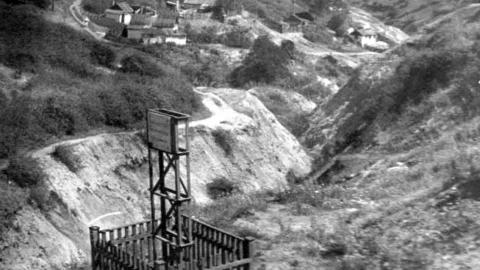
The first mine, which initiated the development of the coal industry in Donbass was located in Lysycha Balka tract, which later became the foundation of the city of Lysychansk in Luhansk oblast.
The mine was a part of the Lugansk foundry and was intended to provide it with coal. And later - it also served for the Black Sea Fleet, the surrounding industrial hubs and population.
The director of the foundry, Karl Haskoin said that the construction of mines was necessary in order to protect forests from complete destruction.
"The search for coal and its mining is entrusted to me as the most important task with the intention to replace the use of firewood on the ships of the Black Sea Fleet, in fortresses and even in the entire region and the forests that are very insufficient there - to preserve from the destruction. According to this, I was instructed to try to open coal in places where it would be delivered by ship to the Black Sea ports and various places in the provinces there, "Karl Haskoin.
The laying of the mine took place under the leadership of the English miner Thomas Roper, who came to Donbass precisely for the purpose of coal excavations. The location of the Lysycha Balka turned out to be very suitable for coal mining, because geologically there were several coal beds at a shallow depth. The opening and start of work of the mine took place in December 1795. It was a group of mines, the first of which was at a depth of 36, 21 meters.
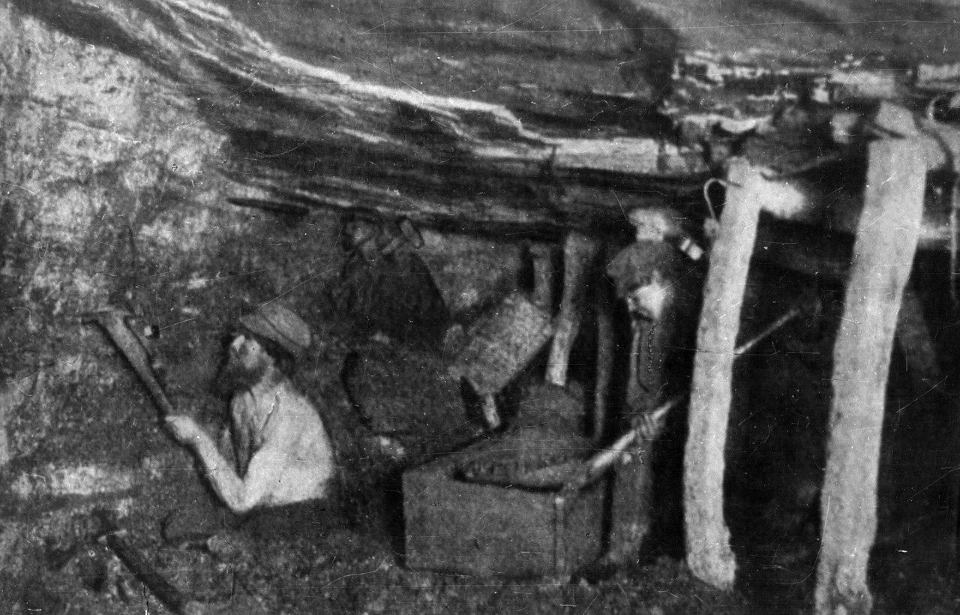
Coal was mined by horizontal deepening into the bowels, so when miners encountered obstacles due to the lack of air, a new mine was built in that place. In this way, ventilation of the entire underground room took place. In order to avoid a collapse, the workers put wooden poles behind them.
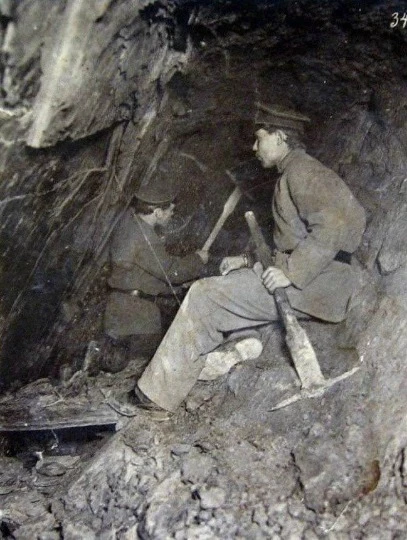
Nowadays, the work of miners is more mechanized and equipped. In the past they used the moils, hammer and iron wedge as the main tools of labor. A wheelbarrow and a sled were used to transport coal from slaughter to lifting. All work was carried out manually, with the exception of lifting coal, for which simple mechanisms were used - manual or horse traction.
Over time, more and more mines appeared in the mining camp and in 1798 monthly workers mined from 327 to 409 kg of coal. During the first year of work they produced more than 212 948 kg. This was reported to the director of the foundry by the new head of the mine Adam Smith. After the death of one of the miners, the need for medical personnel increased and subsequently a new position was introduced - a junior doctor.
Start coat selling
After the first years of coal mining and its transfer to Luhansk plant, Karl Haskoin ordered to sell all unrealized material at a price of 4 kopecks per 16 kg. The volume of production was constantly growing, but the productivity of workers was not. According to the calculations of British specialists, each miner would be able to extract 327 kg per shift, and the figure remained only about 212 kg. But still in 1799, out of 4.5 million kg of mined coal, 568 thousand were sold.
By the way, this mine was the first in coking coal in Ukraine and the Russian Empire.
In 1797, the coal from Lysycha Balka l was delivered up to St. Petersburg to Emperor Pavel I. Haskoin reported on this to the head of the mining department Simonov, and he, in turn, reported to the mining board:
"From the coal brought from Luhansk plant, mined at the state-owned village, called the Third Company, I had the good fortune to present it to the imperial majesty a certain amount, and then remained, accompanying at the same time. He recommended sending to the mining school, ordering a larger piece, in which a weight of 4 poods 18 pounds, without taking away from it at all, indicate with an inscription on it the time and place of the mine where it was found. The rest then tested the pieces chemically, describing with accuracy the complex parts that are in them. "
In a few years Volodymyrska, Mytrofanivska, Petropavlivska, and Kapitalna mines were also built: .
In the 30s - 40s of the 19th century. the sale of coal was carried out in the Voronezh province for a sugar factory. Also - to Sloviansk for salt factories and to Bakhmut.
Technological development in mines
As mentioned above, at first the miners used manual mining methods and homemade devices. Subsequently, there was a complete processing of the upper layers, which required the use of new technologies for deeper penetration into the subsoil and greater extraction. Thus,in 1838, rails were laid, wooden carts for transporting materials were built, steam engines with a drainage device were installed, and coal was already raised to the surface by a mechanism called "Parachute."
New positions also appeared. Horses were used to roll back coal, and people who worked with them were called “conohons”.(horse handlers) Later, when they began to use cars, specialties of a machinist and a locksmith appeared. And when the mine began to use explosives to break hard rocks, the profession of pyrotechnics appeared.
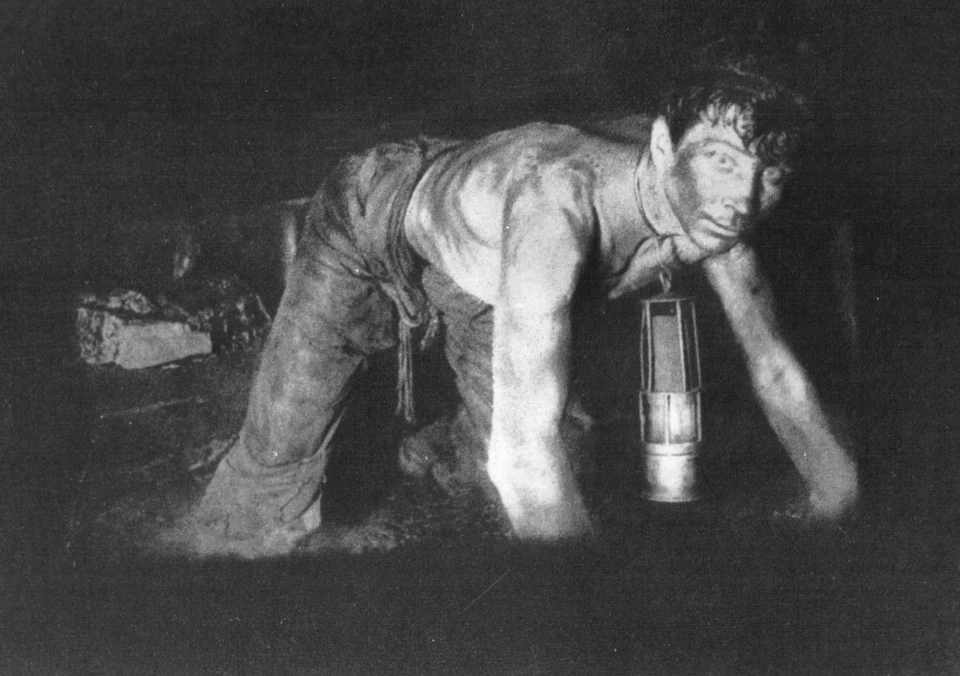
With technical development, it's time to increase the wages of employees. For the payment, which was a long time - in the form of flour, did not stimulate the miners to work. Then they began to use travel payment. This is a system of payment of wages, which depends on the amount of work done by the employee.
Then the first few months each of the miners earned about 88 cents. At a time when food prices were significantly higher.
It is interesting to know that one of the masters who worked at Lysychansk mine was Kiril Sosiura, the great-grandfather of the Ukrainian poet Vladimir Sosiura.
Restoration of the mine after the recession
Approaching the middle of the 19th century, the mine developed more and more, but the demand for coal began to fall significantly. This is due to the fact that in the Donbass there were private mines in Bakhmut and Slavianoserbskyi districts. They were located closer to buyers and coal from them was much cheaper. As a result, the demand from the foundry, which was the main one for the work of the mine, also decreased.
In the 60s - 70s, the Lysychansk mine received a "second wind" with the opening of an iron smelting plant. Then several more mines opened, which worked until 1875. But later the plant was closed, and all the above-mentioned mines were given to private ownership.
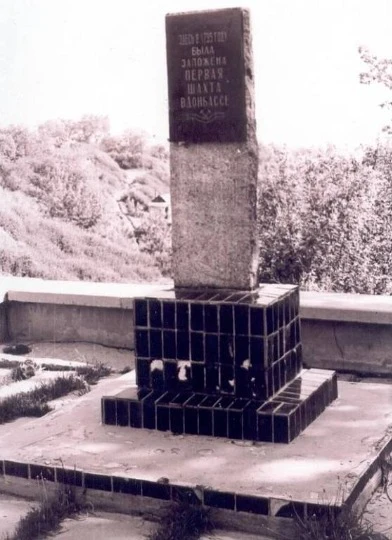
The mine laid in Lysycha Balka is one of the largest and oldest coal deposits in Ukraine. It became one of the key industries in the territory of Donbass, which gave the foundation for the development of the coal industry both in Ukraine and Russia.