

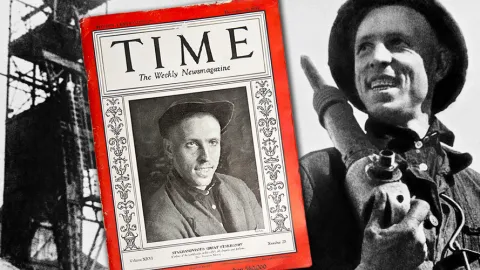
There was hardly anyone writing about Oleksii Stakhanov and the massive propaganda campaign of socialist competitions under the name "Stakhanovite Movement" except for the idlers. This informational bubble created during Soviet times remains a subject of debate and surprisingly has followers convinced of the authenticity of the miner's feat.
In an article for TRIBUN publication, historian Viktoria Pylypenko shared everything known about the Stakhanovite Movement and the creation of the "idol" of the Soviet Union.
Note: Viktoria Pylypenko, candidate of historical sciences, lawyer, researcher of the history of Luhansk and Donetsk regions.

During the times of Yanukovych and Co., the Stakhanovite Movement was referred to as the main brand of Luhansk, a symbol of the prestige of miner's work. The argument in favor of it cited the young age of miners, on average not older than 35 years, and a relatively higher standard of living compared to others. However, behind this stereotypical prestige lay the problem of the entire coal industry. Flooding of state mines, mass opening of illegal mines where higher pay was more of a compensation for life risks than a result of market processes. Paradoxically, all slogans about the rich land of miners, both in the distant 1935 and today, remained slogans against the backdrop of neglected cities.
Who was Oleksii Stakhanov and Why Him?
Oleksii Stakhanov hailed from a poor family in the Orlov Governorate. His childhood and youth coincided with the political crisis in the Russian Empire: the first revolution of 1905-1907, World War I, the 1917 Revolution, and the Bolshevik coup. Naturally, revolutions and wars did not improve the peasants' situation, especially regarding land scarcity and poverty. Stakhanov's father's death in the war immediately made him the main breadwinner of the family. The need to survive led him to one primary goal - to buy a horse. For a peasant in the early 20th century, a horse was a versatile tool for land cultivation, transportation, and even a means of survival during famine. To earn money for a horse, Oleksii decided to work as a laborer for the local landlord.
Following the same narrative as all biographers and researchers of the Stakhanovite movement, they write about the bad landlord who deceived Oleksii and did not pay him for his labor. Let's think logically. The landlord's refusal to pay Stakhanov dates back to 1917. What was happening that year? Was it not a revolution amidst Russia's military defeats? Perhaps it's reasonable to assume that the landlord simply didn't have the money, having been robbed by dissatisfied peasant revolutionaries.
This artificially created sacrifice of the future hero of Soviet propaganda was meant to strengthen his positive perception by society, draw parallels with the fate of Taras Shevchenko, and ultimately turn Stakhanov into a prophet of the proletariat, capable of breaking free from the tyranny and poverty of the landowners through his extraordinary efforts.
Whatever the case, one thing is certain - in 1927, Oleksii Stakhanov arrived in the town of Kadievka in Luhansk and began working as a horse driver at the Central-Irmino mine. This profession had long disappeared from the list of mining jobs, but at the time, it was one of the lowest-paid, involving transporting coal on horse-drawn carts inside the mine. A horse driver's norm was to move 10 tons of coal per shift. Interestingly, the name of the miners' headlamps - "konogonki" - is derived from this profession. After all, a horse driver not only transported coal from the mine to the surface but also illuminated the miners' work. It was clear that , with such a job, Stakhanov couldn't earn enough to buy a horse for his family. It's possible that the horse bought in 1927 as a means of livelihood became a burden by 1929, turning into evidence of belonging to the kulak class, whose mass persecution had just begun.
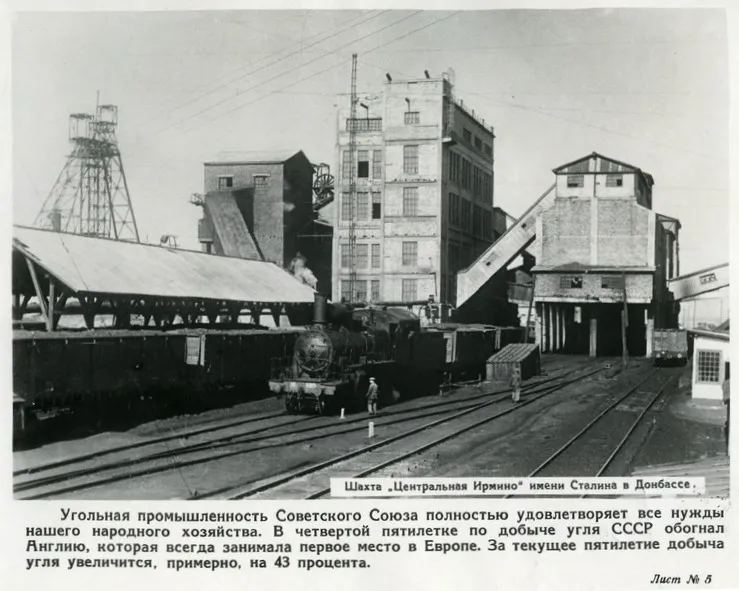
Luhansk and Donetsk, amidst the general post-war devastation, managed to maintain their status as regions with stable incomes and relatively higher living standards compared to other Soviet territories. This was primarily due to the preserved potential of the industrial revolution of the early 20th century. Virtually all of the Donbas industry was owned by Europeans before the Bolshevik coup of 1917, which meant advanced infrastructure, quality equipment, and social security for workers. The Bolsheviks, nationalizing all industrial objects in the Donbas, continued to exploit them inertly, without considering technical modernization and improving working conditions.
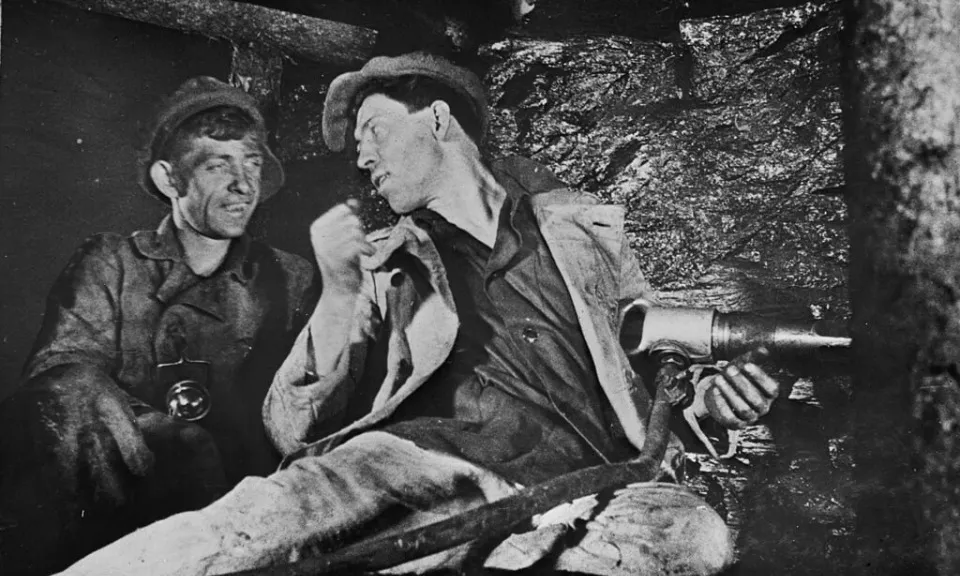
The potential production stability laid down by the mines opened by foreigners at the time is evidenced by the fact that even the Holodomor of 1932-1933 did not cause significant damage to the industrial regions of Lugansk. The number of the working population was artificially maintained at a constant level through migrant workers like Stakhanov. What was felt as a deficit was in skilled personnel, engineers, and miners. It's no wonder, as the first to fall victim to repression in 1928 were mining engineers, figures in what was called the Shakhty Trial. This is why Soviet modernization of the coal industry, initiated in the 1930s, faced unexpected resistance from miners. Stakhanov was one of the few ready to be retrained and learn to work with a jackhammer. But that's understandable, as the pay for a miner was several times higher than that for a horse driver. Violetta, Oleksii Stakhanov's daughter, recalled that her father was a true strongman. He could lift a cow with one hand, let alone work with a jackhammer.
The Essence of Stakhanov's Labor Exploit and Whether It Was Real
The best improvisation is well-planned improvisation. The idea of the Stakhanovite experiment did not come out of nowhere. It was preceded by the Party resolution "On the Work of the Donbas Coal Industry" dated April 8, 1933, which demanded the elimination of wage equalization in the payment system, aiming to ensure higher pay for underground workers compared to surface workers. Just a month later, the coal industry was again shaken, this time by tariff reform. Various production quotas and rates were abolished, and mine management could set quotas and rates tailored to the specific conditions of each mine. Overachievement of quotas was also encouraged, with a separate bonus fund in place to triple the official wages of "labor pioneers".
However, even potential financial incentives did not affect workers' interest in increasing coal production volumes and improving work quality. The state of affairs at the Central-Irmino mine, especially in the "Veleten-East" section where Oleksii Stakhanov worked, was evident from the mine's party committee resolution initiated by the mine's party organizer, Kostiantyn Petrov, on August 20, 1935. The document mentioned systematic failure to meet production targets, neglect of mining operations and track management, accidents, and absenteeism among workers. Considering that repression in the Soviet Union had reached its peak, such a situation could raise questions from punitive authorities regarding the mine's party organizer and management.
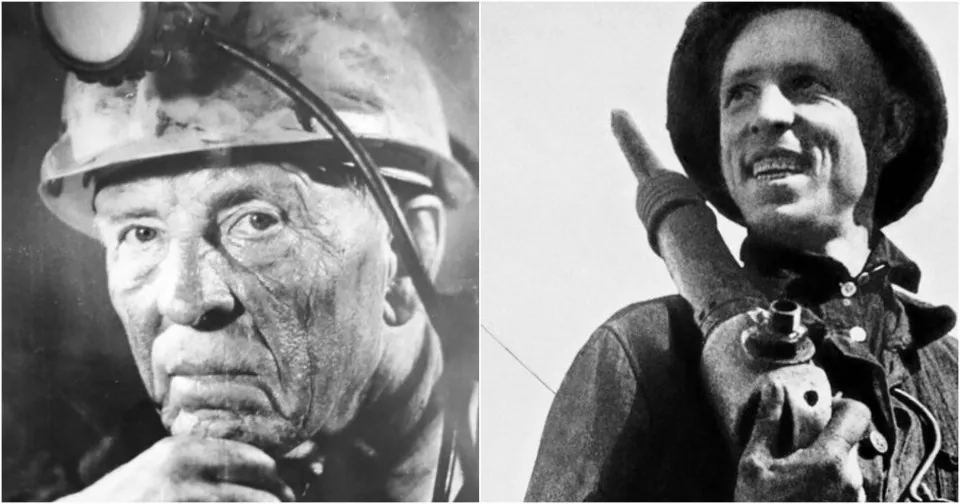
For setting the record, Petrov personally selected Oleksii Stakhanov as the ideal candidate: without harmful habits, young, tidy in appearance, with the "correct" proletarian biography (parallels with Shevchenko). During the discussion of the future record, Stakhanov proposed a new approach to labor division among the mine workers' brigade: the coal cutter would cut coal while two timbermen would reinforce the mine workings and dispose of coal simultaneously. The main emphasis was on the use of the jackhammer – the main achievement of the contemporary modernization. It was necessary to quickly change the existing state of affairs, and setting a record in socialist competitions was perhaps the only solution.
In addition to Stakhanov, two timbermen – Havrylo Shchyholiev and Tikhon Borysenko, party organizer Kostiantyn Petrov (who personally illuminated Stakhanov's coalface), section chief Mykola Mashurov, local newspaper editor Pavlo Mykhailov, and two hired horse drivers for a bottle of vodka were involved in the record-setting night shift from August 30 to 31, 1935. In the morning, the party organizer and the newspaper editor recorded the record – 102 tons, which exceeded the norm by 14 times. Thus, Oleksii Stakhanov, entering the mine as an ordinary coal cutter, emerged on the surface as a propaganda symbol, to whom all the brigade's merits were attributed.
Life After the Record
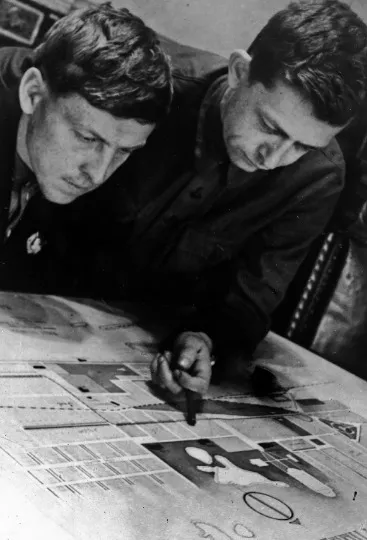
Stakhanov's assistants remained behind the scenes, without photos on the honor board, awards, or incentives. Nothing is known about Stakhanov's assistants, even during his second record, achieved ten days after the first one. The extracted 175 tons of coal were solely attributed to him personally.
Stakhanov became an ideal image for the Soviet ideological machine, portraying the correct career of a true communist (despite joining the Communist Party only in 1936), known not only within the USSR but also beyond its borders: Stakhanov's photo adorned the cover of Time magazine.
The founder of the Stakhanovite movement was awarded the Order of Lenin, elected as a delegate to the XVIII All-Union Congress of Soviets, given an apartment in Moscow, and a personal car. He became a sought-after guest at ceremonies and receptions, had access to an audience with Stalin.
Unlike Stakhanov, whose life underwent significant changes, first miners and then workers from other industries became victims of the image of the record-breaker he created.
A new article of accusation appeared in criminal law: "counter-revolutionary sabotage of the Stakhanovite work method," under which mainly engineering and technical workers were charged. For example, the Donetsk Regional Court held a hearing on the case of the dismissed director Vyshniakov and his deputy Fediayev from Mine No. 29 of the Makievskoye ore management, accusing and sentencing former mine managers to seven years in prison for deliberate disruptions of work by Stakhanovite record-breakers.
All those who pointed out numerous production accidents, the actual stagnation of production volumes despite the increase in similar Stakhanovite record-breakers, were labeled as immediate enemies, sworn bureaucratic elements, and backward workers by the party machine.
Another controversial aspect of the Stakhanovite movement was the noticeable increase in production quotas, even taking into account the record indicators, coupled with the introduction of a "ceiling" on wages. This meant that workers had to work twice as much for limited incentives. It's worth noting that despite the wage "ceiling," miners had significantly higher salaries compared to other industries.
The profitable Stakhanovite movement, starting from 1938, began to go against the planned economy, which was actively preparing for war. Its decline was gradual, achieved through reductions in incentives and the decline of economic capacities of the enterprises themselves, limited by state subsidies.
Similar to the decline of the Stakhanovite movement, the fate of Oleksii Stakhanov unfolded. After 1937, the miner was hardly mentioned anywhere. Sudden interest in Stakhanov's fate from French revolutionary Maurice Thorez prompted Khrushchev's active involvement in the record-breaker's fate. Oleksii was returned to engineering work in the town of Chystiakove in Donetsk.
The founder of the Stakhanovite movement spent his last days in the Donetsk Regional Psychiatric Hospital, where he was involved in several fights and scandals. He was buried in Chystiakove at the local cemetery.
Although Stakhanov lived most of his life not in the Donbas, but in Luhansk, he left a legacy in the form of the city renamed in his honor (until 1978 and since 2016 - Kadievka), the names of several mines, and educational institutions.
Today, the city of the Stakhanovite movement is occupied, as is the entire region, and the "Central-Irmino" mine is in a state of emergency.