

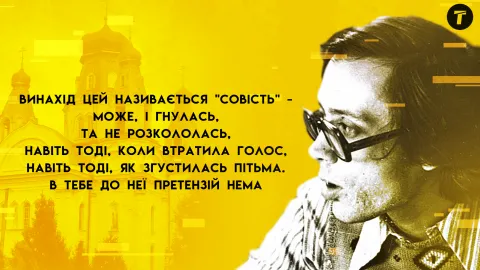
The first news about the death of the Ukrainian journalist from the time of Independence era spread to the media on March 13, 1997, when the body of the poet and journalist Petro Bilyvoda-Shevchenko from Bilovodsk, Luhansk oblast, was found in an abandoned building of a boiler house near Zhulyany, Kyiv oblast. This year, his family and friends will remember him twice - on the 27th anniversary of his mysterious death and on the 70th anniversary of his birth.
Tribun journalists tried to investigate in detail the writer's career and creative legacy , found the memories of his relatives, friends and colleagues in order to tell readers about a prominent local figure.
For Bilovodshchyna, which has never declared itself with bright literary talents, the figure of Petro Mykolaiovych Shevchenko should become sacred. However, unfortunately, he was rarely and forcibly mentioned when lessons on the literature of his native land appeared in school calendars. Then the children learned his poems in order to recite them in front of the teachers, for the report to the raion education department, they took photos in front of the commemorative plaque installed in the Bilovodsk school No. 2(now - Bilovodskyi Lyceum "Leader" ). But he had to be remembered not twice a year, but every day. To remember and carry his image in the head, to look at his native Bilovodsk raion through his poetic eyes. The poet often mentioned Bilovodshchyna in his works:
"There is football in the district center. In the stands
grandfathers and uncles sat down.
Their hands are strong, their feet are strong
have forgotten fatigue
Shoulders - threw off the age.
Movements - became energetic,
turned into a cry and, like a bird,
fly out of the throat.
And that bird chases after the ball -
cuts the air with a sword:
so in the Wild Field
they gained both freedom and fate."
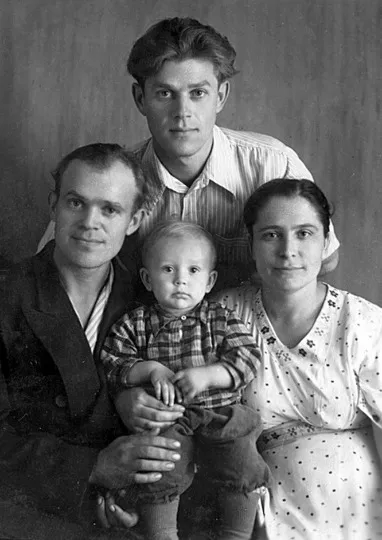
Petro Mykolaiovych Shevchenko was born in Bilovodsk on August 2, 1954 in the family of a civil servant and one of the best teachers of the Ukrainian language and literature in the oblast, from whom the future poet and journalist got the reason for his creative life path.
"Petro is like his mother. Gentle in character, but unyielding in principles. Probably, that is why he had many friends all over Ukraine," recalled the poet's compatriot, writer Vasyl Starun.
The poet graduated from Bilovodsk Secondary School No. 2, worked as a literary employee of the local district newspaper for a year and then gained authority among much older colleagues. Later, Petro Shevchenko began studying at the philological faculty of the Luhansk State Pedagogical Institute named after Taras Shevchenko, was published on the pages of the newspaper "Student's Tribune". On November 30, 1973, his first poems appeared on the pages of this newspaper.
After graduating from the university, Petro Shevchenko married Halina Hnatenko, a woman who repeatedly appeared in his lyrical, romantic works.
"My wife has fragrant hair.
She dreams
as if she were watering flowers."
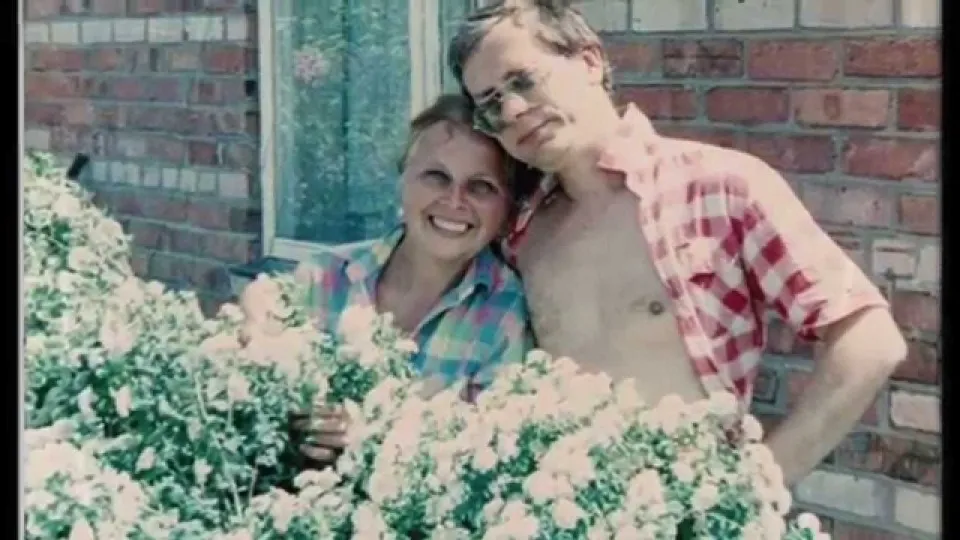
Almost everyone who knew the couple closely mentioned the warm and mutual relationship of the couple in the memoir "The Invention of Petro Bilyvoda". Halyna Shevchenko herself mentioned that the last poems written by the poet were dated around 1987. The woman worried that family care had taken away his ability to write.
"When I told him about it, he replied that he was too happy. "A poet must be unhappy in order for real poems to be born," he said. I do not think that Petro did not write poems just because he was happy. We were always happy together, all these twenty years. Not a day went by without us saying to each other: "I love you". It's just that he was too fascinated by journalism."
The man began his serious journalistic activity in "Molodohvardiika", which, even according to the contemporary reviews of his colleagues, was one of the best newspapers in Luhansk oblast at the time, published in Ukrainian, to which Petro Shevchenko had a special respectful attitude. Halyna, the poet's wife, wrote:
"I sometimes told him: 'Write in Russian, then more people will be able to read your poems.' And he replied that it hurts and offends him to see how such a beautiful language as Ukrainian dies, so let there be fewer people who understand his poems without translation, but he wants to write in it. He truly loved his Ukraine and wanted it to be, so that the language of his parents would not disappear, so that people who speak it would not feel like "second class" people in their own country.
"I gathered in the chest wooden words,
what father and mother talked about
with which they were pigeonholed and beaten,
with which my father used to make
And mother kindeled the stove
And their world was equal to words."
Petro Shevchenko first addressed the all-Ukrainian readership in 1981 in the almanac "Vitryla", but already under the familiar pen name Petro Bilyvoda. There are several versions why the poet chose to write his poems under this name. Both versions take place in the memories of his friends.
First of all, the artist wanted to emphasize the connection with his native land - Bilovodshchyna. Secondly, he sincerely believed that in the history of Ukrainian literature there can be only one Shevchenko - Kobzar. Since that time, the man signed all his poems with the name Petro Bilyvoda, but in journalism he remained Petro Shevchenko.
In some of the poet's poems, even in the second half of the 20th century, there were motifs of the local Bilovodsk dialect, for which Petro Bilyvoda was even criticized at the time, saying that it is not worth littering the language. But modern researchers of his work, for example, Viktor Filimonov, stated:
"Petro Bilyvoda seems to be the first in Ukrainian poetry (note: this is the subject of a special study) to introduce surzhik, frankly non-poetic (that is, highly prosaic) into his lyrics. Moreover, he introduced it not only as someone else's voice of the character, but also noticed the author's speech." Lines in the Slobozhanskyi dialect sound in the poem "On the Eighth of March", "Letter to Brother", "Home" - in all these poems the poet spoke about his family and his small homeland.
"Mom will be congratulated on the eighth of March
I think I'll be on the phone again
I will take a ticket for twenty-five minutes
and I will order a half-forgotten number".
Alongside his poetic activities, journalistic work continued. Over time, "Molodohvardiets" was closed, then Petro Shevchenko became a correspondent of "Nezalezhnost", and later - the own correspondent of the capital publication "Kyiv Vedomosti" in the eastern region.
"He did not meet the cinematic standards of a journalist - he was quiet, modest and unfussy. He looked like a gentle school teacher, a wise philosopher, a lyrical, subtle poet with sad eyes that shone from within with a warm constant light. He was a teacher, a philosopher, a poet, because he was a real journalist. A person who is interested in life in all its manifestations. A person who respected life and tried to make it better," Larisa Troyan, deputy editor-in-chief of "Kyiv Vedomosti" wrote about her colleague in 2004.
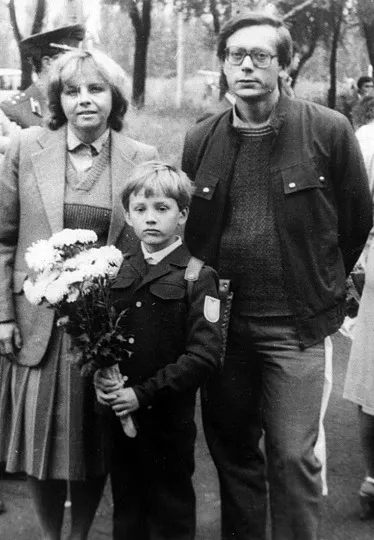
Active work in journalism aroused the writer's interest in public life. This, in turn, resulted in his election as a deputy of Luhansk city council, where Petro Shevchenko worked in the committee on culture. With particular energy and zeal, the poet also participated in the election campaign of Mr. Shchekochikhin, a journalist who ran for the Verkhovna Rada of the Ukrainian SSR and was elected there from Luhansk with the active help of Petro , there was an meeting that undoubtedly changed the course of the poet's life. A local businessman who had never been involved in politics decided to run for the post of mayor of Luhansk. This person was Oleksii Danilov, who currently holds the position of chairman of the National Security and Defense Council (NSDC) of Ukraine.
At that time, the 31-year-old businessman was looking for someone who could advise him, help build an election campaign. The first thing that came to mind was Petro Shevchenko, who was part of the "democratic party" in the city.
"We gathered at Petro's house - that's what his friends and all those with whom he got along closely in the process of implementing different ideas called him. And there was not even a hint of contempt in such an address - if Petro was not loved, then everyone respected him," the politician wrote in his memoirs about the poet and friend.
In the journalist's room, which was very small and barely contained a sofa, a desk and books - in the most democratic setting imaginable - a group of enthusiastic democrats held their meetings. There they discussed the situation in Luhansk, plans to reorganize public life, and the election campaign.
For Oleksii Danilov, Petro Shevchenko became a guide to the world of politics. (with this information, we do not aim to promote someone's political views, this is only a part of the writer's biography). It was he who investigated the mistakes that the future mayor of the city made, it was he who taught him how to communicate with people, the ability to discuss social topics. This helped Danilov become the head of the city council.
At a press conference in 1997, SBU General Zemlianskyi, with whom Danilov, then the mayor of Luhansk, had a conflict, accused journalist Petro Shevchenko of writing commissioned materials about the city's leader. Knowing Peter's character, his special thirst for truth and honesty, the general aimed not only to offend the media person, but also to shake him from his usually stable position. And it must be admitted - he succeeded, Petro Shevchenko never suffered a greater insult in his life. He was very worried, waiting for someone to protect his good and unsullied name.
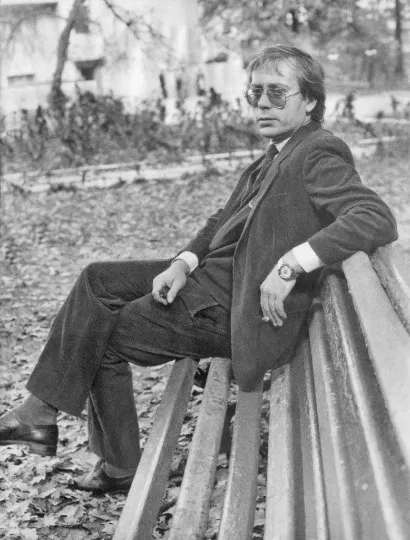
However, there was no protection, on the contrary, after this statement of the SBU general, the real harassment of the poet and writer began. According to Danilov's recollections, one day Petro admitted that he was being watched, he even pointed to a car - a white "seven" with dark windows. Then he said: "These people are constantly persecuting me."
For the people who persecuted the journalist at the time, Petro Shevchenko was really dangerous. In the newspaper, he published materials that could shed light on the names of people's deputies who did business in Luhansk oblast. In addition, according to the memories of friends, the editors tried to save him from a blow: excessively critical articles about the Luhansk regional authorities in "Kyiv Vedomosti" were sent to write their correspondent from Kyiv.
But this did not save the man from a tragic death.
On March 12, 1997, at 08:16 in the morning, the poet Petro Bilyvoda arrived in the capital by train No. 20 Luhansk-Kyiv. He was met at the Central Station by a courier from the newspaper "Kyiv Vedomosti". Peter asked to receive his fee at the cash desk. He said he would come to the editorial office after lunch. They parted around 09:00 in the morning. Since then, none of his friends have seen him alive.
The first alarm was raised by the poet's wife - she felt that something was wrong. Petro did not call her, did not inform her that he had arrived in Kyiv. The poet's faithful friend, Serhii Chirkov, together with his wife, called emergency stations and hospitals known to them at 20:00 that evening. They did not dare to call the morgue.
"March 12, 1997 turned out to be the longest day of my life. It was also the last for Petro," wrote a friend of the poet.
The tension of two days of searching was relieved by bitter tears, and it brought relief, Serhii Chirkov later wrote about the day when the body of the dead poet and journalist from Luhansk oblast was found hanging in a half-abandoned boiler house near Zhulyany, Kyiv oblast.
The investigation was never able to find the last person in the long chain. The only conclusion that can be firmly drawn after reading more than 300 pages of sincere, warm and painful memories about Petro Shevchenko-Bilyvoda: not a single person from his circle believes in the official version of the investigation. No one even suggests to think about whether “their Petro”, who brought light into the lives of everyone he met on his way, could write a suicide note and voluntarily put a noose around his neck.
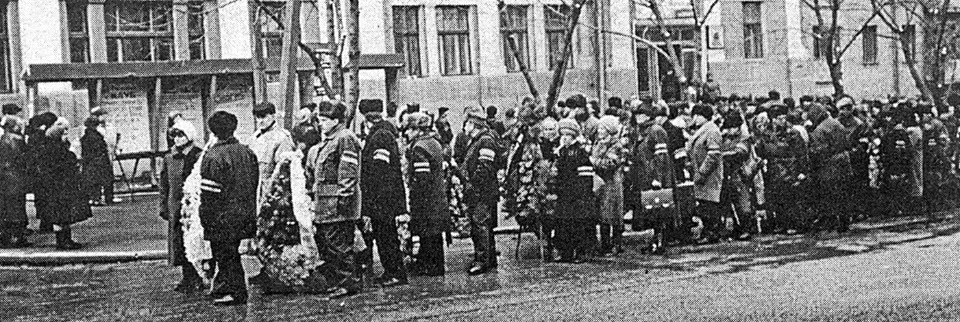
"I wanted every Ukrainian reader who got acquainted with at least one of Petro Bilyvoda's poetry to feel a personal loss - on the Ukrainian Helicon (a sacred object of ancient Greek mythology, one of the mountains dedicated to Apollo, which was considered the abode of the muses ) another true artist was killed; realized: the killing of poets is a sign of a sickly and dangerous state of society, the state as a whole," wrote Roman Korohodskii.
For the tenth year, the grave of Peter Bilyvoda has been in occupied Luhansk. The second year of the occupation of his native village, which began with the beginning of a full-scale invasion, is coming to an end. The occupiers want to destroy the past of the Ukrainian people, erase our memory, ascribe to themselves the most outstanding artists, and the only way to resist this is to remember.
"I died yesterday, but my soul
Commanded me to stay among you,
And I stayed - what was I supposed to do?
And eat and drink with you
I planted my empty body.
We commemorated yesterday together,
They broke bread for the bright day to come,
But the soul has already sipped the cup
And she broke another, non-local bread.
And I sat and cried with you,
And I sat and cried with you,
And I sat and cried with you,
Taken from you by black winds."