

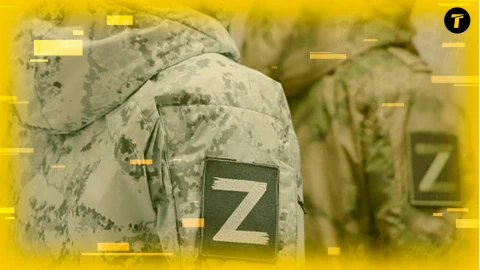
Since 2014, Russian forces have actively used slogans for propaganda and recognition purposes. Some of them have become so well-known that they were mistakenly spread by Ukrainian sources of information. The phrase 'С нами Бог' (God is with us) – has even been attributed to the Armed Forces of Ukraine.
The journalist from TRIBUN has analyzed the most recognizable slogans of the Russian army and explained what they mean and why these expressions should never be spread in the media space.
Russian “God is with us” as a prayer for victory
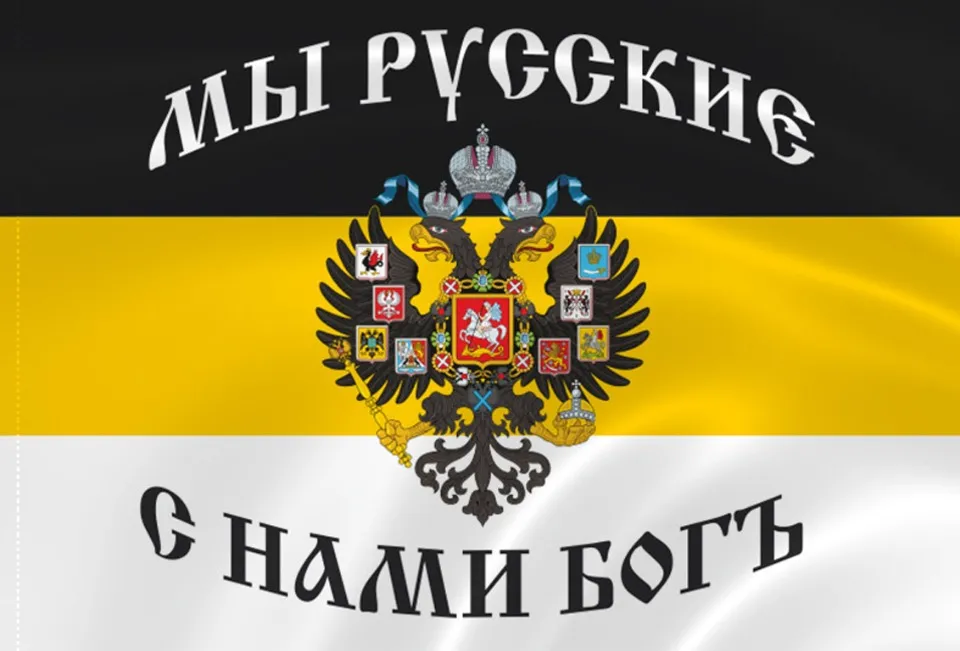
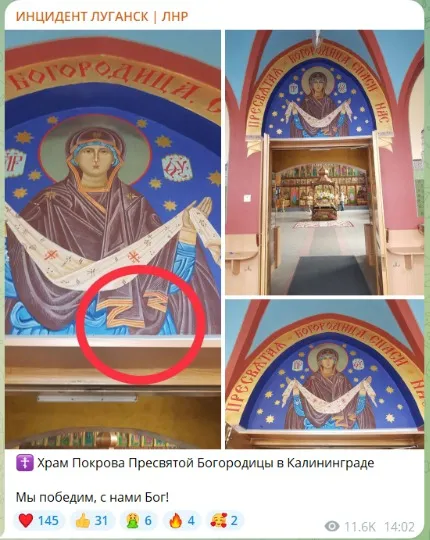
Occupiers have been using this expression since 2014. Preparing for a battle, they say, 'С нами Бог, победа будет за нами!' (God is with us, victory will be ours!). In addition to spreading it in the media space, they print it on flags, especially on military ones, and write it on various surfaces in occupied cities.
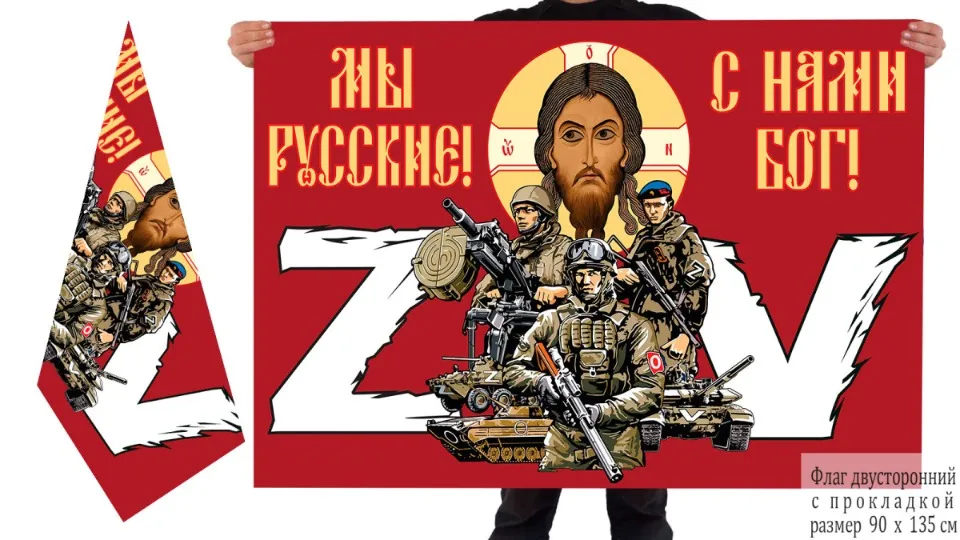
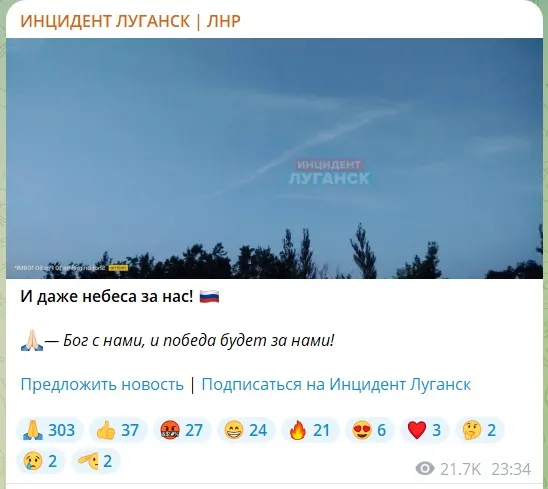
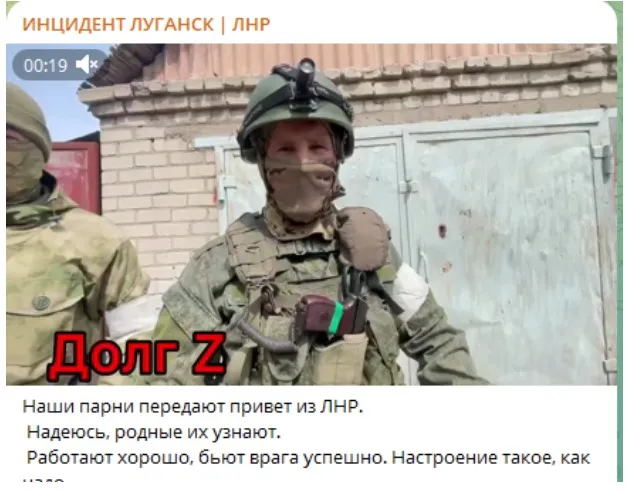
In Telegram channels of the so-called LNR publish “God is with us” in posts that are associated with Russian symbolism.
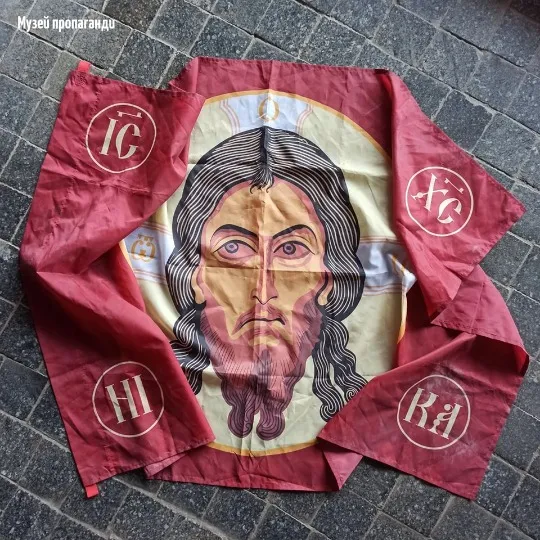
Regarding the combat flag “God is with us” , Ukrainian servicemen managed to obtain it on the battlefield. Mr. Vitaliy from the The 14th Mechanized Brigade "Prince Roman the Great" handed over the flag as a trophy to the Museum of Propaganda located in Shepetivka.
It, along with other belongings of the occupiers, was captured in battles in 2022. Currently, it is exhibited in the museum as part of an exhibition dedicated to the Russian-Ukrainian war.
"Originally, the phrase «God is with us» appeared in Biblical times. In the Jewish writings of the Old Testament, the prophet Isaiah predicted the birth of a child who would be called Immanuel, meaning 'God is with us.' This was one of the names of Jesus Christ, believed to signify that God is with those who believed in Jesus as the Messiah. The Jews pronounced the name Immanuel to express that God was with them. Later, during the Thirty Years' War (1618-1648), the phrase began to be used in the army of the Swedish king Gustavus Adolphus (1611-1632) as a means of recognition during battles. The first time was during the Battle of Breitenfeld (1631), where the Swedish forces defeated the army of the Holy Roman Empire. After that, several more battles occurred where the Swedes emerged victorious. Gustavus Adolphus was a Lutheran. In 1701, the Prussian king Frederick I (1701-1713) inscribed this motto, “God is with us”, on his coat of arms. Later, during the unification of German territories, as well as in both World Wars, this slogan was present on German banners and belts of German soldiers. In Russia, known for historically adopting foreign elements, this slogan appeared on the coat of arms in the 19th century. Russian emperors, of German origin, also adopted it," shared historian Igor Salamakha
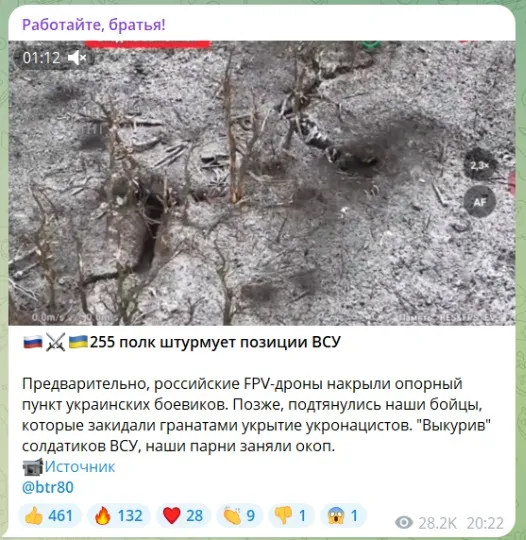
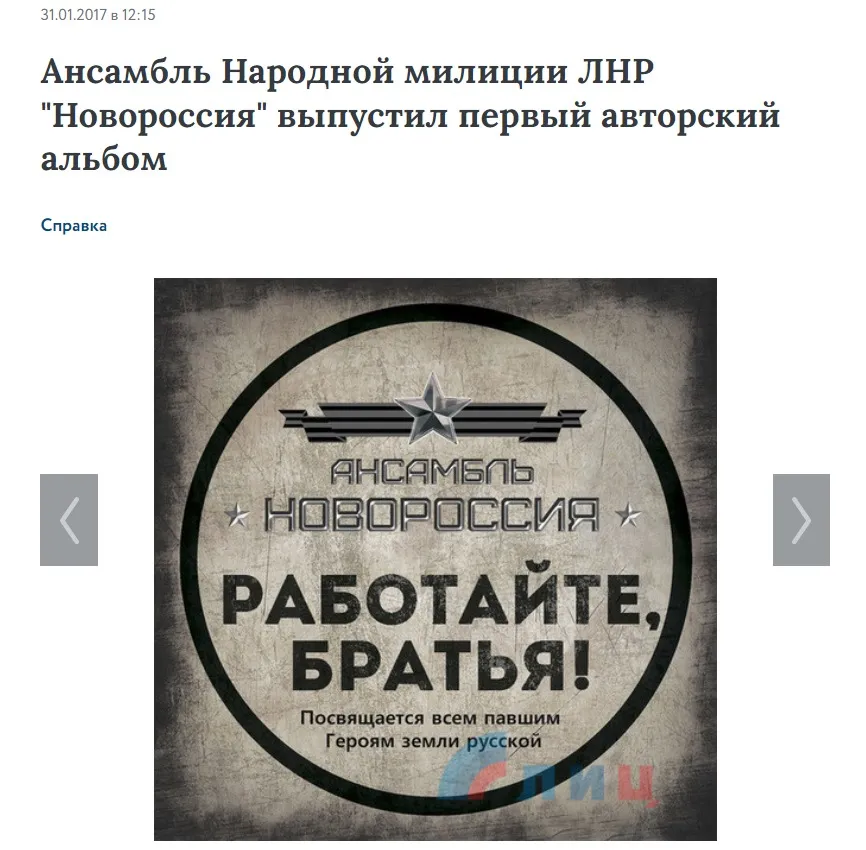
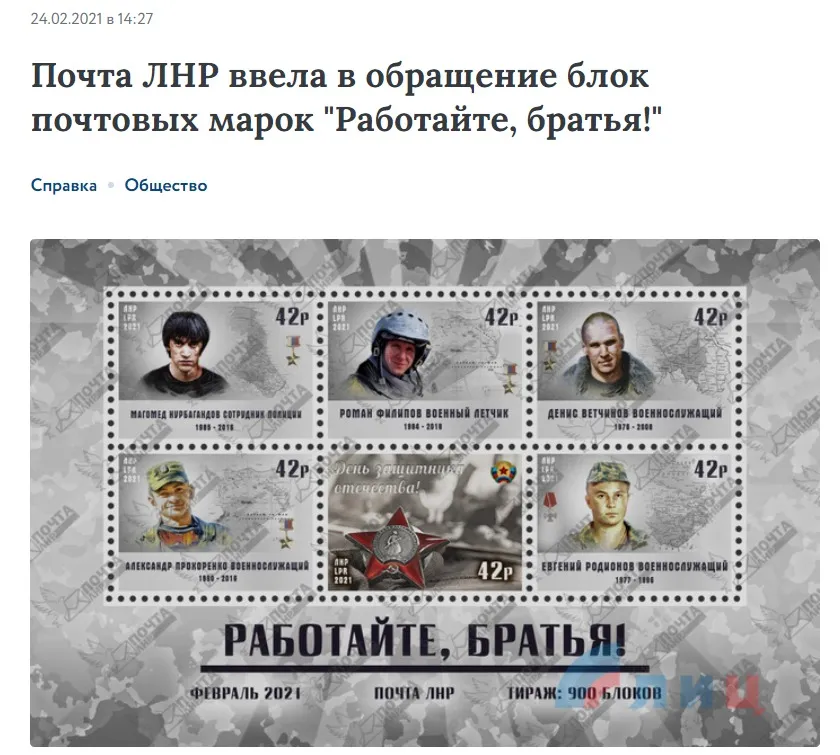
In fact, “Work, brothers” has its own history and was not independently invented by the occupiers. The expression belongs to Police Lieutenant Magomed Nurbagandov, who, on July 10, 2016, fell victim to an attack by militants and was killed by them.
"On July 10, 2016, militants executed Police Lieutenant Magomed Nurbagandov in Dagestan. They began filming him, hoping he would urge his police colleagues to resign. Instead, Nurbagandov uttered a phrase that became an unofficial motto for all law enforcement officers in Russia: “Work, brothers”. For not surrendering until the end, President Vladimir Putin posthumously awarded him the title of Hero of Russia," Russian sources report.
The slogan has become so popular that in the so-called 'LNR' the 'Military Ensemble "Novorossiya" of the People's Militia' released a musical album titled “Work, brothers!”' And the 'LNR' postal service issued a series of postage stamps featuring the slogan.
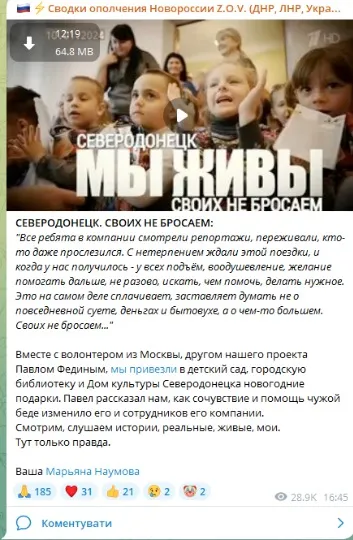
"We don't abandon our own."– slogan of unity among Russians
This expression is used not only by representatives of the Russian armed forces but also by civilian Russians. In the former case, it emphasizes unity on the battlefield, brotherhood, while in the latter, it signifies support for the occupation of Ukrainian territories and their residents who are purportedly seeking reunification with Russia, associating themselves with the Russian people.
For example, in 2022, a 'We Don't Abandon Our Own' event took place in Moscow to support the holding of a referendum in the occupied territories regarding the annexation of Donetsk, Luhansk, Zaporizhzhia, and Kherson regions to the Russian Federation.
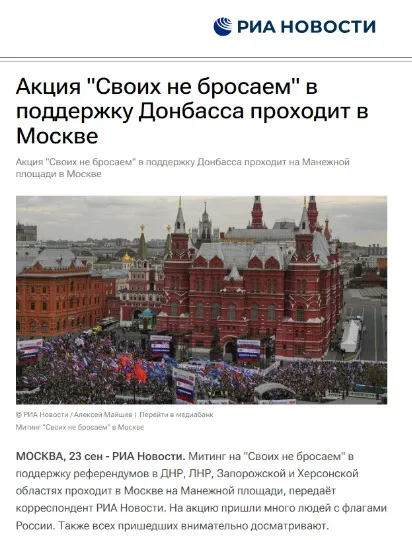
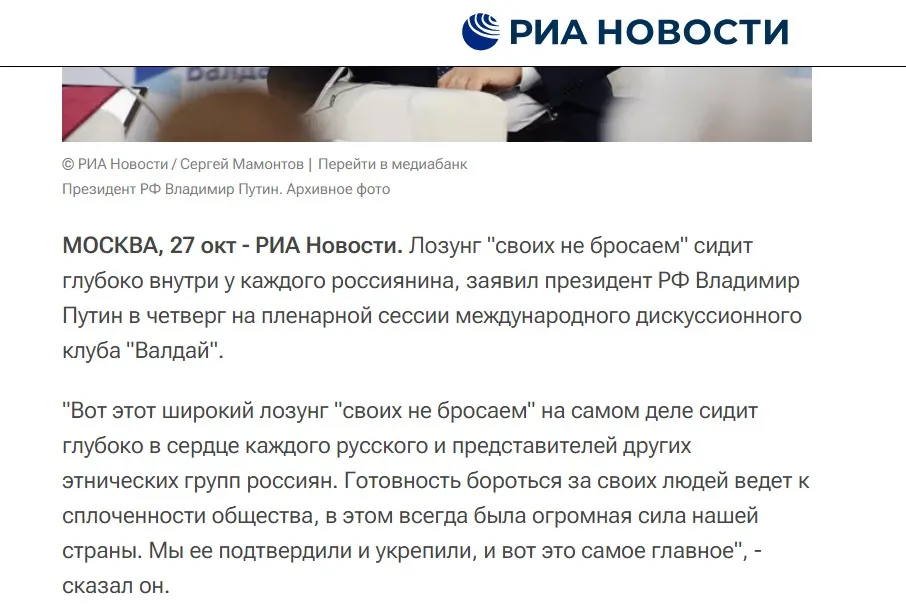
"RIA Novosti," a Russian news outlet, published an explanation of the meaning of 'We Don't Abandon Our Own' from the President of the Russian Federation.
The call 'Rise, Donbas' marked the beginning of the war in the East.
"Вставай, Донбасс" ("Rise, Donbas") was a slogan relevant in 2014 when the Russian-Ukrainian war was just beginning. In this way, occupiers urged residents of Luhansk and Donetsk regions to participate in referendums on joining the Russian Federation, resist Ukrainian authorities and the Armed Forces of Ukraine, and fully align with illegal armed formations.
“Rise, Donbas"is associated with separatism. These two words were easily disseminated among the locals, stirring strong emotions and encouraging impulsive actions, especially among the youth.
When the slogan is used in musical compositions, it expands its reach and impact. In 2014, the band "KUBA" released a song titled "Rise, Donbas" positioning it almost as an anthem for the so-called "LNR/DNR" entities.
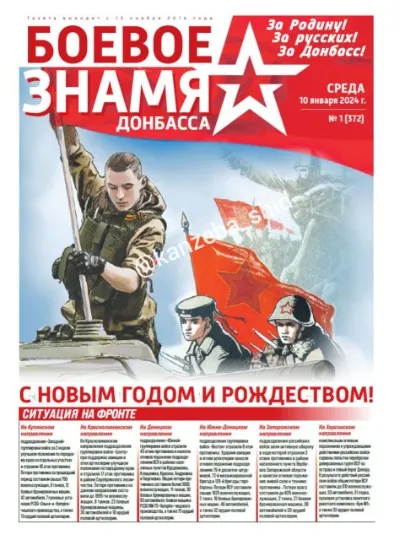
Russian’s use the slogans "For the Motherland! For the Russians! For Donbas!"
These slogans are being used during the full-scale invasion as motivation for their military actions. These slogans express the reasons and goals for their involvement in the conflict. Additionally, the occupiers disseminate "For the Motherland! For the Russians! For Donbas!" among the local population in the occupied territories of Luhansk and Donetsk regions through mass media.
For example, these slogans are printed on the front page of the newspaper "Боевое знамя" (Battle Flag), which is distributed in both the "old" and newly occupied settlements in Luhansk and Donetsk regions.
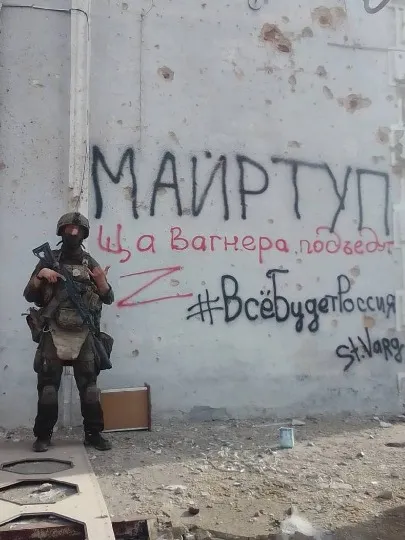
“Wagners are arriving soon”, “Cargo-200 we are together”: what Wagners are remembered for
Private military company "Wagner," led by Yevgeny Prigozhin, actively participates in the battles on the Luhansk and Donetsk fronts. "Wagner" is considered one of the most ruthless and formidable units, acting solely by internal rules, with unrestrained behavior in the occupied territories.
They gained recognition during the battles in Popasna in 2022. When the city was occupied, they started to "entertain" themselves by leaving various inscriptions on ruined buildings. One of them was "Ща вагнера подъедут" (“Wagners are arriving soon”) written on the district House of Culture. These are lyrics from the song "Лето и арбалеты" (Summer and Crossbows) by Akim Apachev.
The slogan “Crago-200 we are together” blongs to Wagners too. It is printed on the patch of private military company soldiers.
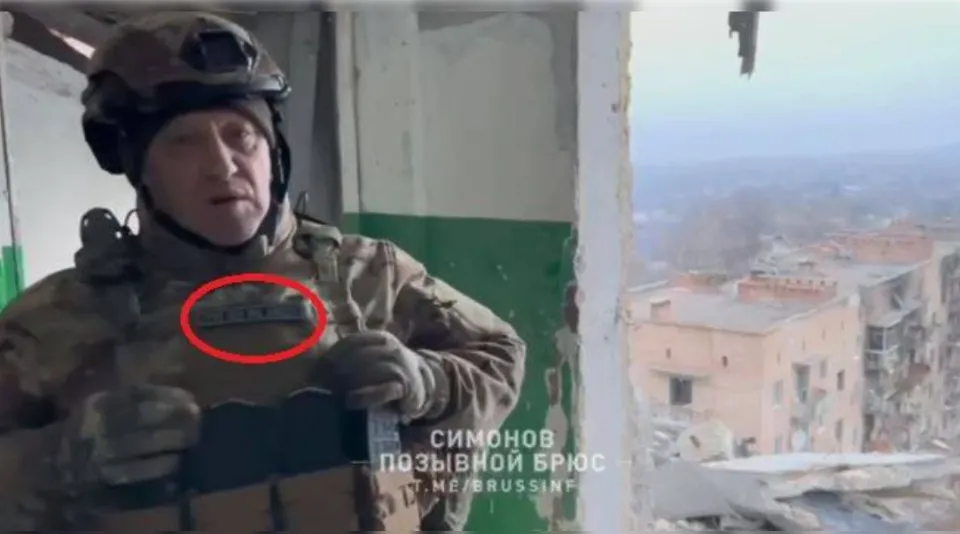
The coastal war correspondent Oleksiy Sukonkin, in the text for "Vesti Primorye," explained the meaning of this slogan.
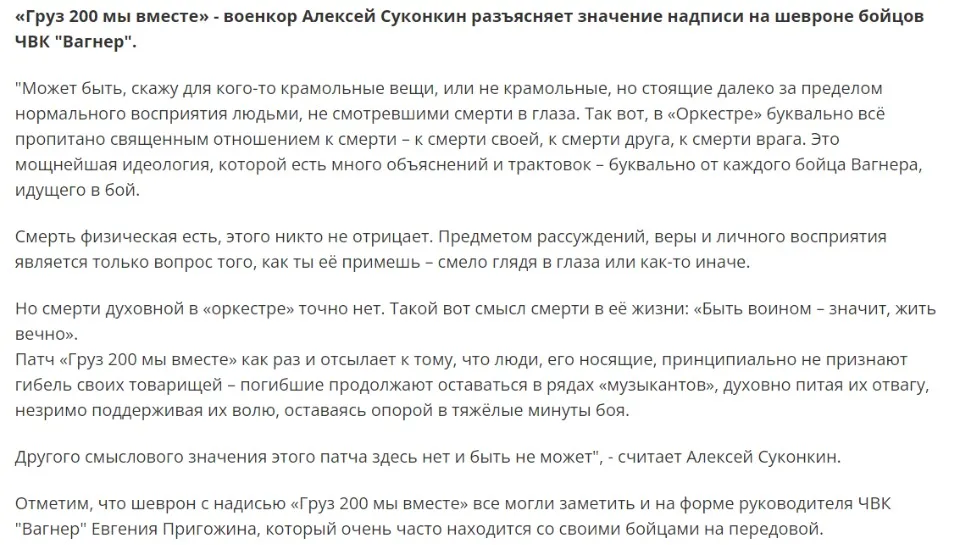
"The patch 'Cargo-200, we are together' precisely conveys the idea that people wearing it fundamentally do not acknowledge the loss of their comrades. The fallen continue to remain among the 'musicians,' spiritually nourishing their courage, invisibly supporting their will, and remaining a pillar in the difficult moments of battle."
Therefore all the analyzed slogans belong to the Russian armed forces. They are quite widespread and recognizable, so they continue to be used on the front lines, occupied territories, and in the media space. The dissemination of these slogans is support for the enemy. Therefore, let's be careful in using such content.
Author: Yulia Kanzeba.